Table of Contents >> Show >> Hide
- Why the Raspberry Pi 400 Became Big News
- Core Specs You Actually Need to Know
- Best Use Cases for the Raspberry Pi 400
- What to Expect in the First Hour
- Pi 400 vs Other Budget Computing Options
- Limitations You Should Know Before Buying
- How to Get the Best Performance Without Spending Much
- Who Should Buy the Raspberry Pi 400 in 2026?
- Extended Experience Section: Real-World Stories and Lessons (500+ Words)
- Final Verdict
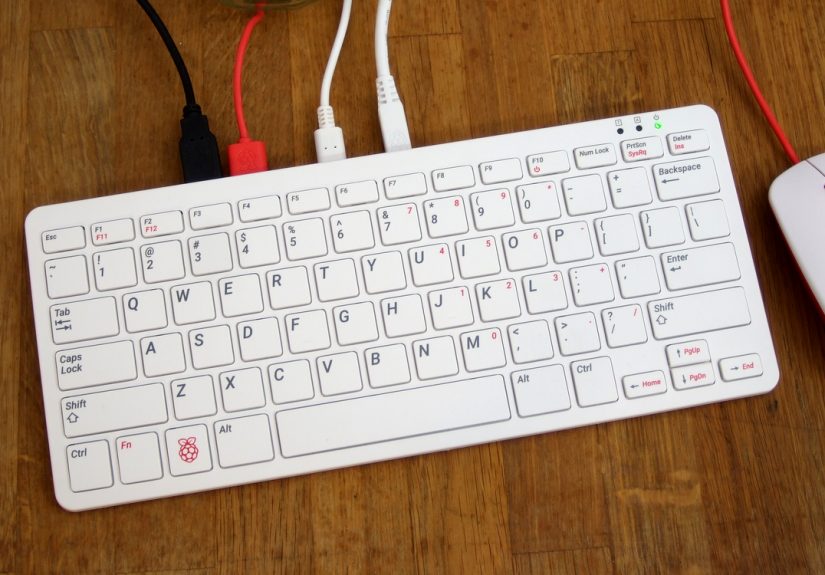
Imagine opening a box, plugging in one cable to power, one cable to a monitor, and instantly having a full desktop computer. No tower. No fan noise. No “where did I put that HDMI adapter?” drama. That is exactly the charm of the Raspberry Pi 400, the keyboard-shaped computer that launched at $70 and quickly became one of the most practical entries in affordable computing.
This guide breaks down what made the Pi 400 special at launch, what still makes it relevant today, and where it fits in a world filled with Chromebooks, mini PCs, and newer Raspberry Pi keyboard models. If you are a parent, student, maker, coder, or just someone who misses the joy of simple computers that boot fast and do useful things, this article is for you.
We’ll keep it honest, practical, and fun: the wins, the trade-offs, and the real-world experience of using the Pi 400 as an everyday machine. Spoiler alert: it is not a gaming beast, but it is absolutely a productivity ninja when you use it for the right jobs.
Why the Raspberry Pi 400 Became Big News
The comeback of the “computer in a keyboard” idea
The Pi 400 brought back a classic format from the 1980s: the computer built directly into the keyboard. Instead of a separate motherboard case, everything is packed inside a compact keyboard body. This design makes setup almost laughably easy. Add a screen, mouse, and power, and you are in business.
That nostalgic form factor is not just for vibes. It removes friction for beginners. Traditional single-board computers can feel intimidating if you have to source multiple accessories and build your own setup from scratch. The Pi 400 lowered that barrier and made “my first Linux desktop” feel accessible.
A price that changed the conversation
At launch, the standalone Raspberry Pi 400 cost $70, while the complete kit cost $100 and included the essentials: mouse, power supply, microSD card, HDMI cable, and beginner guide. That kit pricing was a strategic sweet spot for education and budget home computing.
Later, the broader keyboard-computer lineup evolved, and pricing shifted. The Pi 400 saw a reduction to lower entry cost in the keyboard-computer category, making it even easier to recommend for classrooms, starter coding setups, and light office work.
Core Specs You Actually Need to Know
The Raspberry Pi 400 is basically a tuned variant of the Raspberry Pi 4 platform, housed in a keyboard with better passive cooling. On paper, this is what matters most:
- CPU: Quad-core ARM Cortex-A72 at 1.8GHz
- RAM: 4GB LPDDR4
- Graphics: VideoCore VI GPU
- Display: Dual micro HDMI outputs (up to dual 4K)
- Networking: Gigabit Ethernet, dual-band Wi-Fi, Bluetooth
- Ports: 2× USB 3.0, 1× USB 2.0, USB-C power, GPIO header
- Storage: microSD (boot and main storage)
What the specs mean in daily life
Translation from spec-sheet language to human language: the Pi 400 is quick enough for browsing, documents, online classes, coding in Python, light web development, and basic media playback. It is not trying to replace a workstation with heavyweight video editing, AAA gaming, or massive Docker stacks.
The 1.8GHz clock bump over early Pi 4 models helped make the desktop feel snappier. Pair that with the larger internal passive thermal design, and the Pi 400 generally maintains performance more comfortably during longer sessions.
Thermals and noise: one of its superpowers
A quiet machine is underrated. The Pi 400 runs passively cooled, so you get no fan whine. For libraries, classrooms, bedrooms, and focused writing sessions, that matters more than benchmark bragging rights. It also makes the whole setup feel appliance-like: plug in, work, power off, repeat.
Best Use Cases for the Raspberry Pi 400
1) Learn coding without breaking the budget
This is where the Pi 400 shines brightest. Raspberry Pi OS includes beginner-friendly tools, a browser, office utilities, and programming environments out of the box. Kids can move from block coding to Python. Adults can learn Linux basics without risking their primary machine.
2) Build a low-cost family desktop
Need a “house computer” for homework, forms, email, and basic productivity? The Pi 400 handles that workload well if expectations are clear. It boots fast, feels stable for office tasks, and uses very little power compared with many full desktop PCs.
3) Run maker projects with the GPIO header
Unlike many mini PCs, the Pi 400 keeps the signature 40-pin GPIO header. That means electronics projects are still on the menu: sensors, LEDs, robotics controllers, automation experiments, and STEM demos. You get desktop usability and hardware tinkering in one device.
4) Retro and lightweight media setups
The Pi ecosystem has strong support for retro projects and lightweight media workflows. If your goal is fun experimentation (not maxed-out emulation at every setting), the Pi 400 can be a delightfully tidy base machine.
What to Expect in the First Hour
Here is a practical “first-hour plan” that avoids beginner mistakes and gets good performance immediately:
- Use a reliable power supply (underpowered adapters cause weird issues).
- Install or verify Raspberry Pi OS on a good microSD card.
- Run system updates before installing extra apps.
- Set browser tabs expectations: reasonable multitasking is great; chaos is not.
- Use lightweight tools where possible for a smoother experience.
- Add a USB SSD later if you want faster I/O for bigger projects.
- Set up cloud sync for docs and school/work files early.
If you do these seven things, the Pi 400 feels less like a toy and more like a dependable little productivity station.
Pi 400 vs Other Budget Computing Options
| Option | Best For | Pros | Limitations |
|---|---|---|---|
| Raspberry Pi 400 | Learning, light desktop, coding, maker projects | Affordable, compact, quiet, GPIO access | microSD storage bottleneck, ARM app compatibility trade-offs |
| Raspberry Pi 4 + accessories | Custom builds and embedded projects | Flexible form factors, accessory ecosystem | More cables, more setup effort |
| Budget Chromebook | Web-first school and office workflows | Simple UX, good battery on laptops | Less hardware hacking freedom |
| Used x86 mini desktop/laptop | Legacy software, heavier multitasking | Broader app compatibility | Higher power draw, variable reliability/condition |
| Newer keyboard-Pi models | Users needing more performance headroom | Faster CPU/RAM options | Higher price points |
Limitations You Should Know Before Buying
No mystery, just honest trade-offs
Every budget computer has compromises. The Pi 400’s trade-offs are mostly reasonable, but you should know them up front:
- ARM ecosystem realities: Most common tasks are fine, but some desktop apps are easier on x86 systems.
- Storage speed: microSD is convenient, but not as fast as SSD storage for heavy file operations.
- Expansion differences: If you rely on camera/display interfaces common on bare boards, check model compatibility first.
- Peripherals still matter: display quality, keyboard habits, and network setup influence the real experience more than people expect.
The good news: most of these issues are manageable with smart setup decisions. Better microSD cards, sensible workloads, and lightweight software choices go a long way.
How to Get the Best Performance Without Spending Much
Practical optimization checklist
- Use a high-quality microSD card with strong random read/write performance.
- Keep your system updated for browser and kernel improvements.
- Use one strong browser workflow instead of 40-tab chaos mode.
- Prefer native Linux apps when possible for smoother behavior.
- Move project files to external USB 3.0 storage for heavier workloads.
- Use Ethernet for stable downloads and lower latency in busy Wi-Fi environments.
- Set expectations: this is a focused productivity machine, not a max-power workstation.
Follow that checklist and the Pi 400 feels much faster than its price suggests. Ignore it, and you may end up blaming the hardware for problems caused by setup choices. The computer is tiny, but the difference between “frustrating” and “surprisingly great” is often configuration, not silicon.
Who Should Buy the Raspberry Pi 400 in 2026?
Great fit:
- Students learning coding and Linux fundamentals
- Parents wanting a safe, affordable starter computer
- Makers who want both desktop convenience and GPIO access
- Writers and web users with light-to-moderate workloads
- Anyone building low-cost community computer labs
Maybe skip it if:
- You need heavy creative apps (pro video editing, CAD-heavy work)
- You rely on specific x86-only software with no alternatives
- You want high-end gaming without tinkering or compromises
Extended Experience Section: Real-World Stories and Lessons (500+ Words)
Across classrooms, maker clubs, and home offices, the Pi 400 consistently creates the same reaction: “Wait… this keyboard is the whole computer?” That moment matters because curiosity is fuel. In one school setup, students who usually treat computers like sealed magic boxes suddenly started asking hardware questions. Where is the processor? Why is it warm near the top edge? Why does it boot from a card? Within a week, those questions turned into mini-projects: a simple weather dashboard, a typing game in Python, and a class blog running on a local network. The Pi 400 did not just run apps; it sparked investigation.
In a home-office context, the experience is less about discovery and more about focus. A remote worker used a Pi 400 as a “deep work machine” for writing and research while keeping social apps off the device. The lightweight environment helped reduce distraction. Browser-based docs, email, and task boards were smooth. The biggest win was psychological: the machine felt purpose-built. Power on, work, power off. No gaming launcher updates, no giant background utilities, no surprise “your RGB app needs attention” popups. It became the digital equivalent of a clean desk and a strong coffee.
Maker communities often love the Pi 400 for a different reason: it can be both development station and project controller. One hobby group used it to prototype sensor scripts, then wired external components through the GPIO header for a greenhouse monitor. Because the computer is integrated, there was less bench clutter and fewer loose cables to troubleshoot. The team still had to learn good wiring habits, but the overall workflow was cleaner than juggling a separate keyboard and exposed board. They described it as “one less headache between idea and prototype.”
Families trying to stretch tech budgets also report practical benefits. Instead of buying a full new laptop for a younger child, they reused an older monitor and added a Pi 400 kit. That setup became a homework and coding station. Parents appreciated the lower replacement cost and the educational upside of a Linux-based system. Kids appreciated that it felt like “their own computer,” not a borrowed hand-me-down. There were learning curves, of courseespecially when moving from app-store habits to package managers and web-based alternativesbut those curves became teachable moments rather than blockers.
Not every story is pure sunshine. Some users hit limits quickly when they treated the Pi 400 like a premium desktop with endless browser tabs and heavy web apps all at once. Others learned that cheap microSD cards can drag down the experience more than expected. But even those setbacks produced useful lessons: storage quality matters, workflows matter, and right-sizing expectations matters. Once users made a few adjustmentsbetter card, fewer simultaneous heavy tasks, simpler startup appsthe same hardware felt dramatically better.
Perhaps the most interesting experience pattern is emotional, not technical. People describe the Pi 400 as “fun to use.” That is rare praise in a world where most computers are judged only by benchmark charts. The Pi 400 invites tinkering without demanding expert-level knowledge. It can be a serious productivity tool one hour and a curiosity machine the next. You can write an essay, learn shell commands, test a script, and wire up an LED strip before dinner. It makes computing feel understandable again.
If you have ever wanted a machine that teaches while it works, that is the Pi 400 experience in one sentence. It is affordable enough to experiment with, capable enough to be useful daily, and approachable enough to share with beginners. That combination is why this little keyboard computer keeps showing up in classrooms, workshops, and practical home setups years after launch.
Final Verdict
The Raspberry Pi 400 earned attention because it solved a real problem: computing can be too expensive, too complicated, or both. By combining a practical desktop environment, low power draw, educational value, and maker-friendly DNA into a compact keyboard, it turned “entry-level” into something genuinely empowering.
If your goals are coding, learning, light productivity, and hardware experimentation, the Pi 400 remains one of the smartest value choices in the ecosystem. It is not trying to be everythingand that is exactly why it works so well.