Table of Contents >> Show >> Hide
- Who Exactly Is Palpatine, Again?
- How We’re Ranking Palpatine
- 1. Revenge of the Sith Palpatine: Peak Cackling Evil
- 2. Original Trilogy Emperor: The Shadow Behind Vader
- 3. Clone Wars and Rebels Palpatine: Animated Overachiever
- 4. Phantom Menace and Clone Wars-Era Senator Palpatine: The Slow Burn
- 5. Comics and Novels Palpatine: The Deep Lore Sith
- 6. Rise of Skywalker Palpatine: The Controversial Comeback
- 7. Cultural Rankings: Why Palpatine Is Still a Top-Tier Villain
- Personal Opinions: Where This List Lands
- of Experience: Living With Palpatine in Fandom Culture
- Conclusion: All the Sith, All the Time
If there’s one thing Star Wars fans agree on, it’s that Emperor Palpatine is terrible for the galaxy and fantastic for drama. Scheming senator, cackling Sith Lord, resurrected space lich – Sheev “Somehow I Returned” Palpatine has worn a lot of cloaks (all of them black, obviously). Today we’re doing what fans love most: ranking his many incarnations and sharing some big-picture opinions on why this villain still owns so much real estate in our collective nerd brain.
Who Exactly Is Palpatine, Again?
Just in case you’ve somehow escaped decades of memes, Palpatine – a.k.a. Darth Sidious – is the main puppet master of the Skywalker Saga. He starts out as a senator from Naboo, manipulates his way into becoming Supreme Chancellor, secretly leads both sides of the Clone Wars, wipes out the Jedi, crowns himself Emperor, corrupts Anakin into Darth Vader, and later comes back in the sequels with a whole lab full of creepy cultists and cloning experiments. It’s a lot, even by sci-fi standards.
Across movies, animation, comics, and novels, he’s consistently portrayed as a master manipulator: a man who can smile warmly in the Senate chamber and then cackle while electrocuting someone five minutes later. Psychologists and pop-culture analysts have even pointed out how closely he matches traits of psychopathy – charming, calculating, and utterly lacking empathy.
How We’re Ranking Palpatine
When fans talk about “Palpatine rankings,” they’re usually not arguing about his favorite workout routine (though clearly he’s doing some kind of Sith core training to survive all those falls). We’re ranking his different versions and appearances across the saga and related media, based on a few criteria:
- Villain impact: How much does this version of Palpatine shape the story and terrify everyone?
- Performance: How delightfully evil is Ian McDiarmid (or his animated counterparts) in this era?
- Iconic moments and quotes: Does this version give us the lines fans quote at 2 a.m. on Discord?
- Fan reception: Is the fandom cheering, hating, or confused – and in a good or bad way?
With that in mind, let’s dive into the rankings of Palpatine’s major incarnations, from “peak Sith energy” to “this was… a choice.”
1. Revenge of the Sith Palpatine: Peak Cackling Evil
Why This Is His Top-Tier Form
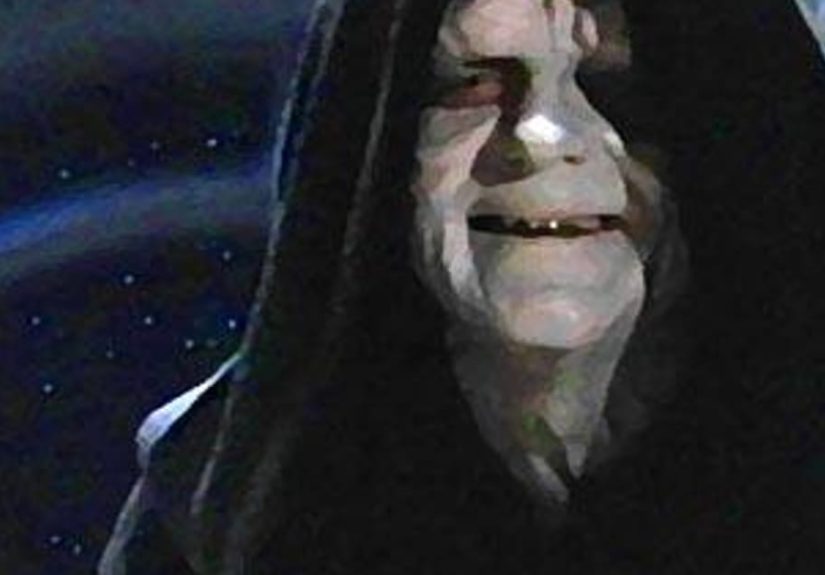
If you ask most fans which version of Palpatine truly delivers, they’ll point straight to Episode III: Revenge of the Sith. This is where all of his years of scheming finally snap into place. He manipulates Anakin’s fears, engineers the fall of the Jedi, executes Order 66, and converts a conflicted hero into his personal enforcer. It’s the full villain origin story payoff.
Critics and fans regularly highlight Ian McDiarmid’s performance here as one of the saga’s most memorable. He goes from soft-spoken mentor to scenery-chewing Sith in about five minutes, especially in the “I am the Senate” confrontation and the transformation scene where Mace Windu’s deflected lightning leaves him permanently disfigured. Interviews and retrospectives often note that McDiarmid leans into the theatricality on purpose – Palpatine is supposed to feel like a performance of evil, not a relatable antihero.
Iconic Moments in This Era
- The tragedy of Darth Plagueis “the Wise”: An opera-house monologue that has become a meme, a copypasta, and a genuinely chilling seduction moment all at once.
- “Unlimited power!”: Quite possibly the most quoted line in the entire prequel trilogy.
- Order 66: Palpatine calmly issues one command and the Jedi across the galaxy fall like dominos.
Verdict: This is Palpatine at his most complete: political mastermind, dark sorcerer, and chaotic theater kid all rolled into one black robe.
2. Original Trilogy Emperor: The Shadow Behind Vader
The Archetypal Space Emperor
In the original trilogy, especially Return of the Jedi, Palpatine is less about character development and more about pure mythic evil. He’s the faceless power behind the Empire, the boss battle after Darth Vader, and the guy who thinks emotional manipulation is a fun hobby.
Fans and commentators often point out how effective this minimalism is. We don’t know his tragic childhood or broken heart – we just know he enjoys lightning people off balconies. Modern discussions about villains frequently use Palpatine as the counterpoint to the “we need a sympathetic backstory” trend: he works because he’s simply, unapologetically evil, and he enjoys it.
The Throne Room Test
The key scene here is the throne room confrontation with Luke and Vader. Palpatine spends the entire time trying to emotionally destroy Luke by taunting him about his friends, his father, and his own potential for darkness. The glee on his face when Luke finally snaps and attacks is basically the Dark Side version of winning the lottery.
Verdict: This version ranks just below Revenge of the Sith because he’s a bit less layered, but he’s arguably the most iconic and instantly recognizable Palpatine.
3. Clone Wars and Rebels Palpatine: Animated Overachiever
The Expanded Universe MVP
The animated series The Clone Wars and Rebels deepen Palpatine’s presence in fun ways. In animation, he’s not limited by live-action logistics, so we see him pulling off wild Force feats, dueling multiple opponents, and meddling with galactic politics on a weekly basis.
Fans frequently rank his duel with Yoda in the Senate chamber and his battle against Darth Maul and Savage Opress as some of his most impressive showcases of raw power. It’s one thing to talk about him being the most dangerous Sith; it’s another to watch him casually take on multiple top-tier fighters while laughing like this is his cheat day workout.
Why the Cartoons Matter
These appearances flesh out how Palpatine operates between the big movie moments. We see the careful long-term planner and the impulsive, lightning-happy monster. Analysts have noted that he’s excellent at long-term plotting but surprisingly reckless in the short term – a pattern that shows up repeatedly as he overplays his hand when things don’t go exactly to plan.
Verdict: Animated Palpatine is the franchise’s “extended cut” of his villainy: more fights, more schemes, more meme material.
4. Phantom Menace and Clone Wars-Era Senator Palpatine: The Slow Burn
When the Villain Wears a Polite Smile
In The Phantom Menace and Attack of the Clones, Palpatine mostly shows up as a polished politician from Naboo. This is the version you could almost imagine at a charity gala… if you didn’t know he was secretly orchestrating a galaxy-wide war.
Writers and commentators have noted that this triplicate identity – Senator, Chancellor, and Darth Sidious – is part of what makes him so interesting. Each persona shows a different angle: the charming statesman, the “reluctant” leader who just happens to be granted emergency powers, and the robed Sith coordinating everything from the shadows.
Underrated Power Move
Arguably his boldest move in this era is engineering his own election as Supreme Chancellor by exploiting a humanitarian crisis on Naboo. He plays the victim, points to “corruption” in the Senate, and positions himself as the savior of democracy – all while planning to dismantle that same democracy from within.
Verdict: Not the most explosive version of Palpatine, but this is where his political horror story really starts. Fans who love the “slow poison” side of the character tend to rank this era higher.
5. Comics and Novels Palpatine: The Deep Lore Sith
When He Goes Full Dark-Side Scientist
Star Wars comics and tie-in novels have a lot of fun with Palpatine’s extremes. In these stories, he’s often depicted experimenting with bizarre Force powers, ancient Sith artifacts, and galaxy-spanning superweapons. Some comic runs highlight his elaborate contingency plans and secret operations, showing just how far ahead he likes to think.
These sources also lean heavily into the idea that he’s not just a tyrant but a true believer in the Dark Side as the ultimate expression of personal power. There’s very little pretense of “for the greater good” – Palpatine is in it for raw control and domination.
Verdict: For casual fans, this version might be niche. For lore enthusiasts, comics-era Palpatine ranks incredibly high because it showcases how terrifyingly far his influence reaches.
6. Rise of Skywalker Palpatine: The Controversial Comeback
“Somehow, Palpatine Returned”
We can’t do a Palpatine ranking without talking about his resurrection in The Rise of Skywalker. Opinions here are… mixed. On one hand, Ian McDiarmid once again delivers an entertainingly grotesque performance as a decaying, half-cloned emperor tethered to ominous machinery. On the other hand, many fans felt the explanation for his return was rushed and that it undercut the ending of the original trilogy.
Expanded material later clarified that Palpatine’s “son” was actually a non-Force-sensitive clone (or strandcast) named Dathan, which makes Rey his genetically engineered granddaughter rather than the product of normal family life – a detail even McDiarmid has joked about in interviews.
Fandom Verdict
In discussions, you’ll often see this version ranked lower than his prequel or original-trilogy forms. Fans acknowledge that he’s still creepy and powerful, but many feel his return leans more on nostalgia than on strong storytelling. That said, some viewers genuinely enjoy the full-horror-movie vibe of zombie Palpatine, especially in the throne room finale with Rey and Ben Solo.
Verdict: Dramatically memorable, narratively divisive. This is the “guilty pleasure” rank of the list.
7. Cultural Rankings: Why Palpatine Is Still a Top-Tier Villain
A Villain Without a Sob Story
Modern audiences are used to villains with complex trauma, sympathetic motivations, or tragic arcs. Palpatine is almost the opposite. Fan discussions and media analysis repeatedly highlight how refreshing it is that he’s just evil – not misunderstood, not secretly soft-hearted, just someone who enjoys domination and chaos.
This simplicity actually gives him staying power. He becomes a kind of moral anchor in the series: whenever Palpatine appears, you know the ethical stakes have hit maximum red alert.
Performance Rankings: Ian McDiarmid vs. Everyone
Across multiple films and decades, Ian McDiarmid is the undeniable core of Palpatine’s success. Directors and fellow creatives have praised how he leans into the character’s over-the-top evil while still grounding him in quiet, manipulative moments. Behind-the-scenes stories mention filmmakers reacting with delighted horror to his more intense scenes – the exact reaction you want to hear when you’re playing the universe’s worst boss.
Animated voice actors and comic writers build on that foundation, but the fan rankings of “best Palpatine” almost always put McDiarmid’s live-action performances in the top slots.
Personal Opinions: Where This List Lands
So, if we had to summarize a “consensus-style” ranking of Palpatine incarnations based on fan chatter, commentary, and cultural impact, it might look like this:
- Revenge of the Sith Palpatine – peak schemer, peak memes, peak tragedy.
- Original Trilogy Emperor – the archetypal space tyrant.
- Animated Palpatine (Clone Wars/Rebels) – the expanded-cut monster.
- Senator/Chancellor Palpatine (Prequel build-up) – the slow-boil nightmare politician.
- Comics/novels Palpatine – for deep-lore enthusiasts and power-scale debates.
- Rise of Skywalker Palpatine – controversial but visually unforgettable.
Regardless of how you shuffle the rankings, one thing is clear: in the Star Wars universe, Palpatine is the gold standard for pure, uncut villainy.
of Experience: Living With Palpatine in Fandom Culture
Talking about Palpatine isn’t just an exercise in film analysis – it’s also a look at how a single character can shape decades of fan experience.
Think about how early many of us met him. For older fans, the first exposure was the hooded hologram in The Empire Strikes Back, a shadowy figure whose face you barely see but whose presence instantly makes Vader seem like someone else’s muscle. For younger fans, the introduction might have been a prequel-era DVD or a streaming binge, watching him smile reassuringly at Padmé while knowing he’s actively sabotaging the entire Republic. That double awareness – seeing the friendly politician while knowing the monster he becomes – is one of the joys of rewatching the saga.
Palpatine also lives rent-free in online culture. His quotes are everywhere: “Do it,” “Unlimited power,” “I am the Senate.” They show up in gaming chats, meme pages, and even serious political threads where people jokingly compare real-world events to Senate scenes from the prequels. If you’ve ever watched a friend hover over a risky life choice and heard someone whisper “Do it” in their best Palpatine impression, you’ve experienced the character’s weirdly long afterlife in everyday conversation.
Then there’s the cosplay and convention experience. At any decent-sized comic con, you’re almost guaranteed to see at least one Palpatine: hunched over, cackling, and sometimes rolling around in a mobility scooter as an improvised Sith throne. Fans love inhabiting his over-the-top evil because it’s so unambiguous – nobody thinks the Emperor is a misunderstood hero. You get to commit fully to being the villain and then step out of the robe and go back to normal life.
On the more thoughtful side, Palpatine has also become a surprisingly useful teaching tool. Educators and commentators use him as a shorthand example when talking about authoritarianism, manipulation, and the erosion of democratic institutions. The way he demands emergency powers “for security,” stirs up fear to justify more control, and turns loyal institutions against themselves is uncomfortably familiar when you start reading real-world history. That’s part of why he ranks so high in discussions of great movie villains: he’s fantastical, but the logic of his power grab feels disturbingly plausible.
Even outside of film and politics, Palpatine shows up in gaming experiences. In video games where he’s playable, he’s often the glass cannon: not the tankiest character, but devastating when he gets to unload Force lightning. Players either love or hate facing him, which mirrors how fans feel watching him on screen – exhilarating, infuriating, and slightly ridiculous all at once.
Finally, there’s the long-term relationship fans have with the character. Over the years, you might find your opinion of certain movies changing, but Palpatine tends to remain oddly consistent. Even viewers who dislike parts of the prequels or sequels often admit that he’s still fun to watch. He’s become a sort of litmus test for how much theatrical evil you’re willing to tolerate in your genre fiction. Too subtle? Too hammy? Just right? Wherever you land, you’re engaging with one of the most enduring villain performances in modern pop culture.
So when we talk about “Palpatine rankings and opinions,” we’re not just arguing about which movie he nailed best. We’re also talking about how we’ve grown up with this character, how we quote him, how we use him as shorthand in our jokes and debates, and how he still manages to zap his way into new conversations decades after his “final” death.
Conclusion: All the Sith, All the Time
In the end, Palpatine’s many incarnations form a single, long-running performance of evil. From the subtle senator to the shriveled space emperor, every version adds a piece to the puzzle of why he remains one of cinema’s most enduring villains. You can debate which appearance ranks highest, but it’s hard to deny that whenever the hood goes up and the voice drops into that sinister growl, the story suddenly feels bigger, darker, and a lot more fun.
If you’re building your own ranking, start with this list, shuffle according to your favorite moments, and ask yourself one key question: which Palpatine would you least want to negotiate with… and which one is the most fun to watch from a very safe distance?