Table of Contents >> Show >> Hide
- What Are Push-in Wire Connectors?
- What Are Screw Connectors?
- Push-in Wire vs. Screw Connectors: The Main Differences
- Are Push-in Wire Connectors Safe?
- Why Loose Connections Are a Big Deal
- When Screw Terminals Are the Better Choice
- When Push-in Connectors May Be Acceptable
- Backstab vs. Back-Wire Clamp: Do Not Mix Them Up
- Signs Your Outlet or Switch Connection May Be Failing
- Best Practices for Replacing Switches and Outlets
- Which Connection Should You Choose?
- Real-World Experiences: What Homeowners Often Notice
- Conclusion
Replacing a switch or outlet looks simple from the outside: remove the cover plate, loosen a couple of screws, swap the device, and feel like the hero of your own home-improvement montage. Then you turn the outlet around and see two options: little push-in holes in the back and traditional screw terminals on the sides. Suddenly, this “five-minute job” starts asking questions.
The debate over push-in wire vs. screw connectors is one of those electrical topics that sounds tiny until you remember that every light, charger, coffee maker, and “just one more extension cord” depends on solid connections behind the wall. Push-in terminals, often called backstab or quickwire connections, are fast. Screw terminals are slower but generally considered more durable and easier to inspect. Both can be legal and safe when used exactly as the device listing and manufacturer instructions allow, but they are not equal in every situation.
This guide explains how push-in wire connectors and screw terminals work, where each method makes sense, why many electricians prefer screws, and when a homeowner should stop immediately and call a licensed electrician. Electricity is wonderfully useful, but it has never been famous for forgiving sloppy work.
What Are Push-in Wire Connectors?
Push-in wire connectors are the small holes on the back of many residential-grade switches and receptacles. To use them, the installer strips the wire to the marked length and pushes the straight bare copper conductor into the opening. Inside the device, a spring clip grips the wire and holds it in place.
The appeal is obvious: no bending a hook, no wrapping around a screw, no extra fiddling inside a crowded electrical box. For a builder wiring dozens of identical outlets, push-in connections can save time. For a DIYer, they look friendly, almost like the outlet is saying, “Just poke the wire here and let’s not make this weird.”
But push-in terminals have limits. On many standard devices, they accept only 14-gauge solid copper wire, which is normally used on 15-amp residential circuits. They typically are not intended for 12-gauge wire, stranded wire, aluminum wire, or higher-load situations unless the device labeling specifically says otherwise. That one detail matters. A 20-amp circuit often uses 12-gauge copper wire, and trying to force that wire into a push-in hole is not clever; it is a tiny audition for a future problem.
What Are Screw Connectors?
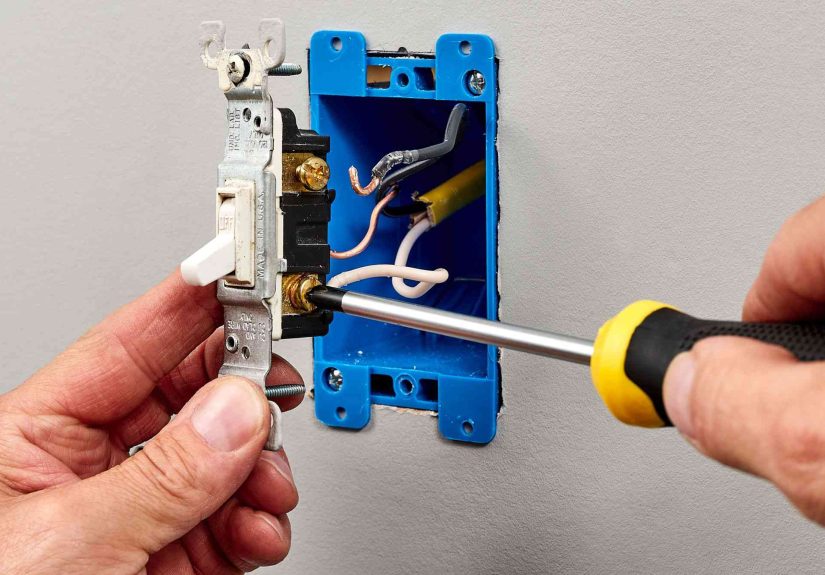
Screw connectors, also called screw terminals, are the traditional side terminals found on switches and outlets. The installer strips the wire, bends the bare copper into a clockwise hook, places it under the screw head, and tightens the screw so the wire is firmly clamped. Brass screws are usually for hot wires, silver screws for neutrals, and green screws for grounding conductors.
Many devices also include a “back-wire” clamp style that should not be confused with ordinary push-in backstab holes. With a clamp-style back-wire terminal, the wire is inserted straight into the back of the device, but a screw tightens a pressure plate onto the conductor. This is common on better-grade receptacles and GFCI outlets. It combines some of the convenience of back wiring with the stronger mechanical grip of a screw clamp.
Traditional screw terminals take longer than push-in connectors, but they offer several advantages: they accept more common wire sizes on many devices, they create a visible mechanical connection, and they are easier to evaluate before the outlet goes back into the box. A properly wrapped wire under a properly tightened screw is not glamorous, but neither is a seat belt. Both are popular for a reason.
Push-in Wire vs. Screw Connectors: The Main Differences
1. Installation Speed
Push-in connectors win the speed contest. Strip the wire, insert it, tug gently to confirm it is seated, and move on. That is why they are sometimes used in production housing or quick replacements on compatible 15-amp circuits.
Screw terminals require more effort. You need to strip the conductor cleanly, shape a hook, place it clockwise around the screw, and tighten it without leaving copper exposed beyond the device body. The extra minute is not exciting, but it can produce a more robust connection.
2. Wire Compatibility
Push-in terminals are often limited to 14-gauge solid copper wire. That makes them unsuitable for many 20-amp circuits using 12-gauge copper. Screw terminals, depending on the device, commonly accept both 14-gauge and 12-gauge copper conductors. Some heavy-duty and commercial-grade devices handle an even broader range, but the rule is always the same: read the labeling and instructions.
Never assume an outlet can accept a wire just because the wire physically fits. Electrical work is not a “close enough” hobby. If the manufacturer says the terminal is for solid copper only, stranded wire does not get invited to the party.
3. Contact Strength
Push-in connectors rely on spring tension. When new and used correctly, that spring clip can hold the wire securely. The concern is that the contact area is smaller and the grip can be affected by movement, repeated removal, or poor insertion.
Screw terminals use mechanical compression. When tightened correctly, the screw clamps the conductor firmly against the terminal. This creates a larger and more inspectable contact area. A tight connection reduces resistance; a loose connection increases resistance, and resistance creates heat. Heat behind a wall is not a feature anyone ordered.
4. Long-Term Reliability
Many electricians prefer screw terminals because they tend to remain secure through years of plug use, device movement, and thermal cycling. Outlets are tugged, bumped, pushed back into boxes, and sometimes asked to support plugs the size of a small sandwich. A stronger mechanical connection gives the device a better chance of staying reliable.
Push-in connections can work, but they are less forgiving. If the wire is not stripped to the correct length, not fully inserted, nicked during stripping, or disturbed while folding the device back into the box, the connection may be weaker. That weakness may show up later as flickering lights, intermittent power, heat, buzzing, or a dead outlet that ruins your plans to charge your phone at 3%.
Are Push-in Wire Connectors Safe?
Push-in wire connectors can be safe when used on listed devices, with the correct wire type and size, and according to the manufacturer’s instructions. That is the technical answer.
The practical answer is more cautious: many professionals avoid basic push-in backstab terminals because they prefer the stronger, more visible connection of screw terminals or screw-clamp back-wire terminals. A push-in connection is not automatically dangerous, but it gives less room for error. And in electrical work, room for error is exactly what you want more of, not less.
Safety agencies consistently warn homeowners to pay attention to symptoms of wiring trouble: warm outlets, discolored wall plates, flickering lights, buzzing sounds, burning smells, loose-fitting plugs, and repeated breaker trips. These signs do not prove a push-in terminal is the culprit, but they do point to a connection or load issue that deserves immediate attention.
Why Loose Connections Are a Big Deal
Electricity needs a clean, tight path. When a connection is loose, damaged, or poorly made, the current has to squeeze through a weaker contact point. That increases resistance, which creates heat. Over time, heat can damage the receptacle, weaken the connection further, melt insulation, or contribute to arcing.
Arcing is especially concerning because it can generate intense heat. Electrical distribution and lighting equipment remain a major source of home fire risk in the United States, and electrical failures or malfunctions are frequently involved in those incidents. That does not mean every bad outlet becomes a disaster, but it does mean the small metal contact inside a receptacle deserves more respect than it usually gets.
A safe outlet should not feel hot during ordinary use. A switch should not buzz like it is trying to join a beehive. A plug should fit snugly, not droop out of the receptacle like it has given up on life. These signs are not personality quirks; they are warnings.
When Screw Terminals Are the Better Choice
For most residential outlet and switch replacements, screw terminals are the better default choice. They are especially recommended when:
- The circuit uses 12-gauge wire.
- The outlet is on a 20-amp circuit.
- The device serves higher everyday loads, such as kitchen, laundry, garage, or workshop equipment.
- The electrical box is crowded and wires may shift as the device is pushed back.
- You want a connection that is easier to inspect visually.
- The old device already shows heat damage, discoloration, or loose contacts.
Screw terminals are not magic; they still must be installed correctly. The wire should wrap clockwise around the screw so tightening the screw pulls the hook inward rather than pushing it out. The conductor should be under the screw head, not half under it and half waving goodbye. The screw should be tight enough to meet the manufacturer’s requirement, but not abused with gorilla-level force.
When Push-in Connectors May Be Acceptable
Push-in connectors may be acceptable for compatible 15-amp lighting or receptacle circuits using 14-gauge solid copper wire, assuming the device is listed for that use and the wire is stripped and inserted exactly as instructed. They can also be useful when speed matters and the installation is performed by someone who understands their limitations.
However, “acceptable” is not the same as “best.” If you are replacing outlets in your own home and have the time, screw terminals or screw-clamp back-wire terminals are usually worth the extra effort. The outlet will spend years behind the wall. Giving it an extra sixty seconds of attention is not overkill; it is the electrical equivalent of chewing your food.
Backstab vs. Back-Wire Clamp: Do Not Mix Them Up
One common source of confusion is the difference between backstab push-in terminals and back-wire clamp terminals. They both involve inserting the wire into the back of the device, but the holding method is different.
A basic backstab connection uses an internal spring clip. A back-wire clamp uses a screw-driven pressure plate. Many electricians are far more comfortable with screw-clamp back wiring because the wire is mechanically clamped when the screw is tightened. This style is common on better receptacles, GFCI outlets, and commercial-grade devices.
If you are shopping for new outlets, look for terms such as “side wire,” “back wire,” “clamp-type back wire,” or “pressure plate.” Avoid assuming that every rear hole is the same. The back of an outlet can be surprisingly full of tiny plot twists.
Signs Your Outlet or Switch Connection May Be Failing
Whether the device uses push-in connectors or screw terminals, a failing connection can reveal itself in several ways:
- Lights flicker when a switch is touched or when a plug is moved.
- The outlet face or cover plate feels warm.
- You smell burning plastic, rubber, or an electrical odor.
- The outlet or switch makes buzzing, sizzling, or crackling sounds.
- Plugs fit loosely or fall out.
- The receptacle is discolored, scorched, cracked, or melted.
- A breaker trips repeatedly after normal use.
If you notice any of these symptoms, stop using the device and have it inspected. Turning the breaker off is wise if there is heat, smoke, odor, or visible damage. This is not the moment to “see what happens.” What happens is usually expensive and occasionally dramatic.
Best Practices for Replacing Switches and Outlets
Turn Off Power and Verify
Always turn off the breaker before working on a switch or outlet. Then test the device with a reliable voltage tester. Do not trust the label on the panel unless you personally verified it. Panel labels are often written by someone who believed “bedroom maybe?” was a complete electrical map.
Match the Device to the Circuit
Use a device rated for the circuit and application. A 15-amp receptacle can appear on many 20-amp branch circuits under certain code rules, but the wiring method and device rating still matter. Kitchens, bathrooms, garages, basements, laundry areas, and outdoor locations may require GFCI, AFCI, weather-resistant, tamper-resistant, or other specific devices under current local code.
Use Pigtails When Appropriate
Where multiple cables enter a box, many electricians prefer using pigtails: short wire leads connected to the circuit conductors with an approved wire connector, then attached to the device. This prevents the device itself from becoming the pass-through point for downstream power. If the receptacle fails or is removed, the rest of the circuit is less likely to be interrupted.
Do Not Overcrowd the Box
Electrical boxes have fill limits. Too many conductors, clamps, devices, and wire connectors crammed into a small box can strain connections when the device is pushed back. A perfect screw terminal connection can become imperfect if the wires are folded in like someone packing a suitcase five minutes before the airport ride arrives.
Replace Cheap, Worn, or Damaged Devices
If an outlet is loose, cracked, painted shut, discolored, or unable to hold plugs snugly, replace it. Upgrading from a bargain residential-grade receptacle to a better-grade device is often inexpensive and worthwhile, especially in high-use areas.
Which Connection Should You Choose?
For most homeowners and careful DIYers, the best answer is simple: choose screw terminals or screw-clamp back-wire terminals whenever possible. Push-in terminals may be allowed on compatible devices, but screw connections usually provide a stronger, more durable, and more inspectable connection.
That does not make every push-in wired outlet a five-alarm emergency. Many homes have them and function normally. But if you are replacing a device today, why choose the method many pros avoid when the sturdier option is sitting right there on the side of the outlet?
Think of push-in connectors as the fast-food drive-thru of wiring: quick, convenient, and sometimes fine. Screw terminals are the home-cooked meal: slower, more deliberate, and usually what you want when the result has to keep everyone happy for years.
Real-World Experiences: What Homeowners Often Notice
In real homes, the push-in wire vs. screw connector debate usually starts with a mystery. One outlet in a bedroom stops working, but the breaker is not tripped. A lamp flickers when someone plugs in a vacuum. A switch works only when pressed at a suspiciously specific angle, as if it is asking for a password. When the device is removed, the issue is often not the plastic face of the outlet but the connection behind it.
One common experience is finding push-in connections on older, inexpensive receptacles where the wires release with very little effort. The outlet may have worked for years, but repeated plug movement, heat cycles, and the device being pushed back into the box can weaken the contact. The homeowner sees no problem from the outside until the outlet becomes intermittent. That is what makes connection quality so important: the failure can hide politely until it becomes inconvenient or unsafe.
Another familiar scenario appears during renovations. Someone replaces old beige outlets with new white ones to freshen up a room. The first outlet comes out easily, and the wires are backstabbed. The installer copies the same method on the new device because it seems faster. By the third outlet, the job feels like a race. Unfortunately, speed can lead to wires stripped too short, not seated fully, or bent sharply as the device is pushed into the box. The final result may look beautiful from the room side, but the box side is where the truth lives.
Electricians often describe screw terminals as more satisfying because the connection can be seen and felt. You can confirm the hook is facing the right direction, check that insulation is not trapped under the screw, and gently tug the wire before folding it back. With push-in terminals, the connection is hidden inside the device. You can tug-test it, but you cannot visually confirm the same amount of metal contact.
Homeowners also notice that better-grade receptacles feel different. The screws are sturdier, the body is more rigid, and clamp-style back wiring feels more secure than basic spring push-in holes. In busy locations such as kitchens, offices, workshops, and living rooms where chargers and appliances are constantly plugged and unplugged, upgrading the device can be a small improvement that prevents future annoyance.
A practical lesson from many outlet replacements is this: the best wiring method is the one that remains tight after the device is carefully folded back into the box. Make the connection, tug gently, fold the conductors neatly, mount the device without forcing it, and test everything after power is restored. If the box is too crowded, the wires are brittle, the insulation is damaged, or anything looks scor, the insulation is damaged, or anything looksched, stop and call a professional. Bravery is admirable; guessing with electricity is not.
For DIYers, the most valuable habit is slowing down. Take a photo before disconnecting anything. Label wires if needed. Replace one device at a time. Use the strip gauge on the device. Avoid reusing tired wire ends when you can trim and restrip safely. Never mix up line and load terminals on GFCI outlets. And if the wiring does not match what you expected, do not invent a new theory of electricity in the hallway. Get help.
The experience-based takeaway is clear: push-in terminals are convenient, but screw terminals and screw-clamp back wiring give you more confidence. When the connection will be hidden behind drywall and trusted for years, confidence is worth more than saving a minute.
Conclusion
Push-in wire connectors and screw terminals can both appear on listed switches and outlets, but they serve different levels of convenience, strength, and long-term confidence. Push-in terminals are fast and may be acceptable with 14-gauge solid copper wire on compatible devices. Screw terminals take more care, but they usually provide a stronger mechanical connection, broader wire compatibility, and easier inspection.
If you are replacing switches or outlets in your home, the safer default is to use screw terminals or screw-clamp back-wire terminals, follow the manufacturer’s instructions, and respect local electrical code. Watch for warning signs such as warmth, discoloration, buzzing, flickering, burning smells, or loose plugs. When in doubt, bring in a licensed electrician. Your home’s wiring should be boring, quiet, and dependable. In electrical work, boring is beautiful.