Table of Contents >> Show >> Hide
- What “Non-Serviceable” Really Means
- Safety Comes First, Even Before the Screwdriver
- How to Diagnose a “Dead” Welding Hood
- Repairs That Are Usually Safe and Worth Doing
- When “Repair” Should Become “Replace”
- Can You Open a Non-Serviceable Auto-Darkening Cartridge?
- How to Make a Non-Serviceable Welding Hood Last Longer
- Experience Section: What Repairing a Non-Serviceable Welding Hood Usually Feels Like in Real Life
- Conclusion
A non-serviceable welding hood is one of those shop items that can ruin your mood faster than a grinder throwing sparks into your sleeve. One minute it is faithfully darkening like a loyal sidekick. The next minute it acts like it has never met electricity, welding, or you. If that sounds familiar, here is the good news: many “dead” hoods are not truly dead. They are dirty, worn, misadjusted, or suffering from a failed part that sits around the hood rather than inside the sealed heart of it.
The bad news is equally important. When a welding hood or auto-darkening filter is labeled non-serviceable, that usually means the internal cartridge is not meant to be opened, modified, or home-brew repaired. In plain English, this is not the place for a butter knife, a heat gun, and the confidence of a person who once fixed a toaster. Repairing a non-serviceable welding hood safely is less about “cracking it open” and more about knowing what can be maintained, what can be replaced, and when the smartest repair is simply retirement.
This guide walks through that line carefully. You will learn what “non-serviceable” actually means, which problems are commonly fixable, which parts are usually replaceable, and when it is time to stop negotiating with your hood and buy a new one. Your eyes, face, and eyebrows will appreciate the professionalism.
What “Non-Serviceable” Really Means
The phrase sounds dramatic, but it is usually pretty specific. A welding hood may still have serviceable external parts even when the auto-darkening filter, electronics, or sealed lens assembly are considered non-serviceable. That distinction matters.
What you can often service or replace
- Outside cover lens or front clear cover plate
- Inside cover lens
- Headgear and ratchet assembly
- Sweatband
- Pivot knobs, tension knobs, and some retainers
- User-replaceable batteries, if your model is designed for them
- Shell, lens holder, or ADF retainer on some higher-end models
What you usually should not service
- Sealed auto-darkening filter electronics
- Internal circuit boards or sensor assemblies not listed as replacement parts
- Damaged optics inside a bonded or sealed cartridge
- Anything the manual specifically says not to open, modify, or tamper with
That is why the smartest approach to welding hood repair starts with the manual and the replacement-parts list. If the manufacturer sells the part, the repair is probably legitimate. If the part requires cutting into a sealed cartridge like you are opening a mystery coconut, the answer is probably no.
Safety Comes First, Even Before the Screwdriver
Before touching anything, remember what the hood is actually for: shielding your eyes and face from arc radiation, heat, sparks, and impact. This is not a desk lamp. If the hood is acting strangely, do not “just try one quick tack” to see whether it behaves. That is a bad test method and a great way to collect regret.
Always start with four basic rules. First, inspect the hood in bright light before welding. Second, wear safety glasses under the hood because the helmet is not meant to replace primary eye protection. Third, never use the hood if the cover lenses are missing, cracked, or installed incorrectly. Fourth, if the auto-darkening filter flickers, fails to darken consistently, or shows visible damage, stop using it until the problem is resolved.
Also, use only compatible replacement parts. Welding hoods are not a universal puzzle where every random lens, knob, or gasket gets along with every shell. A “close enough” part can interfere with fit, visibility, protection, or compliance. In welding, close enough is sometimes another way to say “expensive lesson.”
How to Diagnose a “Dead” Welding Hood
Many failed hoods are really suffering from one of a few common issues. Work through them in order before declaring the hood beyond repair.
1. The cover lens is filthy, spattered, or scratched
This is the most common fake-out. A badly pitted outside cover lens can make a perfectly good hood seem dim, hazy, or unreliable. If the front cover is covered in spatter, smoke film, or fine scratches, replace it. Do not keep polishing it like an old car headlight. Cover lenses are consumables, not heirlooms.
2. The sensors are blocked or dirty
Auto-darkening filters rely on sensors to detect the arc. If those sensors are coated with dirt, covered by a gloved hand, hidden by a fixture, or partially blocked by spatter, the filter may delay or fail to darken properly. Clean them gently and make sure your welding position is not accidentally shadowing them.
3. The battery is weak or dead
Some helmets use solar assist plus replaceable batteries. Others are fully battery-powered. Some sealed cartridges are not designed for battery replacement at all. If your model has user-replaceable batteries, swap them with the exact recommended type before assuming the hood is finished. A suspiciously lazy lens often perks right up after fresh batteries.
4. The hood is stuck in grind mode or the shade is set wrong
This one is humbling because it feels mechanical and mysterious, but sometimes the problem is simply settings. Check shade, sensitivity, and delay controls. Make sure grind mode is off. A hood set incorrectly can behave like it is broken when it is really just taking orders too literally.
5. The inside cover lens is fogged, cracked, or contaminated
People often baby the front cover lens and forget the one inside. A damaged inside lens can distort your view, reduce clarity, and make the whole hood feel unsafe or ineffective. Replace it if it is cloudy, pitted, or loose.
6. The headgear is the real problem
If the hood will not stay down, sits crooked, slips forward, or forces your face too close to the lens, you may not have an optical problem at all. You may just have tired headgear. Replacing the suspension, ratchet, or pivot hardware can make an old shell feel new again.
Repairs That Are Usually Safe and Worth Doing
Now for the practical part. If your hood is non-serviceable internally, here are the repairs that still usually make sense.
Replace the cover lenses
This is the first and best repair for many helmets. Front and inside cover lenses take abuse so the expensive lens assembly does not have to. Replace them whenever visibility drops or damage appears. It is cheap, fast, and dramatically improves performance.
Replace the headgear
Headgear wears out quietly. Ratchets strip. Sweatbands turn into archaeological samples. Pivot points loosen. The shell itself may still be perfectly good. A new headgear kit can restore comfort, fit, and stability better than any amount of muttering.
Replace accessible batteries
If the manual shows battery replacement, do it exactly as directed. Use the correct battery type, mind polarity, and re-test the hood before welding. Do not improvise battery hacks on a sealed cartridge. Your hood is PPE, not a science fair project.
Replace listed retainers, knobs, or lens holders
Many manufacturers sell small parts for exactly this reason. If the shell is sound and the ADF works properly, a missing retainer or broken knob does not always mean the entire hood is scrap.
Clean the hood the right way
Use a soft cloth and mild soapy water where the manual allows. Avoid solvents and abrasive cleaners unless the manufacturer explicitly approves them. Strong chemicals can damage plastics, coatings, and seals. A hood should come back from cleaning ready to weld, not smelling like it lost a fight with a paint thinner can.
When “Repair” Should Become “Replace”
This is where people get stubborn, and stubborn is not always a useful welding accessory. Replace the hood, cartridge, or major assembly when any of the following is true:
- The shell is cracked, heat-damaged, or structurally compromised
- The auto-darkening filter flickers or fails after normal maintenance
- The lens stays light, stays dark, or reacts inconsistently
- The sensors are damaged
- The manufacturer does not list the failed component as replaceable
- The cost of parts gets too close to the cost of a safer new helmet
- The hood has been modified, glued, drilled, or otherwise “improved” into unreliability
If you are staring at a sealed filter assembly that has failed internally, that is the line. Not every object wants a heroic repair arc. Some want a respectful exit.
Can You Open a Non-Serviceable Auto-Darkening Cartridge?
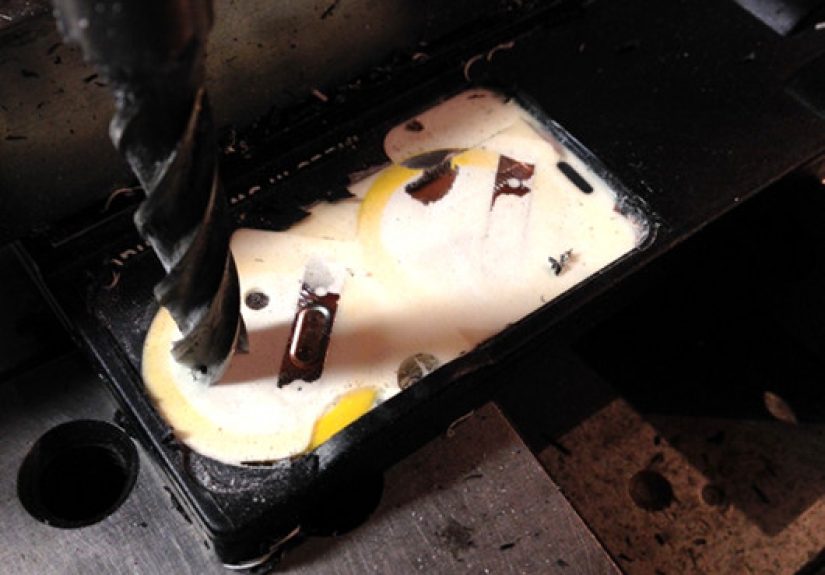
Technically, a determined person can open almost anything. That does not mean they should. The internet loves stories of people cutting open sealed gear, digging out batteries, and reviving electronics that manufacturers intended to replace as a unit. Those stories are fascinating. They are also the kind of thing that belongs in the category of “interesting bench experiment,” not “recommended PPE practice.”
If your welding hood protects your eyesight, the standard should be higher than “well, it sort of works now.” Once you pry open a sealed auto-darkening cartridge, you may compromise its optics, seals, sensor alignment, switch reliability, impact performance, or warranty. Even if you succeed electrically, you may still lose confidence in the one thing that matters most: whether it will protect you at the exact moment you need it to.
So yes, someone, somewhere, can probably resurrect a sealed hood with patience, tools, and a dramatic amount of optimism. But for real-world use, especially on the job, replacing the cartridge or the entire hood is almost always the smarter move.
How to Make a Non-Serviceable Welding Hood Last Longer
The cheapest repair is the one you never need. If you want longer life from your hood, treat the consumables like consumables and the electronics like delicate equipment.
- Change front cover lenses early instead of running them until they look frosted
- Keep spare inner and outer lenses in the shop
- Store the hood in a clean, dry place away from excessive heat
- Do not toss it onto a welding cart like a horseshoe at a county fair
- Clean sensors regularly
- Check settings before each session
- Replace worn headgear before it starts affecting your welding position
- Test the ADF before striking an arc if your model includes a test feature
A hood that is cared for tends to fail more honestly. A neglected one fails in weird, annoying, confidence-destroying ways. There is a difference.
Experience Section: What Repairing a Non-Serviceable Welding Hood Usually Feels Like in Real Life
The first real-world lesson most welders learn is that a “broken” hood is often just a neglected hood. Someone pulls it off the shelf, flips it down, and everything looks cloudy. The natural reaction is to suspect the auto-darkening lens has died. Then they swap the front cover plate and suddenly the view gets dramatically better. It feels almost unfair. After all the worrying, the fix was a thin piece of plastic that cost less than lunch. That experience teaches a valuable habit: start with the cheap, obvious, sacrificial parts before declaring an expensive failure.
Another common experience is chasing what seems like an electronic problem when the real issue is fit. A hood that slips, flops, or rides too close to the face can make the user feel unsafe even if the lens is functioning perfectly. A welder may complain that the hood is “junk” because it never sits right, only to discover the headgear is worn out and the pivot tension is gone. Replace the suspension, adjust the fore-and-aft position, and the same helmet suddenly feels balanced and usable again. It is not a glamorous repair, but it is one of the most satisfying because comfort and visibility improve at the same time.
There is also the frustrating middle ground where the hood works sometimes. Those are the cases that make people suspicious of everything. The lens darkens during one weld, hesitates on the next, then behaves normally again just long enough to make troubleshooting annoying. In practice, this often points to dirty sensors, weak batteries on models that use them, or a lens cover so pitted that visibility and sensor performance both suffer. People tend to remember these experiences because they feel unpredictable. And unpredictability is exactly what you do not want from protective gear sitting inches from your eyes.
Then there is the moment when someone considers opening a sealed cartridge because replacing the hood feels wasteful. That instinct is understandable. Welding gear is not free, and many welders hate throwing away something that looks mostly intact. But the emotional turning point usually comes when they ask a simple question: “If I patch this together, will I trust it when I strike the next arc?” If the answer is no, the repair is already over. A welding hood is not like fixing a shop radio where the worst outcome is silence. The worst outcome here is exposure, hesitation, or injury.
The most experienced users usually end up with the same conclusion. Repair what the manufacturer clearly intended to be replaced: cover lenses, headgear, knobs, sweatbands, accessible batteries, and listed accessories. Clean it properly. Test it honestly. But when the sealed optical core fails, do not turn a piece of protective equipment into a philosophy project. Confidence matters. In the shop, a hood that works every time is worth more than a clever repair that works for now.
Conclusion
Repairing a non-serviceable welding hood is really about drawing a smart boundary. You can absolutely restore many helmets by replacing cover lenses, freshening the headgear, cleaning sensors, correcting settings, and installing user-approved parts. In many cases, those steps bring a tired hood back to life and save real money.
But once the sealed auto-darkening cartridge itself becomes the problem, the game changes. That is where safe maintenance ends and risky improvisation begins. If the internal lens assembly is non-serviceable, cracked, inconsistent, or clearly failing, replacement is not defeat. It is the correct repair decision for a piece of safety equipment that protects the one face you have.
So yes, be practical. Be thrifty. Be the kind of welder who keeps spare cover plates in the drawer and actually uses them. Just do not be so determined to save a hood that you gamble with your vision. A new helmet is expensive. New eyeballs remain frustratingly unavailable.