Table of Contents >> Show >> Hide
- What Makes The Book of Lofts So Important?
- Why Lofts Captured the American Imagination
- What the Book Teaches About Great Interior Design
- Why the Book Still Feels Fresh Today
- Who Should Read The Book of Lofts?
- The Book as an Object: Why It Belongs on a Shelf, Not Just a Screen
- Required Reading, Truly
- Reading The Book of Lofts Today: The Experience Still Hits Different
- SEO Tags
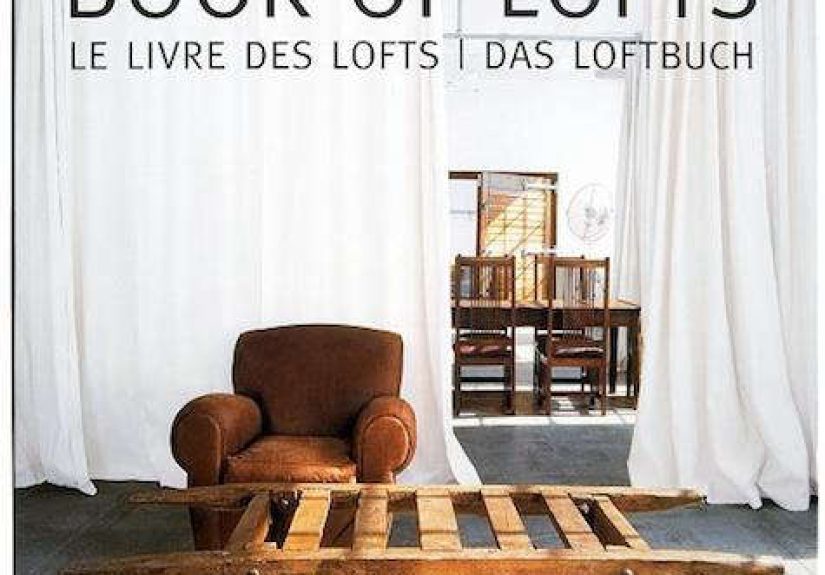
If design books had personalities, The Book of Lofts would be that impossibly stylish friend who shows up wearing old denim, says almost nothing, and still steals the room. It is not loud. It is not gimmicky. It does not beg for attention with trend-of-the-week nonsense. Instead, it does something much harder: it makes space itself look intelligent.
That is why this book still deserves required-reading status. Part visual archive, part design lesson, and part urban daydream, The Book of Lofts captures the drama of wide-open interiors before every apartment developer on earth started throwing the word “loft” around like confetti. This is the real thing: raw volume, industrial bones, live-work practicality, and the kind of spatial freedom that makes most modern floor plans look like they were assembled by a nervous committee.
For readers interested in architecture, interiors, city living, adaptive reuse, or the strange magic of turning former workspaces into deeply personal homes, this book is still a feast. It is also a reminder that great design is not about stuffing a room with more objects. It is about knowing when to step back and let the room breathe. Revolutionary, I know.
What Makes The Book of Lofts So Important?
The Book of Lofts stands out because it documents loft living at the point where it still felt inventive rather than mass-marketed. The book surveys residential lofts across major cities, showing how different people handled the same thrilling problem: what do you do with a huge, flexible, slightly unruly space that was never originally meant to be a cozy home?
The answers are wonderfully varied. Some lofts embrace open, free-flowing layouts that let furniture act like architecture. Others carve out rooms, levels, studios, or work zones without killing the sense of air and possibility. Some feel polished and urbane. Others look like they might still smell faintly of sawdust, oil paint, espresso, and ambition. In every case, the book treats lofts as living experiments instead of frozen showroom sets.
That is the first reason it matters. The second is that it helps readers understand lofts not just as a style, but as a design philosophy. Loft living is about openness, adaptation, and material honesty. It celebrates high ceilings, exposed beams, brick walls, giant windows, concrete, wood, steel, and all the surfaces that polite suburban drywall once tried to hide. In the best lofts, the building’s history is not erased. It is edited, highlighted, and made useful.
Why Lofts Captured the American Imagination
To understand why this book feels so alive, you have to understand why lofts became cultural catnip in the first place. Lofts were not born as luxury trophies. They emerged from industrial and commercial buildings, especially in cities like New York, where artists and other creative tenants began occupying large, affordable spaces that had room for both living and working. These were often imperfect environments, but they offered something ordinary housing could not: freedom.
Freedom is a very attractive design feature. It also ages well.
As loft living evolved, it became tied to larger stories about cities, art, preservation, and reinvention. Former warehouses, manufacturing floors, and workspaces became homes. Neighborhoods once seen as rough or neglected became culturally electric. Eventually, law and policy caught up with reality, and lofts moved from improvised urban solution to recognized housing type. Somewhere along the way, the loft also became a fantasy object: the ideal backdrop for art, ideas, entertaining, and dramatic lighting that makes everyone look more interesting than they really are.
From Artist Survival to Design Myth
One of the quiet achievements of The Book of Lofts is that it preserves the loft before it became pure marketing language. Today, developers label almost anything with an exposed pipe as “loft-inspired,” which is a little like calling a microwave “wood-fired.” The original loft spirit was not about imitation. It was about necessity, ingenuity, and the imaginative reuse of existing structures.
The book captures that spirit beautifully. It reminds readers that these spaces were not designed top-down by branding teams. They were shaped from the inside out by people figuring out how to live, work, gather, create, and rest inside buildings with unusual scale and inherited character.
Adaptive Reuse Before It Became a Buzzword
Another reason the book still feels relevant is that it documents adaptive reuse in a deeply human way. Long before sustainability became a talking point in every real estate brochure, loft conversions were already proving that old buildings could have meaningful second lives. Instead of demolition and blank-slate replacement, lofts showed the value of keeping structure, memory, texture, and craft in play.
That matters now more than ever. Contemporary conversations about preservation, sustainability, housing, and embodied carbon all make the loft seem less like a design fad and more like an early lesson in intelligent urban recycling. The loft is not just cool because it looks cool. It is cool because it represents a creative compromise between history and modern life.
What the Book Teaches About Great Interior Design
At first glance, The Book of Lofts may look like a gorgeous coffee-table object. It absolutely is. No shame there. But it also teaches some surprisingly durable design lessons.
1. Space Is a Material
Many homes are designed as if every square foot must be filled, styled, explained, and emotionally supported. Loft design rejects that panic. In the loft, emptiness is not failure. It is composition. A run of open floor, a quiet wall, a high window, or a long sightline can do as much work as furniture or decoration. The book repeatedly shows that generous space is not wasted space when it creates clarity, drama, and calm.
2. Furniture Can Organize Without Overbuilding
Lofts often rely on arrangement rather than enclosure. A dining table can establish one zone, a shelving unit can imply another, and a raised platform or mezzanine can create function without choking the plan. This is one of the book’s most practical gifts: it encourages readers to think of furniture as a spatial tool, not just a shopping problem.
3. Material Honesty Beats Decorative Overkill
Exposed brick, natural wood, concrete floors, iron-framed windows, ductwork, and steel supports all appear throughout loft design because they belong there. The best lofts do not apologize for their structure. They work with it. The Book of Lofts celebrates this honesty, and in doing so it offers a refreshing antidote to interiors that look as though they were assembled from fear of blank surfaces.
4. Flexibility Is the Real Luxury
Yes, volume is glamorous. Yes, towering windows are fabulous. But the loft’s true luxury is flexibility. A space that can become a studio, office, entertaining zone, gallery wall, workshop, dining area, or bedroom extension has a usefulness that many traditional layouts simply do not. The book shows that loft living works best when design supports changing life instead of forcing life into rigid boxes.
Why the Book Still Feels Fresh Today
Here is the surprising part: despite its age, The Book of Lofts does not feel stale. In fact, it often feels ahead of current conversations. Modern readers are once again obsessed with multifunctional homes, live-work setups, adaptive reuse, and making interiors feel more personal and less scripted. Sound familiar? The loft was doing that before social media learned how to angle a mirror next to a fiddle-leaf fig.
The book also feels current because it refuses a one-size-fits-all formula. Today’s best interior content often celebrates individuality, and this book was already there. The featured lofts are not clones. They differ in mood, layout, and use. Some are spare and gallery-like. Some are layered and domestic. Some lean artistic; others feel architectural or practical. That diversity is what keeps the book from becoming a period piece. It is not a style manual trapped in one decade. It is a study of possibilities.
Even readers who will never live in a converted warehouse can learn from it. The principles translate: preserve what is interesting, simplify what is cluttered, create flexible zones, respect natural light, and let a room’s structure speak for itself.
Who Should Read The Book of Lofts?
This book is ideal for more than just loft owners or architecture obsessives with suspiciously strong opinions about cast iron. It is essential for:
- Interior designers who want a reminder that atmosphere matters as much as decoration.
- Architects interested in adaptive reuse, spatial planning, and urban living.
- Artists and creatives drawn to live-work environments and flexible interiors.
- Homeowners and renters trying to make open-plan spaces feel functional without killing their character.
- Design readers who appreciate books that inspire rather than merely instruct.
It is also great for anyone who suspects that modern interiors sometimes try too hard. The Book of Lofts understands that when architecture has presence, decor can relax a little.
The Book as an Object: Why It Belongs on a Shelf, Not Just a Screen
Some design books survive digitization just fine. You scroll, you save a few pictures, you move on with your life. The Book of Lofts is not really that kind of book. It benefits from being handled, revisited, and left lying around where it can tempt you into one more look. Its visual rhythm matters. The scale matters. The pacing matters. This is a book you browse, then study, then browse again six months later when your living room annoys you for reasons you cannot quite name.
And that is the mark of a useful design book: it does not simply tell you what looked good once. It sharpens your eye. After spending time with The Book of Lofts, you notice proportion differently. You think harder about circulation. You become more alert to light, volume, and the emotional effect of restraint. Suddenly, your impulse to buy another decorative basket may be replaced by the radical idea of removing three unnecessary things. Growth.
Required Reading, Truly
Calling a book “required reading” can sound dramatic, but here it feels earned. The Book of Lofts is not required because it is famous. It is required because it helps explain how a major design language developed, why it still matters, and how powerful interiors can emerge from openness, reuse, and intelligent editing.
It captures a moment when lofts were still experimental, but it also reaches beyond that moment. It shows how people negotiate scale, light, structure, and freedom. It celebrates buildings with past lives and proves that great homes do not need to hide where they came from. Most importantly, it reminds readers that style is not something you paste onto a room after the fact. Style grows out of how space is understood and used.
In other words, The Book of Lofts is not just a book about lofts. It is a book about how to think. And that is exactly why it remains worth reading.
Reading The Book of Lofts Today: The Experience Still Hits Different
There is a special pleasure in opening a design book that does not immediately try to sell you a lifestyle package, an affiliate link, or a suspiciously expensive candle that allegedly smells like “urban stillness.” The Book of Lofts feels refreshing because it comes from a moment when the fascination with space itself was enough. You open it and almost instantly feel your shoulders drop. The rooms are large, the ideas are clear, and the photographs give you the rare sensation that a home can be ambitious without being needy.
Reading it today is a little like walking into a former warehouse on a quiet afternoon when the sun is cutting across old floors and every surface seems to have a memory. You do not just look at the rooms. You imagine how they sound, how they change at night, how a desk might sit near a window, how a dinner party might unfold in one corner while work waits in another. The book invites that kind of projection. It does not lock the reader out with perfection. It leaves enough air for you to enter.
That is part of the experience people often overlook. A great interiors book is not only inspirational; it is participatory. As you move through The Book of Lofts, you start rearranging your own space in your head. Maybe you do not have 14-foot ceilings or a cast-iron column in your kitchen, which is honestly rude of real estate. Still, the book makes you ask better questions. Could one room serve two purposes more gracefully? Could furniture define zones instead of walls? Could less stuff make a home feel richer instead of emptier?
The emotional effect is just as strong as the visual one. The featured spaces have confidence. They are not anxious about being finished. They do not perform coziness with excessive accessories. They trust proportion, light, and texture. For modern readers who are bombarded by algorithm-approved interiors, that confidence feels almost rebellious. The book gives you permission to stop decorating defensively.
It also creates a strange but wonderful sense of continuity. Even if the book belongs to an earlier design era, many of its concerns feel incredibly current: flexible living, work-from-home practicality, sustainability through reuse, and a desire for homes that feel personal rather than generic. That is why spending time with it feels less like nostalgia and more like recognition. The best lofts in the book do not belong to one decade. They belong to an ongoing idea of urban life that values adaptability, character, and creative independence.
By the end, the experience is not just “I want a loft now,” though that thought may absolutely stomp through your brain wearing boots. It is more thoughtful than that. You start to understand why lofts became iconic, why so many people still chase the look, and why most imitations miss the point. The real lesson is not exposed brick or giant windows. It is courage: the courage to let a space stay open, to preserve history instead of sanding it into blandness, and to trust that good design often comes from restraint rather than accumulation. That is a reading experience worth repeating.