Table of Contents >> Show >> Hide
- Why Sci-Fi Keeps Beating the Product Roadmap
- 1) The Machine Stops (1909) E. M. Forster
- 2) Nineteen Eighty-Four (1949) George Orwell
- 3) Fahrenheit 451 (1953) Ray Bradbury
- 4) The Shockwave Rider (1975) John Brunner
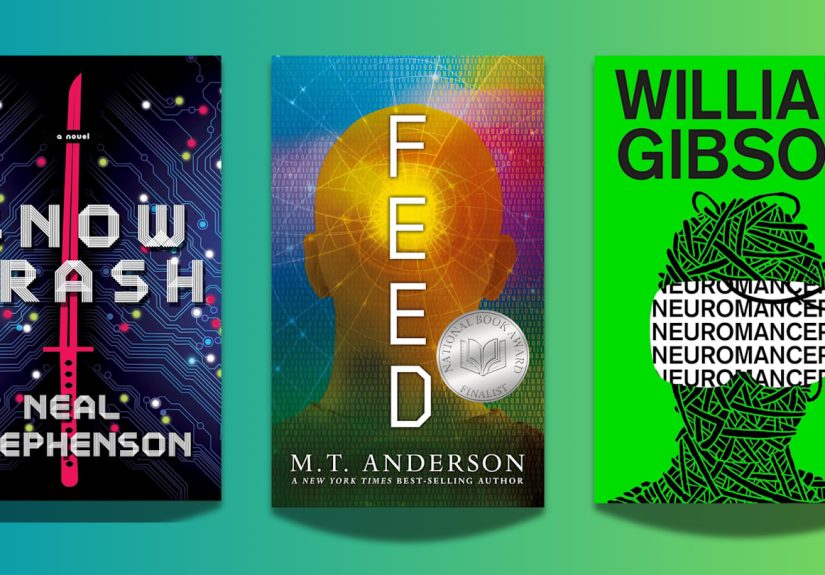
- 5) Neuromancer (1984) William Gibson
- 6) Ender’s Game (1985) Orson Scott Card
- 7) Snow Crash (1992) Neal Stephenson
- What These 7 Books Got Right About Digital Life
- How to Read These Books Like a Futurist (Without Becoming Insufferable at Parties)
- Digital Déjà Vu: of “Wait… Didn’t a Book Warn Us?”
- Conclusion
- SEO Tags
Open your phone for “just a second” andboomit’s 47 minutes later, you’ve joined a group chat you don’t remember consenting to,
and an ad has correctly guessed you’re thinking about buying running shoes (even though you’ve never run anywhere voluntarily).
If this feels less like modern life and more like a plot, congratulations: you’re living in a genre.
Long before push notifications became the soundtrack of humanity, science fiction writers were already sketching the bones of our digital world:
video calls, algorithmic persuasion, online identities, corporate-controlled networks, immersive virtual spaces, and surveillance that doesn’t always need a villain
just a “Sign in with…” button.
Below are seven books that didn’t merely “predict the future” in the cheesy, fortune-cookie sense. They anticipated the shape of it:
how technology rewires attention, power, identity, and community. Think of this list as a time-travel itineraryexcept instead of bringing back a dinosaur,
we accidentally brought back targeted advertising.
Why Sci-Fi Keeps Beating the Product Roadmap
The best tech prophecy doesn’t come from guessing which gadget will win. It comes from asking, “If this gets convenient enough, what will people trade for it?”
Sci-fi writers obsess over incentives: comfort vs. curiosity, connection vs. control, personalization vs. privacy.
They’re not trying to predict apps. They’re predicting habits.
And habits scale. Once a technology makes something effortlesscommunication, entertainment, shopping, social validationit doesn’t just add a feature to life.
It starts quietly renegotiating the terms of being human.
1) The Machine Stops (1909) E. M. Forster
The digital life it predicted
Published when “wireless” sounded like a magic trick, this novella imagines humans living isolated in individual rooms, relying on a global Machine for
food, entertainment, communication, and knowledge. People attend virtual lectures, socialize through screens, and fear direct physical contact.
It’s remote work, streaming culture, video calls, and a hint of “don’t come overI’m introverting.”
Why it still stings
Forster doesn’t frame the Machine as evil. It’s comfortable. Efficient. Beloved.
The real warning is dependency: when a system becomes the default for everything, people forget how to function without itand stop questioning who built it,
who maintains it, and what it quietly demands in return.
2) Nineteen Eighty-Four (1949) George Orwell
The digital life it predicted
Orwell’s telescreens are the poster child for surveillance: always on, always watching, always capable of turning private space into monitored space.
While our world isn’t a perfect match (history refuses to be that tidy), the concept of being observedand shapedthrough omnipresent media feels
uncomfortably familiar in an era of data trails, location tracking, and feeds optimized to influence behavior.
The modern twist Orwell didn’t need to invent
Today, surveillance isn’t only a boot. It’s often a “free” service with a friendly onboarding flow.
We trade data for convenience, then wonder why we’re being nudged, ranked, and profiled. Orwell gave us the metaphor; the internet gave us the user experience.
3) Fahrenheit 451 (1953) Ray Bradbury
The digital life it predicted
Bradbury’s society is drenched in distraction: wall-sized interactive screens (“parlor walls”) that swallow attention and replace genuine relationships with
performative, on-demand entertainment. He also gives characters tiny in-ear devices (“seashells”) that pipe constant audioan eerie cousin of
earbuds, podcasts, and “I’m listening to something” as a lifestyle.
What it nails better than “book burning”
The sharpest part of Fahrenheit 451 isn’t censorship by force. It’s self-censorship by noise:
when everything is instantly entertaining, reflective thought feels like a bug in the system.
Bradbury’s warning sounds less like “they’ll take your books” and more like “you’ll stop caring what’s inside them.”
4) The Shockwave Rider (1975) John Brunner
The digital life it predicted
Brunner drops readers into a near-future of networked information, bureaucratic overreach, identity manipulation, and computer-savvy resistance.
Most famously, the novel is widely credited with introducing the term “worm” for a self-propagating program moving through a networkyears before real-world
worms became headline nightmares.
Why it matters now
Cybersecurity isn’t just a technical issue; it’s a social one. Worms, ransomware, leaks, and deepfakes all exploit the same human vulnerabilities:
trust, haste, and the assumption that “the system” is stable. Brunner understood something modern life keeps proving:
once society runs on networks, networks become society’s soft underbelly.
5) Neuromancer (1984) William Gibson
The digital life it predicted
Gibson didn’t just imagine people using computers; he imagined people living inside networked realitywhat he famously described as “cyberspace.”
His world includes corporate power that feels bigger than governments, hackers as cultural figures, and artificial intelligences operating at a scale
that makes individual humans feel small. That’s not a prediction of a specific platformit’s a prediction of the structure of digital power.
The “how did he know?” factor
What makes Neuromancer feel prophetic is its vibe: technology as an environment.
We don’t “go online” the way we used to. We live in a constant layer of connectivitymessages, maps, payments, algorithmsso ordinary it’s basically weather.
Gibson saw the fog rolling in before most people realized there would be fog.
6) Ender’s Game (1985) Orson Scott Card
The digital life it predicted
While famous for battle school and strategy, the book also contains a remarkably modern subplot: Ender’s siblings publish persuasive political writing under
pseudonyms and gain influence through online forums. It’s a preview of internet-era identity playhandles, personas, anonymous authorityand how public opinion
can be shaped through high-velocity discourse.
Why it feels like a 2020s headline
The idea that “a few compelling posts” can move real-world politics no longer sounds speculative.
Add recommendation algorithms, amplification loops, and coordinated campaigns, and you get a world where influence can be manufactured faster than
institutions can respond. Ender’s Game doesn’t just foresee online speechit anticipates how online speech becomes leverage.
7) Snow Crash (1992) Neal Stephenson
The digital life it predicted
If you’ve ever heard the word “metaverse,” you’ve wandered into Stephenson’s territory.
Snow Crash depicts a vast virtual world where people appear as avatars, socialize, attend events, buy virtual property, and escape messy reality
into an engineered digital alternative. It’s VR culture, online identity, digital economies, and a reminder that the future often comes with
subscription tiers.
The part that hits hardest
Snow Crash is funny, chaotic, and wildly inventivebut it also treats virtual spaces as places where status rules and power concentrates.
The question isn’t “Will we have immersive digital worlds?” We already do, in different forms.
The question is: who owns them, who sets the rules, and what happens when the most meaningful parts of social life migrate into privately controlled spaces?
What These 7 Books Got Right About Digital Life
- Convenience becomes a belief system. Once a tool solves enough problems, it starts feeling “inevitable.”
- Connection doesn’t automatically create community. You can be networked and lonely at the same time.
- Attention is a currency. Whoever captures it can shape culture, politics, and personal identity.
- Systems outgrow their creators. The machine, the network, the platformeventually it develops its own gravity.
- Privacy isn’t just secrecy; it’s breathing room. Without it, people self-edit. With enough self-editing, societies change.
How to Read These Books Like a Futurist (Without Becoming Insufferable at Parties)
Try this: for each book, identify one “technology” and one “trade-off.”
The technology might be video calls, virtual worlds, wearable audio, or networked identity.
The trade-off is the human costreduced curiosity, increased conformity, dependence on systems, or the slow shrinking of unmonitored space.
Then ask a deceptively powerful question: Who benefits?
If the answer is “everyone equally,” you’re reading fantasy. If the answer is “a few people a lot,” congratulationsyou’ve found the nonfiction section.
Digital Déjà Vu: of “Wait… Didn’t a Book Warn Us?”
Imagine you’re having a normal day: you wake up, check your phone, and immediately receive a small emotional weather report from the internet.
Not a literal forecastalthough that’s also therebut the mood of the world. A trending outrage. A viral joke. A crisis. A dance challenge.
Your brain is barely online, and yet you’re already negotiating reality through a feed.
You hop into a video call. Everyone’s in a rectangle, performing “I’m listening” while silently answering messages in another tab.
Someone’s microphone sounds like it’s inside a washing machine. Someone else has a background that places them on a tropical beach,
which is either aspirational or a cry for help. Halfway through, you realize you haven’t stood up in two hoursyour body is in one place,
but your life is routed through the Machine. Forster would not be shocked. He’d probably just ask why your chair is so uncomfortable.
Later, you walk outside with earbuds in. The world is physically present, but you’re sonically elsewherecurated, personalized, optimized.
A podcast host is closer to your ear than your neighbor is to your actual existence. Bradbury’s “seashells” weren’t really about audio technology;
they were about insulation. The little buffer between you and the messy, unpredictable reality where you might have to think a thought
that wasn’t prepackaged.
Then comes the subtle magic trick: you mention wanting new running shoes near your phonemaybe you type it, maybe you don’tand suddenly the internet
becomes an enthusiastic salesperson with the timing of a mind reader. You’re not being forced to buy anything. You’re being guided,
nudged, predicted. Orwell gave us a villain with a mustache; modern life gives us behavioral modeling with a friendly brand voice.
At night, you relax by entering a digital space that isn’t quite the metaverse, but it’s metaverse-shaped: a game, a social app, a virtual hangout,
a place where your avatar (or your profile) speaks before you do. Status appears in small signals: verification badges, follower counts, rare skins,
exclusive invites. Stephenson would recognize the architecture immediately. The future didn’t arrive with trumpets. It arrived with logins.
And somewhere in the background, the invisible war hums: scams, leaks, malware, worms, bots. Brunner understood that once a society becomes a network,
the network becomes a battleground. Even your inbox isn’t neutralit’s contested territory.
The weirdest part is not that sci-fi got so much right. The weirdest part is how normal it feels. We didn’t step into the future.
We updated to itone innocuous “Accept” button at a time.
Conclusion
These seven books didn’t predict our exact devices, interfaces, or app icons. They predicted patterns:
dependence disguised as convenience, influence disguised as entertainment, and surveillance disguised as personalization.
If you want to understand our digital lives, you can read tech newsor you can read the stories that already mapped the human consequences.
The best part? Reading them now isn’t depressingit’s empowering. Once you can name the pattern, you can resist the pattern.
And if you can resist the pattern, you can still use technology without letting it use you. (Or at least you can try, before your phone reminds you
it’s “time to stand.”)