Table of Contents >> Show >> Hide
- Why Black Pepper-Crusted Ahi Tuna Works So Well
- Choosing the Best Ahi Tuna Steaks
- Seared Black Pepper-Crusted Ahi Tuna Steaks Recipe
- Doneness Guide for Ahi Tuna Steaks
- What to Serve With Seared Ahi Tuna
- Nutrition Snapshot (Approximate)
- Frequently Asked Questions
- Real-World Experiences & Pro Tips With Seared Ahi Tuna
If you’ve ever stared at a restaurant plate of perfectly seared ahi tuna and thought,
“There’s no way I can pull that off at home,” good news: you absolutely can. In fact,
once you nail a hot pan, a bold black pepper crust, and a quick sear, you’ll wonder
why you ever paid entrée prices for something that cooks in under five minutes.
This seared black pepper-crusted ahi tuna steaks recipe is all about contrast:
a smoky, peppery crust on the outside, and a buttery, sashimi-style center inside.
It’s naturally high in protein, rich in omega-3s, and feels fancy enough for date night,
but simple enough for a Tuesday when you’re still in your work-from-home sweatpants.
Why Black Pepper-Crusted Ahi Tuna Works So Well
Ahi (also called yellowfin tuna) is a meaty, firm fish that can handle high heat and
a serious crust. Coarsely cracked black pepper gives you:
- Big flavor: pepper brings floral, citrusy, and spicy notes that stand up to the tuna’s richness.
- Texture: a crunchy exterior around a silky center is basically the dream bite.
- Speed: because you serve it rare or medium-rare, cooking time is measured in seconds, not minutes.
Many restaurant-style recipes use cracked peppercorns and sometimes coriander or paprika in the crust, then sear quickly in a ripping hot
cast-iron skillet. That’s the same strategy we’ll use here, with a simple citrus-soy drizzle to tie everything together.
Choosing the Best Ahi Tuna Steaks
For this recipe, your tuna matters just as much as your technique. Look for:
- Sashimi or sushi-grade ahi: ask your fishmonger or check the label. This means the fish was handled and frozen with raw consumption in mind.
- Thickness: aim for steaks about 1 to 1½ inches thick. Thinner pieces overcook quickly and won’t give you that dramatic pink center.
- Color: deep, even ruby or pinkish-red, with no dull or brown patches.
- Smell: like the ocean, not like… the trash behind the ocean.
Frozen tuna is totally fine (and very common). Just thaw it overnight in the fridge,
then pat very dry before you crust it with black pepper. Excess moisture is the enemy
of a good sear.
Seared Black Pepper-Crusted Ahi Tuna Steaks Recipe
Ingredients (Serves 4)
For the Tuna
- 4 ahi tuna steaks (6–8 oz each, about 1–1½ inches thick), sushi-grade if serving rare
- 2 teaspoons kosher salt, divided
- 3 tablespoons coarsely cracked black peppercorns
- 1 teaspoon ground coriander (optional but delicious)
- ½ teaspoon smoked paprika
- ¼ teaspoon cayenne pepper (or to taste)
- 2–3 tablespoons high smoke-point oil (avocado, grapeseed, or canola)
- 1 lemon, cut into wedges, for serving
For the Simple Citrus-Soy Drizzle
- 3 tablespoons low-sodium soy sauce or tamari
- 1 tablespoon fresh lemon juice
- 1 tablespoon rice vinegar
- 1 teaspoon toasted sesame oil
- 1 teaspoon honey or maple syrup
- 1 small garlic clove, finely grated
- ½ teaspoon fresh ginger, finely grated
- Optional: a dab of wasabi or a pinch of red pepper flakes
Step-by-Step Instructions
-
Mix the pepper crust.
In a shallow dish, combine the cracked black pepper, ground coriander, smoked paprika,
cayenne, and 1 teaspoon of the kosher salt. Stir to blend the spices evenly. -
Dry and season the tuna.
Pat the tuna steaks completely dry with paper towels. Sprinkle the remaining 1 teaspoon of salt
over all sides of the tuna. Dry fish + surface salt = better browning. -
Press on the black pepper crust.
Press each tuna steak into the pepper-spice mixture, coating the top, bottom, and sides.
Don’t be shy here; you want a visible crust. Gently press the pepper into the fish so it sticks. -
Preheat your skillet properly.
Place a heavy-bottomed skilletcast iron is idealover medium-high heat and let it preheat
for 3–5 minutes until very hot. Many home cooks under-preheat and end up steaming instead of searing.
A super-hot pan lets you brown the pepper crust in less than 90 seconds per side while keeping the center rare. -
Add the oil.
Once the skillet is hot, add the oil. Swirl to coat the bottom. The oil should shimmer
almost immediately; if it smokes wildly, lower the heat just a touch. -
Sear the tuna steaks.
Carefully lay the pepper-crusted tuna steaks into the pan. You should hear a strong sizzle.
Sear for 30–60 seconds per side for rare, or up to 1–2 minutes per side
for medium-rare to medium, depending on thickness and your comfort level with doneness.
Use tongs to briefly sear the long edges as well so the crust goes all the way around. -
Rest and slice.
Transfer the steaks to a cutting board and let them rest for 2–3 minutes.
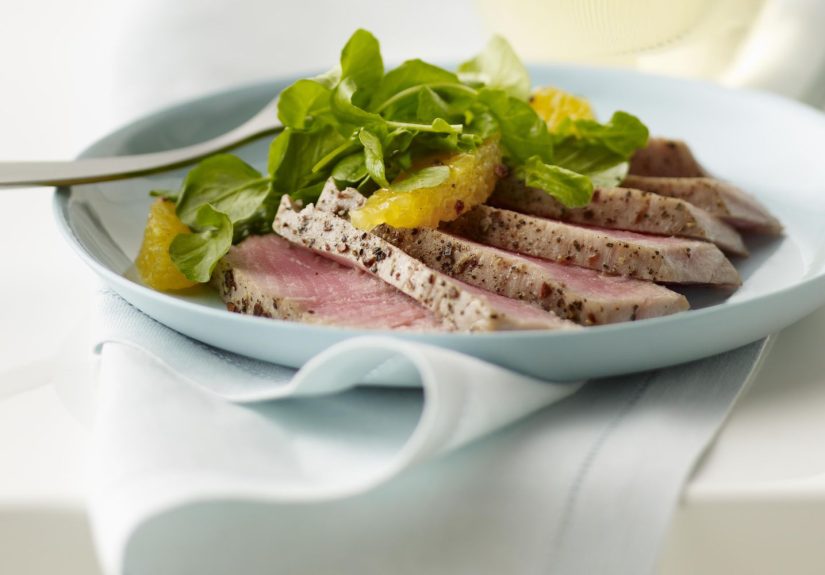
Using a sharp knife, slice against the grain into ¼–½ inch slices. You should see a deep pink or red center
with a dark, crusty edge. -
Mix the citrus-soy drizzle.
Whisk together the soy sauce, lemon juice, rice vinegar, sesame oil, honey, garlic, ginger,
and optional wasabi or red pepper flakes. Taste and adjustmore acid for brightness, more honey
for balance if your soy is very salty. -
Serve.
Arrange sliced tuna on plates or over salad or rice bowls. Drizzle lightly with the sauce,
serve extra on the side, and finish with lemon wedges. Try not to eat it all straight off the cutting board.
Doneness Guide for Ahi Tuna Steaks
Ahi tuna is typically served rare to medium-rare. The goal is a browned, peppery crust with a cool
or slightly warm center. For a 1–1¼ inch thick steak:
| Doneness | Pan Time (per side) | Center Color | Notes |
|---|---|---|---|
| Rare | 30–45 seconds | Deep red, cool to slightly warm | Classic restaurant-style ahi; very tender |
| Medium-rare | 45–60 seconds | Pink-red, warm | Great balance if you’re nervous about very rare fish |
| Medium | 60–90 seconds | Mostly pink, just a thin red line | Still moist if you don’t let it go too long |
For food safety, higher internal temperatures reduce risk, but they also change the texture and flavor.
People who are pregnant, immunocompromised, very young, or older should talk with a healthcare professional
and may prefer fully cooked seafood rather than rare preparations.
What to Serve With Seared Ahi Tuna
Pepper-crusted ahi plays well with fresh, bright, and slightly tangy side dishes. Popular pairings on
American menus and in home kitchens include:
- Citrus avocado salad: orange or grapefruit segments with avocado, red onion, and a light vinaigrette.
- Miso-ginger bok choy or green beans: quick-sautéed veggies with ginger, garlic, and a splash of soy.
- Lemongrass or jasmine rice: fluffy rice perfumed with lemongrass or lime for a fragrant base.
- Cucumber-radish salad: thinly sliced veggies dressed with rice vinegar and sesame oil for crunch and acidity.
- Wasabi mashed potatoes: a fun East-meets-comfort-food twist.
- Seaweed or spinach salad: light, briny, and very “sushi bar” adjacent.
If you’re feeling minimalist, you can keep it super simple: sliced tuna over a bed of mixed greens
with a drizzle of the citrus-soy sauce and a bowl of steamed rice on the side.
Nutrition Snapshot (Approximate)
Numbers will vary based on exact portion sizes and how much oil and sauce you use, but for a 6-ounce
pepper-crusted ahi tuna steak with a light drizzle of sauce, a typical range might look roughly like:
- Calories: around 250–350
- Protein: about 35–40 grams
- Fat: roughly 10–18 grams (mostly from the fish itself and searing oil)
- Carbs: generally low, often under 10 grams if you don’t go heavy on sweet sauces
Commercial pepper-crusted and garlic-peppercorn tuna products tend to be high in protein and relatively
low in carbohydrates, making this style of dish popular in high-protein or lower-carb eating patterns.
Frequently Asked Questions
Can I use frozen ahi tuna?
Yes. Most “sushi-grade” tuna in U.S. grocery stores has been previously frozen. Thaw it in the fridge
overnight, keep it cold, and pat it very dry before seasoning and searing. Never cook ahi that smells off,
feels slimy, or looks discolored.
What if I don’t have a cast-iron skillet?
A heavy stainless-steel skillet works well too. Cast iron just holds heat beautifully and gives you that deep,
even sear. Whatever pan you use, preheat it well and don’t crowd the steaks.
Can I grill these instead?
Absolutely. Oil the grates, preheat to high, and sear for 30–60 seconds per side over direct heat.
You’ll get a nice smoky note from the grill to go with that black pepper crust.
Is “sushi-grade” a regulated term?
In the U.S., “sushi-grade” isn’t tightly regulated by law, but reputable fishmongers use the term for fish
that has been handled and frozen in a way that’s appropriate for raw or undercooked consumption.
When in doubt, talk to your fish counter, buy from trusted sources, and follow general guidance about
who should avoid raw seafood.
Real-World Experiences & Pro Tips With Seared Ahi Tuna
Once you make black pepper-crusted ahi tuna a couple of times, you start to build your own “internal
playbook” for what works in your kitchen. Think of this section as that friend who’s already made every
possible mistake so you don’t have to.
The first time many home cooks try seared ahi, the biggest surprise is how fast it goes from perfect to
overcooked. If you’re used to salmon or white fish that take 6–10 minutes, a 45-second sear per side
feels emotionally wronglike the fish barely visited the pan. But that very short cooking time is what
keeps the center tender. A great beginner move is to intentionally undercook your first batch slightly.
You can always pop the slices back into the pan for a few seconds if they’re too rare for your taste.
Another common “learning moment” is the pepper level. Coarsely cracked peppercorns can be surprisingly
intense, especially if your grinder is set super coarse. If you’re serving guests with mixed spice
tolerance, you can split the difference: coat one side of the tuna in full-on pepper crust, and leave
the other side lightly peppered. When you slice, you’ll naturally create pieces that are more or less
spicy depending on which side shows.
Pan choice and preheating are also big parts of the experience. Many people report that the first time
they tried ahi in a thin nonstick pan, the pepper burned in spots and the crust didn’t brown evenly.
Switching to a cast-iron skillet or a heavier stainless pan instantly improves results because the heat
is more stable. Give your pan a solid few minutes to preheat while you crust the tuna and set the table.
By the time you’re ready to cook, the skillet will be and you’ll get that satisfying hiss the moment
fish hits metal.
Serving style is where you can really have fun. For a low-effort weeknight dinner, a lot of people just
slice the seared ahi and throw it over bagged salad greens with a quick citrus-soy dressing and some
avocado. It feels like something you’d order at a beachside café, but you’ve made it in 15 minutes while
texting and half-watching a show. For date night, plate the slices in a neat fan, drizzle the sauce in a
zigzag, and add a little mound of wasabi mashed potatoes or lemongrass rice on the side. Suddenly, your
kitchen looks like a restaurant pass.
Leftovers are another underrated perk. Seared ahi is excellent cold, as long as you don’t overcook it
initially. The next day, you can tuck slices into rice bowls with edamame and pickled veggies, or lay
them over a crunchy cabbage slaw with a sesame dressing. Because the pepper crust stays flavorful even
when chilled, the fish doesn’t taste “leftover” in the sad way that reheated white fish sometimes does.
Finally, don’t underestimate the psychological win factor. There’s something deeply satisfying about
mastering a dish that feels restaurant-level but fits into a regular weeknight. The more you cook seared
black pepper-crusted ahi tuna, the more it becomes your “I’ve got this” dishperfect for impressing
guests, spoiling yourself after a long day, or making a quick but special meal without heating up the
whole kitchen.
The best advice? Buy good tuna, respect the preheat, keep the sear short, and let the bold black pepper
crust do the heavy lifting. Once you take that first bite of tender, rosy tuna with a crackly peppered
edge, you’ll be planning the next time you can make it again.