Table of Contents >> Show >> Hide
- Who Is Jasper Morrison, and Why Does His Shop Matter?
- Finding the Shop in Shoreditch
- What the Shelves Actually Say
- The Real Luxury Here Is Restraint
- How to Shop Jasper Morrison’s London Store Like a Pro
- Why This Shop Still Feels Relevant
- Extended Diary: The Experience of Shopping Here, Slower and More Personally
- Conclusion
Some stores want to dazzle you. They crank up the lighting, shout with branding, and practically throw a velvet rope around a teaspoon. Jasper Morrison’s shop in London does the opposite. It whispers. It edits. It behaves as if the best compliment a product can receive is not “Wow, look at me,” but “Of course this is exactly how it should be.” In a retail world addicted to drama, that feels almost rebellious.
That is what makes Jasper Morrison’s shop in London such a compelling stop for design lovers, curious travelers, and shoppers who have grown tired of buying things that age like celebrity apologies. Tucked in Shoreditch, the store is small, quiet, and deeply specific. It is less a temple of luxury than a field guide to useful beauty. You go in expecting objects. You come out thinking differently about mugs, trays, stools, scissors, brushes, notebooks, and the strange emotional power of a well-made shovel.
If that sounds dramatic for a shop filled with everyday goods, welcome to the Morrison universe. This is the designer who built an international reputation not by making ordinary life louder, but by making it better. His work has long been associated with the idea of “super normal,” a phrase he developed with Naoto Fukasawa to describe objects that fit daily life so naturally they almost disappear. Not boring. Not bland. Just so right that they stop performing and start serving. That philosophy is all over this shop, and once you see it, you cannot unsee it.
Who Is Jasper Morrison, and Why Does His Shop Matter?
Before the shopping begins, the backstory matters. Jasper Morrison is one of Britain’s most influential product and furniture designers, known for work that prizes usefulness, restraint, and long-term livability over flashy gestures. Born in London in 1959, he studied at Kingston Polytechnic, the Royal College of Art, and Berlin’s HdK before opening his Office for Design in London in 1986. Over the years, he has designed for major brands including Vitra, Alessi, Muji, Samsung, Sony, Cappellini, and more. Museums, including the Museum of Modern Art in New York, have exhibited his work, which tells you something important: the man can make a chair feel like philosophy with legs.
But Morrison’s real influence is not just in the products he has designed. It is in the way he has argued for a calmer, more responsible design culture. Instead of chasing novelty for novelty’s sake, he tends to favor refinement, familiarity, and forms that improve daily life without demanding applause. That outlook makes a retail space under his name especially interesting. A Morrison shop is not just a place to buy objects. It is a place to see what happens when a designer’s worldview gets translated into shelves, displays, categories, and atmosphere.
And atmosphere matters here. Morrison has spoken about products as makers of atmosphere, which is a wonderfully elegant way of saying that objects shape how a room feels, how a routine flows, and how a home behaves. A kettle is not just a kettle. It is part of your morning mood. A tray is not just a tray. It is how your desk stops looking like a paper tornado hit it at 2 a.m. A good object does not merely sit there. It participates.
Finding the Shop in Shoreditch
The location itself tells the story. The shop was established in 2008 in Shoreditch, London, at 24b Kingsland Road, and it still carries that slightly hidden quality that regulars love and first-timers nervously double-check on their phones. Morrison’s own description admits it is not easy to find. You are meant to ring the bell behind a large black door and be let in. In other words, this is not a neon-lit flagship shouting from the sidewalk. It is closer to a designer’s annex to real life.
That setting matters because it reinforces the central idea of the store: this is not retail as spectacle. It is retail as conversation. The shop is run by the staff of Jasper Morrison’s design studio, which gives it a personal and curated feel. In interviews, Morrison has explained that the shop helped “close the circle” between designer and customer. Instead of only dealing with manufacturers, his studio could finally meet the people who actually live with the things. That is a small but meaningful shift. The store is not just a sales point. It is feedback, context, and human contact.
There is also something delightfully unpretentious about the scale of it. This is not a mega-store pretending to be intimate. It is actually intimate. And because it is small, every object has to justify its presence. There is no room for filler. The result is a retail environment that feels more like an edited essay than a department store. Each shelf says: this is here for a reason.
What the Shelves Actually Say
A Modern Hardware Store, Minus the Chaos
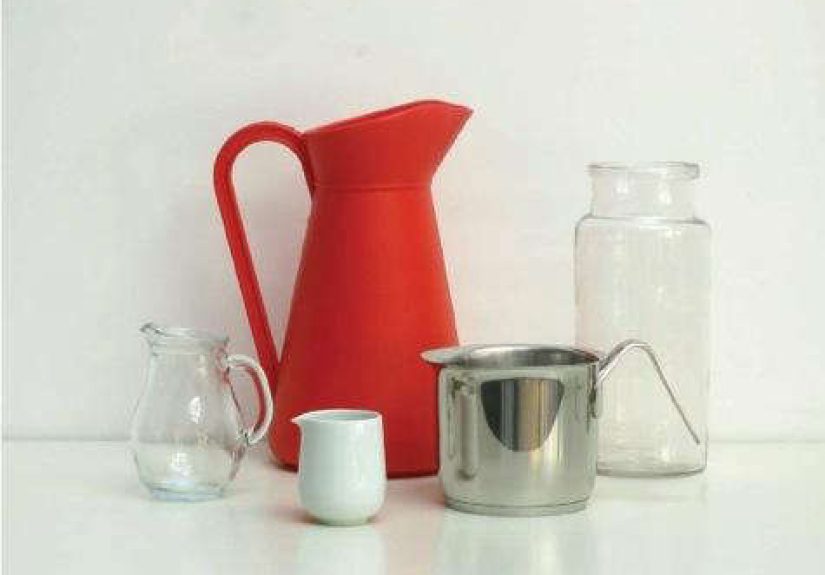
Morrison’s own description of the shop is one of the smartest summaries of its appeal: it is a modern interpretation of the classic hardware store. That phrase does a lot of work. It tells you the shop is not organized around status or trend cycles. It is organized around utility, beauty, and daily performance. The categories alone reveal the mindset: tableware, kitchen, stationery, accessories, hardware, furniture, books. It is the anatomy of domestic life, broken down into useful chapters.
Many of the products are sourced from around the world and are often anonymously designed. That anonymous quality is not an afterthought. It is central to Morrison’s philosophy. He has long admired objects that have evolved through use rather than through egothings that became “right” because people kept using them, improving them, and passing them along. In the shop, those anonymous everyday tools sit beside pieces designed by Morrison himself. The effect is wonderfully democratic. A Morrison chair is not elevated by being isolated from other objects. It is strengthened by being placed in a broader family of sensible things.
In one interview, Morrison described the mix as roughly half his own work and half sourced objects. That ratio is revealing. The store is not a shrine to authorship. It does not insist that only branded design deserves attention. Instead, it suggests that good design can be found in a famous chair, a tray from another maker, a humble brush, or a steel garden tool with years of logic built into its form. That is refreshingly adult. It assumes the shopper can appreciate value without being spoon-fed prestige.
Useful, Beautiful, and Built for the Long Haul
One of the most appealing things about the shop is its bias toward long-term performance. This is not a place for disposable trend bait. It is a place for items that earn their keep. Remodelista once described the store as featuring pieces selected for their utilitarian qualities and built-in long-term performance. That phrase could practically be the mission statement for anyone exhausted by fast homeware and overdesigned clutter.
The products vary, but the logic is consistent. A pot should pour well. A stool should live with dignity in more than one room. A clock should tell time without behaving like a tiny lifestyle manifesto. A notebook should feel good in the hand and not act as though it needs a documentary series. At Morrison’s shop, the ordinary is not dressed up as extraordinary. It is simply allowed to be excellent.
The Real Luxury Here Is Restraint
There is a reason Jasper Morrison’s work has been covered for decades by American design publications and institutions. He represents a rare kind of design intelligence: one that is rigorous without being cold, refined without being snobbish, and minimal without turning into visual punishment. His version of minimalism is not a white box with trust issues. It is warmer than that. It leaves room for living.
That is why the shop feels luxurious even though it avoids traditional luxury signals. The shelves are not screaming exclusivity. The objects are not begging for Instagram validation. The store does not seem interested in proving its sophistication every five seconds. Instead, it gives you something more valuable: confidence. Confidence in proportion. Confidence in material. Confidence that a quiet object can still have presence.
In a culture that often confuses design with decoration, Morrison’s shop reminds visitors that design is also ethics, discipline, and editing. Good design is not merely how something looks in a photo. It is how it behaves over time. It is whether the object still feels right after the novelty wears off, after guests stop complimenting it, after you have used it enough to forget it was once new. That is where the Morrison standard lives.
How to Shop Jasper Morrison’s London Store Like a Pro
If you ever visit, the smartest strategy is to slow down. This is not a place for panic shopping or souvenir hunting. It rewards attention. Start with the small things. Notice how handles are shaped, how edges are softened, how finishes feel. Then compare authored objects with anonymous ones. Ask yourself why both belong. That exercise alone is worth the trip.
Next, think in terms of routines instead of categories. What object would improve breakfast? What would make your desk calmer? What would you still want to use in five years? Morrison’s world is built around use, so shop according to life, not according to impulse. Your kitchen, hallway, worktable, and bathroom all deserve objects that cooperate instead of compete.
Also, resist the urge to judge by immediate spectacle. Some of the best pieces in a store like this are not love-at-first-sight objects. They are slow-burners. They become better as you imagine living with them. That is the entire super normal lesson: the deepest design appeal often emerges through experience, not through first impressions. In a way, Morrison’s shop trains shoppers to become better readers of objects. It sharpens the eye, but also the patience.
Why This Shop Still Feels Relevant
Jasper Morrison’s shop matters because it answers a very current question with a very old-fashioned kind of clarity: what should we buy, and why? At a time when homes are cluttered with algorithmic recommendations, trend-driven purchases, and objects designed to expire emotionally within a season, this London shop offers a different model. Buy less. Buy better. Buy what improves the atmosphere. Buy what stays useful. Buy what does not perform exhaustion by looking dramatic on a shelf and then failing you in the sink.
That is why the store continues to resonate beyond London. American publications such as Dwell, Fast Company, Metropolis, Architectural Digest, Design Milk, and Remodelista have all paid attention to Morrison’s work because it speaks to a broader design hunger: the search for ordinary things done exceptionally well. Even MoMA’s continued exhibition history around his work underscores that his appeal is not a niche cult of minimalism. It is a durable argument for sane modern living.
So yes, Shopper’s Diary: Jasper Morrison’s Shop in London is about a single store. But it is also about a larger design ideal. The shop is what happens when retail stops trying to entertain you and starts trying to improve your standards. It is a place where usefulness is attractive, anonymity is respected, and quiet objects get their due. Frankly, more stores should have that level of self-control.
Extended Diary: The Experience of Shopping Here, Slower and More Personally
To understand the store fully, it helps to imagine the visit not as a shopping errand but as a shift in tempo. London outside may be busy, noisy, and full of people speed-walking like they are late for a meeting with destiny. Then you find the door, ring the bell, and enter a space that seems to have opted out of all that. The mood changes first. It is subtle, but immediate. Nothing is trying to seduce you through noise. Nothing is arranged for cheap surprise. The objects sit there with calm self-respect, and somehow that makes you stand up straighter too.
You begin to notice things you would normally skip over in a larger store. The way a tray edge curves just enough to feel secure in the hand. The seriousness of a kitchen utensil that has not been “improved” into uselessness. The charm of a brush that looks like it was designed by someone who has, at minimum, actually swept a floor before. It becomes clear that much of the pleasure here comes from relief. Relief that not every object has to invent a personality. Relief that good taste can still be practical. Relief that a shop can trust customers to appreciate nuance.
And then there is the peculiar emotional effect of seeing anonymous goods beside famous design. It levels the room in the best possible way. A celebrated Morrison piece does not dominate; it converses. A modest household object from elsewhere is not treated as filler; it is treated as evidence. Evidence that intelligence in design often comes from repetition, adjustment, and use rather than from ego. For shoppers, that is quietly liberating. It gives permission to love an ordinary object for being deeply competent. It suggests that your home does not need more icons. It needs more things that work beautifully without begging to be called iconic.
The longer you stay, the more the store starts to feel like a lesson in domestic editing. You think about your own rooms differently. Maybe that overcomplicated fruit bowl at home suddenly seems a bit desperate. Maybe your desk accessories look like they all met on different dating apps and should never have moved in together. Morrison’s shop has that effect: it does not bully you into minimalism, but it does make visual noise feel less lovable.
What lingers after the visit is not a single product, though it may well be a tray, a tool, a book, or a piece of tableware that follows you home. What lingers is the standard. You leave with a slightly sharper eye and a slightly lower tolerance for nonsense. You remember that design is not just about having nice things. It is about living with fewer regrets. It is about choosing objects that age well in both material and meaning. And in that sense, Jasper Morrison’s London shop offers more than merchandise. It offers a calmer way to think about consumption itself, which might be the most radical product on the premises.
Conclusion
Jasper Morrison’s shop in London is not trying to be the loudest design destination in the city. That is exactly why it stays with you. It captures the essence of Morrison’s philosophy: useful objects, quiet confidence, and the belief that daily life deserves thoughtful design even when nobody is clapping. For shoppers, designers, and curious visitors alike, the store works as both retail experience and design education. It shows that good taste does not need theatrics, and that the best things in a home are often the ones that simply keep doing their job beautifully for years.