Table of Contents >> Show >> Hide
- Why the Side-by-Side Comparison Feels So Wild
- How Bohemian Rhapsody Re-Created Live Aid So Convincingly
- Why Freddie Mercury’s Real Live Aid Performance Still Looms So Large
- Rami Malek’s Performance: Impression, Interpretation, or Something In Between?
- Where the Movie Takes Creative License
- Why the Internet Couldn’t Resist This Comparison
- The Cultural Legacy of the Live Aid Finale
- What Watching the Side-by-Side Actually Feels Like
- Final Thoughts
There are movie impressions, there are celebrity impersonations, and then there is whatever happened when somebody put Rami Malek’s Bohemian Rhapsody performance next to Freddie Mercury’s real 1985 Live Aid set. At that point, the internet did what the internet does best: it collectively gasped, pointed at the screen, and said, “Okay, now that’s a little ridiculous.” In the best way.
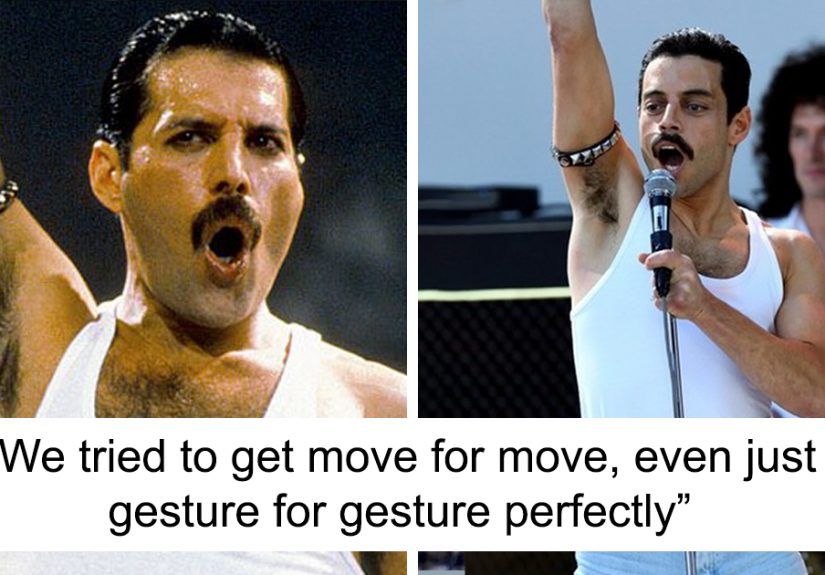
The side-by-side comparison has become one of those rare pop-culture clips that works on almost everyone. Queen fans love it because it shows how carefully the film recreated one of rock’s most famous performances. Movie fans love it because it is a master class in physical acting. Even casual viewers who couldn’t name every Queen album usually come away thinking the same thing: this is unnervingly close. Not “close enough for Hollywood.” Close like someone studied the original with a microscope, a metronome, and possibly supernatural assistance.
That reaction did not come out of nowhere. The final Live Aid sequence in Bohemian Rhapsody was designed to be the emotional peak of the film, and it had a very high bar to clear. Freddie Mercury’s performance with Queen at Wembley Stadium on July 13, 1985, is often treated as one of the greatest live sets in rock history. So when the movie built toward that moment, it had to do more than suggest the energy. It had to convince viewers they were watching a real cultural event being reborn.
Why the Side-by-Side Comparison Feels So Wild
The reason the comparison hits so hard is simple: Malek does not just copy Freddie Mercury’s clothes or mustache. He captures the rhythm of the man. Watch the stance, the half-strut, the arm angles, the piano approach, the turn toward the crowd, the quick glances that feel both spontaneous and perfectly timed. Freddie had a stage grammar all his own, and Malek learned to speak it fluently.
That is what separates a solid imitation from a performance that makes viewers do a double take. Mercury was not merely energetic; he was precise. Even in a huge stadium, his body language looked intentional down to the smallest movement. So if an actor gets the tempo of those gestures wrong, fans notice immediately. The side-by-side comparison works because Malek gets the little things right, and the little things are exactly what make Freddie Mercury feel like Freddie Mercury.
There is also the matter of confidence. Mercury performed as if the stage were both a command center and a playground. Malek understood that playing him required more than swagger. It required control, timing, and a strange mix of flamboyance and discipline. That is a hard balance to fake. You cannot just slap on aviators, wear a white tank top, and expect the spirit of Wembley to descend from the ceiling like stage fog.
How Bohemian Rhapsody Re-Created Live Aid So Convincingly
1. The production treated Live Aid like sacred text
One reason the scene feels so exact is that the filmmakers treated the original set almost like historical evidence. The camera movements, staging, lighting, costume details, and musical beats were recreated with obsessive care. That decision was smart. Live Aid is too famous to fake loosely. Millions of fans know the look of that performance, from Freddie’s jeans-and-tank-top outfit to the famous microphone stand and the way he worked the piano, crowd, and band with almost surgical confidence.
2. Malek studied the physical mechanics, not just the mood
Actors often talk about “finding the essence” of a real person. Malek had to do that, but he also had to learn the mechanics. The angle of the chin. The gait. The posture. The stretch of the mouth around lyrics. The way Freddie seemed to lean into the air itself when he sang. When you watch the comparison, you can feel the amount of rehearsal hiding under the performance. It does not look labored, which is exactly why it impresses people.
3. Hair, makeup, teeth, and costume did serious heavy lifting
Let’s be honest: Freddie Mercury had one of the most recognizable silhouettes in music history. The overbite, the mustache, the cropped hair, the athletic build, the minimalist white tank, the wristbands, the lived-in jeans it all mattered. The movie’s transformation team understood that realism would depend on proportion and texture, not just resemblance. The result is that Malek does not look like “Rami Malek dressed as Freddie Mercury for Halloween.” He looks like a stylized but startlingly credible screen version of the icon.
4. Sound design helped sell the illusion
The Live Aid sequence works visually, but it lands emotionally because the sound is huge, immediate, and designed to put the audience inside the concert. That matters. A side-by-side comparison is not only about what you see; it is about whether the recreated moment carries the same pulse. When the audio, crowd response, and performance energy line up, the scene stops feeling like a reenactment and starts feeling like an event.
Why Freddie Mercury’s Real Live Aid Performance Still Looms So Large
To understand why the comparison became such a sensation, you have to understand the original myth it is measuring itself against. Queen’s Live Aid set has long been remembered as a career-defining triumph. In a concert packed with stars and watched around the world, Freddie Mercury somehow turned a stadium performance into something intimate and enormous at the same time. He was commanding, playful, theatrical, and totally in control.
That combination is rare. Stadium rock can become distant. Big stages can flatten personality. Mercury did the opposite. He made Wembley feel like an extension of his own nervous system. The famous “Ay-Oh” call-and-response, the crowd participation on “Radio Ga Ga,” the sharp transitions between bravado and warmth all of it made the performance feel alive rather than merely polished.
That is why people keep returning to the side-by-side clip. They are not just judging whether an actor looks similar. They are testing whether a modern film can touch a performance that already lives in pop culture as near-sacred material. The surprise is that, in that sequence at least, Bohemian Rhapsody gets remarkably close.
Rami Malek’s Performance: Impression, Interpretation, or Something In Between?
The smartest thing Malek did was avoid turning Freddie into a wax figure with a soundtrack. His performance works because it lives in the space between impression and interpretation. He gives viewers the physical recognition they want, but he also preserves a sense of emotional movement underneath it. You can see the burden of performance, the hunger for connection, and the thrill of command.
That balance is important because Freddie Mercury was larger than life without ever being cartoonish. A lesser performance could have overplayed the flamboyance and underplayed the intelligence. Malek instead suggests that Freddie’s stage power came from craft as much as charisma. That makes the character feel human and mythic at the same time, which is pretty much the Freddie Mercury sweet spot.
It also helps explain why Malek’s work was so widely praised even by critics who had issues with the film itself. Bohemian Rhapsody drew plenty of criticism for its biopic shortcuts, polished storytelling, and historical compression. But again and again, viewers and reviewers carved out space to say some version of the same thing: whatever your problems with the movie, Malek’s Live Aid finale absolutely goes for it.
Where the Movie Takes Creative License
Now for the necessary reality check, because good pop writing should be fun and allergic to nonsense. The film’s Live Aid climax is emotionally effective, but it is not a documentary. Several elements of Queen’s timeline were compressed or altered for dramatic effect. Most notably, the movie suggests the band had split before Live Aid and that Mercury revealed his AIDS diagnosis to the band just before the concert. That is not historically accurate.
Does that make the side-by-side comparison less impressive? Not really. The comparison is about performance recreation, not timeline accuracy. Still, it is worth separating two conversations. One is whether Malek and the production team convincingly rebuilt the Live Aid set. They did. The other is whether the movie presents every fact exactly as it happened. It does not. Both things can be true at once, and pop culture gets a lot easier to discuss when we stop pretending every biopic must be either flawless history or total fraud.
Why the Internet Couldn’t Resist This Comparison
The side-by-side clip is tailor-made for online culture. It is visual, immediate, emotional, and easy to understand in seconds. You do not need to watch the entire film to appreciate it. You do not need a long explainer. The point is right there on screen: one frame is Freddie, one frame is Malek, and your brain starts playing a game called “wait, which one is which?”
It also taps into a deeper internet obsession: the thrill of accuracy. People love seeing artists, actors, or craftspeople do something with absurd levels of detail. It scratches the same itch as a perfect historical costume remake or a shot-for-shot scene recreation. In a noisy online world full of half-baked takes, there is something deeply satisfying about craftsmanship you can verify with your own eyeballs.
And yes, there is a faintly comedic pleasure in it too. The internet loves a good “same person” joke. We exaggerate because exaggeration is fun. But underneath the meme language is genuine admiration. What viewers are really saying is: this took work, and the work shows.
The Cultural Legacy of the Live Aid Finale
One of the most interesting things about the comparison is how it extends the legacy of both the original performance and the film. Freddie Mercury’s Live Aid set already had legendary status. The movie did not create that. What it did do was introduce the moment to new audiences who may have known Queen’s songs without fully understanding why that Wembley appearance mattered so much.
For younger viewers, the film’s finale became an entry point. For longtime fans, it became a test of respect. For film lovers, it became proof that a biopic can briefly transcend its formula when every department is pulling in the same direction. That is a big reason the scene continues to circulate years after the movie’s release. It is not just nostalgia bait. It is one of those rare movie moments where reenactment becomes its own performance achievement.
And that achievement mattered commercially and culturally. Bohemian Rhapsody became a box-office hit, Rami Malek won the Academy Award for Best Actor, and the film’s climax helped cement the public memory of his performance. Plenty of biopics come and go. Very few leave behind a comparison clip that makes people stare at their screens like they have just witnessed time travel with better lighting.
What Watching the Side-by-Side Actually Feels Like
Watching the side-by-side comparison is a surprisingly emotional experience, even if you start from a place of pure curiosity. At first, the appeal seems technical. You are looking for similarities. You notice the costume, the microphone, the walk, the shoulders, the piano. It feels a bit like inspecting a magic trick to see how it works. Then, somewhere in the middle, the clip stops being a checklist and starts becoming a performance in its own right.
That shift is what makes the comparison memorable. You begin by measuring accuracy, but you end by feeling momentum. Freddie Mercury’s original Live Aid appearance had a unique current running through it: the sense that he understood exactly how large the moment was and exactly how to dominate it without forcing it. The recreated version captures enough of that current that the comparison stops feeling academic and starts feeling electric.
For older Queen fans, the experience can be almost disorienting. There is a flash of recognition followed by a flash of disbelief. The gestures are so familiar that your memory rushes ahead of your logic. You know you are watching an actor, but for split seconds the body language is so precise that the boundary blurs. That is not because Malek becomes Freddie Mercury in some mystical way. It is because performance is physical memory, and he learned the pattern well enough to trigger it in viewers.
For younger viewers, especially people who met Freddie through Bohemian Rhapsody rather than through MTV, vinyl, VHS concert recordings, or old Wembley clips on television, the side-by-side comparison often works in reverse. It sends them back to the real performance. They watch Malek first, then Freddie, and suddenly the original set feels even more extraordinary. The recreation becomes a bridge rather than a substitute.
There is also a communal element to watching the clip. People rarely keep that kind of video to themselves. They send it to friends. They post it. They caption it with dramatic overstatement because dramatic overstatement is basically the internet’s house style. But underneath the jokes is a real desire to share astonishment. The comparison gives people the same pleasant jolt that a great cover song gives them: the joy of seeing something familiar reborn without being flattened.
Another part of the experience is realizing how much of live performance depends on tiny physical decisions. Freddie’s power at Live Aid was never just his voice, famous as that was. It was the economy of movement, the confidence in stillness, the ability to project mischief and command simultaneously. When the side-by-side puts those details under a magnifying glass, it teaches viewers how much performance lives below the level of conscious attention. You may not have noticed every wrist turn or weight shift the first time around, but your brain definitely did.
And then there is the emotional afterglow. Once the clip ends, you are left thinking about more than resemblance. You start thinking about legacy, about what it means for one performer to honor another without turning him into a museum exhibit. You think about how hard it is to recreate lightning, and how strange it feels when somebody gets close. Maybe that is why the comparison keeps making the rounds. It is not only a cool visual trick. It is a reminder that great performances echo across generations, and sometimes an actor can catch that echo just long enough for the rest of us to hear it all over again.
Final Thoughts
So, is the side-by-side comparison of Rami Malek and Freddie Mercury at Live Aid really “like watching the same person”? In the literal sense, of course not. Freddie Mercury remains singular, and that is exactly why the original performance still towers over rock history. But in terms of screen recreation, movement study, design accuracy, and sheer commitment, the comparison comes startlingly close.
That is why the clip continues to spread. It is not just celebrity look-alike content with a catchy caption. It is a compact showcase of what happens when acting, research, costume design, makeup, sound, and cultural memory all lock into place. It reminds us that even in a film that takes liberties, one sequence can feel almost uncannily true.
And honestly, that may be the best compliment a performance like this can get. Not that it replaces the original. Not that it improves on it. Just that, for a few mesmerizing minutes, it makes you look twice and grin like you have seen movie magic pull off something improbably close to the real thing.