Table of Contents >> Show >> Hide
- Introduction: Can a Home Really Make Its Own Water?
- What Is The Water Freedom System?
- How Atmospheric Water Generation Works
- What Consumers Should Like About the Concept
- Where The Water Freedom System Needs a Reality Check
- How It Compares With Traditional Emergency Water Options
- Who Might Benefit From The Water Freedom System?
- Red Flags to Watch Before Buying
- Practical Buying Checklist
- Pros and Cons
- Final Verdict: Is The Water Freedom System Worth It in 2025?
- Personal Experience Section: Living With the Idea of Water Freedom
- Conclusion
Editorial note: This is an independent consumer-style review, not an official report from Consumer Reports and not a medical, plumbing, legal, or emergency-management recommendation. Always follow local water advisories, local laws, and certified water-safety guidance before drinking water from any DIY system.
Introduction: Can a Home Really Make Its Own Water?
The idea behind The Water Freedom System sounds like something your practical uncle would build in the garage after watching three survival videos and drinking two cups of coffee: a DIY approach to producing or securing clean water when the tap is unreliable, expensive, or simply unavailable. In 2025, that idea has plenty of attention. Between drought headlines, hurricane prep, boil-water notices, rising utility bills, and the general feeling that modern life is held together by phone chargers and municipal infrastructure, a product promising more water independence naturally gets clicks.
But here is the big consumer question: is The Water Freedom System a serious preparedness resource, a clever DIY guide, or another shiny “freedom” product wrapped in emergency language? The honest answer is more nuanced than a sales page usually admits. Public descriptions present it as a guide associated with atmospheric water generation, condensation, filtration, and emergency water self-reliance. Some marketing materials claim a household can produce significant amounts of water from humid air, with DIY materials and a setup that does not require industrial equipment. That is exciting. It is also exactly where smart consumers should slow down, put on their detective hat, and ask: under what conditions, at what cost, with what testing, and with what safety backup?
This Water Freedom System review 2025 breaks down what the system appears to offer, who it may help, where the claims need caution, and how it compares with established emergency water planning. The goal is not to throw confetti or tomatoes. The goal is to give you a clear, readable consumer report before you spend money or trust your family’s hydration to a homemade contraption that may or may not love your local humidity.
What Is The Water Freedom System?
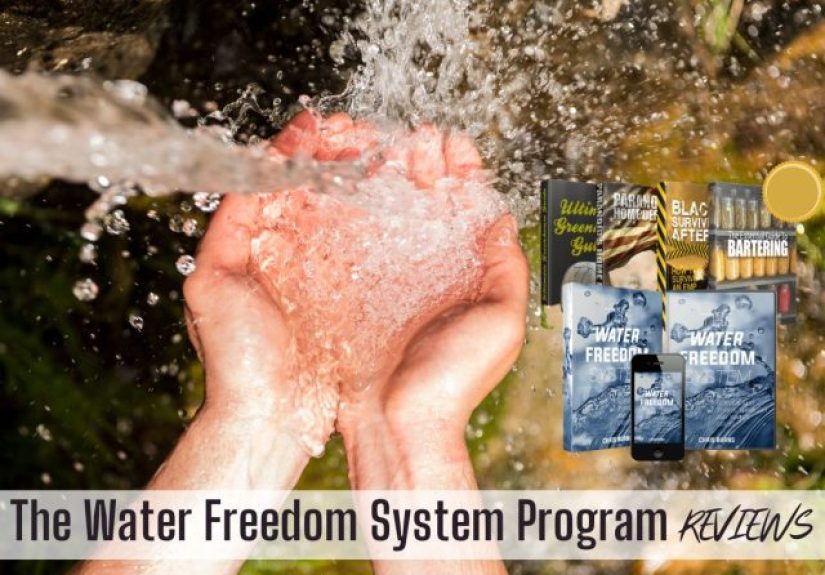
The Water Freedom System is generally promoted as a DIY water-independence program rather than a single finished appliance shipped to your door. Public product pages and press-style summaries describe it as a guide that teaches users how to create a home-based water solution, often involving atmospheric water generation concepts, condensation, collection, filtration, storage, and emergency water planning.
In simple English, the pitch is this: instead of relying only on bottled water, city water, wells, or rain barrels, you learn how to create a setup that can help collect or produce usable water. The most eye-catching version of the claim involves extracting moisture from air, similar in principle to how a dehumidifier pulls water from a room. That idea is real. Atmospheric water generators do exist. The catch is that output depends heavily on humidity, air temperature, machine design, energy use, maintenance, and post-treatment quality control.
That last sentence is the adult in the room. Water from air is not magic. It is physics wearing a survival hat.
How Atmospheric Water Generation Works
Most consumer-friendly explanations of air-to-water systems compare the process to a cold glass sweating on a summer porch. Warm, humid air touches a cooler surface, moisture condenses, and liquid water appears. Commercial atmospheric water generators usually rely on fans, cooling coils, condensers, filters, and sometimes ultraviolet treatment or mineral balancing. Some newer research explores sorbent materials that absorb moisture and release it later, but the basic consumer concept is still simple: capture humidity and turn it into liquid water.
For a DIY guide like The Water Freedom System, the key issue is not whether the science exists. It does. The key issue is whether a typical user can safely, affordably, and consistently produce enough drinkable water at home. A family in humid coastal Florida may have a very different experience from a family in dry Arizona. A system running in summer may perform differently from the same setup in winter. A garage with poor airflow may behave differently from an outdoor shaded area. Water output is not a fixed number; it is a moving target.
What Consumers Should Like About the Concept
1. It Encourages Water Preparedness
The best thing about The Water Freedom System may be that it gets people thinking about water before there is a crisis. Most households have flashlights, random batteries, and perhaps a heroic can of beans hiding in the pantry. But emergency water? That is often an afterthought until a storm arrives and everyone suddenly treats bottled water like concert tickets.
Emergency planning authorities commonly recommend storing at least one gallon of water per person per day for several days, and more when possible. A water-independence guide can be useful if it pushes readers to create layers of backup: stored water, filtration, disinfection knowledge, collection options, and a plan for pets, infants, hot weather, or medical needs.
2. It May Reduce Panic Buying
If you understand where water can come from and how to treat it properly, you are less likely to sprint through a grocery store like a dehydrated raccoon when a storm warning hits. A household with stored water, clean containers, a certified filter, and a realistic backup plan is simply calmer. Calm is underrated. Calm also prevents buying 14 cases of bottled water and then discovering you have no room for cereal.
3. It Appeals to DIY Learners
Some people genuinely enjoy building systems, learning how components work, and testing improvements. For that audience, The Water Freedom System may be interesting as an educational project. If you are already comfortable with tools, filters, tubing, basic electrical safety, sanitation, and careful testing, a DIY water guide can become a weekend experiment with practical value.
4. It Promotes Redundancy
Preparedness experts often talk about redundancy: do not rely on one solution. A single filter can clog. Stored water can run out. A well pump can fail if the power goes down. Bottled water can disappear from shelves. A DIY water-generation or collection idea may be one more layer in a broader plan. Used that way, it makes more sense.
Where The Water Freedom System Needs a Reality Check
1. Output Claims Depend on Climate
Any review of an atmospheric water system should say this loudly: humidity matters. A lot. Air-to-water systems generally perform better when the air is warm and humid. In dry air, the system has less moisture to capture and may require more energy for less output. If a sales page suggests large daily production without clearly explaining temperature, humidity, power draw, and testing conditions, treat that claim as a best-case scenario, not a promise.
2. Drinkable Water Requires More Than Collection
Condensed water is not automatically ready for a family dinner table. Surfaces, coils, storage tanks, tubing, dust, airborne particles, microbial growth, and poor maintenance can all affect quality. Drinking water should be treated, stored correctly, and tested when there is any doubt. A system that “makes water” is not the same as a certified drinking-water system unless it has appropriate treatment and verification.
3. DIY Builds Can Create Safety Risks
DIY projects are fun until electricity, water, and optimism meet in the same corner of the garage. Any system involving cooling, fans, wiring, pumps, or UV treatment should be assembled with care. Poor wiring can be dangerous. Poor sanitation can make people sick. Poor storage can turn clean water into questionable soup. If you are not handy, a simpler emergency water plan may be safer.
4. “Natural” Does Not Mean Safe
Rainwater, stream water, roof runoff, and collected condensation may all need treatment. Boiling can kill many disease-causing organisms, but it does not remove every chemical contaminant. Filters vary widely, and not every filter removes lead, PFAS, viruses, pesticides, or other contaminants. For health-related claims, look for recognized third-party certifications and contaminant-specific testing, not just pretty icons on a product page.
How It Compares With Traditional Emergency Water Options
Stored Water
Stored water is boring. It is also reliable. Food-grade containers, commercially bottled water, and a rotation schedule can provide immediate backup without electricity or assembly. The downside is space. A family of four storing two weeks of water needs a lot of room. Your closet may begin to look like it is preparing for a desert expedition.
Water Filters
Certified filters are practical for improving tap water or treating certain emergency sources. The key word is certified. NSF/ANSI standards such as 42, 53, 58, and 401 relate to different types of performance claims. A filter that improves taste is not automatically a filter that removes lead or other health-related contaminants. Consumers should match the filter to the contaminant problem.
Boiling and Disinfection
Boiling is a proven emergency method for many biological hazards, and unscented household bleach can be used under proper guidance for disinfection. However, neither method is a magic eraser for every chemical problem. If authorities issue a “do not drink” advisory because of chemicals or toxins, boiling may not make the water safe.
Rainwater Harvesting
Rain barrels and cisterns can be excellent for gardens and non-potable uses. Drinking rainwater is a different matter and usually requires careful treatment and local legal awareness. Some states and municipalities regulate rainwater collection, storage volume, plumbing connections, or permitted uses. Before building a big rainwater system, check local rules. Water freedom is great; water fines are less adorable.
Atmospheric Water Generation
Atmospheric water generation is attractive because it does not require a river, well, or rainstorm. But it usually requires energy, humidity, maintenance, and quality control. As a backup layer, it can be interesting. As the only household water plan, it deserves caution.
Who Might Benefit From The Water Freedom System?
Preparedness-minded homeowners may find value in the guide if they want to understand multiple water options and are willing to verify safety. DIY hobbyists may enjoy the build process and use it as a practical learning project. Rural residents with unreliable water access may appreciate ideas for redundancy, though they should still use professional testing for drinking water. Campers and off-grid enthusiasts may find the concepts useful, especially if they already use filters, storage tanks, and solar power.
However, this system is probably not ideal for people who want a plug-and-play certified appliance, renters who cannot modify equipment, households with no space or tools, or anyone who needs medically reliable drinking water without uncertainty. If you need guaranteed safe water for an infant, an elderly family member, or someone with a compromised immune system, do not rely on a DIY water project without professional testing and a safer backup.
Red Flags to Watch Before Buying
Before purchasing The Water Freedom System or any similar DIY water program, pay attention to how the product is marketed. Big promises should come with big proof. Look for clear explanations of required materials, total cost, humidity conditions, energy consumption, maintenance steps, refund terms, support availability, and whether any drinking-water claims are independently tested.
Be cautious with countdown timers, exaggerated scarcity claims, anonymous testimonials, and “works anywhere” language. The Federal Trade Commission expects advertising claims to be truthful, not misleading, and supported by evidence. That does not mean every dramatic sales page is bad, but it does mean consumers should not confuse enthusiasm with verification.
Practical Buying Checklist
Use this checklist before buying or building anything related to home water generation:
- Does the guide clearly list all materials and realistic costs?
- Does it explain expected water output by humidity and temperature?
- Does it include sanitation, storage, and maintenance instructions?
- Does it recommend independent water testing?
- Does it explain what contaminants the system can and cannot address?
- Does it provide a real refund policy with clear contact details?
- Does it avoid claiming that DIY water replaces all emergency supplies?
If the answer to several of these is “not really,” slow down. A good water system should survive questions. If it melts under basic scrutiny, it may not deserve your money.
Pros and Cons
Pros
- Encourages household water preparedness and self-reliance.
- May teach useful concepts about water collection, filtration, and storage.
- Appeals to DIY users who enjoy practical projects.
- Could add one more backup layer during emergencies.
- May reduce dependence on bottled water when used responsibly.
Cons
- Water output may vary dramatically by local humidity and temperature.
- DIY assembly may be too complex for some users.
- Drinkable water requires careful sanitation, filtration, and testing.
- Marketing claims may sound more certain than real-world results.
- It should not replace stored emergency water or official safety guidance.
Final Verdict: Is The Water Freedom System Worth It in 2025?
The Water Freedom System may be worth considering as an educational DIY water-preparedness guide, but it should not be treated as a guaranteed household water miracle. The core ideas behind atmospheric water generation and water redundancy are legitimate. The consumer risk comes from expecting too much, too fast, with too little testing.
If you buy it with realistic expectations, use it as one layer of preparedness, follow water-safety guidance, and verify results with testing, it may offer value. If you expect a cheap homemade machine to replace your water utility, bottled emergency supply, certified filtration system, and common sense, you may be disappointed. Water independence is a smart goal. Water fantasy is not.
The best consumer approach is balanced: store emergency water first, own a certified filter suited to your local water risks, learn proper disinfection methods, check local rainwater rules, and then explore DIY water generation as a backup project. In other words, build a water plan like a sensible adult, then enjoy the cool DIY part like a kid with a science fair ribbon.
Personal Experience Section: Living With the Idea of Water Freedom
The most relatable way to understand The Water Freedom System is to imagine a normal household trying to become less dependent on the tap. Not a bunker. Not a movie scene. Just a family kitchen with dishes in the sink, a dog bowl on the floor, and someone asking why there are suddenly five water containers in the laundry room.
The first experience is usually awareness. Once you start thinking seriously about water, you notice how much you use without thinking. Coffee, pasta, brushing teeth, rinsing fruit, filling the pet bowl, wiping counters, washing hands, making ice water is everywhere. A short outage can turn an ordinary Tuesday into a puzzle. That is where a system like this becomes interesting, not because it solves everything instantly, but because it changes your mindset from “the tap will always work” to “what is my backup plan?”
The second experience is practicality. A DIY water setup sounds exciting until you start listing what it needs: space, airflow, containers, tubing, filters, cleaning steps, power, and patience. The project becomes less like buying a gadget and more like maintaining a small appliance that happens to involve your health. That is not a bad thing, but it does mean the user must be honest. If you ignore maintenance on a coffee maker, you may get weird coffee. If you ignore maintenance on a water system, the stakes are higher.
The third experience is testing expectations. Many people imagine dramatic output: gallons appearing like a tiny private waterfall. In real life, production depends on the weather. Humid days feel promising. Dry days may feel like the machine is politely thinking about water rather than producing it. That does not make the concept useless; it simply makes it conditional. The smarter attitude is to treat any collected water as a bonus supply, not the only supply.
The fourth experience is the confidence boost. Even learning the basics of storage, filtration, condensation, and disinfection makes you feel less helpless. You begin checking containers, labeling dates, reading filter certifications, and paying attention to local advisories. You become the person who says, “We should rotate that emergency water,” which is not glamorous, but neither is dehydration.
The final experience is humility. Water is simple until it is not. Clear water can still be unsafe. Expensive products can still require verification. Natural sources can still contain contaminants. The Water Freedom System idea is useful when it inspires preparation, experimentation, and responsibility. It becomes risky only when someone treats it like a magic faucet. The best experience is using it as part of a layered plan: stored water for immediate needs, certified filtration for known contaminants, safe disinfection methods for emergencies, and DIY generation as an extra tool in the toolbox. That is real water freedom not panic, not hype, just a household that is a little more ready than it was yesterday.
Conclusion
The Water Freedom System Review 2025 comes down to one practical conclusion: the concept is interesting, the preparedness mindset is valuable, but the claims deserve careful reading. Consumers should treat it as a DIY learning guide and backup idea, not a certified replacement for safe municipal water, stored emergency water, or professionally tested filtration. If you enjoy hands-on projects and understand the limits of atmospheric water generation, it may be a useful addition to your preparedness plan. If you want guaranteed drinking water with no maintenance, no testing, and no climate limitations, this probably is not your golden ticket.
Water independence is a worthy goal. Just make sure your plan is built on evidence, not wishful thinking with a garden hose attached.