Table of Contents >> Show >> Hide
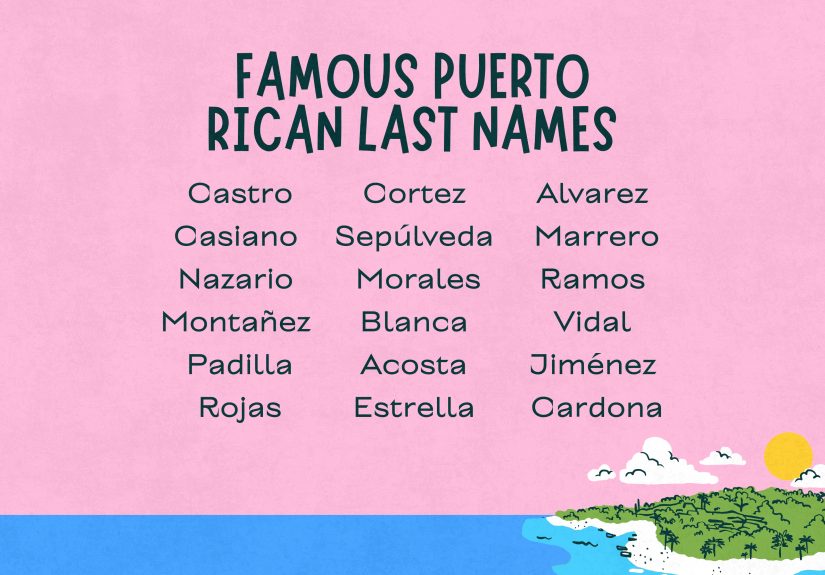
Puerto Rican last names are tiny history books disguised as everyday introductions. You hear one at a family cookout, spot another on a baseball jersey, and suddenly you are standing knee-deep in stories about Spain, Taíno heritage, migration, Catholic tradition, African influence, and generations of relatives who absolutely insisted that everybody already knew who “the other Rivera family” was. Spoiler: nobody did.
If you have ever wondered why so many Puerto Rican surnames end in -ez, why names like Cruz, Rosario, and Santiago feel so deeply rooted, or why one family tree can contain Spanish, Basque, Canarian, and Caribbean threads all at once, you are in the right place. This guide breaks down the meaning behind more than 100 Puerto Rican last names in clear, easy English.
One quick note before we dive in: surname meanings are usually the most widely accepted interpretations, not ironclad verdicts handed down by a medieval judge with a fancy beard. Over time, spellings shift, families move, and a single surname can have more than one origin. Still, the patterns are real, and they reveal a lot about Puerto Rican identity.
Why Puerto Rican Last Names Matter
Puerto Rican last names are mostly Spanish in form, but the culture behind them is much bigger than Spain alone. Puerto Rico’s history includes Taíno roots, Spanish colonization, African heritage, Catholic naming traditions, and later migration across the Caribbean and the mainland United States. That is why Puerto Rican surnames can feel familiar to Spanish speakers everywhere while still carrying a distinct island flavor.
In Puerto Rico, many people traditionally use two surnames: the father’s surname first and the mother’s surname second. So if someone is named Elena Rodríguez Rivera, Rodríguez is usually the paternal surname and Rivera the maternal surname. That naming style is one reason Puerto Rican genealogy can be both fascinating and mildly chaotic. It gives you more family clues, but it also means forms designed for just one last name sometimes throw a bureaucratic tantrum.
The Big Patterns Behind Puerto Rican Surnames
1. Patronymic surnames
These are the classics. Many Puerto Rican last names ending in -ez began as patronymics, meaning “son of.” That is why names like Rodríguez, Martínez, and López are so common. They started as family markers tied to a father’s given name and then became inherited surnames.
2. Place-based surnames
Other surnames describe where a family came from or what the landscape looked like nearby. A name like Rivera points to a riverbank. Sierra suggests mountains. Navarro identifies someone from Navarre. These names are basically old-school address labels, just with more drama and fewer ZIP codes.
3. Religious surnames
Puerto Rico’s strong Catholic influence helped popularize surnames tied to saints, devotions, and sacred imagery. Cruz, Rosario, Del Rosario, Santiago, and De Jesús all reflect that tradition.
4. Occupational and descriptive surnames
Some names came from jobs, traits, or nicknames. Herrero points to a blacksmith. Molina is linked to a mill. Delgado means slender. Bravo suggests boldness. Medieval people loved efficient labels. If a guy was tall, loud, or always around horses, odds were good the neighborhood noticed.
100+ Puerto Rican Last Names and Their Meanings
The list below includes many surnames widely found in Puerto Rico. Some are especially common on the island, while others are long-established Spanish surnames with deep Puerto Rican roots.
Patronymic Puerto Rican Last Names
- Sánchez usually means “son of Sancho.”
- Díaz usually means “son of Diego.”
- Rodríguez “son of Rodrigo.”
- Vázquez “son of Vasco.”
- Ortiz “son of Ortún” or a related older given name.
- Pérez “son of Pedro” or “Pero.”
- González “son of Gonzalo.”
- Menéndez “son of Menendo.”
- Martínez “son of Martín.”
- López “son of Lope.”
- Hernández “son of Hernando” or “Fernando.”
- Vélez “son of Vela.”
- Ruiz “son of Ruy.”
- Fernández “son of Fernando.”
- Jiménez “son of Jimeno.”
- Álvarez “son of Álvaro.”
- Ramírez “son of Ramiro.”
- Muñoz “son of Muño.”
- Núñez “son of Nuño.”
- Benítez “son of Benito.”
- Méndez “son of Mendo.”
- Suárez “son of Suero.”
- Gómez “son of Gome” or a related older name.
- Domínguez “son of Domingo.”
- Enríquez “son of Enrique.”
- Antúnez “son of Antón.”
Place and Landscape-Based Puerto Rican Last Names
- Rivera someone who lived near a riverbank.
- Burgos from the city or region of Burgos in Spain.
- Canales linked to channels or canals.
- Vega a fertile meadow or plain.
- Sierra mountain range or saw-shaped hills.
- Acevedo from a place with holly trees.
- Sanabria from the Sanabria region in Spain.
- Soler often linked to sunny ground or a homestead.
- Campos fields or open countryside.
- Arroyo stream, brook, or ravine.
- Fuentes springs or fountains.
- Montes mountains or wooded high ground.
- Cuevas caves.
- Figueroa associated with fig trees or a fig-tree place.
- Aponte from a place name meaning “the bridge.”
- Lugo from Lugo, especially in Galicia.
- Navarro someone from Navarre.
- Toledo from Toledo.
- Valle valley.
- Del Valle “of the valley.”
- Ríos rivers.
- Soto grove, thicket, or riverside woodland.
- Matos brushwood or thickets.
- Serrano mountain dweller or someone from the highlands.
- Cabrera goat-herding land or a goat place.
- Medina city or town, from Arabic influence in Spain.
Religious, Occupational, and Status-Linked Puerto Rican Last Names
- Cruz cross.
- Santiago Saint James.
- Reyes kings, often tied to the Three Kings tradition.
- Merced mercy or grace.
- Nieves snow, often tied to a Marian title.
- Rosario rosary; ultimately tied to “rose garden.”
- Del Rosario “of the Rosary.”
- De Jesús “of Jesus.”
- De la Rosa “of the rose.”
- Pastor shepherd.
- Guerrero warrior.
- Herrera forge or ironworks.
- Herrero blacksmith.
- Molina mill.
- Molinero miller.
- Zapata linked to shoes or a shoemaker.
- Calderón cauldron; sometimes occupational.
- Caballero horseman, gentleman, or knight.
- Ferrer ironworker or smith.
- Montero hunter or keeper of the hills.
- Ponce linked to the old Roman name Pontius.
- Cordero lamb.
- León lion.
- Romero pilgrim to Rome; also associated with rosemary.
- Santos saints.
- Del Carmen “of Carmel.”
Descriptive and Common Puerto Rican Last Names
- Ramos branches, boughs, or palms.
- Morales mulberry trees.
- Agosto August; often tied to a birth month or given name.
- García from an old medieval given name, often linked to “bear.”
- Ortega usually tied to nettles or a nettle field.
- Torres towers.
- Ayala from the Ayala place name in the Basque region.
- Rosa rose.
- Pagán often linked to the old Latin paganus; origins can vary by family.
- Valentín from a name meaning strong or healthy.
- Delgado slender or thin.
- Quiñones land allotments, estates, or divided plots.
- Rosado rosy or pink-toned.
- Flores flowers, or sometimes from the name Floro.
- Blanco fair or white.
- Moreno dark-haired or dark-complexioned.
- Prieto dark or blackish.
- Bravo bold, fierce, or spirited.
- Calvo bald.
- Garrido elegant, handsome, or stylish.
- Pavón peacock.
- Gallo rooster.
- Correa strap, belt, or leather band.
- Cortés courteous or polite.
- Roldán from the old Germanic name Roland.
- Arias from an old given name, usually Arias.
Distinctive Puerto Rican Favorites
- Cabán from a word meaning cabin or hut.
- Cotto usually treated as a variant of Coto.
- Adorno adorned or ornamented.
- Pabón often treated as a variant of Pavón, meaning peacock.
- Berríos usually linked to Berrio, often interpreted as “new place.”
- Narváez from a Spanish place name.
- Betancourt from the French place name Bethencourt.
- Fontánez likely linked to a fountain or spring.
How to Read Puerto Rican Surnames Like a Pro
If you are trying to understand Puerto Rican last names, start by looking for patterns instead of obsessing over one dramatic origin story. A name ending in -ez is often patronymic. A name tied to the landscape may point to a family’s old hometown. A religious surname may reflect Catholic tradition rather than geography. And when a surname seems unusually specific, like Cabán or Agosto, it may carry a regional flavor that feels especially rooted in Puerto Rican family history.
It also helps to remember that nicknames are common in Puerto Rican families. That means your cousin known as “Papo,” “Tito,” or “Nena” may have a full legal name that sounds nothing like the person everyone actually calls when dinner is ready. Genealogy gets a lot easier once you stop assuming that the loudest aunt at the table introduced herself using her official paperwork name.
Experiences Related to Puerto Rican Last Names: More Than Words on a Form
There is a very specific feeling that comes with hearing a Puerto Rican last name in the wild. Maybe it happens in a waiting room when someone calls out “Rivera,” and suddenly five heads turn at once. Maybe it happens in school when two students named Rodríguez discover they are not related, while two people with completely different surnames turn out to share the same grandmother’s town. Puerto Rican last names do that. They create instant curiosity, tiny sparks of recognition, and the occasional comedy sketch in real life.
For many Puerto Ricans and members of the diaspora, last names are tied to belonging. A surname can connect someone to a neighborhood in San Juan, a family story from Ponce, grandparents from Mayagüez, or a migration chapter in New York, Orlando, Chicago, or Philadelphia. Sometimes a name feels like an heirloom. Other times it feels like a puzzle piece. Either way, it rarely feels empty.
There is also a practical side to the experience. Anyone who has filled out forms outside Spanish-speaking systems knows the struggle. One box for “last name” is not always enough when your family uses two surnames. Databases split names incorrectly. Airlines get creative in all the wrong ways. School records turn a maternal surname into a middle name. It is enough to make a person stare at a screen and whisper, “Respectfully, who designed this form?”
Family storytelling adds another layer. In many homes, last names are not explained through textbooks. They are explained through people. “That side of the family is all Pagáns.” “The Quiñones line came from the mountains.” “Your abuela was a Rosario before she married.” These comments float around birthdays, funerals, baptisms, and holiday dinners until they become part of how identity is understood. You may not know the exact medieval etymology at first, but you know the emotional geography.
Then there is genealogy, which is where Puerto Rican surnames become both magical and mildly rude. Magical, because two surnames can provide extra clues in church records, civil documents, and family trees. Rude, because spelling variations, accents, abbreviations, and nicknames love to show up just when you think you are making progress. One record says Velez, another says Vélez, and a third one decides today is a great day to pretend the maternal surname never existed. Cool. Very helpful. Thank you, mysterious clerk from 1897.
Still, that is exactly why these names matter. Puerto Rican last names are not just labels. They hold memory, migration, faith, class, geography, humor, and resilience. They can reveal whether a family line once pointed to a riverbank, a saint, a trade, a town, or an old given name. More importantly, they can help people feel anchored. In a world that moves fast and forgets easily, a surname can quietly say: this is where we have been, this is who carried us, and this is why we still answer when history calls our name.
Final Thoughts
Puerto Rican last names are a rich mix of history, language, and identity. Some point to fathers’ names. Some point to mountains, rivers, saints, or old trades. Some feel especially at home in Puerto Rican family records, while others connect the island to a broader Spanish-speaking world. Together, they tell a story that is layered, proud, and deeply human.
So the next time you come across names like Sánchez, Rivera, Agosto, Rosario, Cabán, or Quiñones, remember that you are not just looking at a label. You are looking at a breadcrumb trail through Puerto Rican history. And honestly, that is a lot more interesting than another boring listicle pretending every last name means “warrior.”