Table of Contents >> Show >> Hide
- The Decor Item Doing the Most (In the Best Way)
- What a Dhurrie Rug Is (and Why Designers Love It)
- Why This One Piece Makes My Living Room Feel Like “Home”
- How to Style a South Asian Flatweave Rug in a Modern American Living Room
- Care Tips: Keeping a Dhurrie Beautiful in Real Life
- Buying One Thoughtfully: A Quick Guide to Shopping Without Regret
- Conclusion: The Rug That Keeps Me Grounded (Plus of Real-Life Meaning)
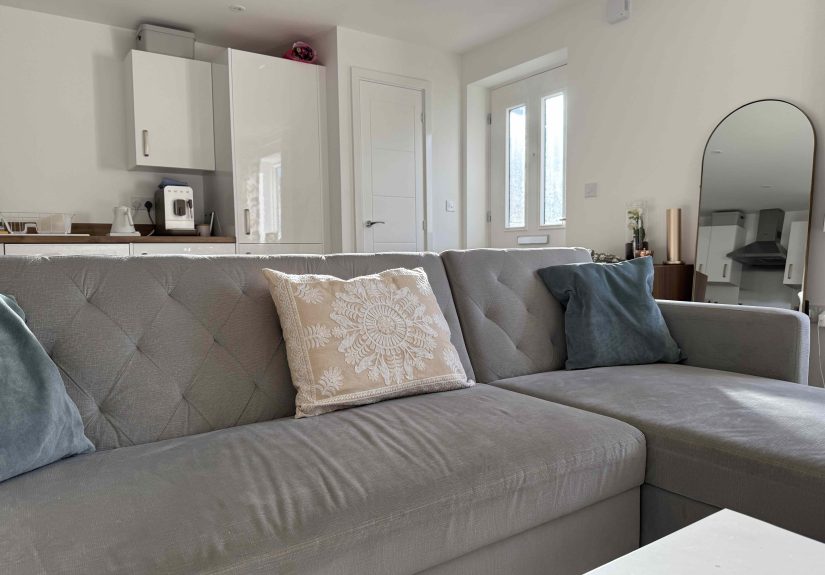
My living room is a very American scene: streaming remote in one hand, a suspiciously large iced coffee in the other,
and a couch that has survived more snack-related incidents than I’d like to admit. And yet, one thing in the room
instantly makes it feel like mine in the way only heritage can: a handwoven South Asian flatweave rugspecifically,
a dhurrie.
If you’ve never heard of a dhurrie, don’t worryneither had half my friends until I turned into “that person” who
points at the floor and says, “Yes, it’s reversible. Yes, it’s handwoven. No, you may not bring red wine near it.”
But here’s the real reason it matters: this rug doesn’t just decorate my living room. It carries memory, craft, and
a kind of everyday joy that makes the space feel like a home that remembers where I come from.
The Decor Item Doing the Most (In the Best Way)
In design terms, a rug “anchors the room.” In real-life terms, it stops my coffee table from looking like it’s floating
in the middle of an existential crisis. A dhurrie does bothwhile quietly giving my space a South Asian heartbeat.
Dhurries are traditionally flatwoven rugs (often cotton, sometimes wool blends) made across South Asia.
They tend to be low-profile, lightweight, and practicalthink “beautiful workhorse,” not “delicate museum artifact
that faints when you vacuum near it.” Many come in stripes, diamonds, chevrons, or geometric grids that feel surprisingly
modern, even when the pattern language is rooted in older weaving traditions.
The one I own has a sun-faded paletteindigo, warm ivory, and a little rust. It looks like it could live in a minimalist
Scandinavian apartment… and also like it belongs in a home where aunties have strong opinions about your life choices.
Iconic, honestly.
What a Dhurrie Rug Is (and Why Designers Love It)
A dhurrie is a flatweave rug, meaning it’s woven rather than knotted into a plush pile. That structure is
why it tends to be:
- Low-profile (great for high-traffic living rooms and under coffee tables)
- Easy to layer (especially if you want that cozy, collected look)
- Often reversible (two looks for the price of one, which feels emotionally supportive in this economy)
- Pattern-forward (geometric designs that play well with modern furniture)
In South Asian homes, flatwoven rugs and mats show up everywhere: under seating areas, in gathering spaces,
during celebrations, or simply where family life happens. That practicality is part of the beauty. A dhurrie isn’t
trying to be preciousit’s trying to be present.
Why This One Piece Makes My Living Room Feel Like “Home”
Plenty of decor items can nod to heritage, but a dhurrie is special because it’s both functional and
emotional. It’s the kind of object that doesn’t need a dramatic spotlight. It’s already doing its job
holding the room togetherwhile also holding a story.
1) It creates an instant gathering space
South Asian culture is famously good at togetherness. We gather loudly, frequently, and with snacks that appear
as if summoned by a group chat. A rug makes a living room feel like a designated “sit here, stay awhile” zone.
Even if nobody sits on the floor, the room feels arranged for community.
2) It brings pattern in a way that feels alive
South Asian aesthetics often embrace color and pattern with confidencewithout needing every item to match like
a furniture showroom. A dhurrie lets you introduce bold design language without committing to, say, a hot-pink sofa
that you might regret after one overly honest relative visits.
3) It’s heritage you can actually live with
Some culturally meaningful pieces feel too delicate for daily life. A flatweave rug is the opposite: it’s meant to be
walked on, vacuumed, rotated, and (occasionally) apologized to after a spill. That “use it, don’t just display it”
spirit feels deeply aligned with the way many of us grew upwhere beauty wasn’t separate from everyday utility.
How to Style a South Asian Flatweave Rug in a Modern American Living Room
The goal is not to build a “theme room.” The goal is to build a home that feels like youlayered, real, and personal.
Here’s how to make a dhurrie feel intentional, not costume-y.
Get the scale right (so the rug doesn’t look like a placemat)
If there is one design “rule” worth caring about, it’s this: a living room rug should be big enough to connect the
seating area. In most layouts, that means at least the front legs of the sofa and chairs sit on the rug.
Big rugs make rooms feel bigger; tiny rugs make furniture look awkwardly stranded, like it missed the last bus home.
A few practical placement ideas:
- Classic anchor: Front legs of sofa + chairs on the rug, coffee table centered.
- All-in: All furniture legs on the rug (best for larger rooms).
- Small-space cheat: Rug starts under the sofa’s front legs and extends into the room to define the zone.
Let the rug “talk,” then keep the supporting cast calm
If your dhurrie has bold stripes or bright geometrics, balance it with simpler shapes elsewhere:
a solid sofa, streamlined curtains, and a coffee table with clean lines. This isn’t about muting your heritageit’s about
giving it a clear stage.
Pull one or two colors into the room (not all of them)
Dhurries can be colorful, but you don’t need to replicate the entire palette across the room. Choose two accents:
maybe indigo from the rug becomes a throw pillow, and the warm rust becomes a vase or art print detail.
Suddenly the room feels cohesive, not chaotic.
Mix textures like you’re building a good chai
A living room looks richer when it has multiple textures. Pair your flatweave rug with:
- a linen or cotton sofa (soft and matte)
- a wood coffee table (warm and grounded)
- a little brass or copper accent (a subtle South Asian wink)
- a boucle or wool throw (cozy contrast to the flatweave)
The trick is variety without clutter. The room should feel collected, not like a storage unit with good lighting.
Care Tips: Keeping a Dhurrie Beautiful in Real Life
Flatweave rugs are practical, but they still deserve decent treatmentlike a friend who always shows up for you and
therefore gets the best seat at the table.
Everyday maintenance
- Vacuum regularly to keep dirt from settling into the weave (use a gentle setting if possible).
- Rotate every few months so wear stays evenespecially if the sun hits one side more.
- Use a rug pad to reduce slipping and help the rug keep its shape.
Spills and stains
Blot first (don’t rubrubbing is how stains get promoted to “permanent resident”). Use mild soap and water for spot
cleaning if the care label allows. If your dhurrie is small enough and labeled washable, follow the manufacturer’s
instructions carefullysome cotton flatweaves can handle gentle washing; others prefer professional cleaning.
Buying One Thoughtfully: A Quick Guide to Shopping Without Regret
Because dhurries are popular, the market includes everything from artisan-made handweaves to mass-produced
“inspired” versions. If celebrating roots matters to you, consider these tips:
Look for transparency
Good sellers can tell you where a rug is made, what it’s made of, and how it’s dyed. If the listing is vague and
the photos look like they were taken in a dimension with no shadows, proceed with caution.
Support makers and communities when you can
Fair-trade groups, artisan cooperatives, diaspora-run home shops, and museum stores sometimes carry textiles
with clearer provenance. Vintage and secondhand dhurries can also be a great optionmore sustainable, often more
character-rich, and sometimes more affordable.
Pick the “right” imperfections
Handmade pieces often have minor variations in weave or color. That’s not a flawit’s proof that a person, not a robot,
made it. (And yes, I’m aware I’m saying this as a robot. Let me have this one.)
Conclusion: The Rug That Keeps Me Grounded (Plus of Real-Life Meaning)
I love plenty of things in my living roommy lamp that makes everything look like a cozy movie scene, my bookshelf
that pretends I’m always reading serious literature, my couch that has become a witness to every major life decision
I’ve ever made. But the dhurrie is different. It’s not just “nice.” It’s anchoring.
On a purely design level, it does what the best living room decor should do: it defines the space, adds warmth, and
makes the room feel finished without feeling fussy. On a deeper level, it’s a daily reminder that my story didn’t start
in this apartment, in this city, or even on this continent. It started in family voices, in food rituals, in weddings and
festivals, in languages that change their rhythm depending on who’s speaking, and in the quiet persistence of craft.
Now for the extra, real-life partthe kind you don’t always see in a decor roundup. My dhurrie has become
the stage for tiny moments that feel like homecoming. The first was a Diwali get-together where I didn’t own enough
matching plates (because adulthood is a scam), but I did have the rug. We pushed the coffee table aside and suddenly
the living room turned into a gathering space the way I remember from growing up: people sitting closer than “American
personal space” recommends, passing snacks, laughing too loudly, and telling stories that begin with “Okay, so listen…”
and end an hour later with nobody remembering the original point.
Another time, I FaceTimed a relative while standing barefoot on the rug, and I caught myself smiling at how familiar it
feltlike my feet recognized the language of the weave even when my brain was busy juggling work and deadlines. I’ve
had chai spill incidents (tragic), quick blots with a towel (heroic), and that one moment where I stared at a tiny stain
and thought, “So this is what it’s like to become your parents.” I’ve watched friends who didn’t grow up South Asian
run their hands over the texture and ask questionsnot in a museum way, but in a curious, human way. Those questions
opened doors to conversations about where my family is from, what we celebrate, what we miss, and what we’re still
learning how to carry.
The rug has also been a surprising comfort on hard days. There are nights when I’ve sat on the floorphone facedown,
brain tiredand felt soothed by something as simple as the room having a grounded center. A dhurrie is literally designed
to hold space. Maybe that’s why it can feel symbolic: it holds the furniture, the footsteps, the gatherings, the quiet, the
chaos. It holds all the versions of “me” that show up at homeprofessional-me, messy-me, celebratory-me, homesick-me.
And yes, it’s “just” decor. But it’s also a bridge. In the same way certain smells can drop you into a childhood memory,
the right textile can make a modern room feel like it has ancestry. My living room doesn’t look like a replica of my
grandparents’ home, and it shouldn’t. It looks like my life nowAmerican rhythms, South Asian roots, and a rug that
quietly ties them together like it’s been doing this job forever.
If you’ve been looking for one meaningful piece of living room decorsomething that feels personal, functional, and
deeply “you”consider starting with the floor. A dhurrie doesn’t scream for attention. It simply says, every day,
“You belong here.”