Table of Contents >> Show >> Hide
- Why Musical Guests Work So Well on The Simpsons
- The Early Years: When Springfield Started Booking Legends
- The Peak of the Joke-Music Crossover
- Notable Musicians and Bands on The Simpsons
- How the Show’s Music Cameos Changed Over Time
- The Fan Experience: Growing Up with Springfield’s Jukebox
- Final Take
If Springfield were a real city, its booking agent would deserve a medal, a corner office, and probably a donut-shaped bonus. Over the years, The Simpsons has welcomed an absurdly impressive parade of musicians and bands, from classic-rock royalty and hip-hop legends to pop megastars and cult favorites. Some guest stars show up as themselves. Others voice oddballs, mentors, rivals, or the kind of emotional support coyotes you only meet after eating very spicy chili.
That range is exactly why Simpsons musical guests remain such a fun corner of TV history. The show never treated musicians as wallpaper. Instead, it used them to sharpen jokes, parody fame, build entire episodes, and occasionally sneak great music into the middle of animated chaos. In other words, Springfield didn’t just invite stars over for a cameo. It put them to work.
This guide rounds up many of the most memorable musicians and bands on The Simpsons, explains why their appearances mattered, and shows how the series turned guest spots into part of its comic DNA. It is not a complete encyclopedia of every singer who ever wandered into Moe’s, but it is a deep, representative list of the biggest, weirdest, funniest, and most memorable music cameos in the show’s long history.
Why Musical Guests Work So Well on The Simpsons
The secret is that The Simpsons understands celebrity better than most live-action comedies. It knows fame is funny, musicians often have larger-than-life personas, and fans love seeing stars gently roast themselves. When a band or singer appears in Springfield, the joke usually lands on two levels at once: it rewards viewers who know the artist and still works for people who just want to see Homer embarrass himself in front of somebody famous.
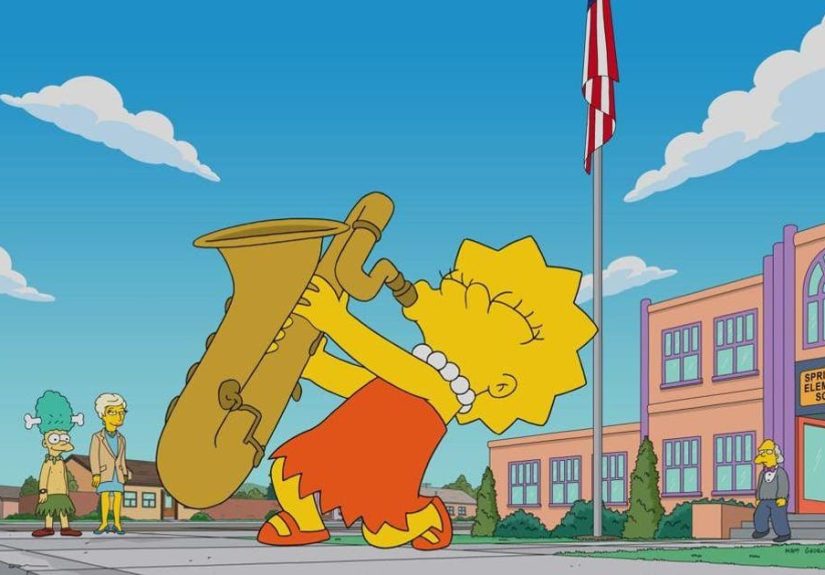
The show also has a built-in advantage: music is already woven into its world. Lisa is a serious musician. Homer is forever mourning the rock-star career he never had. Springfield itself is a magnet for talent, delusion, and public humiliation, which is basically half the music industry anyway. That setup lets writers slot artists into the story naturally instead of awkwardly announcing, “Look, kids, a celebrity!”
Sometimes the musicians play straight versions of themselves, like U2, The Who, or the Rolling Stones-adjacent fantasy camp crowd. Sometimes they become story engines, like Johnny Cash as the Space Coyote or Lady Gaga arriving to boost Lisa’s confidence. And sometimes they appear for one perfect gag and leave before the yellow dust settles. That variety is what makes any serious list of musicians and bands on The Simpsons so much fun to revisit.
The Early Years: When Springfield Started Booking Legends
The early seasons established the formula and did it with astonishing confidence. One of the most famous examples is Michael Jackson in “Stark Raving Dad,” where he voiced Leon Kompowsky under the credit “John Jay Smith.” The episode became legendary not just because of Jackson’s involvement, but because it showed how the series could blend pop-culture stunt casting with real emotion. Lisa’s birthday song still lives rent-free in many fans’ heads, right next to whatever jingle is currently occupying space in Homer’s brain.
Then came a run of appearances that felt like a music-history class taught by pranksters. Aerosmith showed up in “Flaming Moe’s.” Sting appeared in “Radio Bart.” Tom Jones, Linda Ronstadt, Barry White, Bette Midler, and the Red Hot Chili Peppers all turned up in the classic era. These were not random bookings. The show was building a world where superstar musicians could coexist with Sideshow Bob, Krusty, and a monorail salesman who should never have been trusted.
Season 5 alone was a buffet of musical weirdness. George Harrison and David Crosby appeared in “Homer’s Barbershop Quartet,” while The Ramones delivered one of the funniest celebrity drive-bys in the entire series at Mr. Burns’ birthday party. James Brown and James Taylor also joined the show’s growing musical hall of fame. By this point, The Simpsons had proven it could land stars from wildly different genres and make each one feel like part of Springfield’s logic, which is to say, not logical at all.
The Peak of the Joke-Music Crossover
Paul McCartney, Johnny Cash, and the “golden weird” era
If there is a golden stretch for Simpsons guest stars in music, it is hard to beat the mid-to-late 1990s. Paul and Linda McCartney gave “Lisa the Vegetarian” extra weight and warmth, helping anchor one of the show’s most beloved Lisa-centered stories. That episode is a perfect example of the series using a famous musician for more than a punch line. The McCartneys support Lisa’s convictions, but the episode never forgets to stay funny.
Then there is Johnny Cash as the Space Coyote in “El Viaje Misterioso de Nuestro Jomer.” It is one of the strangest and most inspired musical guest appearances the show ever produced. Cash did not simply wander in as “Johnny Cash, celebrity visitor.” He became a surreal guide in Homer’s hallucination, making the cameo feel less like stunt casting and more like comedy folklore.
“Homerpalooza” and the alternative-rock summit
No article about bands on The Simpsons is complete without “Homerpalooza,” the episode that turned Springfield into a parody music festival with impeccable taste. Cypress Hill, Peter Frampton, The Smashing Pumpkins, and Sonic Youth all appear, and the episode still feels like a snapshot of 1990s cool colliding with Homer’s aggressively uncool dad energy.
What makes “Homerpalooza” great is that the artists are not just decorative cameos. They help define the generational joke. Homer wants relevance. The bands represent a world he does not fully understand. The result is a perfect culture-clash episode that ages remarkably well. It is funny whether you came to it as a teen who loved alternative rock or as an adult who now realizes Homer was, tragically, doing his best.
U2, The Who, and rock gods in full cartoon mode
U2 made a memorable appearance in “Trash of the Titans,” where Homer inserts himself into the band’s giant concert screens while campaigning for sanitation commissioner. It is exactly the kind of oversized joke that suits both a stadium band and a cartoon man with no sense of shame. The Who also delivered a great Springfield moment in “A Tale of Two Springfields,” where their presence helps resolve one of the town’s many civic meltdowns. If a rock riff can tear down a wall, honestly, city planning should explore that more often.
By the early 2000s, the show had become so trusted by musicians that it could gather astonishing lineups. “How I Spent My Strummer Vacation” brought in Elvis Costello, Lenny Kravitz, Mick Jagger, Tom Petty, Keith Richards, and Brian Setzer. The premise itself is ridiculous in the best way: Homer attends a rock-and-roll fantasy camp, which is exactly where Homer belongs if you want maximum chaos with minimum self-awareness.
Notable Musicians and Bands on The Simpsons
Below is a broad list of memorable and culturally significant music guests. It is not every last cameo ever animated in yellow, but it covers many of the biggest names fans still talk about.
Classic stars and icons
- Michael Jackson Stark Raving Dad
- Aerosmith Flaming Moe’s
- Sting Radio Bart
- Tom Jones Marge Gets a Job
- Linda Ronstadt Mr. Plow
- Barry White Whacking Day, Krusty Gets Kancelled
- Bette Midler Krusty Gets Kancelled
- Red Hot Chili Peppers Krusty Gets Kancelled
- George Harrison Homer’s Barbershop Quartet
- David Crosby Homer’s Barbershop Quartet, Marge in Chains
- The Ramones Rosebud
- James Brown Bart’s Inner Child
- James Taylor Deep Space Homer
- Paul McCartney and Linda McCartney Lisa the Vegetarian
- Johnny Cash El Viaje Misterioso de Nuestro Jomer
- Tito Puente Who Shot Mr. Burns? Part One and Part Two
Alternative, rock, and festival favorites
- Cypress Hill Homerpalooza
- Peter Frampton Homerpalooza
- The Smashing Pumpkins Homerpalooza
- Sonic Youth Homerpalooza
- U2 Trash of the Titans
- The Who A Tale of Two Springfields
- R.E.M. Homer the Moe
- Phish Weekend at Burnsie’s
- Elvis Costello How I Spent My Strummer Vacation
- Lenny Kravitz How I Spent My Strummer Vacation
- Mick Jagger and Keith Richards How I Spent My Strummer Vacation
- Tom Petty How I Spent My Strummer Vacation
- Blink-182 Barting Over
- “Weird Al” Yankovic Three Gays of the Condo and later appearances
- The Decemberists The Day the Earth Stood Cool
- Tom Waits Homer Goes to Prep School
- Sigur Rós The Saga of Carl
- Ed Sheeran Haw-Haw Land
Pop, hip-hop, and newer-era guests
- ’NSYNC New Kids on the Blecch
- Britney Spears The Mansion Family
- Katy Perry The Fight Before Christmas
- Lady Gaga Lisa Goes Gaga
- Flight of the Conchords Elementary School Musical
- Justin Bieber The Fabulous Faker Boy
- Lionel Richie He Loves to Fly and He D’ohs
- Plácido Domingo The Homer of Seville
- Dixie Chicks Papa Don’t Leech
- Coldplay later-era appearance in Springfield’s orbit
- Common, RZA, and Snoop Dogg The Great Phatsby
- Trombone Shorty Lisa Gets the Blues
- Patti LaBelle and Pentatonix 2024 holiday special
- Los Tigres del Norte 2025 appearance with a new song
How the Show’s Music Cameos Changed Over Time
In the early years, the cameos often felt delightfully surprising. You never knew when a legendary singer would appear, and because the celebrity culture around TV was different, the shock value was huge. Later, the show became more expansive and more willing to bring in artists from every imaginable genre: classic rock, country, opera, indie rock, hip-hop, boy bands, and pop royalty. That breadth helped keep the guest-star tradition alive even as pop culture changed around it.
But the best appearances share one trait: they serve the joke. The strongest musical episodes are not the ones with the biggest names. They are the ones where the artist fits the story so well that you cannot imagine the episode without them. Paul McCartney makes perfect sense in a Lisa morality tale. Johnny Cash makes perfect sense in a chili-induced vision quest. U2 makes perfect sense when Homer needs to turn public sanitation into a large-scale embarrassment.
That is also why some cameos from later seasons still land. Lady Gaga arrives as a confidence-boosting force for Lisa. Flight of the Conchords fit naturally into a send-up of artsy coolness. Ed Sheeran slides into a jazz-and-romance parody. Even when fans debate which era of the show is strongest, the musical guest tradition keeps proving that Springfield knows how to cast a bit.
The Fan Experience: Growing Up with Springfield’s Jukebox
One of the most underrated things about The Simpsons is how it works like a sneaky music-discovery machine. A lot of viewers did not meet certain artists through radio, MTV, or a parent’s dusty CD shelf. They met them because Homer got in the way of a concert, Lisa found a hero, Bart ruined something expensive, or Krusty somehow booked an impossible comeback special. For plenty of fans, The Simpsons was not just funny. It was educational in the most chaotic possible way.
That experience is especially powerful because the show never lectures. It just drops artists into absurd situations and trusts the audience to pick up the vibe. Maybe you did not know who Tito Puente was the first time you saw him. Maybe George Harrison was just “that cool guy at the awards party” until years later. Maybe you laughed at The Ramones long before you actually listened to The Ramones. The Simpsons made that kind of accidental music appreciation feel effortless.
There is also something deeply satisfying about how the show respects fandom without becoming precious about it. It can invite major artists into Springfield and still make them look ridiculous, which honestly is a compliment in Simpsons language. If a musician is willing to be yellow, weird, and mildly humiliated, the audience tends to love them more for it. The cameos feel earned because the stars are usually in on the joke.
For longtime viewers, these appearances also become tiny time capsules. “Homerpalooza” captures a very specific 1990s cultural mood. U2’s cameo feels like a late-1990s stadium-pop snapshot. Katy Perry, Lady Gaga, and Ed Sheeran mark later pop moments in completely different ways. Rewatching these episodes is not just revisiting the show. It is revisiting entire eras of how music felt, looked, and moved through pop culture.
And then there is the emotional side. The best musical guest episodes are funny, yes, but they also tend to stick because music gives them extra feeling. Lisa the Vegetarian works because Paul and Linda McCartney help validate Lisa’s point of view. Johnny Cash’s Space Coyote appearance lingers because it turns a surreal joke into something strangely profound. Even silly musical moments can create genuine warmth, which is part of why fans remember them so clearly years later.
Watching these episodes now, the experience is a little like flipping through a brilliantly unhinged playlist. One minute you are with classic-rock icons, the next with indie darlings, then opera legends, then boy bands, then punk weirdos, then pop megastars in a town where the local doctor still says “Hi, everybody!” like that is normal. It is a reminder that The Simpsons has always understood something important: music is funny, emotional, nostalgic, and communal all at once.
That is why the tradition still matters. A list of Simpsons musical guests is not just trivia for TV nerds. It is a map of how one comedy series interacted with music history for decades, inviting artists from every corner of the industry into Springfield and somehow making them all feel like neighbors. Some came for one joke. Some helped define whole episodes. All of them added another note to the strangest, funniest concert residency television has ever seen.
Final Take
If you are looking for the best musicians and bands on The Simpsons, the answer depends on what you love most: emotional storytelling, one-liner chaos, music-industry parody, or pure nostalgia. But one thing is clear: the show’s guest-star history is not a side dish. It is part of the recipe. From Michael Jackson and Paul McCartney to Cypress Hill, U2, Lady Gaga, and beyond, The Simpsons has spent decades turning celebrity appearances into comedy that actually lasts.
And that may be the biggest achievement of all. In lesser shows, guest stars can feel like marketing. In Springfield, they feel like folklore. Yellow, tuneful, occasionally ridiculous folklore.