Table of Contents >> Show >> Hide
- 1. Jack the Ripper
- 2. The Road Hill House Murder
- 3. The Charles Bravo Poisoning
- 4. The Brides in the Bath Murders
- 5. The Great Train Robbery
- 6. The Disappearance of Lord Lucan
- 7. The Disappearance of Suzy Lamplugh
- 8. The Murder of Rachel Nickell
- 9. The Murder of Jill Dando
- 10. The Daniel Morgan Murder
- Patterns in the Chaos
- Why These Cases Still Feel So Unsettling: A Longer Reflection
- Conclusion
- SEO Tags
Note: This article is based on real historical cases and written for informational and entertainment purposes in standard American English.
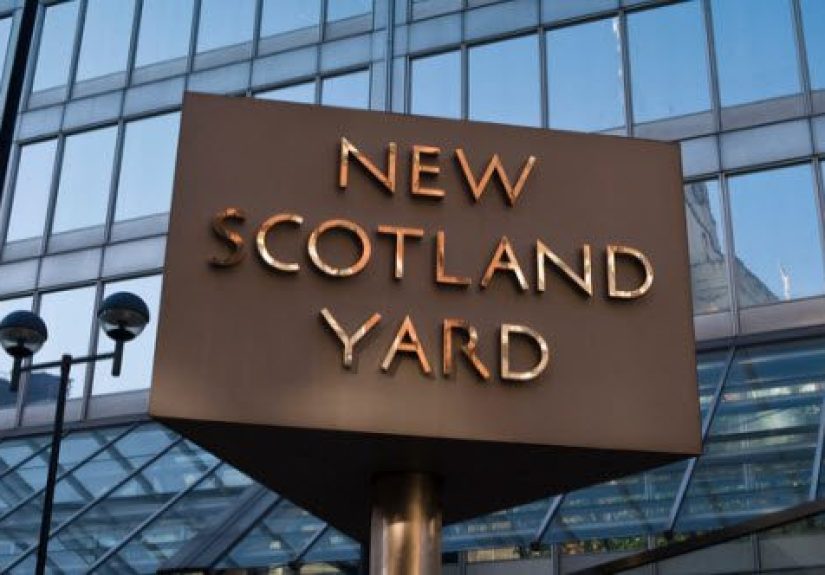
Few names in policing carry quite the same dramatic fog-and-gaslight aura as Scotland Yard. Technically, the phrase refers to the headquarters of London’s Metropolitan Police, but in popular culture it has become shorthand for British detectives trying to stare down the impossible. And sometimes, despite the uniforms, notebooks, informants, fingerprints, and famous confidence, the impossible stared right back.
That is what makes the cases below so irresistible. Some were never solved. Some were solved only after years of confusion, dead ends, and public embarrassment. Others were “solved” in a way that left people arguing long afterward. Together, they show that crime is rarely tidy, criminals are rarely considerate enough to leave helpful clues, and public pressure can turn even the smartest investigation into a high-speed bicycle ride over cobblestones.
Here are 10 of the most infamous cases that baffled Scotland Yard, shook public confidence, and proved that real detective work is usually messier than the movies make it look.
1. Jack the Ripper
If there is a grand champion of unsolved mysteries, it is Jack the Ripper. In the autumn of 1888, a killer terrorized London’s Whitechapel district, murdering women with shocking brutality and slipping away before police could pin him down. Scotland Yard threw manpower, interviews, patrols, and mountains of suspicion at the case. What it did not have was modern forensic science, reliable crime scene preservation, or a way to separate useful evidence from the era’s industrial-sized panic.
The result was a case that became less an investigation than a cultural storm. Rumors multiplied. Fake letters fueled the legend. Suspects ranged from plausible to wildly theatrical. More than a century later, the identity of the killer remains uncertain, and the Ripper still stands as the case most often cited when people talk about Scotland Yard being outfoxed on the biggest stage imaginable.
2. The Road Hill House Murder
Long before true-crime podcasts learned how to say “twist” every seven minutes, the Road Hill House murder had Victorian Britain completely transfixed. In 1860, three-year-old Saville Kent was found murdered after being taken from his bed in a respectable country home. It was the kind of crime that horrified the public because it happened in a setting that was supposed to be safe, orderly, and proper. In other words, the very opposite of a nightmare.
Scotland Yard detective Jonathan Whicher suspected that the truth lay inside the household itself, not in some convenient outside intruder story. His theory was bold, unpopular, and deeply controversial. He was ridiculed for it, and the case damaged his career. Years later, Constance Kent confessed, making the case look partly solved and partly tragic. Yet the long delay, the social prejudice surrounding the investigation, and the lingering questions about motive turned this into one of the earliest examples of Scotland Yard being right too soon, and punished for it.
3. The Charles Bravo Poisoning
Victorian England loved a poisoning mystery the way modern audiences love a limited streaming series with ominous piano music. The death of Charles Bravo in 1876 delivered exactly that. Bravo, a young barrister, died after swallowing antimony, and the central question was maddeningly simple: did he kill himself, was he accidentally poisoned, or did someone murder him?
The trouble was that almost every possible answer opened another door of scandal. Suspicion swirled around his wife, her former lover, household staff, and Bravo himself. Testimony clashed. Motives overlapped. Certainty packed its bags and left the building. Scotland Yard never produced a clean, convincing ending, and the case became one of the great unresolved poison dramas of the era. It baffled investigators not because there were no theories, but because there were too many and none landed with enough force to close the matter for good.
4. The Brides in the Bath Murders
At first glance, the Brides in the Bath deaths looked like a cruel run of accidents. Women married George Joseph Smith, and soon afterward they were found drowned in bathtubs. That should have set off deafening alarm bells, but hindsight is always wonderfully observant. At the time, the deaths seemed odd without being instantly prosecutable.
What baffled Scotland Yard was the method. There were few obvious signs of struggle, little physical evidence, and no easy explanation for how a seemingly healthy woman could drown so quickly in a tub. Detective Inspector Arthur Neil eventually recognized the pattern and used experimental reconstruction to understand how the murders could have been carried out. Smith was convicted, but only after police worked through a case that exposed how difficult it can be to spot serial murder when the killer hides behind domestic normalcy, paperwork, and a face that says, “Me? I merely enjoy baths.”
5. The Great Train Robbery
Not every baffling Scotland Yard case involved murder. The Great Train Robbery of 1963 was a giant, swaggering masterclass in criminal planning. A gang stopped the Glasgow-to-London Royal Mail train, stole about £2.6 million, and briefly made the police look as though they had been outmaneuvered by men who had read the rules and then used them as kindling.
The robbery was bold, disciplined, and carefully organized. Yes, many of the gang were eventually caught, thanks in part to fingerprints and sloppy cleanup at the hideout. But the heist still embarrassed investigators because it revealed how a highly choreographed criminal operation could punch straight through the system. Add the later escape and globe-trotting saga of Ronnie Biggs, and the case became less a single robbery than a long-running reminder that catching criminals is one thing, keeping the story from becoming folklore is another.
6. The Disappearance of Lord Lucan
Some cases refuse to stay in one category. The Lord Lucan case was part murder inquiry, part missing-person investigation, part national obsession. In 1974, nanny Sandra Rivett was murdered, Lady Lucan was attacked, and Lord Lucan vanished. His abandoned car was found, suspicion closed around him, and then the man himself seemed to evaporate into legend.
This was catnip for tabloids and a migraine for police. Did he kill himself? Was he smuggled abroad by wealthy friends? Did he start a new life somewhere warm, implausible, and heavily fictionalized? The official machinery moved, inquests were held, and later legal declarations recognized him as dead. But the unanswered question of what exactly happened after the crime kept the case alive for decades. Scotland Yard was left wrestling not only with evidence, but with a suspect who became a rumor machine with a title.
7. The Disappearance of Suzy Lamplugh
In 1986, estate agent Suzy Lamplugh disappeared after going to meet a client listed in her diary as “Mr. Kipper.” That detail alone sounds like something a mystery writer would reject for being too on-the-nose, yet it was real. Lamplugh never returned, and despite extensive investigations, searches, and public appeals, her body was never found.
The case baffled Scotland Yard because it sat right at the intersection of visibility and absence. There was a clear timeline, a working woman in daylight, a scheduled appointment, and still no neat trail to follow. Years of inquiry produced strong suspicion, especially around convicted killer John Cannan, but not the kind of resolution that closes a file with confidence. Lamplugh’s disappearance became one of Britain’s most haunting missing-person cases precisely because it began in such an ordinary way and ended in a blank space.
8. The Murder of Rachel Nickell
The Rachel Nickell case is remembered not only because the murder was horrifying, but because the early investigation went so badly off course. Nickell was killed on Wimbledon Common in 1992 while walking with her young son, and public outrage was immediate. Under pressure, police focused heavily on Colin Stagg, a local man who fit a psychological profile but was not supported by forensic evidence.
The result was a disastrous “honeytrap” operation and a prosecution that collapsed. Years later, improvements in DNA analysis helped identify Robert Napper, who eventually admitted manslaughter on the grounds of diminished responsibility. The real sting for Scotland Yard was that the case became a warning label attached to tunnel vision, media pressure, and overconfidence in offender profiling. It was solved, yes, but not before the original investigation became a case study in how not to let urgency outrun evidence.
9. The Murder of Jill Dando
When beloved BBC presenter Jill Dando was shot outside her home in 1999, the case exploded into one of the biggest murder inquiries in modern British history. She was high-profile, widely admired, and killed in a way that suggested either chilling professionalism or shocking opportunism. Neither option made the investigation any easier.
Barry George was convicted, then later acquitted after a retrial, and the case remains one of the most debated unsolved killings associated with the Metropolitan Police. Was it a targeted assassination? A stalker? A random act? A case of mistaken identity? The theories keep circling because no single explanation has fully satisfied the evidence. For Scotland Yard, the Dando case was baffling not just because it was hard, but because it unfolded under relentless public scrutiny while certainty stayed just out of reach.
10. The Daniel Morgan Murder
The Daniel Morgan case is the kind of mystery that corrodes trust as much as it frustrates detectives. Morgan, a private investigator, was murdered in 1987 with an axe embedded in his head in a south London parking lot. That alone would have guaranteed a major investigation. What made it far worse was what followed: repeated failed inquiries, allegations of corruption, and a sense that the case was tangled not only in criminality but in institutional failure.
Over the years, the murder became a symbol of everything that can go wrong when policing a crime is complicated by questions about the police themselves. No one has been brought to justice for Morgan’s death. That fact has given the case an especially bitter afterlife. It baffled Scotland Yard on the evidence, on the process, and on the reputation front all at once. For a force that trades on authority, that is about as uncomfortable as mysteries get.
Patterns in the Chaos
Put these cases side by side and a pattern emerges. Scotland Yard was most vulnerable when a case arrived before the tools were ready, before the culture was ready, or before the investigators themselves were ready to think beyond the obvious script. In some cases, the problem was primitive forensics. In others, it was class prejudice, media hysteria, bad assumptions, or simple human error. And sometimes the criminal was just very, very good at being terrible.
That is why these stories still fascinate readers. They are not simply tales of villains slipping away. They are stories about institutions under pressure, detectives making brilliant leaps and catastrophic mistakes, and the stubborn truth that some mysteries do not care how famous the people chasing them happen to be.
Why These Cases Still Feel So Unsettling: A Longer Reflection
There is a particular feeling that comes with reading about cases that baffled Scotland Yard. It is not just curiosity, and it is not quite fear. It is the uneasy realization that even the most famous detectives, working for the most famous police force, can still run headfirst into uncertainty. These cases remind us that crime is not a crossword puzzle where the final square always fits. Sometimes the page stays half-empty. Sometimes the answer was there, but nobody recognized it in time. Sometimes the wrong person absorbs the suspicion while the truth quietly slips out the back door.
That is part of why these stories linger in the imagination so stubbornly. They create an emotional whiplash between confidence and doubt. On one hand, people want to believe that a force like Scotland Yard can solve anything if it tries hard enough. On the other, history keeps waving a large and inconvenient file folder and saying, “Actually, not always.” There is something deeply human in that gap. It exposes the limits of expertise, the danger of arrogance, and the messiness of real life.
Reading through these cases also changes how you think about evidence. In fiction, evidence behaves beautifully. It glows under the correct light, points in one useful direction, and politely waits for the detective to arrive. In real investigations, evidence can be partial, contaminated, misunderstood, or drowned in noise. Witnesses misremember. Journalists speculate. Officials feel pressure. Whole narratives get built from details that later collapse like wet cardboard. The Rachel Nickell case is a painful example of that. So is Jill Dando. So is Daniel Morgan, where the investigation itself became part of the problem.
Then there is the eerie power of the missing ending. Jack the Ripper, Lord Lucan, and Suzy Lamplugh all survive in public memory because they deny us the neat final chapter our brains crave. People do not like unresolved stories. We are built to want cause, effect, confession, verdict, curtain. When those things never arrive, the mind keeps pacing the floor. It invents theories, revisits old clues, and asks one more time whether the obvious answer was missed back in year one, day one, minute one.
And yet these cases are not memorable only because they are frustrating. They matter because they changed how people think about policing, justice, and public trust. Some pushed forensic methods forward. Some exposed investigative bias. Some revealed how fame, class, and media pressure can distort the search for truth. In that sense, the baffling cases are often the most important ones. They teach harder lessons than the tidy victories do.
So yes, these stories are gripping. They are eerie, dramatic, and impossible to forget. But they are also cautionary tales. They remind us that mystery is not always romantic, that uncertainty can wound real families for decades, and that the line between legend and failure is sometimes thinner than a newspaper headline. Which, frankly, is a lot heavier than the cozy detective novels promised us. Entertaining? Absolutely. Comforting? Not even a little.
Conclusion
The cases that baffled Scotland Yard are not famous just because they were grisly or glamorous. They are famous because they exposed the limits of even the most celebrated investigators. From Jack the Ripper’s unanswered shadow to the institutional pain of the Daniel Morgan murder, these stories reveal the same hard truth: a major investigation can be intelligent, expensive, relentless, and still end in doubt.
That lingering doubt is exactly why people keep returning to these cases. They are history, mystery, and cautionary tale all at once. And while Scotland Yard solved plenty of crimes over the years, the ones it could not fully conquer became legends. Not because failure is entertaining, but because unresolved questions have a habit of haunting the public imagination far longer than solved ones ever do.