Table of Contents >> Show >> Hide
- Why This Vegetarian Boston Baked Beans Recipe Works
- Ingredients
- How to Make Vegetarian Boston Baked Beans
- What These Beans Taste Like
- Tips for the Best Vegetarian Boston Baked Beans
- Shortcut Version With Canned Beans
- Serving Ideas
- Easy Variations
- Storage and Reheating
- Frequently Asked Questions
- Conclusion
- Kitchen Experiences and Real-Life Notes on Making Vegetarian Boston Baked Beans
- SEO Tags
If your idea of baked beans comes from a can that opens with a tiny metallic sigh, welcome to the upgrade. This Vegetarian Boston Baked Beans Recipe is the from-scratch version that tastes deep, rich, sweet, savory, and just a little old-school in the best possible way. It has the familiar molasses backbone that makes Boston-style beans famous, but skips the bacon and still brings enough flavor to hold its own at a cookout, potluck, or random Tuesday when dinner needs to feel like a warm blanket.
The beauty of vegetarian Boston baked beans is that they don’t try to impersonate meat. They simply lean harder into what already makes this dish great: creamy navy beans, onion, mustard, molasses, brown sugar, and a slow bake that turns everything glossy, thick, and ridiculously spoonable. A little tomato paste adds body, smoked paprika brings subtle campfire energy, and soy sauce or tamari sneaks in the savory depth that makes people ask, “Wait, these are meatless?”
Even better, this recipe is practical. It uses pantry ingredients, rewards patience, reheats beautifully, and somehow tastes even better the next day. Basically, it is the kind of dish that quietly steals the spotlight from flashier food. Sorry, burgers. You had a good run.
Why This Vegetarian Boston Baked Beans Recipe Works
Traditional Boston baked beans are known for three things: white beans, molasses, and long, slow cooking. This vegetarian version keeps that identity intact while replacing the smoky, salty richness usually supplied by salt pork or bacon.
Here is the flavor logic:
- Navy beans are classic, tender, and creamy without falling apart too fast.
- Molasses gives Boston baked beans their signature dark sweetness and deep color.
- Brown sugar rounds out the sharper edge of molasses.
- Mustard keeps the sweetness from getting too cozy.
- Onion and garlic build savory depth.
- Tomato paste adds body and a subtle tang.
- Soy sauce or tamari adds the kind of savory note that makes vegetarian dishes feel complete.
- Smoked paprika gives a whisper of smoke without turning the whole pot into a campfire reenactment.
The result is a pot of beans that tastes balanced instead of one-note. Sweet, yes. But also earthy, tangy, and savory enough to keep you coming back for “just one more spoonful” about six times.
Ingredients
For the beans
- 1 pound dried navy beans
- Water, for soaking and simmering
- 1 bay leaf
For the sauce
- 2 tablespoons olive oil or 2 tablespoons unsalted butter
- 1 medium yellow onion, finely diced
- 3 garlic cloves, minced
- 1/3 cup unsulfured molasses
- 1/4 cup dark brown sugar
- 2 tablespoons tomato paste
- 1 tablespoon Dijon mustard or yellow mustard
- 1 teaspoon dry mustard
- 1 tablespoon soy sauce or tamari
- 1 tablespoon apple cider vinegar
- 1 teaspoon smoked paprika
- 1/2 teaspoon black pepper
- 1 to 1 1/2 teaspoons kosher salt, to taste
- 3 to 4 cups vegetable broth or hot water, as needed
How to Make Vegetarian Boston Baked Beans
1) Soak the beans
Sort and rinse the dried navy beans. Cover them with plenty of water and soak overnight. If you forgot to plan ahead because life is chaotic and beans rarely get calendar invites, use a quick-soak method instead: boil them for 2 minutes, turn off the heat, cover, and let them sit for 1 hour. Drain and rinse.
2) Par-cook the beans
Place the soaked beans in a large pot and cover with fresh water by about 2 inches. Add the bay leaf. Bring to a gentle boil, then reduce to a simmer and cook for 25 to 35 minutes, or until the beans are beginning to soften but are not fully done. Drain, reserving about 2 cups of the cooking liquid if you want extra starchy bean broth for the bake.
This step matters. Molasses and other acidic ingredients can slow down bean softening, so starting with partially cooked beans saves you from the heartbreak of a pot that smells amazing but still crunches.
3) Build the sauce
Preheat the oven to 300°F. In a Dutch oven or heavy oven-safe pot, heat the olive oil or butter over medium heat. Add the onion and cook for 6 to 8 minutes until softened and lightly golden. Add the garlic and stir for 30 seconds.
Add the molasses, brown sugar, tomato paste, Dijon mustard, dry mustard, soy sauce, apple cider vinegar, smoked paprika, black pepper, and salt. Stir until the tomato paste dissolves and the mixture looks glossy and smells like you suddenly became the person who always brings the best side dish.
4) Combine and bake
Add the par-cooked beans to the pot. Pour in 3 cups of vegetable broth or hot water and stir gently. The liquid should come just to the top of the beans, not drown them like they owe it money.
Cover and bake for 2 hours. Check once or twice during baking. If the beans look dry, add more hot broth or water, about 1/2 cup at a time. Remove the lid and bake for another 30 to 45 minutes, until the sauce is thick, dark, and bubbling and the beans are fully tender.
Let the beans rest for 10 to 15 minutes before serving. They thicken as they cool, which is lovely news unless you planned to inhale them directly from the pot.
What These Beans Taste Like
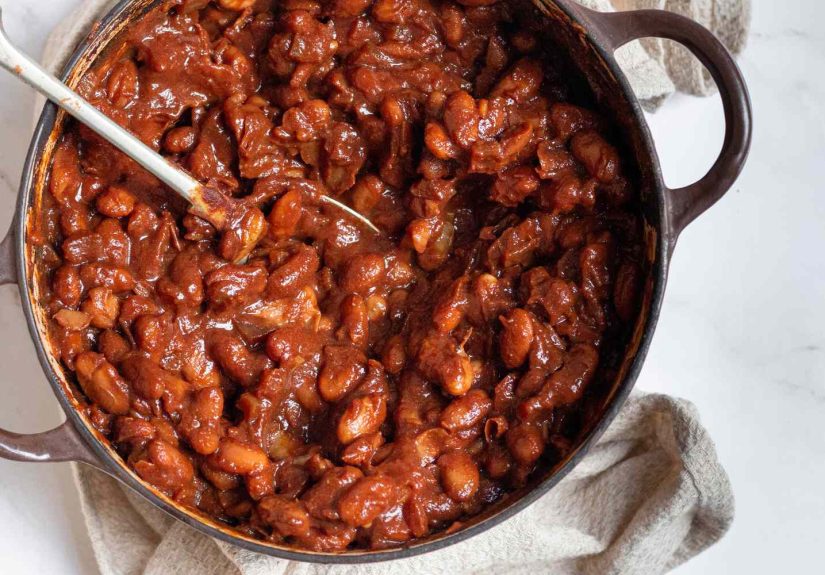
This is not a sugary diner-style bean situation. These homemade vegetarian baked beans are richer and more layered. The molasses gives them a dark caramel flavor, the mustard keeps things sharp, the tomato paste adds depth, and the smoked paprika tucks in just enough smokiness to make the dish feel rounded rather than flat.
The texture should be thick and saucy, not soupy. Boston-style baked beans are supposed to feel substantial. The sauce clings to the beans, the onions nearly melt into the background, and every bite tastes like the kind of comfort food that doesn’t need a sales pitch.
Tips for the Best Vegetarian Boston Baked Beans
Choose the right molasses
Use unsulfured molasses for the best flavor. Blackstrap is usually too bitter here unless you enjoy your side dishes with a side of personal struggle.
Use dried beans if you can
Canned beans work in a pinch, but dried beans give you better texture and a more classic baked-bean finish. They stay creamy inside while holding their shape through a long bake.
Don’t skip the rest time
Fresh from the oven, the beans may look a little loose. Give them 10 to 15 minutes. They settle, thicken, and become exactly what you were hoping for.
Keep an eye on the liquid
Low and slow cooking is the whole point, but beans still need enough moisture to finish tender. Check periodically and add hot liquid as needed.
Make them a day ahead
This recipe is fantastic the day you make it, but it is often even better the next day after the flavors have had time to deepen and mingle like old friends at a reunion.
Shortcut Version With Canned Beans
Need the flavor without the long haul? Use 4 cans of navy beans, drained and rinsed. Skip the soaking and par-cooking. Make the sauce as written, but reduce the liquid to about 1 1/2 cups total. Bake covered at 325°F for 30 minutes, then uncover and bake for 20 to 30 minutes more.
Will it be exactly the same as the dried-bean version? No. Will it still be delicious and dramatically better than a sad last-minute side dish? Absolutely.
Serving Ideas
This Vegetarian Boston Baked Beans Recipe plays well with plenty of main dishes and side dishes. Try it with:
- Skillet cornbread or brown bread
- Coleslaw with a sharp vinegar dressing
- Roasted potatoes
- Grilled vegetables
- Mac and cheese
- Veggie burgers
- Plant-based sausages
- Pickles for contrast and crunch
It also works as a main dish with toasted bread and a green salad, which is handy when you want dinner to feel hearty without cooking five different things.
Easy Variations
Vegan Boston baked beans
Use olive oil instead of butter. That is it. You are done. Beautiful.
Maple-molasses baked beans
Replace a tablespoon or two of the brown sugar with maple syrup for a softer sweetness and a little New England energy.
Spicier baked beans
Add a pinch of cayenne or a chopped chipotle in adobo if you want gentle heat and extra smokiness.
Tangier baked beans
Increase the cider vinegar slightly if you prefer a sharper finish.
Storage and Reheating
Store leftovers in an airtight container in the refrigerator for up to 5 days. Reheat gently on the stovetop or in the microwave with a splash of water or broth if the sauce has thickened too much. These beans also freeze well for up to 3 months.
Frankly, leftovers are one of the strongest arguments for making a full batch. The next-day bowl is a thing of beauty.
Frequently Asked Questions
Are Boston baked beans always vegetarian?
No. Traditional versions usually include salt pork or bacon. This recipe keeps the molasses-forward Boston character but makes it fully vegetarian.
What beans are best for Boston baked beans?
Navy beans are the classic choice because they are small, creamy, and sturdy enough for a long bake.
Why are my baked beans still hard?
Usually the beans were too old, not soaked long enough, or not par-cooked before meeting acidic ingredients like molasses and tomato. Give dried beans a head start before baking.
Can I make this recipe ahead of time?
Yes, and you probably should. The flavor improves after a night in the fridge.
Conclusion
If you want a side dish that tastes like effort, nostalgia, and common sense all at once, this Vegetarian Boston Baked Beans Recipe deserves a place in your regular rotation. It delivers the classic sweet-savory Boston flavor profile without meat, and it does so with ingredients you can actually find, steps you can actually follow, and results that make canned beans seem a little too confident for what they bring to the table.
Make it for a barbecue, a holiday spread, a weekend dinner, or a cold evening when only serious comfort food will do. Then make it again the next day, because baked beans are one of those magical dishes that seem to understand leftovers better than most humans understand group texts.
Kitchen Experiences and Real-Life Notes on Making Vegetarian Boston Baked Beans
The first time I made a proper batch of vegetarian Boston baked beans from scratch, I thought the beans were going to be the easy part. Cute idea. What actually happened was a long, humbling lesson in patience, liquid levels, and the mysterious power of molasses to make a kitchen smell like history and dessert at the same time. I kept opening the oven every twenty minutes like a worried stage parent, convinced the beans needed emotional support. They did not. They needed time.
Once I relaxed, the recipe became one of those dependable comfort dishes that rewards calm energy. You soak the beans, simmer them, stir together a dark glossy sauce, and then the oven takes over. It is wonderfully low drama once you stop expecting instant gratification. There is a specific moment, somewhere near the end of baking, when the top turns lacquered and the sauce thickens around the edges. That is the moment you realize these are not just “good vegetarian beans.” These are genuinely great baked beans, period.
I have also learned that everyone has an opinion about sweetness. One person wants more molasses. Another wants less sugar. Someone else insists smoked paprika is the hero. This is part of the fun. Vegetarian Boston baked beans are surprisingly flexible, and after making them a few times, you start adjusting the balance to fit your table. For a summer cookout, I like them a little tangier. For cold-weather dinners, I lean deeper into the molasses and let the sauce get extra thick and cozy.
These beans have saved more than one meal for me. They work when the main dish is underwhelming. They work when guests arrive late. They work when the weather turns weird and the menu suddenly needs something warm and grounding. I have served them beside cornbread, baked potatoes, grilled corn, and sharp slaw. I have eaten them for lunch straight from the fridge with a spoon while pretending I was “just checking the seasoning.” No one believed me, including me.
What I appreciate most is that the recipe feels generous. It makes a lot, it reheats well, and it seems to improve after a night in the refrigerator. The second-day bowl has deeper flavor, thicker sauce, and a kind of confidence the first-day batch is still working toward. If a dish can feed a crowd, handle leftovers, and still taste like you know exactly what you are doing, that dish has earned respect.
So yes, vegetarian Boston baked beans take a little time. But the process is soothing, the ingredients are humble, and the payoff is excellent. You end up with a pot of beans that tastes thoughtful, comforting, and grounded. Also, your kitchen smells amazing for hours, which is not a small thing. Some recipes feed people. This one also makes the whole house feel more welcoming. That is a pretty solid return on a pound of navy beans.