Table of Contents >> Show >> Hide
- Product Walkthrough: The Plain-English Definition
- Why Product Walkthroughs Matter
- Product Walkthrough vs. Product Tour vs. Demo vs. Documentation
- Common Walkthrough UI Patterns
- Types of Product Walkthroughs
- How to Build a Walkthrough That Users Actually Finish
- Examples: What a Good Walkthrough Looks Like
- How to Measure Walkthrough Success
- Common Product Walkthrough Mistakes
- Experiences: What Works in the Real World (About )
- Conclusion
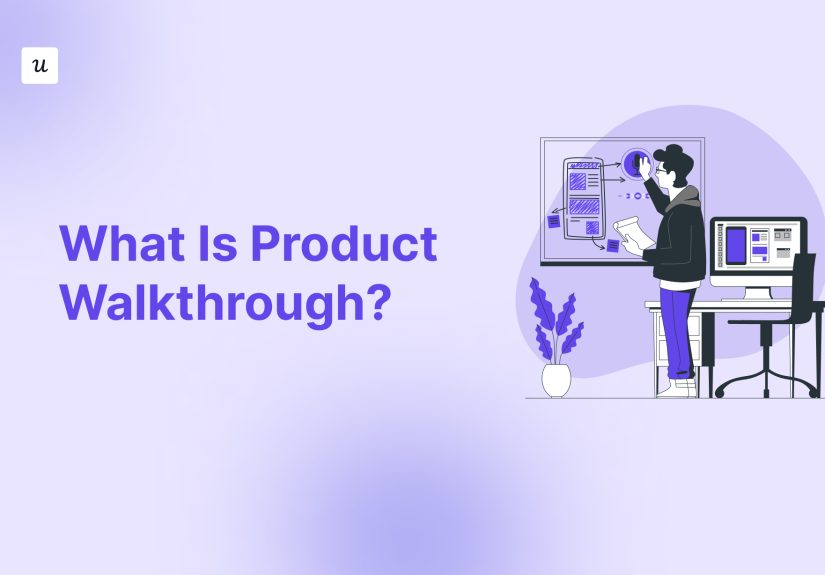
A product walkthrough is the friendly voice inside your app that says, “Start here,” instead of letting users wander around like they just entered IKEA with no map and a growing sense of doom. It’s one of the most practical pieces of user onboarding because it teaches people how to get value while they’re using the product.
Product Walkthrough: The Plain-English Definition
Product walkthrough (a.k.a. in-app walkthrough or interactive walkthrough) is a guided, step-by-step experience inside your product that helps users complete key actions. It uses UI cueslike tooltips, hotspots, and checkliststo point at real interface elements and nudge users to click, type, or configure something meaningful.
Glossary version: a walkthrough is an interactive tutorial designed to move users from “I signed up” to “Ohhh, this is the point.” That “aha” moment might be inviting a teammate, connecting data, creating the first project, or publishing a reportwhatever your product’s core value looks like.
Why Product Walkthroughs Matter
They shorten time-to-value
Most users don’t quit because they hate your product. They quit because they never reach the good part. Walkthroughs reduce time-to-value by removing guesswork and showing the next best action at the moment it matters.
They boost activation and feature adoption
A walkthrough should point to activation events (the behaviors that predict retention) and support feature adoption for high-impact capabilities people tend to miss on their own.
They reduce “Where do I click?” support tickets
In-app guidance answers common questions in context. That means fewer repetitive tickets, fewer frustrated users, and fewer customer success folks living in a permanent state of “one sec, let me screen share.”
Product Walkthrough vs. Product Tour vs. Demo vs. Documentation
These get mixed up constantly. Here’s a simple cheat sheet:
| Format | What it feels like | Best for |
|---|---|---|
| Product walkthrough | “Do this next” (action-oriented) | Helping users complete key tasks |
| Product tour | “Here’s what’s where” (orientation) | Building confidence and context |
| Interactive demo | “Try the promise” (often sales/marketing) | Showing value before sign-up |
| Documentation | “Read the details” (deep support) | Edge cases, policies, advanced learning |
Quick takeaway: tours are “look around,” walkthroughs are “get it done,” demos are “taste the value,” and docs are “when you need the full story.”
Common Walkthrough UI Patterns
Walkthroughs usually combine a few lightweight UI patterns. Pick the smallest tool that gets the job done (your users will thank you, silently, by not leaving).
- Welcome modals to set expectations and ask a goal question
- Tooltips to clarify a field, button, or choice
- Hotspots / beacons to highlight something new without interrupting
- Checklists to make progress visible and motivating
- Inline hints for micro-guidance that doesn’t hijack the screen
- Resource centers so users can self-serve when they’re stuck
Tooltip rule of thumb: don’t hide the “must-know” stuff
Tooltips are great for extra context. They’re not great as the only place you explain something criticalbecause they disappear and users have to remember what they said. Keep them short, specific, and tied to an action.
Checklists work best when they map to outcomes
A good onboarding checklist reads like a list of wins: “Connect your data,” “Create your first dashboard,” “Invite a teammate.” A bad checklist reads like a list of clicks. Guess which one people finish.
Progressive disclosure keeps your UI from shouting
Walkthroughs pair nicely with progressive disclosure: teach the essentials first, reveal advanced settings later. Users learn faster when they aren’t forced to hold 30 new concepts in their head at once.
Types of Product Walkthroughs
First-run onboarding walkthrough
A short, skippable flow that helps new users hit their first success moment quickly. If it feels like a lecture, it’s too long.
Setup and configuration walkthrough
Perfect for products with required setup (permissions, integrations, data imports). Think “setup wizard,” but kinder and more contextual.
Feature adoption walkthrough
Targeted guidance for a specific featureshown only to the users who need it. (If you show everyone everything, you’ve reinvented spam.)
Just-in-time walkthrough
Triggered by intent: the first time a user opens a complex screen, gets an error, or repeats a confusing action. It’s the closest thing your product has to mind-reading, minus the ethical concerns.
How to Build a Walkthrough That Users Actually Finish
1) Start with a job, not a feature list
Define the user’s goal in one sentence: “Create and share a report,” “Launch the campaign,” “Invite the team.” Walkthroughs succeed when they help users accomplish a job, not admire your UI.
2) Pick one activation event and design around it
Choose a single “this counts as progress” action, then guide users directly to it. Examples:
- Project tool: create a project and add a first task
- CRM: import contacts and create a pipeline stage
- Analytics: track an event and view a first dashboard
3) Keep steps short, contextual, and skippable
Use the smallest number of steps possible. Let users skip or close the walkthrough. Ironically, freedom is one of the best ways to get people to actually participate.
4) Personalize by segment and behavior
Trigger different walkthroughs based on role (admin vs. end user), lifecycle stage (new vs. returning), plan, and what the user has already done. Showing a “Getting started” guide to someone who’s already started is like handing a map to a person standing in their own kitchen.
5) Iterate like it’s a product feature (because it is)
Measure drop-offs by step, run A/B tests on step count and timing, and review guides whenever the UI changes. A walkthrough that points at a button that no longer exists is the UX version of “call this number” on a torn poster.
Examples: What a Good Walkthrough Looks Like
Example 1: CRM “first pipeline” walkthrough
Imagine a new CRM user who just wants to track deals. A useful walkthrough doesn’t start with “Welcome to your dashboard!” and then point at every menu. It starts with the job: build a pipeline. The flow might:
- Ask a quick goal question (“Are you setting up sales, partnerships, or recruiting?”) and prefill stage templates.
- Guide the user to create the first pipeline (activation), then immediately prompt them to add one deal.
- Use a short checklist (“Create pipeline → Add deal → Invite teammate”) so the user can pause and resume.
The key is momentum: each step produces something real in the productso by the time the walkthrough ends, the user already has data worth coming back to.
Example 2: Analytics “track an event” walkthrough
For an analytics tool, the “aha” moment is often seeing your own data. A walkthrough can meet users where they’re anxious: implementation. Instead of a long integration doc, the flow might highlight the SDK setup screen, offer a copy-ready snippet, and then guide the user to fire a test event and confirm it appears in a live view. Once the first event arrives, the walkthrough can pivot to the next win: build a simple dashboard and save it. That’s a walkthrough doing its jobturning scary setup into a series of small, confidence-building clicks.
How to Measure Walkthrough Success
- Start rate: Do users choose to engage?
- Completion rate: Do they finish once they start?
- Step drop-off: Where do they bail?
- Time-to-value: Do users reach the first outcome faster?
- Activation and adoption: Do more users hit the activation event and use the target feature?
- Support impact: Do related “how do I…” tickets decline?
Pair metrics with a tiny dose of feedback (a one-click “Was this helpful?” works wonders) to understand what’s confusing and why.
Common Product Walkthrough Mistakes
- Too long: If it needs a scroll bar, it needs an editor.
- Bad timing: Showing guidance before intent is like offering sunscreen at midnight.
- No segmentation: Generic guidance becomes background noise fast.
- Overexplaining: Replace narration with action (“Click here to…”).
- Never updating: UI changes break trust instantlykeep walkthroughs current.
Experiences: What Works in the Real World (About )
Now for the part nobody puts in the strategy deck: walkthroughs are easy to design in theory and hilariously easy to break in practice.
1) The “one more step” spiral
Teams often begin with a clean, five-step walkthrough. Then someone says, “We should also show billing,” and someone else adds “Don’t forget integrations,” and suddenly the walkthrough has a sequel trilogy. Users don’t hate guidance; they hate being trapped. The fix is ruthless: every step must move users closer to value or it gets postponed to a later moment (or politely escorted out of the building).
2) Goal-based onboarding is weirdly magical
A simple question“What are you here to do?”can transform the whole experience. Offer 2–4 goals, then tailor the checklist and walkthrough to that path. People feel understood, and your product stops shouting irrelevant instructions. It also makes measurement clearer: you can compare activation paths by intent instead of tossing everyone into one onboarding blender and hoping for the best.
3) Tooltips aren’t tiny modals (stop feeding them paragraphs)
When teams cram long explanations into tooltips, users either ignore them or forget the content instantly because the tooltip vanishes. Better: keep tooltips short, and tie them to a concrete action. “Add a workspace name so teammates recognize it” is more useful than “A workspace is a container that…” If something needs a full definition, link it from a resource center.
4) The best walkthroughs feel optional
Counterintuitive truth: the walkthrough that performs best is often the one that doesn’t auto-launch. A subtle checklist prompt (“Finish setup”) or a “Show me how” button gives users control, and control builds participation. Forced tours can spike skip rates; invited guidance tends to earn attention.
5) Measurement humbles everyone (in a good way)
Sometimes a walkthrough gets high completion but low activation. That’s not a failureit’s a clue. Maybe the walkthrough is guiding users to an action that feels busywork, or maybe the activation event is too far away. The practical approach is iteration: instrument each step, watch where users hesitate, read their feedback, and refine. And yes, occasionally the winning move is deleting the walkthrough entirely. Your goal is user success, not “most tooltips shipped.”
6) Walkthroughs break when your UI evolves
Walkthroughs are picky: if a button moves, a selector changes, or a label gets renamed, the guide can quietly failor worse, confidently point at the wrong thing. The healthiest habit is a “walkthrough review” ritual tied to product releases. Any time you ship UI changes, scan your active guides, click through them, and update copy. Users can forgive a confusing feature. They rarely forgive a guide that lies with a smile.
If you’re looking for a dependable “starter move,” start small: one walkthrough aimed at one activation event for one user segment. Ship it, measure it, then expand. Walkthroughs scale best when they earn their way into the productnot when they arrive as a full marching band on day one.
Conclusion
A product walkthrough is an in-app, step-by-step guide that helps users complete key actions and reach value faster. Done well, it improves onboarding, increases activation, drives feature adoption, and reduces confusion without turning your interface into a pop-up carnival. Keep it short, contextual, goal-driven, and measurableand your users will learn faster (and complain less, which is everyone’s love language).