Table of Contents >> Show >> Hide
- First, what are payday loans and cash advances?
- The #1 reason they’re so bad: the math is brutal
- The debt-trap mechanics: how short-term turns into long-term
- Cash advances have their own set of “gotchas”
- What about “cash advance apps” and payday alternative products?
- Better options than payday loans and cash advances (yes, even when you’re stressed)
- If you’re already stuck: how to climb out without making it worse
- So why are they “so bad,” in one sentence?
- Real-World Experiences: What This Looks Like in Actual Life (About )
If money emergencies had a theme song, it would be the sound of your phone buzzing with a “FINAL NOTICE” email
while your car makes a noise that can only be described as “expensive.” In that moment, payday loans and cash
advances can look like a life raft. You click, you sign, you get cash fast. Problem solved… right?
Not exactly. Payday loans and cash advances are two of the fastest ways to turn a short-term cash crunch into a
long-term money headache. They’re popular because they’re easy. They’re dangerous because they’re easy
and expensive. The fees and interest are built to keep you payingoften longer than you expecteduntil
you’re basically dating the loan and it’s not a healthy relationship.
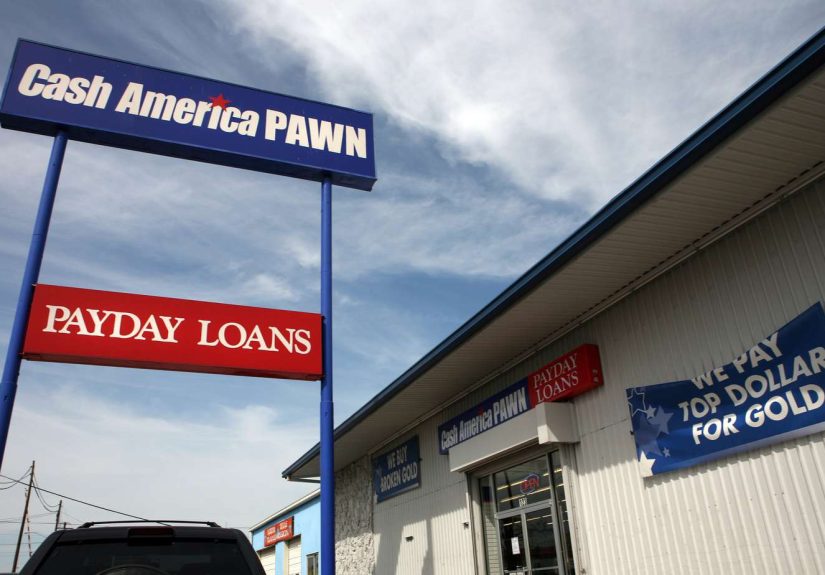
First, what are payday loans and cash advances?
Payday loans (a.k.a. “two weeks from now… me will handle it”)
A payday loan is typically a small-dollar, short-term loan meant to be repaid on your next payday (often in two to
four weeks). You usually give the lender access to your bank account (or provide a post-dated check). When the
loan comes due, the lender pulls the money automaticallyor tries to.
The sales pitch is simple: “We’ll spot you a few hundred bucks.” The fine print is simpler: “And we’ll charge you a
fee that looks small until you do the math.”
Credit card cash advances (your credit card’s pricey alter ego)
A credit card cash advance lets you withdraw cash using your credit line, usually at an ATM or bank. It’s different
from making a normal purchase because it often comes with:
- a cash-advance transaction fee (commonly a percentage of the amount, sometimes with a minimum),
- a higher APR than your purchase APR, and
- interest that starts immediately (often no grace period).
Translation: it’s like borrowing money with your credit card, except the meter starts running right away and the
meter is not shy.
The #1 reason they’re so bad: the math is brutal
Payday loans: “$15 per $100” doesn’t sound scary… until you annualize it
Many payday lenders charge fees that might look like $10 to $30 for every $100 borrowed. A common example is
$15 per $100 for a two-week loan. That fee structure can translate to an APR around 391% on a typical two-week
payday loan. Meanwhile, credit cardsoften criticized for being expensivehave historically averaged far lower APRs
than that (still not “cheap,” just… not “four-hundred-percent”).
Here’s a concrete example: borrow $300, and you may owe $345 in about 14 days ($300 principal + $45 fee). If you
can’t pay the full amount and you roll it over, you might pay the $45 fee to extendonly to owe the $300 again plus
another fee later. You’ve now paid $90 in fees to borrow $300 for roughly four weeks. That’s how people end up
paying a lot and still owing the original amount.
Cash advances: death by fee + instant interest
Cash advances can be less explosive than payday loans, but they’re still expensive. You might pay an upfront
transaction fee (often a percentage of the amount), then a higher interest rate than normal purchases, and interest
may begin accruing immediately. No grace period means you’re paying interest from day one, even if you’re the kind
of person who normally pays your card off each month.
Example: You take a $300 cash advance. If there’s a 5% fee, that’s $15 instantly. Then interest starts immediately
at a potentially high APR. If it takes you a few months to pay back, the “quick fix” gets steadily more expensive.
The debt-trap mechanics: how short-term turns into long-term
1) The due date is too soon for real life
The core design flaw is the short repayment window. If you needed a payday loan because you were short this pay
period, the odds are not great that you’ll magically have extra money next pay period. Rent is still rent. Groceries
still insist on being purchased regularly. Life keeps happening.
2) Rollovers and renewals keep fees coming (even when the balance doesn’t shrink)
Rollovers are where the wheels really come off. Many borrowers don’t pay down the principal; they pay fees to buy
time. In some cases, borrowers can pay rollover fees repeatedly and still owe the original amount. That’s not
“progress,” that’s treadmill cardio for your bank account.
One illustration shared by federal consumer regulators: with a typical $300 payday loan, a borrower paying $45 in
rollover fees every two weeks can rack up hundreds of dollars in rollover fees over time while still owing the
original principalunless they switch to a structured repayment option when available.
3) Automatic withdrawals can cause overdrafts and a cascade of bank fees
Payday lenders commonly get permission to withdraw from your account on the due date. If the money isn’t there,
you can end up with overdraft fees, NSF (non-sufficient funds) fees, or multiple failed attemptsdepending on your
bank’s policies and the lender’s behavior. Even when a lender follows the rules, the “pull from your account” model
puts your checking balance on a tightrope.
If you’re already short, a surprise overdraft fee is like getting pushed down the stairs and then charged for using
the stairs incorrectly.
4) They’re often used for everyday expenses, not one-time emergencies
In surveys and research, many payday borrowers report using these loans for regular bills and recurring needsrent,
utilities, groceriesrather than a one-off emergency. That’s a clue the product is often filling an income gap, not a
temporary timing gap. And income gaps don’t disappear in 14 days.
Cash advances have their own set of “gotchas”
High utilization can ding your credit
Taking a cash advance raises your credit utilization. If your card balance jumps, your score can take a hit, which
can make future borrowing more expensive. So the cash advance can create a two-for-one problem: you pay more now
and you may pay more later.
You may lose perks (and you don’t earn rewards like normal purchases)
Many cards don’t treat cash advances like purchases. You might not earn rewards points, and you’ll still pay the
fees. It’s like paying extra for the “no benefits” package.
There are sneaky “cash-like” transactions
Some transactions can be treated as cash advances even when you didn’t walk away with cash. It depends on the card
issuer and how the transaction is coded. The point isn’t to scare youit’s to remind you: when you’re desperate for
money, read the terms twice, because fees hide in boring places.
What about “cash advance apps” and payday alternative products?
Earned wage access (EWA) and “paycheck advance” apps let some workers access money they’ve already earned before
payday. In theory, that sounds better than borrowing. In practice, the details matter: some products charge
expedited transfer fees, encourage optional “tips,” or have subscription fees. If you use them frequently, the
effective cost can add up quickly.
Regulators have been paying attention because these products can look like credit, act like credit, and sometimes
cost like creditespecially when fees and tips are involved. The regulatory classification of these products has
shifted in public guidance over time, which is another reason to focus less on the label (“not a loan!”) and more on
the real cost and the repayment mechanics.
Bottom line: some wage-access products can be genuinely helpful for bridging timing issues, but they’re not
automatically “safe.” If a product makes it easy to live paycheck-to-paycheck with extra fees attached, it can still
keep you stuck in the same cycle payday loans exploit.
Better options than payday loans and cash advances (yes, even when you’re stressed)
When you’re short on cash, “better options” can sound like “drink water and meditate.” So let’s get practical.
These are alternatives that can be cheaper and realistic.
1) Ask for more timeseriously
Before borrowing at triple-digit APRs, contact your landlord, utility company, medical provider, or lender. Ask for
a payment plan or an extension. Many companies would rather get paid a little later than not at all. Even if there’s
a late fee, it may be far less than payday-loan fees.
2) Credit union Payday Alternative Loans (PALs)
Some federal credit unions offer Payday Alternative Loans designed to be less predatory than payday lending. These
loans have guardrails, such as interest rate limits and limits on fees and rollovers. You may need to become a
member, but if you qualify, this can be a much safer small-dollar option.
3) Bank small-dollar loans and “responsible” installment products
Some banks and supervised institutions have explored small-dollar lending programs intended to be more affordable
than payday loans, with pricing guidance encouraging APRs around 36% or less and structures that help borrowers
actually reduce principal. The key is amortizing payments (you pay down the balance) instead of endless fee-only
extensions.
4) A 0% intro APR credit card purchase (if you can repay)
If you have decent credit and the expense can be paid as a normal purchase (not a cash advance), a 0% introductory
APR period can buy you time with less interest. This is only a good idea if you have a plan to pay it off before the
intro period ends. Otherwise, you’re swapping one problem for another, just with nicer marketing.
5) Nonprofit credit counseling and community help
If the issue is bigger than a one-time bill, consider nonprofit credit counseling. Also check community resources:
local assistance programs, religious organizations, and 211 services can sometimes help with utilities, food, rent,
or emergency expenses.
If you’re already stuck: how to climb out without making it worse
Step 1: Stop borrowing to repay borrowing
It’s tempting to take a new loan to cover the old one. That’s how the cycle deepens. If you’re rolling over, pause
and look for a repayment plan or a different (cheaper) source of funds to break the chain.
Step 2: Ask the lender about extended payment plans (where available)
Some lenders and some state rules provide for extended payment plans or structured repayment options. If you’re at
the rollover stage, ask what alternatives exist that reduce fees and let you pay down principal.
Step 3: Protect your bank account
If automatic withdrawals are creating overdrafts, talk to your bank about options and monitor your account closely.
The goal is to prevent a fee cascade that makes repayment harder.
Step 4: Get outside help if you need it
If you’re juggling multiple debts, getting a third party (like a nonprofit counselor) can help you set a plan and
negotiate with creditors. It’s not glamorous, but it can be a turning point.
So why are they “so bad,” in one sentence?
Payday loans and cash advances are bad because they solve today’s problem by borrowing from tomorrow at an
outrageously high pricethen they make it easy to keep doing it until tomorrow becomes a whole season of your life.
If you take nothing else from this: a quick loan isn’t automatically a quick fix. If the cost is high and the due date
is too soon, you’re not borrowing moneyyou’re renting it at luxury prices.
Real-World Experiences: What This Looks Like in Actual Life (About )
Experience #1: The “Just This Once” Rollover. Marcus took a $300 payday loan after a surprise
medical copay. Two weeks later, the bill was paidbut his paycheck was already allocated to rent and childcare. He
couldn’t repay $345, so he paid the fee to extend. He told himself it was temporary. After a couple of rollovers,
the “temporary” fix had eaten the wiggle room he needed to repay the principal. The frustrating part? He kept paying
money, but the balance didn’t shrink. The lesson Marcus learned (the hard way) was that paying fees without paying
principal feels like progress, but it isn’t.
Experience #2: The Bank-Fee Domino Effect. Brianna had a payday lender scheduled to pull repayment
on Friday. Her paycheck posted Friday afternoonafter the lender tried the withdrawal Friday morning. The result was
an overdraft fee and a negative balance. Now her next purchases triggered more fees. She wasn’t “bad with money.”
She just got caught in a timing trap where the lender got first dibs on her account. Brianna’s takeaway: automatic
withdrawals can turn a tight budget into a fee factory.
Experience #3: The Credit Card Cash Advance Surprise. Sam assumed a cash advance was basically the
same as using his credit card for groceries. He withdrew $200 for an emergency repair, then noticed his statement
had a cash-advance fee plus interest starting immediately. He paid the card down quickly, but he still felt burned
because the cost was front-loaded and the interest clock didn’t wait. His new rule: if it’s a cash advance, he treats
it like borrowing from the “very expensive shelf,” not like a normal purchase.
Experience #4: The “It’s Not a Loan” App That Adds Up. Tasha started using a paycheck advance app
for gas and groceries between paydays. The advances felt harmless because the amounts were small. But she kept
paying for instant transfers (because waiting a few days didn’t work with her schedule), and she used it so often
that those “tiny” fees became a monthly line item. She eventually realized she was paying for the privilege of being
broke on a faster timeline. Her takeaway: frequent convenience fees can mimic high-interest borrowing, even when the
product doesn’t call itself a loan.
Experience #5: The Escape Plan That Actually Worked. Devon got stuck in a payday cycle after a car
repair. The turning point was calling his utility provider and negotiating an extension, then using a credit union
small-dollar loan to pay off the payday balance in one shot. He set up an automatic savings transfersmall enough to
be painlessto build even a tiny buffer. Devon’s story isn’t magic; it’s boring, practical steps that reduced the cost
of borrowing and gave him breathing room. The lesson: escaping the cycle often requires replacing the expensive debt
with a structured, cheaper repayment plan and building even a modest emergency cushion.