Table of Contents >> Show >> Hide
- First, What Did “Nationalized 5G” Actually Mean?
- Why Would Trump or Trump-Era Officials Even Entertain It?
- So Why Did the Idea Crash Into a Wall?
- Why Did Trump Later Reject Nationalized 5G?
- What Trump Really Wanted Was Control of the Outcome, Not Necessarily Ownership of the Network
- 500-Word Reality Check: What the Nationalized 5G Debate Felt Like in Practice
- Conclusion
If the phrase nationalized 5G sounds like something cooked up in a policy lab after three espressos and a geopolitical panic attack, that is because it kind of was. For a brief moment, people in and around the Trump administration flirted with a dramatic idea: what if the federal government helped build, control, or heavily direct a national 5G network in the United States?
That idea made jaws drop across Washington. Conservatives hated the government-heavy vibe. Telecom companies hated the threat to their business models. Regulators hated being told, in effect, “Thanks for your service; we’ll take it from here.” And yet the proposal did not appear out of thin air. It came from real anxieties about China, cybersecurity, American industrial strength, rural connectivity, and the fear that the United States might lose the next great technology race.
So, why would Trump want nationalized 5G? The cleanest answer is this: he might have found the goal attractive even if the method was explosive. A secure, fast, nationwide wireless system matched Trump-era priorities: beat China, look tough on national security, claim a win on infrastructure, and promise that America would dominate the future instead of renting a seat in it. The twist, of course, is that Trump later publicly rejected nationalization and embraced a private-sector-led 5G strategy. In other words, the fantasy was bold, the politics were messy, and the final playbook was much more traditional.
First, What Did “Nationalized 5G” Actually Mean?
When people heard the phrase, many imagined the federal government climbing cell towers itself, wearing hard hats, and trying to explain spectrum allocation with a straight face. The reality was a little more technical but not much less dramatic.
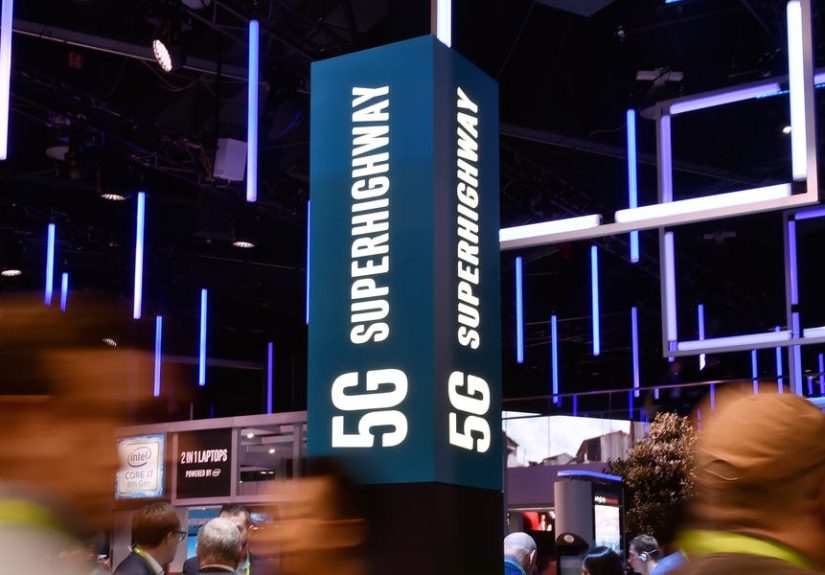
The idea reportedly floated in 2018 was that the U.S. government could help create a single, secure 5G backbone, likely using valuable mid-band spectrum, and then allow private carriers to lease access to it. Think of it as a public superhighway for next-generation wireless service. The pitch was that a shared national network could be built more quickly, secured more consistently, and used as a strategic answer to China’s growing influence over telecom equipment and digital infrastructure.
That matters because 5G was never just about faster phones. It was sold as the nervous system for smart factories, connected vehicles, remote medicine, military logistics, industrial automation, and the broader internet of things. Whoever shaped that system could influence supply chains, standards, jobs, innovation, and security. Once you frame it that way, the nationalized 5G idea starts to look less like random policy theater and more like a panicked attempt to control a critical layer of the future.
Why Would Trump or Trump-Era Officials Even Entertain It?
1. China Was the Giant Red Warning Light
The biggest reason was China. During the Trump years, Washington increasingly treated Chinese telecom companies, especially Huawei, as more than mere competitors. They were seen as possible national-security risks and as tools of a broader Chinese strategy to dominate critical technology. If 5G was going to power finance, logistics, communications, defense, health care, and industry, then letting China gain too much leverage over that ecosystem looked like a strategic own goal.
From that perspective, a government-backed 5G network was not just about internet service. It was about geopolitics in hard-hat form. If the United States built its own secure architecture, it could reduce the risk of foreign influence, protect sensitive data flows, and signal that it was serious about winning the technology contest of the century.
Trump loved competition framed in blunt, scoreboard language. Win. Lose. Ahead. Behind. China was frequently cast as the rival trying to eat America’s lunch and then invoice us for the napkin. In that atmosphere, a proposal promising a dramatic, whole-of-country response had obvious appeal.
2. A Single Network Looked Faster on Paper
There was also a practical argument, at least in theory. Building multiple overlapping 5G networks across a vast country is expensive, slow, and messy. It involves spectrum fights, local permits, fiber backhaul, zoning issues, hardware supply chains, and an endless parade of meetings where nobody says “synergy” enough.
A nationalized or semi-nationalized approach promised something simpler: build one secure platform and let everyone ride on it. Supporters could argue that this would avoid duplication, reduce fragmentation, and accelerate deployment. For an administration that liked big promises and fast timelines, that had a certain rough-edged charm.
It also fit a classic Trump instinct: when a system looks slow, jammed, or overly negotiated, bulldoze the process and centralize the push. Whether that instinct works in telecom infrastructure is another story. Spoiler: many experts thought it absolutely would not.
3. It Offered the Optics of Industrial Policy Without Calling It That
Nationalized 5G also carried a more subtle attraction. It could act as a kind of industrial policy for the digital era, even if nobody wanted to say those words too loudly. A federally directed network could, in theory, support domestic manufacturing, create demand for trusted vendors, influence standards, and reduce dependence on foreign suppliers.
That matters because one of the underlying fears of the 5G debate was that the United States had become strong at apps and software while losing ground in some of the physical infrastructure and equipment layers that make modern networks work. A national push could be sold as a way to revive American capability in the “real stuff” of technology: towers, radios, spectrum policy, secure hardware, and long-term systems planning.
For Trump, who often mixed nationalism, infrastructure language, and economic symbolism, that could be politically attractive. It sounds strong. It sounds strategic. It sounds like the kind of thing that fits on a podium with flags behind it.
4. Security Was Easier to Sell Than Market Theory
Nothing cuts through political noise quite like the phrase national security. And 5G security concerns were genuine. The more devices, sensors, factories, farms, hospitals, and vehicles that connect to advanced networks, the more damaging a compromised system could be.
A centralized approach might seem appealing because it offers the illusion of clean control. One architecture. One set of rules. One security framework. One national answer to a sprawling technical threat. In a world where fragmented systems create fragmented vulnerabilities, that simplicity can be seductive.
But here is the catch: cybersecurity is not magic. A single network does not automatically become a single secure network. In fact, critics argued that centralization could create a giant target and a giant bureaucracy at the same time, which is a deeply unromantic combo.
5. It Could Be Framed as an Infrastructure Win for Rural America
There was another political angle too: coverage. Private carriers tend to invest where returns are strongest, which means dense urban and suburban markets usually get the first shiny toys while remote communities wait patiently and refresh their signal bars like medieval peasants watching the sky for rain.
A nationally directed 5G system could be marketed as a way to make sure rural America did not get left behind. That mattered to Trump politically. Promising that farmers, small towns, and underserved regions would benefit from next-generation wireless fit neatly into his message about forgotten America. Even if the real policy mechanics were far more complicated, the slogan practically wrote itself.
So Why Did the Idea Crash Into a Wall?
Because America Is Not Exactly Eager to Nationalize Wireless Networks
The opposition was immediate and fierce. The Federal Communications Commission pushed back. Telecom companies pushed back. Policy analysts from very different ideological camps pushed back. Even people who agreed that China posed a real challenge often thought the cure sounded worse than the disease.
The core objections were straightforward.
First, it would disrupt massive private investment. Carriers were already spending heavily on 5G deployment. Dropping a government-run network into the middle of that process would be like interrupting a marathon to suggest that everyone switch to roller skates.
Second, the government was not likely to build it faster. Telecom infrastructure is not a hobby project. It takes permitting, engineering, fiber, equipment, labor, spectrum coordination, vendor relationships, and operational experience. Critics argued that the federal government would almost certainly move slower, cost more, and trigger more legal warfare than the private market.
Third, nationalization clashed with American regulatory and political instincts. The United States usually builds communications infrastructure through a mix of private investment, regulation, auctions, standards, and targeted subsidies. A federal takeover would have been a huge break from that model.
Fourth, security was more complicated than the memo seemed to imply. Even if one segment of a 5G ecosystem were federally managed, the broader network would still connect with private systems, software layers, devices, cloud services, and supply chains. A secure slice is not the same thing as a secure universe.
In short, the plan was criticized as too expensive, too disruptive, too centralized, too optimistic, and too weirdly un-American for something meant to showcase American strength.
Why Did Trump Later Reject Nationalized 5G?
Because once the blowback landed, the politics changed. Fast.
By 2019, Trump publicly said the U.S. approach to 5G would be private-sector driven and private-sector led. That was not just a tactical pivot. It fit the broader Republican preference for market-led infrastructure and let the administration keep the parts of the 5G agenda it liked most: competing with China, pushing spectrum policy, cutting regulatory barriers, spotlighting rural broadband, and talking about American technological dominance.
In other words, Trump could keep the headline goals without owning the nationalization baggage. He could say America must win the 5G race, insist networks must be secure, pressure agencies to free more spectrum, support restrictions tied to Chinese telecom risks, and still avoid sounding like he wanted Washington to become the nation’s cell carrier.
That was politically cleaner and ideologically safer. It also reflected reality: the private sector was already building 5G, and the administration had a more plausible lane in shaping rules, security policy, and spectrum access than in trying to build a national network from scratch.
What Trump Really Wanted Was Control of the Outcome, Not Necessarily Ownership of the Network
This is the key takeaway. The title question is useful, but it can also be misleading. The evidence suggests that the real attraction was not nationalization for its own sake. It was the promise of control, speed, leverage, and strategic advantage.
Trump-era officials wanted the United States to be secure, first, and visibly in charge of the future. A nationalized 5G concept seemed, for a moment, like a shortcut to that result. But once it became clear that the shortcut ran through industry revolt, regulatory resistance, ideological awkwardness, and a thousand miles of political barbed wire, the administration moved to a different approach.
That approach was still aggressive. It emphasized spectrum strategy, faster permitting, tougher scrutiny of Chinese telecom threats, and a broader “America must win” message. So the nationalized 5G episode was less a final destination than a revealing policy x-ray. It showed what worried Trump-world most: China’s rise, infrastructure weakness, security risk, and the fear of looking slow in a technology race.
500-Word Reality Check: What the Nationalized 5G Debate Felt Like in Practice
To understand why the nationalized 5G idea caused such a stir, it helps to imagine the experience from ground level rather than from a white paper. For telecom executives, the proposal probably felt like someone bursting into the room halfway through a renovation and yelling, “Great news, we’re rebuilding the whole house.” Companies had already lined up capital, vendors, engineers, trials, and market strategies. Suddenly, the possibility of a government-backed national network threatened to turn billion-dollar plans into very expensive scratch paper.
For regulators, it was the kind of idea that makes your calendar cry. The FCC was already deeply involved in spectrum auctions, deployment rules, and the general grind of 5G policy. A nationalized network proposal suggested a power struggle over who actually gets to shape America’s wireless future. That is not a small turf fight. That is a full-contact bureaucratic rodeo.
For local governments, the conversation had another flavor entirely. 5G is not just a national strategy; it is also poles, permits, equipment, neighborhood objections, fees, timelines, and lawsuits. City officials were already wrestling with where infrastructure would go and how fast it should be approved. A more centralized federal role would have looked less like elegant planning and more like Washington showing up with a megaphone and a stopwatch.
Then there were rural communities. For people in areas with weak broadband, the 5G debate was not an abstract battle over industrial policy. It was about whether they could run a business, access telehealth, keep up with school, or stop driving to a parking lot for decent internet. That is why the idea had emotional pull. When you hear “national effort,” you may hear “finally, someone is going to stop forgetting us.” The policy may have been flawed, but the frustration behind the appeal was real.
Investors and markets likely heard something else: uncertainty. Telecom networks depend on long time horizons and stable expectations. If Washington starts flirting with a government-run alternative, even as a thought experiment, it can chill confidence. And in infrastructure, uncertainty is expensive. Nobody wants to place giant bets while the referee is still deciding whether to rewrite the rulebook.
For ordinary consumers, meanwhile, the whole thing sounded both futuristic and faintly absurd. Most people hear “5G” and think better speed, fewer loading wheels, and maybe fewer moments of rage when a video freezes at the worst possible second. They do not automatically think about Chinese supply chains, mid-band spectrum, or national-security architecture. That gap matters. It is one reason political leaders love giant technology slogans: they sound visionary even when the underlying trade-offs are messy enough to make experts argue for months.
In the end, the nationalized 5G episode felt like many Trump-era policy stories: big strategic fear, big political theater, real underlying problems, and a proposed solution that sounded stronger in headline form than in operational reality.
Conclusion
So, why would Trump want nationalized 5G? Because in the abstract, it promised everything a nationalist technology policy loves: security, speed, scale, visibility, leverage, and a dramatic answer to China. It looked like a way to say that America would not merely participate in the future; it would own the runway.
But once the idea met the real world, it ran into economics, law, industry structure, and political ideology. Trump ultimately backed a more conventional path: let private companies build, let Washington clear obstacles, tighten the security screws, and keep telling the country that winning the 5G race matters. That final strategy was less cinematic than nationalization, but it was far more realistic.
In that sense, the nationalized 5G debate was valuable precisely because it failed. It exposed the pressure points in U.S. telecom policy: dependence on trusted infrastructure, the challenge of competing with China, the need for secure networks, the complexity of rural access, and the question of how much government direction America will tolerate when the stakes are high. The answer, apparently, is: quite a lot of direction, but not so much that Uncle Sam starts moonlighting as Verizon.