Table of Contents >> Show >> Hide
- What Is Rebar Shelving by Mizner Design?
- Why Rebar Works So Well as Furniture
- The Austin Design Connection
- Industrial Shelving Without the Cliché
- Best Places to Use Rebar Shelving
- How to Style Rebar Shelving Like a Designer
- Rebar Shelving vs. Standard Bookcases
- What to Consider Before Buying or Commissioning Rebar Shelving
- Why This Design Still Feels Relevant
- Design Lessons From Mizner Design’s Rebar Shelving
- Added Experiences: Living With and Designing Around Rebar Shelving
- Conclusion
Some shelving politely fades into the background. Rebar shelving by Mizner Design in Austin does not. It walks into the room wearing work boots, carrying a stack of red oak boards, and somehow still looks refined enough to be invited to dinner. Designed by Austin-based architect and furniture maker Derek Mizner, this storage piece turns one of construction’s most overlooked materialsreinforcing steel bar, better known as rebarinto a sculptural, useful, and surprisingly elegant shelving system.
The appeal is easy to understand. Rebar is normally hidden inside concrete, doing the unglamorous job of giving buildings their strength. Mizner Design pulls it out of the slab, lets it breathe, and gives it a starring role. Paired with wood shelves, the result is a piece that feels industrial without being cold, handcrafted without being precious, and practical without looking like it wandered in from a garage sale wearing a name tag that says “storage solution.”
In Austin, where modern homes, creative studios, renovated bungalows, and live-work spaces often blend raw materials with warm interiors, rebar shelving feels especially at home. It has the grit of a jobsite, the geometry of architecture, and the personality of custom furniture. For anyone looking for storage that does more than hold books, plants, ceramics, records, or the mysterious basket of cables every household owns, this design offers a memorable lesson: the best shelving can organize a room and give it a backbone.
What Is Rebar Shelving by Mizner Design?
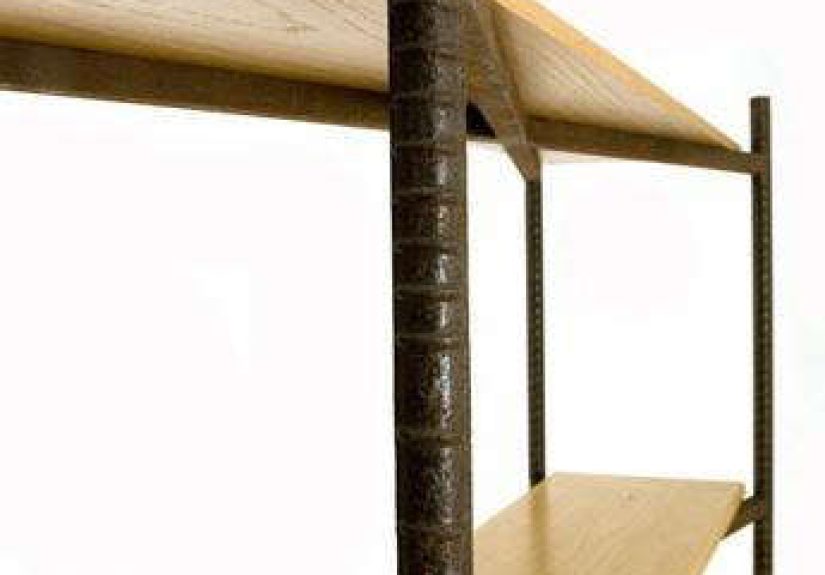
Rebar shelving by Mizner Design is a freestanding storage unit made with a metal frame fabricated from rebar and square tube steel, traditionally paired with red oak shelving. The original design gained attention for its industrial character, honest materials, and custom-made feel. The unit has been described as approximately 77 inches tall, 48 inches wide, and 14 inches deep, a size that works well as a bookcase, display shelf, media storage piece, or architectural room accent.
The construction is straightforward in concept but distinctive in execution. Rebar provides the vertical and structural rhythm, while wood shelves add warmth and usable surface area. The steel frame can be left with a rusted or raw finish for a rugged look, or powder-coated for a cleaner, more colorful, and more controlled appearance. Alternative shelf materials such as acrylic or glass can create a lighter, more contemporary effect.
That flexibility is part of the magic. A rusted rebar frame with red oak shelves leans toward industrial farmhouse or Austin-modern grit. A powder-coated frame with glass shelves can feel sharper, more gallery-like, and almost minimalist. The same idea can shift personalities depending on finish, context, and styling. It is not just a shelf; it is a framework for taste.
Why Rebar Works So Well as Furniture
Rebar is not the obvious first choice for living room furniture. That is exactly why it works. Its ridged texture, structural strength, and everyday construction-site identity give it an authenticity that many mass-produced “industrial style” pieces try very hard to imitate. Rebar does not need fake distressing. It has already earned its texture honestly.
It Has Built-In Strength
Rebar is designed to reinforce concrete, so it naturally suggests durability. In a shelving unit, that strength translates visually even before anyone tests the shelf with heavy books. The frame looks capable. It communicates support, stability, and purpose. This matters in storage design because shelving should not only function well; it should feel trustworthy. Nobody wants a bookcase that appears to be having an existential crisis under the weight of three art books and a pothos plant.
It Adds Texture Without Clutter
The ribbed surface of rebar creates shadow, rhythm, and tactility. Unlike smooth metal tubing, rebar has a patterned exterior that catches the eye without requiring ornament. That makes it ideal for modern rustic interiors, industrial lofts, creative offices, and homes that need a little edge but not a full theatrical production of exposed ductwork and Edison bulbs.
It Bridges Raw and Refined
The best industrial furniture balances toughness with polish. Mizner Design’s rebar shelving does this by combining rugged steel with wood, glass, or acrylic. The frame brings structure; the shelves bring usability and warmth. Together, they avoid the two common shelving mistakes: looking too flimsy or looking like warehouse equipment accidentally delivered to the living room.
The Austin Design Connection
Austin has a long-standing appetite for design that feels personal, inventive, and a little unconventional. The city’s architectural character includes midcentury homes, new modern builds, renovated cottages, creative studios, and restaurants that treat reclaimed materials like old friends. In that setting, rebar shelving by Mizner Design makes sense. It is local, practical, and expressive.
Mizner Design’s broader work includes residential, commercial, and furniture projects, with an interest in metalwork and repurposed or industrial materials. That architectural background matters. This shelving is not merely a decorative object. It has the logic of a small structure. The proportions, lines, and material choices feel like they were thought through by someone who understands how spaces work.
In Austin homes, especially those with open floor plans or mixed-material interiors, a piece like this can act as a visual anchor. Place it against a white wall and it becomes a graphic statement. Use it in a brick-walled studio and it feels like it has always been there. Put it in a warm wood-and-plaster living room and it adds a welcome bit of tension, the design equivalent of adding a pinch of smoked salt to something sweet.
Industrial Shelving Without the Cliché
Industrial style can go wrong quickly. One minute you are adding a metal shelf; the next, your dining room looks like a theme restaurant called “The Rusty Bolt.” Rebar shelving avoids that trap because it is not trying too hard. Its industrial quality comes from real construction material, clean geometry, and honest fabrication.
The key is restraint. The shelving does not need oversized wheels, fake factory labels, or decorative pipes pretending to do plumbing work. The rebar frame already provides enough visual interest. The wood shelves soften the structure and keep the piece usable for everyday life. This is industrial design for grown-upsstill cool, still rugged, but not auditioning for a steampunk movie.
Wood and Metal: The Classic Combination
Wood-and-metal shelving remains popular because the materials complement each other beautifully. Metal gives definition and strength. Wood adds warmth, grain, and a natural surface for books, dishes, baskets, and display objects. Red oak, in particular, has a visible grain pattern that can stand up to the boldness of rebar. It does not disappear beside the metal; it has its own voice.
For interiors that already include hardwood floors, butcher block counters, leather furniture, black-framed windows, or steel lighting, rebar shelving can tie those elements together. It is especially effective in rooms where the furniture mix feels too soft or too polished. A rebar shelf says, “Let’s give this room a little muscle,” but it says it with manners.
Best Places to Use Rebar Shelving
Because the design is open and architectural, rebar shelving can work in more rooms than expected. It is not limited to lofts or bachelor apartments with suspiciously large speaker systems. With the right styling, it can serve many practical roles.
Living Room Display Storage
In a living room, rebar shelving can hold books, framed photos, ceramics, plants, baskets, and art objects. Its open frame keeps the piece from feeling too bulky, while the metal structure creates a strong outline. To style it well, mix vertical and horizontal stacks of books, leave negative space, and avoid filling every inch. A shelf needs breathing room, just like people after assembling flat-pack furniture.
Home Office Organization
For a home office, the shelf can store reference books, binders, printer paper, file boxes, and decorative objects that make work feel less like a punishment. The industrial character pairs well with desks in wood, steel, or concrete-look finishes. It is also a strong choice for creative professionals who want storage that looks intentional on video calls.
Kitchen or Dining Room Storage
In a kitchen or dining area, rebar shelving can hold serving bowls, cookbooks, glassware, pottery, linens, or barware. If glass or acrylic shelves are used, the piece can feel lighter and more refined. If wood shelves are used, it reads warmer and more rustic. Either way, open storage encourages editing. That is good news for anyone whose cabinet contains seven novelty mugs and one emotional-support spatula.
Entryway or Studio Storage
In an entryway, a rebar shelf can combine storage and display: baskets for shoes, trays for keys, hooks nearby for bags, and a few objects that say “welcome” without involving a wooden sign that literally says “welcome.” In a studio or workshop, it can hold materials, tools, samples, books, and prototypes while reinforcing the creative atmosphere.
How to Style Rebar Shelving Like a Designer
The best way to style rebar shelving is to respect its strong lines. Because the frame already has texture and pattern, the objects placed on it should create balance rather than chaos. Think of the shelf as a small skyline: varied heights, open gaps, and a few focal points.
Start With the Heavy Items
Place heavier books, boxes, or storage baskets on lower shelves. This helps the unit feel grounded and visually stable. It also makes practical sense because nobody enjoys lifting a giant design monograph from above eye level while pretending their shoulder is fine.
Mix Practical and Decorative Pieces
Good shelving is not just for display. Combine useful items with beautiful ones. In a living room, that might mean books, baskets, plants, and a ceramic bowl. In a kitchen, try cookbooks, serving pieces, jars, and glassware. In an office, mix files with sculptural bookends, framed prints, and a desk lamp.
Repeat Materials Around the Room
To make rebar shelving feel integrated, repeat its materials elsewhere. A black metal lamp, oak coffee table, leather chair, steel-framed mirror, or concrete planter can echo the shelf without matching it exactly. The goal is conversation, not a furniture uniform.
Use Plants to Soften the Structure
Plants are excellent companions for industrial shelving. Trailing greenery softens the grid of the frame, while sculptural plants add organic shape. Just be careful with watering if the frame has a rusted finish or the shelves are wood. Use saucers, trays, or cachepots to protect surfaces. Design is lovely, but water rings are undefeated.
Rebar Shelving vs. Standard Bookcases
A standard bookcase is often designed to disappear. Rebar shelving is designed to participate in the room. That is the central difference. A basic bookcase may be better if the goal is invisible storage, maximum closed containment, or a low-cost solution. Rebar shelving is better when storage should also add architectural character.
Compared with many mass-market shelves, Mizner Design’s rebar shelving offers a more handcrafted and material-driven look. The open construction prevents the piece from feeling like a heavy box, while the metal frame gives it presence. It works best for people who want their furniture to show evidence of how it is made.
It is also more flexible aesthetically than it first appears. A rusted frame feels raw and rustic. A powder-coated frame can be bold, playful, or sleek. Red oak shelves feel warm and substantial. Glass shelves feel lighter. Acrylic shelves add a modern edge. With custom dimensions or finishes, the piece can adapt to a range of interiors.
What to Consider Before Buying or Commissioning Rebar Shelving
Before choosing rebar shelving, think about location, finish, weight, shelf material, and what you plan to store. A strong design still needs practical planning.
Measure the Space Carefully
The original unit’s approximate dimensions make it tall and substantial. Before placing a piece like this, measure wall width, ceiling height, walkway clearance, and nearby furniture. A shelf that looks perfect online can feel enormous in a small room if the proportions are ignored. Measuring first is cheaper than rearranging your entire personality around a bookcase.
Choose the Right Finish
A rusted or raw metal finish adds character, but it may not suit every interior or climate condition. Powder coating creates a smoother, more controlled surface and can introduce color. If the shelf will sit near children, pets, high-touch areas, or delicate fabrics, a sealed or coated finish may be more practical.
Think About Shelf Material
Wood shelves are warm, durable, and forgiving. Glass shelves are elegant but require more cleaning and careful handling. Acrylic shelves are modern and lighter-looking, though they can scratch. The right choice depends on whether the piece will hold heavy books, decorative objects, dishes, or lighter display items.
Plan for Safety
Any tall shelving unit should be stable and, when appropriate, anchored to the wall. This is especially important in homes with children, pets, or uneven floors. Rebar may look tough enough to challenge gravity to a duel, but good installation practices still matter.
Why This Design Still Feels Relevant
Although the rebar shelving design first attracted attention years ago, it remains relevant because it fits several long-lasting design values: durability, material honesty, customization, and character. Trends come and go, but useful furniture made from real materials tends to age better than furniture built around a temporary look.
The modern home is increasingly asked to do many jobs. It may be a workplace, school zone, gym, library, dining room, storage unit, and occasional nap facility. Good shelving has become more important because people need visible, accessible, flexible storage. Rebar shelving answers that need while adding personality.
It also reflects a broader appreciation for furniture that feels local and made rather than anonymous and shipped in a box with 47 screws and one tiny wrench. In a world full of smooth sameness, a rebar shelf has texture, story, and a little attitude. It is storage with a pulse.
Design Lessons From Mizner Design’s Rebar Shelving
The biggest lesson from this piece is that ordinary materials can become extraordinary when handled with imagination. Rebar is common. Red oak is familiar. Shelving is basic. But combine them with proportion, fabrication skill, and a clear design point of view, and the result becomes memorable.
Another lesson is that storage does not have to be visually quiet. Many homes treat storage as a problem to hide, but open shelving can be a way to express taste, organize daily life, and create rhythm in a room. When the shelf itself is sculptural, even simple objects look more intentional.
Finally, the design proves that industrial style does not need to feel cold. The warmth of wood, the option for color, and the handcrafted nature of the piece keep it approachable. It is tough, yes, but not unfriendly. Think of it as the shelving equivalent of a well-built pickup truck parked outside a very good coffee shop.
Added Experiences: Living With and Designing Around Rebar Shelving
One of the most interesting experiences related to rebar shelving is how quickly it changes the mood of a room. A plain wall can look unfinished for years, quietly judging every decorating decision from the background. Add a rebar shelving unit, and suddenly that wall has purpose. It becomes a display zone, a storage hub, and an architectural feature. The room feels more designed, even before the shelves are fully styled.
In real-life use, the open structure encourages better organization. Closed cabinets allow clutter to disappear, which is useful until the day you open the door and discover three flashlights, five extension cords, and a vase you have no memory of buying. Open rebar shelving keeps things visible. That visibility gently pressures you to edit. You begin choosing better baskets, arranging books more thoughtfully, and removing objects that do not deserve prime real estate. In other words, the shelf becomes a polite but firm life coach.
Another practical experience is the way rebar shelving handles mixed collections. Many people own a strange combination of beautiful and useful things: books, candles, family photos, pottery, office supplies, speakers, games, plants, travel souvenirs, and at least one object that is impossible to categorize but emotionally non-negotiable. A strong open shelf can bring these items together. The metal frame provides discipline, while the wood shelves offer warmth. Even eclectic objects start to feel curated when placed within a confident structure.
For Austin-style interiors, rebar shelving works especially well because it can bridge casual and sophisticated design. In a bungalow with white walls and warm floors, it adds contrast. In a modern home with concrete, steel windows, or black fixtures, it reinforces the architecture. In a creative office, it signals that the space values craft and originality. In a patio-adjacent room or sunroom, a powder-coated version can feel relaxed and durable, especially when paired with plants, woven baskets, and ceramic planters.
There is also a tactile pleasure to furniture made from real materials. Smooth laminate shelves can be useful, but they rarely invite a second look. Rebar and oak have texture. They show grain, ridges, shadows, and slight irregularities. That physical presence makes the shelving feel grounded. It reminds you that furniture is not just something you buy; it is something that occupies space with you. When designed well, it contributes to the daily atmosphere of a home.
From a styling perspective, the best experience comes from not overloading the shelf. Rebar shelving has a strong personality, so it rewards restraint. A few stacks of books, one or two trailing plants, a large bowl, framed art leaning casually against the wall, and closed storage boxes on the bottom shelves can be enough. Leave some empty space. Empty space is not wasted; it is what makes the good objects visible. It is also cheaper than buying more decorative objects, which is a rare design win for both aesthetics and the wallet.
Maintenance is generally straightforward, but the finish determines the care routine. A powder-coated frame can usually be dusted and wiped clean more easily. A rusted or raw finish may need more thoughtful handling, especially around pale fabrics or damp areas. Wood shelves benefit from coasters, trays, and occasional cleaning with appropriate wood-safe products. Glass or acrylic shelves create a lighter look but may require more frequent wiping. The good news is that a piece like this is not meant to look sterile. A little age and patina can add charm.
Perhaps the most rewarding part of using rebar shelving is that it starts conversations. Guests notice it. They ask what it is made from. They look closer. That is the difference between storage as background and storage as design. Mizner Design’s rebar shelving proves that even a practical piece can have a story, a sense of place, and a little humor. It takes a material normally buried inside concrete and lets it stand proudly in the living room. That is not just clever storage. That is design with a wink.
Conclusion
Storage: Rebar Shelving by Mizner Design in Austin is a strong example of how practical furniture can become architectural, expressive, and deeply useful. By combining rebar with wood, glass, or acrylic shelves, the design turns a construction material into a refined storage piece with industrial character and Austin-made personality. It works because it balances toughness with warmth, structure with openness, and function with style.
For homeowners, designers, and anyone tired of forgettable shelves, rebar shelving offers inspiration beyond one specific product. It encourages us to look differently at ordinary materials, invest in storage that suits real life, and choose furniture with enough character to hold both our belongings and our attention. After all, a shelf should do more than prevent books from living on the floor. It should help the room tell a better story.
Note: This article is written in original American English and synthesizes publicly available information about Mizner Design, rebar furniture, industrial shelving, custom storage, and modern interior styling for web publication.