Table of Contents >> Show >> Hide
- The quick answer: “Earnings down” doesn’t automatically mean “market down”
- Stock prices: a napkin formula that explains a lot
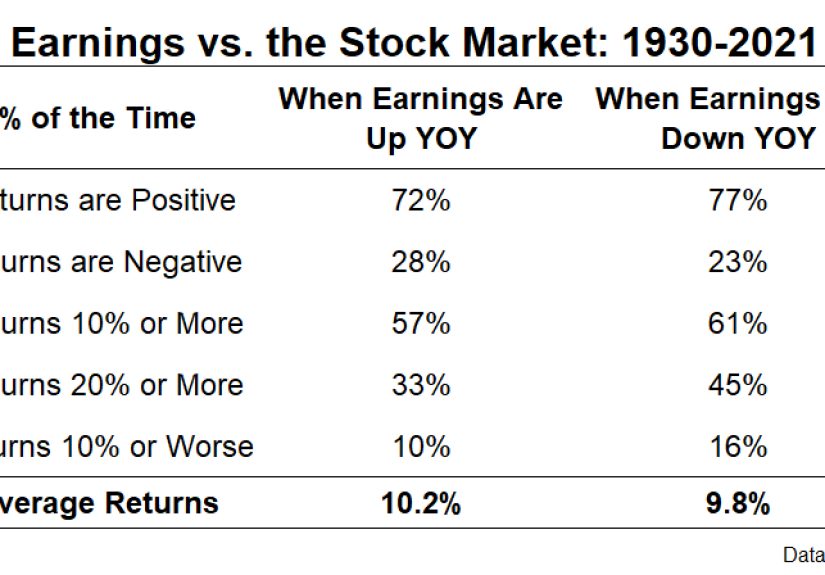
- Why the market can rise even when earnings fall
- 1) The market saw it coming (and already sold weeks ago)
- 2) “Bad, but less bad than feared” is still a party
- 3) Valuation multiples can expand if rates fall
- 4) Earnings are cyclical, but equities price the cycle’s next chapter
- 5) Index earnings aren’t “the economy”they’re global, sector-heavy, and weird
- 6) Share buybacks can cushion per-share earnings (EPS)
- When falling earnings usually do drag the market down
- Real-world examples: earnings, multiples, and the market’s mood swings
- What to watch if you’re trying to connect earnings to market direction
- So… will the market fall if earnings fall?
- Experience Section (Extra ): What it feels like when earnings roll over
- Conclusion
If corporate earnings fall, will the stock market automatically do a dramatic fainting couch routine?
Sometimes. But not alwaysand definitely not on a neat schedule that matches quarterly earnings calendars.
The market is less like a scoreboard and more like a group chat full of predictions, hot takes, and
overconfident emojis.
Here’s the big idea: stocks move on expectations. Not just what earnings did, but what
investors think earnings will do nextand what they think interest rates, inflation, and risk
appetite will do while we wait.
The quick answer: “Earnings down” doesn’t automatically mean “market down”
A drop in earnings can pressure stock prices, but the market’s reaction depends on three questions:
- Was the earnings drop already expected? (If yes, it may be “old news.”)
- Is it temporary or structural? (One bad quarter vs. a real earnings recession.)
- What happens to valuations and interest rates? (Because math has feelings too.)
If earnings fall and investors demand a higher return (higher discount rates or higher equity
risk premium), stocks can get hit twice: lower “E” and a lower “P/E.” That’s the financial version of
stepping on a rake and then immediately stepping on another rake.
Stock prices: a napkin formula that explains a lot
A simplified way to think about broad market pricing is:
Price ≈ Earnings × Valuation Multiple
So market declines can come from:
- Falling earnings (the “E” shrinks)
- Falling valuation multiples (the market pays less for each dollar of earnings)
- Both at once (the “double-whammy” that makes headlines)
That valuation multiple is basically a shorthand for how investors feel about:
expected growth, interest rates, inflation, and risk. In discounted cash flow terms, stock value is the
present value of expected future cash flows discounted by a required rate of returnso changes in the
discount rate can move prices even if earnings don’t change much.
Why the market can rise even when earnings fall
This is where people yell “the market is irrational!” and the market shrugs like: “I’m forward-looking.”
Here are the most common reasons stocks can hold upor even climbduring an earnings dip.
1) The market saw it coming (and already sold weeks ago)
Stocks don’t wait politely for the official earnings number. Analysts revise forecasts, companies guide
expectations, and investors reposition. By the time earnings actually print, the market may have already
done the falling part.
2) “Bad, but less bad than feared” is still a party
Markets trade on the gap between expectations and reality. If everyone braced for a 20% earnings drop and
it ends up being 8%, stocks can rally even though earnings are down. Think of it as financial relief
breathing: still not great, but you’re no longer convinced the toaster is plotting against you.
3) Valuation multiples can expand if rates fall
Lower interest rates (or expectations of lower rates) reduce discount rates in valuation models, which
can justify higher multiples. In plain English: if safer yields decline, investors may be willing to pay
more for future earningseven if today’s earnings are soft.
4) Earnings are cyclical, but equities price the cycle’s next chapter
Corporate earnings often dip during slowdowns and then recover. If investors believe the downturn is
short-lived, stocks may bottom before earnings do. This is why market bottoms often occur while headlines
still feel like doom poetry.
5) Index earnings aren’t “the economy”they’re global, sector-heavy, and weird
Broad indexes (like the S&P 500) include multinational firms, sector concentrations, and businesses
with different sensitivities. A profits slump in one sector can mask resilience elsewhere. Plus, a handful
of mega-cap companies can heavily influence index-level earnings growth and market performance.
6) Share buybacks can cushion per-share earnings (EPS)
Even if total profits stagnate, companies that repurchase shares can boost EPS by shrinking the share
count. That doesn’t magically create business growth, but it can change the per-share math investors watch.
When falling earnings usually do drag the market down
Earnings declines are more dangerous for stocks when they come with deteriorating fundamentals, tighter
financial conditions, or a market that was priced for perfection.
1) Earnings recession + tightening financial conditions
If earnings fall while interest rates rise (or credit conditions tighten), valuation multiples often
compress. This “E down, multiple down” combo is how you get nasty bear markets.
2) Falling margins that signal structural problems
Watch profit margins, not just revenue. A revenue slowdown can be manageable; a margin collapse can signal
pricing pressure, wage costs, input inflation, or a demand shock. If the market believes margins won’t
bounce back, it will reprice valuations quickly.
3) A leverage problem (corporate debt + refinancing pain)
When earnings fall, debt becomes heavier. If refinancing costs jump (higher rates) at the same time, the
risk of downgrades and defaults rises. Equity investors don’t love being “second in line” behind creditors
when a balance sheet wobbles.
4) Negative guidance and downward revisions
The market cares intensely about forward earnings. If companies cut guidance broadly and analysts
ratchet down forecasts over multiple quarters, stock prices often followespecially when valuations
started out high.
5) High starting valuations (thin margin for error)
When the market is trading at elevated forward P/E multiples, it’s effectively saying: “We expect solid
earnings growth and a reasonable discount rate.” If earnings disappoint, there’s less cushion. The market
doesn’t just adjust the “E”it questions the whole story.
Real-world examples: earnings, multiples, and the market’s mood swings
History doesn’t repeat perfectly, but it does love remixing.
The early 2000s: earnings fell and multiples deflated
Coming out of the late-1990s bubble, the market wasn’t just repricing earningsit was repricing optimism.
Earnings weakness plus collapsing valuation multiples is why the drawdown felt so severe. When “growth at
any price” loses the “at any price” part, math gets mean.
2008–2009: the earnings drop wasn’t the only issue
During the financial crisis, earnings plunged, but the bigger shock was credit risk and systemic fear.
Investors demanded much higher risk compensation, which pressured valuation multiples while earnings
collapsed. In that environment, even “cheap” can get cheaper.
2020: earnings dropped… and the market recovered anyway
In the pandemic crash and rebound, earnings fell sharply, but massive policy support and collapsing
interest rates pulled discount rates down and boosted expectations for a future recovery. Stocks began
recovering before earnings didbecause markets are impatient like that.
2022: the market can fall even without an earnings collapse
A key lesson: stocks can decline primarily from multiple compression. When inflation rises and rates jump,
the discount rate increasesso the present value of future cash flows falls. Earnings can be “fine-ish,”
but valuations can still reset lower.
What to watch if you’re trying to connect earnings to market direction
If you want a practical dashboard (without turning your life into a Bloomberg terminal cosplay),
focus on these:
1) Forward earnings revisions (not just trailing results)
Are analyst estimates being revised down week after week? Persistent negative revisions often matter
more than one quarter’s headline EPS. The market sniffs out trend changes fast.
2) Corporate guidance breadth
One company cutting guidance is a story. Many companies cutting guidance across sectors is a themeand
themes move indexes.
3) Profit margins and revenue quality
Is earnings weakness driven by temporary items, or is core profitability deteriorating? Look for signs of
demand softness, pricing pressure, and cost stickiness.
4) Interest rates and the equity risk premium
Valuations don’t exist in a vacuum. When Treasury yields rise, investors often demand higher expected
returns from stocks, which can lower P/E multiples. When yields fall, multiples can expandeven if earnings
are temporarily weak.
5) Valuation starting point (forward P/E, earnings yield)
A market with a high forward P/E is more sensitive to earnings disappointment. A market with a lower
valuation has more “shock absorber.”
6) Credit conditions (spreads, defaults, lending standards)
Earnings weakness becomes more dangerous when credit tightens. Equity is the riskier claim, so stocks
often react early to credit stress.
So… will the market fall if earnings fall?
It depends on whether the earnings fall is bigger than expected, persistent, and paired with
tighter financial conditions or falling valuation multiples.
If earnings dip modestly but expectations improvebecause rates fall, margins stabilize, or investors
believe the downturn is temporarythe market can shrug (or even rally). But if earnings fall while
guidance worsens, credit tightens, and valuations compress, stocks often decline meaningfully.
The “secret” is that the stock market is rarely reacting to earnings alone. It’s reacting to
earnings in context: the future path of profits, the discount rate applied to those profits, and
the mood (risk appetite) of investors paying for them.
Experience Section (Extra ): What it feels like when earnings roll over
Ask investors what happens when earnings start falling and you’ll get answers that sound less like a
finance textbook and more like a weather report delivered by someone who’s been caught in hail.
That’s because the experience of an earnings downturn isn’t just “numbers went down.” It’s a
shifting cocktail of surprises, revisions, narratives, and the occasional overreaction that ages badly
within 48 hours.
The “but they beat!” trap
One of the most common investor experiences during earnings season is watching a company “beat estimates”
and still drop 8% in a day. At first it feels like the market is broken. Then you realize the estimate
that mattered wasn’t last quarter’s EPSit was the next quarter’s guidance, the margin outlook,
or a single sentence on the conference call that sounded like “demand is normalizing.”
Translation: the market isn’t grading the past; it’s repricing the future in real time.
The “kitchen-sink quarter” and the relief rally
Investors also learn (sometimes the hard way) that bad earnings can be bullishif the bad news is
complete. There’s a phenomenon where management dumps every ugly item into one quarter:
restructuring charges, write-downs, “strategic realignment,” and enough accounting cleanup to make the
balance sheet sparkle. The headline earnings number looks awful, but investors breathe easier because the
uncertainty shrinks. The stock pops, and anyone staring at the EPS line alone feels personally attacked
by capitalism.
Multiples: the invisible hand that slaps you
Another lived experience: realizing your portfolio can fall even when “earnings aren’t that bad.”
That’s usually multiple compression. Investors don’t always talk about it at parties (because they like
being invited back), but the sensation is unmistakable: stocks drift lower day after day, headlines blame
“sentiment,” and suddenly everyone is an expert on the 10-year Treasury yield. What’s happening is the
market is demanding a higher return, which pushes down the price investors will pay for future earnings.
It feels unfair because nothing “dramatic” happened in the earnings report. But discount rates don’t need
drama. They just need higher yields and a serious face.
The whiplash of revisions
During earnings slowdowns, investors often experience “estimate erosion.” Analysts start the year with
optimistic forecasts. Then a few companies guide down. Then suppliers guide down. Then retailers talk
about promotions. Before you know it, forward earnings estimates have been shaved for months, and the
market has been quietly repricing the whole time. The frustrating part is that the index might not look
like it’s “crashing”it just refuses to rally, because every bounce runs into another round of downward
revisions.
The unexpected lesson: the market bottoms before you feel okay
Probably the most universal experience is psychological: by the time earnings are obviously bad, investors
feel least confidentand that’s often near (or after) important market lows. Markets tend to turn when
the future looks “less terrible,” not when the present looks good. It’s why the best rallies often start
while economic data still stinks and corporate commentary is still cautious. The lesson investors repeat
(usually after living through it once) is simple: watch the direction of expectations, not just the level
of earnings.
Conclusion
Falling earnings can pull the stock market downespecially when the decline is broad, persistent, and
paired with higher discount rates or shrinking valuation multiples. But the market is a forecasting
machine, not a rearview mirror. If earnings fall but expectations stabilize, rates fall, or investors see
a credible path to recovery, stocks can hold up surprisingly well.
In other words: earnings matter a lot, but earnings plus expectations plus the discount rate
is the trio that actually drives the plot.