Table of Contents >> Show >> Hide
- How We Got Here: The Data Behind the AI Valuation Explosion
- What “3–10x Normal Multiples” Actually Means
- Why Venture Has Become Winner-Take-All in AI
- The Downside: Risk, Fragility, and the Rest of the Market
- How Founders Can Compete When They’re Not in the Top 1%
- What This Means for Investors
- Real-World Experiences in a Winner-Take-All AI Market
If it feels like every headline AI start-up is suddenly worth the GDP of a small country while everyone else is begging for a bridge round, you’re not imagining things. The venture market has quietly split into two universes: a tiny club of elite AI companies raising money at eye-watering valuations, and…everyone else, operating on “normal” multiples and much tougher terms.
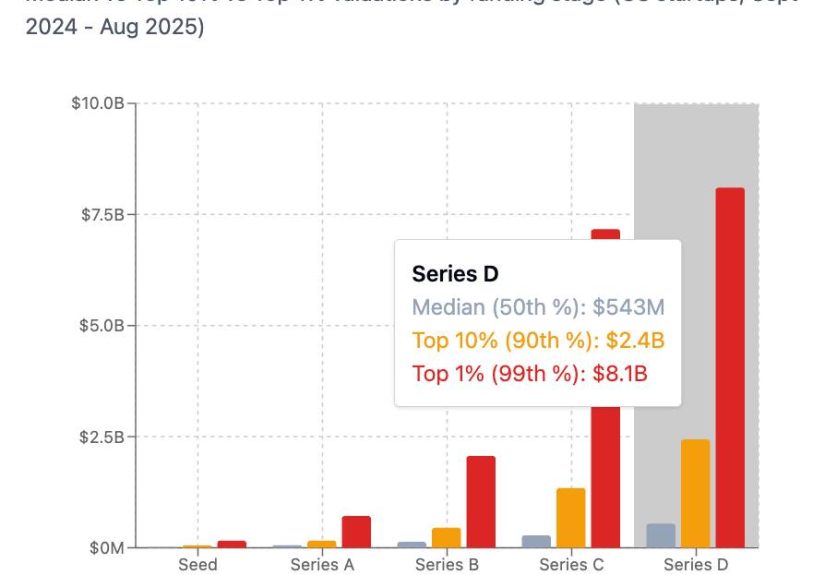
Recent Carta data on more than 3,000 U.S. venture rounds between late 2024 and mid-2025 shows that the top 1% of AI start-ups are being priced at 3–10x the valuation multiples of traditional software or even average AI peers at the same stage. At the same time, global AI funding has exploded: AI-focused companies pulled in over $130 billion in 2024 alone, up more than 50% year over year, while funding for non-AI start-ups actually declined.
In other words, venture has gone full winner-take-all. A handful of AI darlings hoover up capital at insane valuations… and the rest of the market is playing on hard mode.
How We Got Here: The Data Behind the AI Valuation Explosion
To understand why the top 1% of AI start-ups trade at 3–10x “normal” multiples, it helps to look at the numbers behind the hype.
1. Median AI multiples vs “regular” tech
Analyses of 2025 deals show that private AI companies are routinely valued at 25–30x forward revenue, while many public SaaS companies hover around 6x revenue. Consulting and investment banking reports echo the same pattern: AI companies are, on average, valued at over 3x the multiples of non-AI tech peers.
That’s the “average.” At the top of the heap, it gets even more extreme. The most coveted AI infrastructure, model, and platform companies can command multiples that are several times even those elevated medians, especially when they’re perceived as category-defining.
2. Capital concentration in a handful of mega-rounds
The funding picture is even more skewed than the multiples. In recent quarters, nearly half of all global venture dollars have gone into AI companies, and in some quarters, a single firm has captured nearly a third of all AI funding. Analyses of mega-rounds (deals over $100 million or $1 billion, depending on who you ask) show that these giant checks represent the majority of AI capital deployed in a given quartermore than 80% in some periods.
Think of it this way: there might be hundreds of AI start-ups in a category, but 3–5 of them are absorbing almost all the oxygen. Everyone else is pitching into a headwind.
3. A global, but U.S.-dominated, arms race
Although Europe and other regions are growing their AI ecosystems, the money is still overwhelmingly concentrated in the United States. One analysis suggests that roughly three-quarters of global AI venture funding goes into U.S. companies. An IMF commentary went even further, estimating that around 95% of the money being spent on AI development is in the U.S., with only a small share in Europe and the rest of the world (excluding China).
Add it up: most of the capital is going into AI, most of the AI capital is going to a few mega-rounds, and most of those mega-rounds are in a handful of U.S. companies. That’s how you get a winner-take-almost-everything market.
What “3–10x Normal Multiples” Actually Means
Let’s make this more concrete. Suppose a solid B2B SaaS company doing $10 million in annual recurring revenue (ARR), growing 60% year over year, raises a Series C at an 8x ARR multiple. A respectable, defensible price: $80 million pre-money.
A comparable AI infrastructure company with the same ARR and growth rate might be priced at 25x ARRso a $250 million valuation. That’s more than 3x the “normal” SaaS multiple. If it has a strong foundation model, unique data moat, or deep hardware partnerships, that multiple might jump into the 40–60x rangenow you’re approaching 5–7x “normal” levels. Add some market euphoria, a hot co-investor, and a couple of well-timed press hits, and suddenly you’re flirting with 10x.
We’re also seeing valuations double or triple within months as AI companies stack back-to-back funding rounds. A coding assistant start-up that ended 2024 at around $2–3 billion in value was reportedly priced at $10 billion by mid-2025less than a year later. When growth, hype, and competition collide, normal venture math goes out the window.
Why Venture Has Become Winner-Take-All in AI
AI intensifies a bunch of forces that already existed in tech: network effects, scale economies, and data moats. Put them together, and you get markets that tilt hard toward a few giants.
1. Foundation models and infra create structural moats
Investors know that whoever controls the foundational layers of the AI stackcompute, orchestration, core models, and distribution platformscan potentially extract outsized value from the entire ecosystem. That’s why infrastructure start-ups providing cheaper or faster AI training and inference, top-tier cybersecurity, or unique data infrastructure often get the wildest multiples.
If you look “platform-shaped,” with the ability to tax an entire layer of the stack, you’re suddenly part of the 1% club.
2. Capital chases perceived category kings
Venture has always loved category leaders, but in AI the stakes feel existential. Many investors believe there will only be a few durable winners in each major AI segmentmaybe even just one in some cases. That belief alone pushes them to over-concentrate capital into the perceived front-runner. After all, if “second place is zero” in the long run, why dilute your fund across 10 competitors?
Limited partners (LPs) are also complicit here. In a world where AI returns might define a decade of performance, many LPs are urging their managers to secure exposure to the most visible nameseven if that means tolerating frothy prices and highly concentrated portfolios.
3. Brand and narrative move faster than fundamentals
In AI, “narrative velocity” can outrun actual product or revenue traction. A few viral demos, a hot open-source model, or an endorsement from a big-name investor can shift a company from “interesting seed deal” to “must-own asset” in a single quarter.
This doesn’t mean fundamentals don’t matterthey do, especially for later-stage financing and eventual exits. But along the way, narrative momentum can yank valuation multiples far above anything a spreadsheet can justify.
The Downside: Risk, Fragility, and the Rest of the Market
Winner-take-all dynamics create clarity for a lucky few, but they also create fragility for everyone else in the ecosystem.
1. Portfolio risk for VCs and LPs
When funds concentrate huge checks into a tiny handful of AI bets, their outcomes become highly path-dependent. A regulatory shock, a safety incident, an open-source breakthrough, or a hardware bottleneck can dramatically re-price those investments. Analysts have warned that this kind of capital concentration may undermine the resilience LPs usually depend on from diversified venture portfolios.
2. Scarcity for non-elite founders
For founders who aren’t in the top 1% valuation tier, the new reality is harsher:
- Rounds are smaller, slower, and more heavily diligenced.
- Investors benchmark you against unicorn-track AI companies you’ve never actually competed with.
- “AI” on your slide deck no longer guarantees a premiumif anything, it can invite extra skepticism.
Many strong but “normal” AI and SaaS businesses now live in a parallel universe where responsible valuations and solid execution coexist… just without the fireworks.
3. Market structure and competition
At a macro level, winner-take-all investing accelerates concentration of power in a few platforms. That can reduce competition, narrow the diversity of approaches, and make the ecosystem more dependent on the strategic decisions of a tiny group of firms (and their investors).
For users and customers, it’s a mixed bag: you may get incredible capabilities from a handful of hyperscaled AI platforms, but less innovation at the edges and fewer weird, experimental ideas getting real funding.
How Founders Can Compete When They’re Not in the Top 1%
So what do you do if you’re building in AI (or adjacent to it) but you’re not on the Carta chart of top 1% valuation outliers?
1. Compete where capital is less crowded
Much of the valuation insanity is clustered at the core of the stack: foundation models, infra, and massive horizontal platforms. But there are still plenty of under-served verticals, workflows, and customer segments where an applied AI company can build a great, durable business without needing a billion-dollar compute budget.
That might mean:
- Deep vertical AI for regulated industries (healthcare, insurance, industrial),
- Applied AI tools where proprietary data beats model size,
- Hybrid products where AI is a feature, not the entire story.
The multiples may be more modest, but the path to product-market fit is often clearerand the competition from hyper-funded giants is weaker.
2. Make your data, not your model, the moat
With foundational models increasingly commoditized and available via APIs, defensibility often comes from unique data: workflow data, domain-specific annotations, feedback loops, integrations, and proprietary context. Investors consistently cite access to high-quality, hard-to-replicate data as one of the key drivers of premium AI multiples.
If your pitch is essentially “we fine-tuned someone else’s model,” you’ll look like a feature. If your pitch is “we own a data asset no one else can get,” your multiple starts to move.
3. Build a business that works at “normal” multiples
The uncomfortable truth: many founders have modeled their company as if they’ll one day raise at 30–50x revenue and exit at a triple-digit multiple. That’s not a strategy; that’s a fantasy.
A healthier approach is to design your company such that:
- You can be break-even or profitable on sub-$100 million in funding.
- You still win if your exit multiple looks like a good but not crazy SaaS comp.
- You can survive a funding winter without a flat or down round destroying morale.
If you do eventually punch into the 1% club, great. But your default plan should be to build a solid business at sane valuations.
4. Use the hype, don’t depend on it
Hype can absolutely help: it can get you your first meetings, your first design partners, and your first key hires. But in a winner-take-all environment, hype is also volatile. Narratives flip quickly: the same investors who were chasing “AI-powered everything” last year might be complaining about “AI tourist founders” this year.
Use the narrative tailwinds where they exist, but anchor your company in durable value: customer outcomes, retention, and usage, not vibes.
What This Means for Investors
For investors, the temptation is to keep piling into the top 1%even at extreme pricesbecause missing a single outlier can define an entire fund’s track record. But that approach comes with real risks.
Smart investors are starting to blend two strategies:
- Barbell exposure: a small number of concentrated bets in potential AI category kings, plus a broader portfolio of “normal” but high-quality companies in applied AI and adjacent SaaS.
- Valuation discipline at the margins: being willing to lose a few hyper-competitive deals if the price action no longer makes sense, even in a frothy environment.
They’re also watching second-order effects: AI reshapes demand for infra, chips, developer tools, fintech, cybersecurity, and more. You don’t have to back only pure AI start-ups to benefit from the AI boom.
Real-World Experiences in a Winner-Take-All AI Market
It’s one thing to talk about the winner-take-all dynamic in theory; it’s another to live inside it. Founders and investors on the ground describe a market that feels, by turns, exhilarating and completely absurd.
1. The “you’re too early… until you’re suddenly too late” problem
Many AI founders report a familiar pattern. For months, investors tell them, “We like what you’re doing, but it’s too early.” Then a direct or indirect competitor announces a big round from a marquee firm. Overnight, the bar shifts:
- If you’re the anointed competitor, your inbox fills, your valuation triples, and everyone wants “just a small allocation.”
- If you’re not, you hear, “We already placed our bet in this category.” Same metrics, same product, totally different result.
The lesson many founders take away: you need to be ready to raise aggressively when the narrative window opensbecause it might not stay open for long.
2. Being the “normal” company in an abnormal market
There’s also the quieter, less glamorous experience: building a great AI-enabled product while others grab ridiculous headlines. A mid-market AI tooling company may be adding real ARR, improving margins, and keeping churn low… and still find itself compared unfavorably to heavily hyped peers with ten times the burn and half the revenue.
Founders in this camp often talk about the psychological pressure of seeing competitors announce billion-dollar rounds while they’re negotiating over a few points of dilution in a much smaller raise. But some of these “boring” companies now have the last laugh: with real customers and durable unit economics, they’re well positioned for acquisitions or profitable growth even if the mega-round market cools.
3. Investor FOMO and the art of saying “no”
Investors, for their part, describe intense FOMO around the top AI names. When a fund passes on a deal that later turns into an overnight unicorn, it can dominate internal post-mortems for months. Partners worry about missing the next defining company in AI the way 2010s funds worried about missing the next Facebook or Stripe.
The more disciplined investors are trying to build processes that acknowledge FOMO without being ruled by it. That can mean clearer internal rules about when they’re willing to stretch on price, or explicit portfolio construction limits on how much exposure they’ll take to any single AI name or category.
4. Practical wisdom emerging from the chaos
From these lived experiences, a few pieces of practical wisdom keep resurfacing:
- Founders: Don’t anchor your self-worth to your valuation. Anchor it to customer love, retention, and cash-flow sanity.
- Investors: Write the memo as if the hype vanished tomorrow. If the company still looks good, you probably have a real deal.
- Everyone: Plan as if you’ll live in the “normal” world, but stay optional on the chance you get pulled into the 1% universe.
Winner-take-all dynamics aren’t going away in AI venture any time soon. But founders and investors who understand the underlying forcesand design their strategies accordinglycan still build meaningful companies and strong portfolios, even if they never make it onto the chart of the top 1% outliers.