Table of Contents >> Show >> Hide
- What Makes a Sconce “Minimalist”?
- Why Minimalist Sconces Work So Well Right Now
- The Closest Thing to the “World's Most Minimalist Sconce”
- How to Choose the Right Minimalist Sconce
- Best Rooms for a Minimalist Sconce
- Placement Rules That Make Minimalist Sconces Look Better
- Materials and Finishes That Feel Truly Minimal
- Common Mistakes to Avoid
- So, Is There Really a World’s Most Minimalist Sconce?
- Experiences With Minimalist Sconces in Real Life
- Conclusion
Some light fixtures enter a room like they own the place. A chandelier arrives in a gown. A big pendant makes an introduction. But the minimalist sconce? It slips in quietly, leans against the wall like it pays rent, and somehow ends up changing the entire mood of the room.
That is the charm behind the question, World’s Most Minimalist Sconce? The answer is not really one single product. It is more like a design philosophy with great posture. The most minimalist sconce is the one that does the most with the least: less bulk, less visual noise, less fuss, and often fewer materials. Yet it still gives you the warm glow, practical light, and architectural interest that a room needs to feel complete.
In an era when homeowners are cutting clutter, softening interiors, and choosing lighting that feels intentional instead of flashy, minimalist wall sconces have become design overachievers. They can free up space on a nightstand, frame a mirror without stealing the show, add mood to a hallway, or function almost like built-in sculpture. In other words, they are tiny, hardworking mood managers.
This article explores what makes a sconce truly minimalist, why the style works so well in modern homes, how to choose the right one, and where to use it without turning your walls into a lighting experiment gone rogue.
What Makes a Sconce “Minimalist”?
Minimalist design is built on simplicity, clean lines, breathing room, and an absence of unnecessary visual clutter. So when that mindset shows up in a wall sconce, you typically get a fixture with a restrained profile, a streamlined shape, and a finish that feels calm rather than loud. Think slim cylinders, soft globes, narrow backplates, low-profile LED bars, pared-down cone shades, or sculptural lines that seem to float on the wall.
The magic is in the editing. A minimalist sconce does not need decorative scrollwork, ornate crystals, or enough brass flourishes to make your wall look like it joined a marching band. Instead, it relies on proportion, material, and glow. The silhouette does the talking, but in a very indoor voice.
The best versions usually share a few traits:
1. Clean geometry
Circles, cylinders, discs, slim rectangles, and gently curved arms dominate minimalist lighting. These shapes read as modern, timeless, and easy to place in different rooms.
2. Controlled light
Minimalist sconces often direct light with purpose. Some throw light upward for soft ambience. Others push it down for reading or task use. Some glow through frosted glass for a diffused effect that feels clean and flattering.
3. Quiet finishes
Popular finishes include matte black, white, brushed nickel, soft brass, oil-rubbed bronze, and muted stainless tones. The finish should support the room, not start a feud with it.
4. Small visual footprint
Minimalist does not always mean tiny, but it usually means visually disciplined. Even a dramatic minimalist sconce tends to look intentional and airy rather than heavy.
Why Minimalist Sconces Work So Well Right Now
Minimalist sconces fit the way many people actually live today. Rooms need to be flexible. Bedrooms double as reading zones. Bathrooms need flattering light without visual overload. Small spaces benefit from fixtures that do not eat up valuable surfaces. And more homeowners want lighting that feels integrated into the architecture rather than dropped in as an afterthought.
That is where the minimalist sconce shines, literally and figuratively. It is functional enough to earn its wall space and stylish enough to improve the room even when switched off. In minimalist interiors, lighting is not just utility; it becomes part of the decor. A slim wall light can emphasize negative space, support a calm palette, and help a room feel more open and less crowded.
This is especially useful in homes where natural light is a major design asset. Minimalist rooms often depend on daylight, soft textures, and a sense of openness. When the sun goes down, a bulky or overly decorative fixture can wreck the mood. A minimalist sconce keeps the handoff from daylight to lamplight smooth and elegant.
The Closest Thing to the “World’s Most Minimalist Sconce”
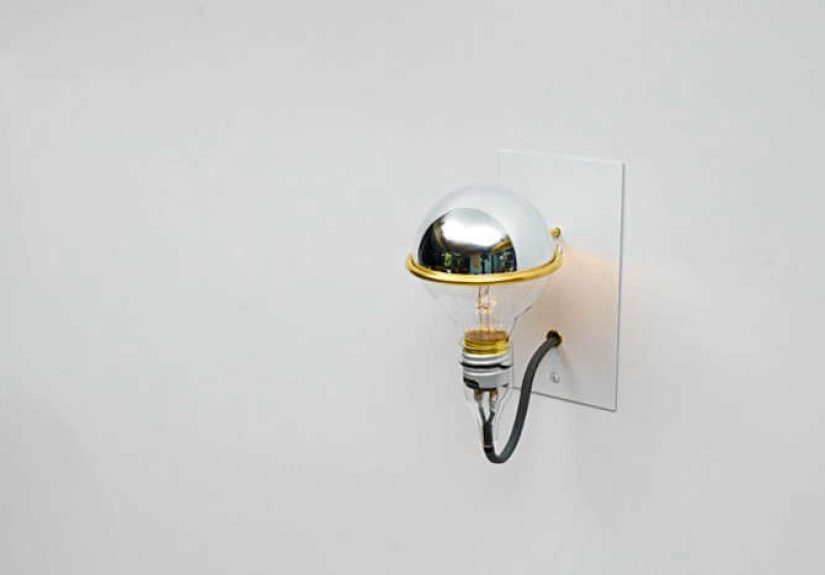
If we had to describe the purest version of a minimalist sconce, it would probably be this: a slim fixture with a low-profile backplate, an understated arm or housing, a soft integrated LED or frosted diffuser, and a finish that blends into the room. It might be a narrow line of light. It might be a small cone directing warm light downward. It might even be a plug-in design that cleverly hides the cord so it looks hardwired.
In other words, the most minimalist sconce is often the one that feels almost inevitable, as if the wall always wanted that exact line, shape, or glow and finally got it.
That does not mean every room needs the same fixture. A minimalist sconce can lean Scandinavian, mid-century, modern, industrial, or quietly luxurious. The key is restraint. No chaos. No costume jewelry. No “look at me” energy unless the room is so simple that the fixture itself becomes the intentional focal point.
How to Choose the Right Minimalist Sconce
Start with function, not feelings alone
Yes, the fixture should be beautiful. But before falling in love with a wall light that looks like modern art crossed with a paperclip, ask what the sconce needs to do. Is it there for ambient lighting, reading light, vanity lighting, or accent lighting? Up-lighting, down-lighting, diffused glow, and directional task light all create very different experiences.
If the fixture is for reading in bed, a downward or adjustable light source usually makes more sense than a purely decorative glow. If it is for a hallway, a soft ambient wash can be enough. If it is going beside a mirror, you want flattering light that minimizes harsh shadows.
Pay attention to scale
Minimalist sconces are unforgiving when the scale is wrong. Too small, and they look accidental. Too large, and they stop being minimalist and start becoming wall drama. Measure the wall area, the furniture below, and the way the light projects. A shallow fixture can feel very sleek, while a long arm or wide shade will visually dominate more than you think.
Think about projection and glare
Minimalist fixtures often rely on exposed geometry and open light paths. That can look gorgeous, but it can also put glare right in your face if mounted poorly. A well-designed sconce should direct light where you need it without blinding you every time you walk by like the wall is holding a grudge.
Choose the right bulb quality or LED spec
For interiors, warm light usually feels best. In living spaces, bedrooms, and bathrooms, many designers and lighting guides favor warm white light in the 2700K to 3000K range. Color rendering matters too. If colors look flat, skin tones look strange, or your beautiful paint suddenly resembles office oatmeal, the bulb quality may be the problem. A CRI of 80 or higher is a solid baseline, and higher quality can make a noticeable difference.
Use dimmers whenever possible
A minimalist sconce becomes much more versatile when you can dim it. Bright enough for a task, soft enough for evening, cozy enough for a quiet corner: that is the dream. A dimmer is often the difference between “pretty fixture” and “fixture I actually love living with.”
Best Rooms for a Minimalist Sconce
Bedroom
This is one of the strongest use cases. Minimalist wall sconces can replace bedside lamps, free up nightstand space, and create a calmer look. Cone sconces, swing-arm options, and slender directional lights work especially well for reading. A pair placed symmetrically around the bed instantly makes the room feel more considered.
Bathroom
A minimalist sconce beside the mirror can be both practical and elegant. Side-mounted vanity sconces tend to cast more flattering light than a single harsh source from above. Clean cylindrical shades, frosted globes, and vertical bars are popular because they feel modern without being fussy. Just make sure the fixture is rated appropriately for bathroom conditions, especially near tubs or showers.
Hallway and entry
These are perfect spaces for understated wall lighting. A minimalist sconce can punctuate a long corridor, create rhythm, and soften what might otherwise be a tunnel of drywall and regret. In an entryway, it can add instant polish without crowding the space.
Living room
In living spaces, minimalist sconces can flank a fireplace, frame artwork, or add mood lighting at a lower visual height than recessed fixtures. They are especially useful in small rooms where floor and table lamps would create clutter.
Renter-friendly spaces
Plug-in sconces deserve a standing ovation. They can deliver the look of layered wall lighting without a full electrical project. Some newer designs are clever enough to hide or integrate the cord so the fixture looks far more polished than the old “dangling wire of compromise” approach.
Placement Rules That Make Minimalist Sconces Look Better
Minimalist lighting looks effortless only when the placement is right. That is the annoying truth. General wall sconces are often mounted around 60 to 72 inches from the finished floor, though ceiling height, fixture shape, and room use can shift that range. In bedrooms, sconces are commonly installed about 30 to 36 inches above the mattress. At bathroom vanities, pairs are often mounted around eye level and spaced roughly 28 to 30 inches apart, depending on mirror width and fixture size.
Spacing matters just as much as height. In hallways, multiple sconces are often placed several feet apart to create a balanced spread of light. If a fixture sticks far off the wall, you should also think about clearance, especially in narrow circulation paths. In some settings, low-profile or ADA-conscious designs are the smartest choice because they reduce projection and keep the walkway comfortable.
The general principle is simple: the fixture should feel aligned with the room’s architecture and avoid shining directly into your eyes. Minimalism is supposed to lower stress, not create surprise retina events.
Materials and Finishes That Feel Truly Minimal
Minimalist sconces are often at their best when material choices are simple but tactile. Matte metal, frosted glass, ceramic, plaster-like textures, alabaster-inspired shades, and softly brushed finishes all work beautifully. In minimalist rooms, texture does a lot of emotional heavy lifting. If the shape is simple and the palette is restrained, the material becomes the quiet luxury.
Matte black creates graphic contrast. White disappears into pale walls and feels airy. Soft brass adds warmth without shouting. Brushed nickel or stainless tones skew crisp and contemporary. Even in the most restrained room, the right finish can keep the fixture from feeling sterile.
Common Mistakes to Avoid
Choosing a fixture that is too cold
A minimalist room should feel calm, not clinical. If the light is too blue or too harsh, the whole space can read like a stylish dental office.
Ignoring layers of light
A sconce is wonderful, but it usually should not do every job alone. Rooms feel better when ambient, task, and accent lighting work together.
Forgetting the wall color
The same fixture will look totally different on warm white paint, charcoal plaster, or natural wood paneling. Minimalist lighting depends heavily on contrast and shadow, so the backdrop matters.
Buying solely for the photo
A sconce might look gorgeous online and be terrible for your actual life. If you read in bed, put on makeup, or need to navigate a dark hallway without stepping on the dog, function still wins.
So, Is There Really a World’s Most Minimalist Sconce?
Maybe not one universal winner. But there is a clear idea behind the title. The world’s most minimalist sconce is not the one with the least personality. It is the one with the least unnecessary personality. It earns its keep through clarity, proportion, warmth, and usefulness.
It can be a tiny cone in a bedroom, a vertical light bar beside a vanity, a low-profile LED wash light in a hallway, or a renter-friendly plug-in design that looks nearly built in. The best one will disappear just enough to let the room breathe, while still making the space feel smarter, calmer, and more complete.
That is the trick of minimalist design. It looks simple, but simplicity done well is never accidental. A great minimalist sconce proves that a quiet object can have a surprisingly loud impact. It does not need to perform. It just needs to glow in exactly the right way.
Experiences With Minimalist Sconces in Real Life
Living with a minimalist sconce is one of those home upgrades that can seem minor on paper and strangely life-improving in reality. At first, it feels like you have just swapped one light fixture for another. Then a week passes, and you realize the room behaves differently.
In a bedroom, the change is immediate. A wall-mounted sconce clears visual clutter from the nightstand, which sounds small until your bedside table suddenly has room for a book, a glass of water, and the charger cable that used to live in lamp chaos. The room feels cleaner without actually being larger. Evening routines become calmer because the light source is more intentional. A downward-facing cone or adjustable arm creates a little pool of light that is ideal for reading, while the rest of the room can remain softly dim. It feels less like “all lights on” and more like the house understands your mood.
In a bathroom, the experience is even more practical. A well-placed minimalist sconce beside the mirror can make grooming feel easier because the light is more flattering and balanced. Suddenly, shaving, skincare, or makeup does not involve mysterious shadows that make one side of your face look dramatic and the other side look like it is auditioning for a noir film. The cleaner design also helps the bathroom feel less busy, especially if the vanity already has strong materials such as stone, tile, or wood grain.
Hallways may be where minimalist sconces are most underrated. A corridor that used to be purely functional can feel thoughtful and architectural with just a few simple fixtures. Instead of harsh overhead brightness, you get a softer rhythm of light along the wall. It changes how you move through the space. Guests notice it too, even if they cannot explain why the hallway feels more expensive all of a sudden.
There is also an emotional effect. Because minimalist sconces are often paired with warm bulbs and dimmers, they encourage lower, softer light in the evening. That creates a more relaxed atmosphere than blasting overhead fixtures at full brightness. The room feels less busy, your eyes feel less attacked, and everything from wall texture to bedding to paint color tends to look richer.
Perhaps the biggest real-world benefit is that a minimalist sconce rarely goes out of style quickly. It is not trend-proof in some magical way, but it ages well because it does not rely on novelty. A simple shape, good materials, and warm light usually keep working year after year. That is the beauty of this category: once you get the scale, light quality, and placement right, the fixture keeps quietly doing its job while making the room feel more composed every single day.
Conclusion
The question World’s Most Minimalist Sconce? is really a question about how little a fixture can do visually while still doing a lot for a room. The answer lies in balance. A truly successful minimalist sconce is clean but not cold, subtle but not forgettable, practical but still beautiful. It supports the architecture, improves the mood, and keeps the room feeling open, warm, and intentional.
If you want one lighting upgrade that can make a bedroom feel calmer, a bathroom feel more polished, or a hallway feel designed instead of merely passed through, a minimalist sconce is a smart place to start. The best ones prove a lovely point: when it comes to lighting, less can absolutely glow more.