Table of Contents >> Show >> Hide
- What Scoliosis Really Means
- Can Yoga Help Scoliosis?
- But Let’s Keep It Honest: Yoga Is Not a Cure
- The Best Yoga Poses for Scoliosis
- Yoga Poses and Habits to Be Careful With
- Tips for Practicing Yoga Safely With Scoliosis
- When to Stop and Call a Healthcare Provider
- Experience-Based Insights: What Yoga for Scoliosis Often Feels Like in Real Life
- Conclusion
- SEO Tags
If you have scoliosis, you have probably heard every kind of advice imaginable. “Just stand up straighter.” “Stretch more.” “Don’t twist.” “Definitely twist.” At some point, your spine starts to feel like it is trapped in a group chat with too many opinions.
Here is the good news: yoga can be a helpful part of a scoliosis management plan. Here is the equally important reality check: yoga is not a magic wand, a cure, or a replacement for medical care. The best yoga practice for scoliosis is thoughtful, individualized, and more interested in symmetry, breathing, and stability than in winning an imaginary flexibility contest.
When used wisely, yoga may help improve posture awareness, core and back strength, mobility, breathing, and everyday comfort. It can also help you feel more at home in your body, which matters when your spine seems determined to freelance. In this guide, we will walk through the real benefits of yoga for scoliosis, the poses that may help, the mistakes to avoid, and practical tips for building a safe routine.
What Scoliosis Really Means
Scoliosis is a sideways curve of the spine that often looks like a “C” or an “S” on imaging. It can show up in childhood, adolescence, or adulthood. Some people have few symptoms, while others deal with pain, muscle fatigue, uneven shoulders or hips, stiffness, balance changes, or reduced comfort during standing, walking, or sitting for long periods.
Not all scoliosis behaves the same way. A teen with mild adolescent idiopathic scoliosis is dealing with a different situation than an adult with degenerative scoliosis and back pain. That is why one-size-fits-all exercise advice can miss the mark. The direction of the curve, where it sits in the spine, whether the ribs rotate, and how severe the curve is all affect which movements help and which ones need modification.
That point matters because yoga for scoliosis works best when it is customized. The goal is not to force your spine into perfect straightness. The goal is to create more balance, more support, and less strain in the body you have right now.
Can Yoga Help Scoliosis?
In many cases, yes, but with nuance. Yoga may support scoliosis care in several meaningful ways:
1. It can improve posture awareness
Many people with scoliosis unconsciously collapse into the more compressed side of the torso or overwork the more prominent side. Yoga slows things down enough for you to notice those habits. That awareness alone can be powerful. You start catching yourself before you do the human question mark pose at your desk.
2. It can build strength where the body needs support
Scoliosis often creates muscle imbalances. Some muscles become overworked and tight, while others become weak or underused. A well-designed yoga practice can strengthen the trunk, back, hips, and shoulders, which may improve stability and reduce fatigue.
3. It may reduce pain and tension
For adults especially, scoliosis-related discomfort often comes from muscle strain, joint stress, postural fatigue, and sometimes nerve irritation. Gentle yoga can help release tight areas and improve movement quality. Less guarding often means less pain.
4. It can support breathing mechanics
Because scoliosis may compress one side of the rib cage, breathing can become shallow or uneven. Yoga breathing and rib-expansion work can help improve awareness of the concave side of the torso and encourage fuller, more balanced breath.
5. It may improve function and confidence
Sometimes the biggest win is not a dramatic before-and-after photo. It is being able to walk longer, sit more comfortably, reach overhead without feeling crooked, or finish the day without your back filing a formal complaint.
But Let’s Keep It Honest: Yoga Is Not a Cure
This is the part where we politely escort hype out of the room. Major medical organizations make it clear that exercise can play a role in scoliosis care, but it is not a guaranteed fix for the spinal curve itself. Some small studies on yoga-based interventions, including side plank variations, have shown promising results, particularly for certain types of scoliosis. Still, the overall research base is limited, and results vary.
So yes, yoga may help reduce symptoms, improve function, and possibly support better alignment in some people. No, it should not be marketed as a miracle solution that replaces medical evaluation, physical therapy, bracing, or surgery when those are needed.
If you have moderate to severe scoliosis, increasing pain, numbness, weakness, breathing issues, or a rapidly changing curve, talk with a physician or scoliosis-trained physical therapist before starting or changing your exercise routine.
The Best Yoga Poses for Scoliosis
The most useful poses tend to do at least one of four things: lengthen the spine, strengthen key support muscles, improve breathing into compressed areas, or help you organize your posture more evenly. Here are several commonly recommended options.
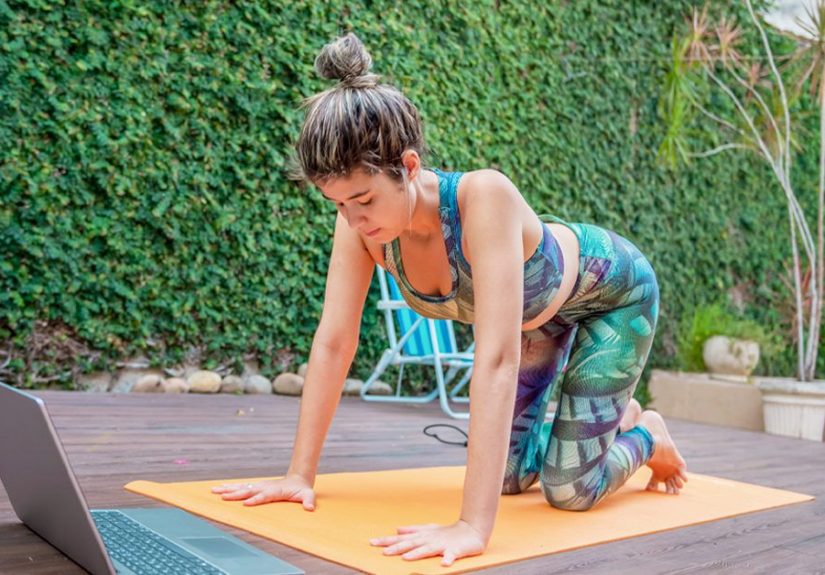
Cat-Cow
Cat-Cow is a gentle way to warm up the spine without demanding too much. It encourages movement through flexion and extension, helps you notice where your spine feels stuck, and invites the breath to move with the body.
Why it may help: It improves spinal mobility, reduces stiffness, and helps you develop awareness of your rib cage and pelvis.
Tip: Move slowly. The goal is not the biggest arch or roundest back. The goal is smooth, controlled motion and steady breathing.
Child’s Pose
Child’s Pose can create a gentle sense of length through the back and ribs. With scoliosis, small adjustments matter. Walking the hands slightly to one side may help open the more compressed side of the torso.
Why it may help: It can relax the back muscles, lengthen the spine, and encourage breath into tighter areas.
Tip: Use a bolster or folded blanket under the chest or hips if the pose feels cramped rather than calming.
Mountain Pose at the Wall
This is not flashy, which is exactly why it is useful. Standing with your back near a wall can teach you what “stacked” actually feels like. Many people with scoliosis do better when they train posture in simple, supported positions before attempting more demanding poses.
Why it may help: It builds postural awareness, improves alignment, and teaches you how to distribute weight more evenly through both feet.
Tip: Notice if one rib cage, shoulder, or hip tends to drift. Gently organize rather than force.
Half Forward Fold at the Wall or Chair
This supported variation gives you the spinal lengthening benefits of a forward fold without dumping your body weight into the low back. It can also strengthen the shoulders and help you find a longer, more neutral spine.
Why it may help: It decompresses the spine, improves shoulder mobility, and encourages symmetrical length through the torso.
Tip: Keep your knees soft and your spine long. Think “reach” rather than “collapse.”
Locust Pose
Locust is often recommended because it strengthens the posterior chain, including the muscles that support the spine. That matters in scoliosis, where fatigue and weakness in the trunk can add to discomfort.
Why it may help: It can strengthen the back extensors, glutes, and hamstrings while improving postural endurance.
Tip: Start small. Lifting a little with control is more helpful than launching yourself into a dramatic backbend and then regretting your life choices.
Side Plank
Side Plank gets a lot of attention in yoga-for-scoliosis conversations because small studies have linked asymmetrical side plank practice with improvement in some curves. But this is also the pose most likely to be oversimplified online.
Why it may help: It strengthens the lateral trunk muscles, shoulder stabilizers, and core.
Important caution: The correct side for practice may depend on your curve pattern. Do not guess based on a random internet diagram. A scoliosis-trained clinician or physical therapist should tell you whether, how, and on which side to practice this pose.
Chair Twist
Gentle, supported twists can help some people with scoliosis feel less rigid and more organized through the rib cage and trunk. The keyword is gentle. Scoliosis already includes a rotational component, so aggressive twisting is not the move.
Why it may help: It can improve rotational awareness and mobility when done with spinal length first.
Tip: Lengthen on the inhale, rotate lightly on the exhale, and stop well before strain.
Constructive Rest or Supported Savasana
Sometimes the smartest pose is the least glamorous one. Lying on your back with support under the knees, ribs, or head can help you relax gripping patterns and practice fuller breathing.
Why it may help: It reduces tension, supports recovery, and improves breath awareness.
Tip: Props are not cheating. They are tools. Your ego may disagree, but your spine will likely send a thank-you note.
Yoga Poses and Habits to Be Careful With
With scoliosis, more intensity does not automatically mean more benefit. Be cautious with:
- Deep backbends that compress the low back
- Forceful or repeated spinal twists
- Extreme side bends done without stabilization
- Fast transitions that sacrifice alignment
- Any pose that causes pinching, radiating pain, numbness, dizziness, or breath restriction
Also, avoid treating symmetry as “make both sides do the same thing.” In scoliosis, the smarter question is often: What does each side need? One side may need more opening. The other may need more support. That is why individualized instruction matters so much.
Tips for Practicing Yoga Safely With Scoliosis
Know your curve pattern
If possible, understand whether you have a thoracic, lumbar, or S-shaped curve, and which side is convex or concave. That information helps guide modifications.
Get cleared when needed
If you are newly diagnosed, have significant pain, have had spine surgery, wear a brace, or are dealing with neurological symptoms, ask your clinician what types of movement are appropriate.
Work with a qualified professional
An experienced yoga therapist, physical therapist, or instructor familiar with scoliosis can help you avoid generic cueing that does not fit your body.
Use props generously
Walls, chairs, blocks, straps, blankets, and bolsters can make poses more effective, not less. The goal is good positioning, not suffering for sport.
Prioritize consistency over intensity
Ten to twenty thoughtful minutes a few times a week usually beats the heroic, once-a-month class that leaves you walking like a confused flamingo.
Track how you feel afterward
The best practice is the one that helps you function better later, not just the one that feels dramatic in the moment. Look for signs like easier breathing, less fatigue, better posture, and more comfortable movement the next day.
When to Stop and Call a Healthcare Provider
Yoga should challenge you a little, not alarm you. Stop and get medical advice if you notice:
- New or worsening back pain
- Pain that shoots into the legs or arms
- Numbness, tingling, or weakness
- Loss of balance that is getting worse
- Shortness of breath not explained by effort
- A visible increase in curve or asymmetry
That is especially important for adults with degenerative scoliosis and for children or teens who are still growing.
Experience-Based Insights: What Yoga for Scoliosis Often Feels Like in Real Life
One of the most useful ways to understand yoga for scoliosis is to talk about experience, because this practice usually changes daily life in subtle, practical ways before it changes anything dramatic. A teenager with mild scoliosis, for example, may not say, “My thoracic rotation has improved.” They are more likely to say, “My backpack feels less annoying,” or “I don’t get as achy after sitting in class.” That is real progress.
Adults often describe a different pattern. Many say their back feels less like one giant knot and more like a collection of parts that can move again. Before yoga, they may notice one shoulder constantly creeping up, one side of the waist shortening, or a heavy, tired feeling after standing in the kitchen for 20 minutes. After a few weeks of consistent, modified practice, they often report better body awareness first. They catch themselves leaning, gripping, or twisting awkwardly long before pain ramps up. That kind of awareness sounds small, but it can completely change how the day feels.
Breathing is another big one. People with rib cage asymmetry sometimes say they never realized how shallow their breath had become until they practiced supported poses and directed breathing into the tighter side of the torso. The first few times can feel strange, almost like trying to inflate a room in the house you forgot existed. Over time, though, that breathing work can create a greater sense of space and calm.
There is also an emotional side to the experience. Scoliosis can make people feel uneven, self-conscious, or frustrated, especially when exercise classes use cues that assume everybody’s spine is built from the same blueprint. A more tailored yoga practice often feels validating. Instead of being told to “square your hips” or “make both sides match,” you learn to work with your structure. That shift can be surprisingly freeing.
Of course, progress is rarely a straight line, which is fitting for a scoliosis article. Some days a pose feels great. Other days the body says, “Absolutely not.” Weather, stress, sleep, work, hormones, and how long you sat in a terrible chair all matter. The people who tend to do well are usually not the most flexible. They are the most observant and consistent. They modify. They use props. They stop trying to win yoga.
Many people also discover that yoga works best as part of a bigger plan. It pairs well with physical therapy, walking, strength training, and regular medical follow-up. In that sense, yoga is less a solo hero and more a very useful member of the care team. Not flashy. Just dependable.
If you are starting out, the most realistic expectation is not “My spine will be perfect.” It is “I may feel stronger, more balanced, more mobile, and more comfortable in my own body.” That is not a small outcome. That is a meaningful one.
Conclusion
Yoga for scoliosis can be genuinely helpful when it is approached with patience, precision, and common sense. The biggest benefits usually include better posture awareness, improved trunk strength, easier breathing, less muscle tension, and more confidence in movement. The best poses are often the ones that create length, support, and control rather than dramatic range of motion.
Just remember: scoliosis is personal, so yoga should be personal too. Your spine does not need a boot camp. It needs a smart plan. Work with qualified professionals when possible, use props without apology, and let your practice be guided by what helps you feel steadier and stronger in daily life.
That is the real goal. Not perfection. Not pretzel-level flexibility. Just a body that feels more supported, one breath and one well-placed pose at a time.