Table of Contents >> Show >> Hide
- What Is a Bone Density Z-Score?
- Z-Score Bone Density Chart
- Z-Score vs. T-Score: What Is the Difference?
- Who Needs a Z-Score for Bone Density?
- What Does a Low Z-Score Mean?
- How Is a Bone Density Z-Score Measured?
- How to Read a Bone Density Report
- Can a Z-Score Diagnose Osteoporosis?
- When Should You Talk With a Doctor?
- What Tests May Follow a Low Z-Score?
- How to Support Healthy Bone Density
- Example: Understanding a Z-Score in Real Life
- Common Myths About Z-Scores for Bone Density
- Experience Notes: What People Often Learn After Seeing a Bone Density Z-Score
- Conclusion
A bone density report can look like it was designed by someone who loves numbers a little too much. You may see terms like BMD, DXA, T-score, and Z-score, all sitting there like guests at a medical math party. The good news: once you understand what a Z-score means, the report becomes much less mysterious.
A Z-score for bone density compares your bone mineral density with what is expected for someone of your age, sex, and body size. It is especially useful for children, premenopausal women, and men younger than 50. Unlike a T-score, which compares your bones with those of a healthy young adult, a Z-score asks a more personalized question: “How do your bones compare with people like you?”
This article explains Z-scores for bone density, how to read a Z-score chart, what a low Z-score may mean, how it differs from a T-score, and what steps may help protect bone health over time.
What Is a Bone Density Z-Score?
A bone density Z-score is a number that shows how far your bone mineral density is above or below the average for people similar to you. The score is measured in standard deviations. That sounds fancy, but the basic idea is simple: a score near 0 means your bone density is close to average for your comparison group.
A positive Z-score means your bone density is higher than average for your age group. A negative Z-score means it is lower than average. For example, a Z-score of -1.0 means your bone density is one standard deviation below the average for people like you. A Z-score of -2.0 means it is two standard deviations below that average.
In clinical reporting, a Z-score of -2.0 or lower is commonly described as “below the expected range for age.” A Z-score above -2.0 is generally considered “within the expected range for age.”
Z-Score Bone Density Chart
The following chart gives a practical overview of how Z-scores are often interpreted. Your doctor may interpret your result differently depending on your age, fracture history, medications, health conditions, and the part of the body tested.
| Z-Score Result | General Meaning | What It May Suggest |
|---|---|---|
| Above 0 | Higher than average bone density for your age group | Usually reassuring, but still interpreted with your full health history |
| 0 | Average bone density for your age group | Your result is close to the expected average |
| Between -1.0 and -1.9 | Below average, but usually still within the expected range for age | Your doctor may review lifestyle, nutrition, risk factors, or repeat testing plans |
| -2.0 or lower | Below the expected range for age | May prompt evaluation for secondary causes of low bone density |
Z-Score vs. T-Score: What Is the Difference?
The Z-score and T-score both come from a bone density test, usually a DXA scan. They are related, but they answer different questions.
Z-Score
A Z-score compares your bone density with the average bone density of people your same age, sex, and body size. It is most often emphasized in:
- Children and teenagers
- Premenopausal women
- Men younger than 50
- People whose doctors suspect a secondary cause of low bone density
T-Score
A T-score compares your bone density with that of a healthy young adult. It is the score most often used to diagnose osteopenia or osteoporosis in postmenopausal women and men age 50 and older.
In adults where T-scores are used, a T-score of -1.0 or above is generally considered normal. A T-score between -1.0 and -2.5 is commonly called low bone mass or osteopenia. A T-score of -2.5 or lower is consistent with osteoporosis.
Here is the friendly shortcut: T-score is about fracture-risk classification in many older adults; Z-score is about whether your bones look unusual compared with peers.
Who Needs a Z-Score for Bone Density?
Z-scores are especially important when bone density is being assessed in people who do not fit the typical osteoporosis screening group. For example, a healthy 32-year-old woman with low bone density should not be judged the same way as a 72-year-old postmenopausal woman. Their bones, hormones, risk factors, and treatment decisions may be very different.
Doctors often pay close attention to Z-scores in younger adults because a very low score may suggest that something else is affecting bone health. Possible contributors include certain medications, endocrine disorders, digestive conditions that reduce nutrient absorption, kidney disease, inflammatory diseases, eating disorders, low body weight, long-term steroid use, or low levels of sex hormones.
What Does a Low Z-Score Mean?
A low Z-score does not automatically mean you have osteoporosis. This is one of the most important points to remember. A Z-score is not a stand-alone diagnosis. It is a clue.
If your Z-score is -2.0 or lower, your healthcare provider may look for possible reasons your bone density is lower than expected for your age. This is sometimes called evaluating for secondary osteoporosis or secondary causes of low bone mass.
Possible Reasons for a Low Z-Score
- Low calcium or vitamin D intake
- Vitamin D deficiency
- Long-term use of glucocorticoids, such as prednisone
- Thyroid or parathyroid problems
- Celiac disease or other malabsorption conditions
- Chronic kidney or liver disease
- Rheumatoid arthritis or other inflammatory diseases
- Low estrogen or testosterone levels
- Eating disorders or very low body weight
- Heavy alcohol use or smoking
- Family history of osteoporosis or fragility fracture
Think of the Z-score as a smoke alarm, not the fire itself. If it is low, your doctor may investigate what is causing the signal.
How Is a Bone Density Z-Score Measured?
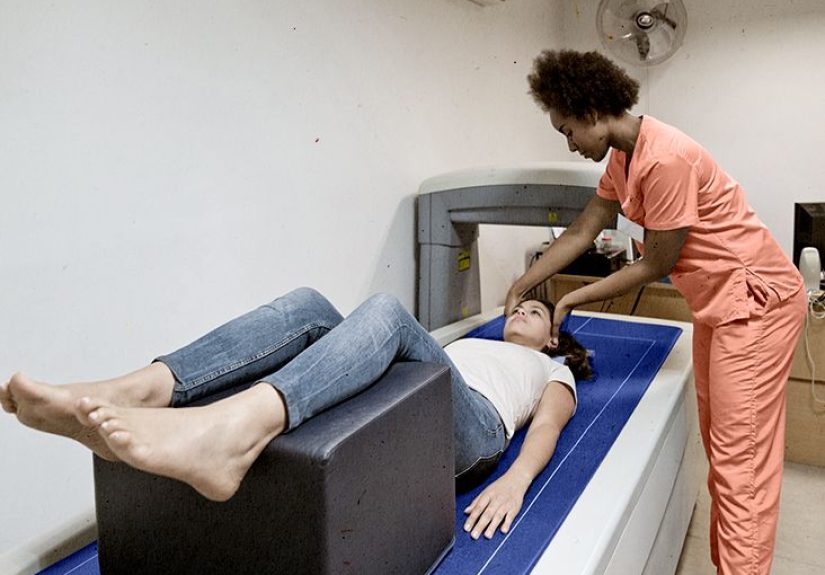
Bone density is most often measured with a DXA scan, also called a DEXA scan. DXA stands for dual-energy X-ray absorptiometry. The scan uses low-dose X-rays to measure bone mineral density, usually at the hip and spine. Sometimes the forearm is tested, especially if the hip or spine cannot be measured accurately.
The test is painless, noninvasive, and usually quick. You lie on a table while the scanner passes over the area being measured. No dramatic hospital-movie soundtrack is required. Most people can return to normal activities right after the scan.
How to Read a Bone Density Report
A DXA report may include several numbers and locations. The most common areas measured are the lumbar spine, total hip, femoral neck, and sometimes the one-third radius of the forearm. Each site may have its own BMD value, T-score, and Z-score.
Important Items to Look For
- BMD: The actual bone mineral density measurement.
- Z-score: Your comparison with people similar to your age and body profile.
- T-score: Your comparison with a healthy young adult reference group.
- Test site: The part of the body measured, such as hip, spine, or forearm.
- Prior comparison: Whether your bone density has changed since a previous scan.
One caution: do not panic over tiny changes between scans. Small differences can happen because of body positioning, machine differences, or normal measurement variation. Your clinician can tell whether a change is meaningful.
Can a Z-Score Diagnose Osteoporosis?
In many cases, no. A Z-score alone usually does not diagnose osteoporosis, especially in premenopausal women, men younger than 50, and children. Instead, it helps determine whether bone density is unexpectedly low for age.
Osteoporosis diagnosis may involve more than a scan result. Doctors may consider fracture history, medical conditions, medication use, lab tests, family history, and fall risk. In children, the diagnosis is even more careful and usually requires both low bone density and a meaningful fracture history.
For postmenopausal women and men age 50 or older, T-scores are usually more central to diagnosing osteoporosis and estimating fracture risk.
When Should You Talk With a Doctor?
You should discuss your bone density results with a healthcare professional if your Z-score is -2.0 or lower, if you have had a fracture from a minor fall, or if you have risk factors for low bone density. A doctor may recommend blood tests, medication review, nutrition assessment, or additional imaging.
You should also ask questions if your report seems confusing. A bone density report is not exactly beach reading. Your healthcare team can explain which number matters most for your age and situation.
What Tests May Follow a Low Z-Score?
If your Z-score is below the expected range for age, your clinician may look for hidden causes. Follow-up testing depends on your health history, but it may include:
- Blood calcium and vitamin D levels
- Thyroid function tests
- Parathyroid hormone testing
- Kidney and liver function tests
- Markers of inflammation
- Celiac disease screening
- Sex hormone evaluation
- Medication review
The goal is not simply to label the score. The goal is to understand why the score is low and what can be done about it.
How to Support Healthy Bone Density
You cannot change your Z-score overnight. Bones are living tissue, but they are not microwave popcorn. They remodel slowly. Still, daily habits can support bone strength and may help reduce future fracture risk.
Get Enough Calcium
Calcium is a key building block for bones. Many people can get calcium from foods such as dairy products, fortified plant milks, tofu made with calcium, canned salmon or sardines with bones, leafy greens, almonds, and fortified cereals. Supplements may help some people, but more is not always better. Too much calcium from supplements can cause problems, so it is best to discuss your needs with a clinician.
Pay Attention to Vitamin D
Vitamin D helps the body absorb calcium. It comes from sun exposure, foods such as fatty fish and fortified products, and supplements when needed. People with limited sun exposure, darker skin, certain digestive conditions, or older age may be more likely to have low vitamin D.
Do Weight-Bearing and Strength Exercises
Bones respond to healthy stress. Walking, stair climbing, dancing, resistance training, and balance exercises may support bone and muscle health. If you already have osteoporosis, spinal fractures, balance problems, or very low bone density, ask a professional which exercises are safe.
Avoid Smoking and Limit Alcohol
Smoking is linked with poorer bone health. Heavy alcohol use can also increase fall and fracture risk. Your skeleton may be quiet, but it definitely notices lifestyle choices.
Review Medications
Some medications can affect bone density, especially when used long term. These may include glucocorticoids, some seizure medications, some cancer treatments, and certain hormone-suppressing therapies. Never stop a prescribed medication without medical guidance, but do ask whether bone protection should be part of the plan.
Example: Understanding a Z-Score in Real Life
Imagine a 38-year-old man has a DXA scan after a low-trauma wrist fracture. His report shows a lumbar spine Z-score of -2.3. That does not automatically diagnose osteoporosis by itself. However, it tells the doctor that his bone density is below what would be expected for his age.
His clinician may ask about family history, digestive symptoms, steroid use, testosterone levels, vitamin D, alcohol intake, and previous fractures. The final plan may include lab tests, nutrition changes, strength training, treatment of an underlying condition, or medication if fracture risk is high enough.
Now imagine a 67-year-old woman has a T-score of -2.6 at the femoral neck. In her case, the T-score is usually the key diagnostic number, and the result is consistent with osteoporosis. Same scan family, different score doing the main job.
Common Myths About Z-Scores for Bone Density
Myth 1: A Low Z-Score Always Means Osteoporosis
Not always. A low Z-score means your bone density is lower than expected for your age group. Diagnosis depends on your age, fracture history, T-score when appropriate, medical history, and other findings.
Myth 2: A Normal Z-Score Means You Have No Fracture Risk
Not necessarily. Fracture risk depends on more than bone density. Falls, medications, vision problems, muscle weakness, previous fractures, and medical conditions can all matter.
Myth 3: Only Older Women Need Bone Density Testing
Older women are a major screening group, but they are not the only people who may need testing. Men, younger adults with risk factors, people taking long-term steroids, and individuals with fragility fractures may also need evaluation.
Experience Notes: What People Often Learn After Seeing a Bone Density Z-Score
Many people first encounter their Z-score by accident. They go in for a DXA scan because a doctor is being cautious, or because a fracture seemed “too easy,” and suddenly they are staring at a report full of decimals. The first experience is often confusion. Patients may wonder whether -1.7 is terrible, whether -2.1 means their bones are about to crumble like a cookie, or whether a positive score means they have superhero bones. The truth is usually less dramatic and more useful: the Z-score is a starting point for better questions.
One common experience is realizing that bone health is connected to the whole body. A low Z-score may lead someone to discover low vitamin D, untreated thyroid disease, celiac disease, low hormone levels, or the bone effects of medication. In that sense, the scan can be surprisingly helpful. It does not just measure bones; it may point toward a health issue that has been quietly hanging around in the background, wearing sunglasses and pretending not to be involved.
Another experience is learning that lifestyle changes are practical, not perfect. People often imagine they must become gym warriors overnight. In reality, the first steps may be simple: walking more consistently, adding resistance bands, improving protein intake, checking calcium from food, correcting vitamin D deficiency, reducing alcohol, and making the home safer to prevent falls. These steps may sound ordinary, but bones love ordinary habits repeated over time.
Patients also learn that comparing results can be tricky. A scan done on a different machine, at a different facility, or with slightly different positioning may not match perfectly with an older scan. This is why clinicians often prefer repeat DXA testing at the same facility when possible. The trend matters, but only when the comparison is reliable. Tiny changes do not always mean the skeleton is staging a rebellion.
For younger adults, a low Z-score can feel emotionally unfair. Many assume bone density is only an older-person problem. Seeing a low result at 28, 35, or 45 may be unsettling. But it can also be empowering because younger people may have more time to identify causes and build a long-term plan. The score becomes less of a verdict and more of a dashboard warning light: pay attention, check under the hood, and make smart adjustments.
The best experience with a Z-score is a calm conversation with a knowledgeable healthcare provider. Instead of focusing on one number, the conversation should cover fracture history, family risk, nutrition, exercise, medications, lab results, and follow-up timing. A Z-score is useful, but it is not the whole story. Your bones are part of a living system, and the right plan should fit the person attached to them.
Conclusion
A Z-score for bone density compares your bone mineral density with what is expected for someone of your age, sex, and body size. It is especially important for children, premenopausal women, and men under 50. A Z-score of -2.0 or lower is generally considered below the expected range for age and may lead your doctor to look for secondary causes of low bone density.
The most important takeaway is this: a Z-score is not a final diagnosis by itself. It is a useful clue. When interpreted with your health history, fracture history, medications, nutrition, hormone status, and lifestyle, it can help guide a smarter bone health plan.
If your bone density report looks confusing, ask your healthcare provider to walk through it with you. Your skeleton has been supporting you for years. It deserves a clear explanation, a practical plan, and maybe a little appreciation for doing all that work without asking for applause.