Table of Contents >> Show >> Hide
- Why Warm Wooden Stairs Are Having a Moment
- Choosing the Right Wood (and Finish) for Modern Stairs
- 10 Modern Favorites: Warm Wooden Stair Ideas
- 1. White Walls + Pale Oak: The Remodelista Classic
- 2. Floating Timber Treads with Glass Railings
- 3. Warm Wood + Cool Metal Rail
- 4. Half-Open Risers for Light (and Privacy)
- 5. Chunky Block Treads for Modern Farmhouse
- 6. Wood Treads, White Risers: Best of Both Worlds
- 7. Modern Staircase as Gallery Wall
- 8. Wood Stairs with Stone or Tile Accent Walls
- 9. Under-Stair Storage, but Make It Chic
- 10. Compact, Curved, and Spiraled
- Practical Considerations: Safety, Comfort, and Maintenance
- Styling Tips: Making Your Staircase Feel Intentional
- Real-Life Experiences with Warm Wooden Stairs
- Conclusion: A Quiet Showpiece for Everyday Life
There’s a reason every great modern house tour sneaks in a staircase glamour shot.
A run of warm wooden stairs against calm white walls is like the house’s spine: quiet,
structural, and surprisingly emotional. One good stairway can make an ordinary hallway
feel like an architectural moment; one bad stairway can feel like, well, airport back-of-house.
Inspired by Remodelista’s love of clean-lined interiors and those famously
serene stairwells, this guide rounds up 10 modern favorites that all share one thing:
warm wood underfoot. From floating oak treads to chunky farmhouse blocks and minimalist
glass-guarded runs, these wooden staircase ideas prove you can be both sculptural and
practical, cozy and crisp.
Along the way, we’ll talk about what kind of wood actually works on stairs, how to keep a
smooth timber tread from turning into a personal slip-and-slide, and why hardwood stairs
have become the go-to upgrade for design-conscious homeowners who are slowly saying goodbye
to wall-to-wall carpet.
Why Warm Wooden Stairs Are Having a Moment
Hardwood stairs have been around forever, but the current wave is different: lighter,
simpler, and more architecturally expressive. Instead of heavy, turned balusters and shiny
orange varnish, you’re seeing:
- Matte finishes that showcase wood grain instead of high gloss.
- Open risers and floating treads for a light, airy feel.
- Glass or slender metal railings that visually disappear.
- Warm species like oak and ash paired with white plaster walls.
Designers love wood stairs because they bring instant warmth to otherwise stark spaces.
Even the most minimal white box feels more humane when you introduce natural timber in the
vertical circulation exactly the design logic behind many Remodelista stairway roundups.
Homeowners, meanwhile, are realizing that hardwood stairs are durable, relatively easy to
clean, and visually timeless. Compared with carpet, which can stain, mat, and trap dust,
wood stands up well to busy households and regular cleaning.
Choosing the Right Wood (and Finish) for Modern Stairs
Before we get to the 10 favorite looks, a quick primer. You don’t need an exotic species
to achieve a modern staircase; in fact, simple is better. Many architects rely on:
- White oak – The current star of modern interiors: pale, calm, subtly grained.
- European oak or ash – Light, refined, great with matte finishes.
- Maple – Smooth and minimal; it reads almost Scandinavian.
- Walnut accents – A darker, luxe counterpoint if the rest of your home is pale.
Finish matters as much as species. Designers increasingly favor low-sheen, natural-oil or
matte polyurethane finishes that look more “gallery” than “gymnasium.” These finishes
help keep the surface visually soft while still protecting against scuffs and daily wear.
10 Modern Favorites: Warm Wooden Stair Ideas
1. White Walls + Pale Oak: The Remodelista Classic
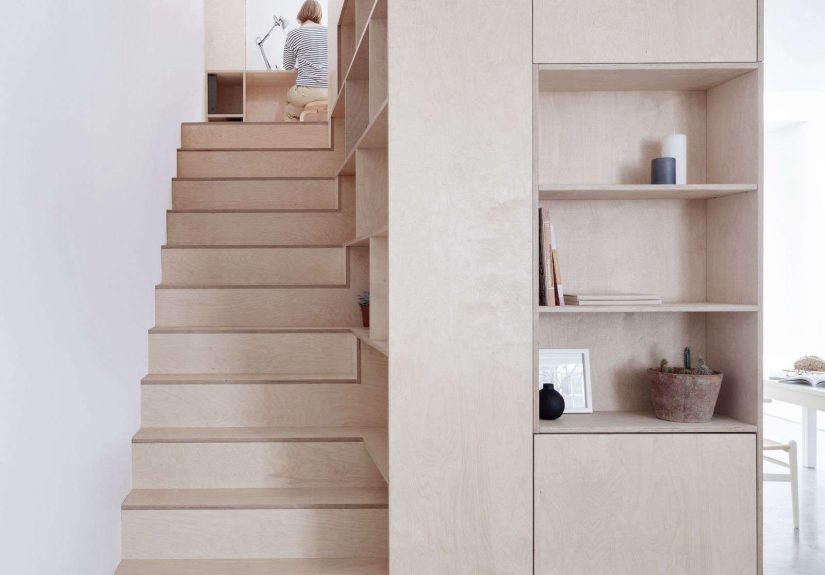
The quintessential modern stair: pale oak treads, crisp white risers or walls, and almost
nothing else. Remodelista has showcased countless examples where the stair reads as a gentle
ribbon of wood cutting through a white volume.
Why it works: the white walls bounce light, making the wood glow. The effect is especially
good in narrow hallways that might otherwise feel like tunnels. Swap heavy railings for a
slim metal handrail or wall-mounted grab bar to keep the look feather-light.
2. Floating Timber Treads with Glass Railings
If your goal is maximum “architectural moment,” floating stairs are hard to beat. Thick
timber treads appear to hover from the wall, while clear glass railings keep sightlines open.
Newer projects pair warm oak with frameless glass so the stairs become a sculptural object
instead of a solid block.
This look is perfect for homes where you want to preserve views from one level to another.
Just be sure to coordinate with your engineer; floating stairs are not a DIY weekend whim.
3. Warm Wood + Cool Metal Rail
Wooden treads with a simple black metal railing hit the sweet spot between warmth and modern
edge. Think oak or ash steps, slim black balusters, and a square-profile handrail. The contrast
keeps things graphic but not harsh, especially if the surrounding palette is white and soft gray.
Bonus: metal rails are sturdy, low maintenance, and can comply easily with building code for
spacing and height when detailed correctly.
4. Half-Open Risers for Light (and Privacy)
All-open risers can feel a bit vertigo-inducing for some people, and they’re not always allowed
under local codes. A compromise: partially open risers or shallow reveals between treads.
These still let light filter through while giving the staircase a sense of solidity.
Use this approach if your stair is near a big window or skylight; the small gaps between treads
can turn ordinary steps into a subtle light sculpture throughout the day.
5. Chunky Block Treads for Modern Farmhouse
If you live in a farmhouse-style or rustic-modern home, consider extra-thick stair treads
imagine steps carved from hefty slabs of oak. Pair them with white shiplap walls or limewashed
plaster, and you’ve got something that feels both sturdy and fresh.
This style reads especially nicely in entries and mudrooms, where you want your stair to feel
like furniture rather than infrastructure. It’s also a natural partner for exposed beams and
wide-plank floors.
6. Wood Treads, White Risers: Best of Both Worlds
For families, the wood-treads/painted-risers combo remains wildly popular. You get the visual
warmth and easy cleaning of hardwood at the top of each step, with the brightness of white paint
on the vertical faces.
This is also a budget-friendly approach: you can invest in higher-quality wood for the tread,
and use a more economical material for the riser, knowing it will be painted.
7. Modern Staircase as Gallery Wall
Wooden stairs often run along a prime vertical surface that’s begging to do more than just
hold up the floor above. One trend: treat that wall as a mini gallery. Keep the stairs themselves
simple warm wood, minimal railing and layer art, family photos, or sculptural wall lights
along the climb.
The trick is restraint. Too much clutter and the space feels cramped. Aim for a controlled mix
of frames and use lighting to highlight the wood grain on the treads below.
8. Wood Stairs with Stone or Tile Accent Walls
For a more dramatic backdrop, pair warm wooden steps with a stone, tile, or textured plaster wall.
Designers are increasingly using marble, terrazzo, or porcelain tiles up the stair wall to contrast
with the softness of timber, creating a quiet little “wow” moment on the way up.
This combo works especially well in narrow stairwells, where a patterned surface can add depth
without taking up physical space.
9. Under-Stair Storage, but Make It Chic
Modern wooden stairs do not waste square footage. Under-stair zones are being turned into
seamless built-ins think flush oak doors, integrated drawers, or a reading nook lined in the
same wood as the treads. The goal: make storage visually disappear.
Using the same species and finish for both the stair and the cabinetry keeps the whole composition
calm and coherent. It’s a particularly Remodelista move: beauty in the hardworking parts of the house.
10. Compact, Curved, and Spiraled
When space is tight, a compact spiral or curved staircase in wood can be a sculptural solution.
Instead of the classic metal spiral you remember from student apartments, picture gently curved
oak treads hugging a central column, with a thin railing tracing the outside edge.
Curved stairs suit entry corners and lofts, and the warmth of wood keeps them from feeling too
industrial or cold especially when paired with soft wall colors and natural textiles below.
Practical Considerations: Safety, Comfort, and Maintenance
Are Wooden Stairs Slippery?
They can be, especially if finished in a high-gloss coating or left dusty. Safety organizations
consistently recommend slip-resistant tread surfaces, clearly visible nosings, and stair angles
within a comfortable range usually between about 30 and 38 degrees.
Modern solutions include:
- Choosing a matte or satin finish with better grip.
- Adding non-slip treads or adhesive strips on the leading edge.
- Designing good lighting so each step is clearly visible.
Wood vs. Carpet on Stairs
The wood-versus-carpet debate is alive and well. Flooring experts point out that hardwood
stairs are durable, visually elegant, and much easier to keep clean, while carpeted stairs
offer more traction, noise control, and cushioning if someone falls.
One increasingly popular compromise: use hardwood on the main staircase to showcase the
architecture, and reserve carpeted runs for secondary flights to bedrooms or basements where
comfort and quiet matter more than aesthetics.
Daily Care for Warm Wooden Stairs
The good news: wooden stairs don’t require spa-level pampering. A soft broom or vacuum on
low setting, plus an occasional pass with a damp (not wet) microfiber mop and a wood-safe
cleaner, is usually enough.
The big enemies are grit and pooled water. Grit scratches; puddles stain. A simple runner
near the base and top of the stairs, and a habit of wiping up spills quickly, will keep your
treads looking good for years.
Styling Tips: Making Your Staircase Feel Intentional
Once the architecture is set, think about the supporting cast the things that make a stair
feel like part of a real home instead of a product photo:
- Entry vignettes: a small wooden bench, a tray for shoes, and a single lamp can echo the warmth of the treads.
- Lighting: wall sconces or step lights create dramatic shadows on the risers at night.
- Plants: a tall fiddle leaf or olive tree at the stair base softens all those lines.
- Textiles: a flat-weave runner can add color without hiding the wood completely.
The mantra is “thoughtful simplicity” edit down instead of adding more, so the shape of the
stairs and the glow of the timber stay center stage.
Real-Life Experiences with Warm Wooden Stairs
Design photos are lovely, but what happens once you’ve lived with warm wooden stairs for a few
years? Homeowners, architects, and even flooring pros share some recurring themes and a few
surprises about modern wood staircases.
1. The “Wow” Factor Never Really Wears Off
People who replace carpeted stairs with hardwood almost always mention the same thing: the whole
house suddenly feels more finished. Even if nothing else changes, that one upgrade can make
the entry feel brighter and more intentional, especially when sunlight hits the treads and
you see the wood grain come to life.
Homeowners report that guests tend to comment on the stairs first sometimes before the kitchen.
On everyday mornings, that little burst of beauty on the way down to coffee can legitimately
improve your mood. It’s like having a boutique hotel moment built into your commute between floors.
2. Noise Is Real, but Manageable
One frequently mentioned trade-off: wood stairs are louder than thick carpet. Sneaking up on
teenagers becomes easier for parents; sneaking down for a midnight snack becomes harder for anyone.
In open-plan homes, the sound of feet on treads can travel more than expected.
People who’ve already made the switch often say they wish they’d planned acoustics a bit more
by adding area rugs on landings, heavier curtains nearby, or even soft wall hangings along the stair.
None of these ruin the clean, modern look, but they help absorb sound so a simple trip upstairs
doesn’t echo like a drum solo.
3. Safety Comes Down to Finish and Habits
The “Are wood stairs slippery?” question usually resolves into a more nuanced reality. Most
homeowners who choose a matte or satin finish, keep dust in check, and add a few non-slip strips
or a runner on the steepest portion report very few slip issues. Families with small kids often
introduce rules like “no socks on the stairs” or “one hand on the rail,” which are smart regardless
of material.
People who run into problems tend to have high-gloss finishes, polished socks, pets that take
corners like racecars, or a perfect storm of all three. The lesson: build safety into the design
(with good lighting, handrails, and slip-resistant finishes) and you’ll enjoy the warm look
without the drama.
4. Cleaning Is Easier Than Expected
If you’ve ever tried to get an old coffee stain or mysterious gray path out of stair carpet,
wood will feel like a breath of fresh air. Many homeowners say they simply vacuum dust and pet
hair, then quickly wipe with a damp microfiber cloth and a wood-safe cleaner once in a while.
No bulky carpet cleaners, no waiting for things to dry, no “don’t step on that yet” choreography.
The most common regret? Not adding a small landing mat at the bottom or top of the stairs early on.
Those little rugs catch grit before it can grind into the finish and help keep the treads
looking newer, longer.
5. Design Choices Age Differently
Experiences also reveal which modern wood stair ideas age gracefully and which feel trend-driven.
Simple runs of oak or ash with white walls and a minimal railing almost always hold up; they look
as appropriate in ten years as they do on day one. More daring choices like heavily patterned
tile paired with strong wood tones or high-contrast paint schemes can feel busy as tastes shift.
People who are happiest long-term usually did two things:
- Kept the staircase itself calm, in a classic wood species and simple form.
- Used easily changeable layers runners, artwork, lighting to experiment with personality.
In other words, treat your warm wooden stairs like you would a great hardwood floor: make the
architecture timeless, and let the decor be the place where you play.
Conclusion: A Quiet Showpiece for Everyday Life
Warm wooden stairs may not shout the way a colorful kitchen or bold tile does, but they shape
your house in quieter, deeper ways. They connect levels, hold daily routines, and greet you
every time you come home. When they’re designed with care good wood, good proportions,
safe detailing, and thoughtful styling they become the kind of background beauty you never
get tired of.
Whether you’re planning a full remodel or just daydreaming through stairway inspiration,
think of your staircase as an opportunity: a place where modern lines and natural warmth
can meet in the middle. Minimalist, yes. But never cold.