Table of Contents >> Show >> Hide
- What Is an Electrified Road, Exactly?
- How a Road Can “Charge You While You Drive”
- Real-World Proof: This Is Already Happening
- Why Bother? The Big Payoffs (If It Scales)
- The Challenges No One Can Meme Away
- Where Electrified Roads Make Sense First
- What to Watch Next
- Driver Experience: What It Might Feel Like to “Charge While You Drive” (500+ Words)
- Conclusion
Imagine a road that behaves like a giant wireless chargerexcept instead of topping up your phone at 12% while you doomscroll,
it quietly feeds electrons into your electric vehicle while you’re just… driving. No plugs. No “is this charger working?”
No awkward charging-station small talk with a stranger who’s also pretending they’re “just stretching.”
This isn’t sci-fi. It’s an emerging category of infrastructure called an Electric Road System (ERS)and it’s already
being tested in the real world, including a public roadway in Detroit built to wirelessly charge compatible EVs as they roll over it.
The idea is simple in concept and delightfully complicated in execution: move energy from the road to the vehicle safely, efficiently,
and at the right momentwhile the vehicle is in motion.
What Is an Electrified Road, Exactly?
An electrified road is a roadway equipped with technology that can deliver electricity to a vehicle while it’s moving (or sometimes while it’s stopped
at a traffic light, bus stop, or loading zone). Think of it as “charging infrastructure” that’s been blended into the pavement.
The most common approach you’ll hear about for passenger vehicles is dynamic wireless chargingsometimes described in research as
Dynamic Wireless Power Transfer (DWPT). Instead of a cable, the road uses embedded hardware (often coils) to create an electromagnetic field.
A receiver on the vehicle captures that energy and converts it into battery power.
The dream scenario: you charge a little, often, in the places you already driveso EVs can potentially use smaller batteries, spend less time parked at chargers,
and worry less about range. The practical scenario (for now): limited pilot segments, specialized vehicles, and a lot of engineers arguing about millimeters.
How a Road Can “Charge You While You Drive”
There isn’t just one electrified-road technology. There are a few main flavors, each with its own “this is brilliant” benefits and “this is why we can’t have nice things” challenges.
1) Inductive (Wireless) Charging Built Into the Pavement
This is the headline-grabbing option: coils embedded under the road create a magnetic field that transfers energy to a matching receiver on the vehicle.
It’s similar in principle to wireless phone charging, but scaled up dramaticallybecause your car is slightly heavier than your phone (unless you’ve been lifting).
Key points:
- Vehicles need onboard receiver hardware to accept powertoday’s EVs won’t automatically charge just because they drove over a fancy lane.
- The road section can be segmented, activating only when a compatible vehicle is present to reduce wasted energy.
- Alignment matters (yes, even on a road). Systems are designed to tolerate real-world driving, but positioning affects efficiency and power delivery.
2) Conductive Rails in the Road (Physical Contact, Carefully)
Another approach is a conductive rail embedded in the road that delivers electricity through physical contact with a vehicle-mounted pickup.
To keep things safe, only short segments energize when the right vehicle is over them, and the conductive elements are designed to minimize exposure.
These systems can be appealing for heavy vehicles and controlled corridors, but they introduce mechanical wear considerations and winter-road realities.
3) Overhead Lines (Like a Trolley… but for Trucks)
You’ll also see “electrified road” used to describe overhead catenary lines for freight corridors, where trucks use pantographs like electric trains.
It’s extremely efficientbut it changes vehicles more dramatically and reshapes the road environment. In many places, it’s a serious option for long-haul trucking.
In other places, it’s a non-starter because nobody wants a skyline of wires on every highway.
Real-World Proof: This Is Already Happening
The fastest way to understand electrified roads is to look at what’s been built and testedbecause nothing clarifies a concept like “here is the actual road.”
Detroit’s Public Wireless-Charging Roadway
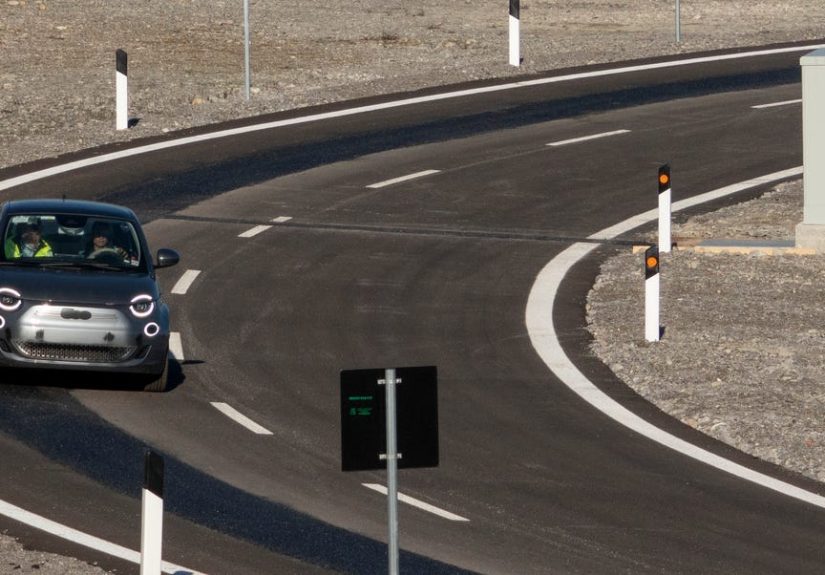
In Detroit, a quarter-mile public roadway in the Michigan Central innovation district was equipped with inductive charging coils
designed to wirelessly charge EVs with compatible receivers as they drive. It’s been described as the first public roadway of its kind in the U.S.a real street,
not a private test track, meant to gather real-world data on performance, durability, and daily operations.
Why Detroit matters: it’s not just a demo. It’s a practical “learning lab” that helps answer the hard questionshow the system holds up under traffic, weather,
road maintenance, and the chaotic poetry of urban driving.
Indiana’s Highway-Speed Dynamic Charging Milestone
Research teams in Indiana have been pushing DWPT from controlled experiments toward highway reality. Work tied to a pilot/testbed near West Lafayette has focused on
embedded charging components, pavement design considerations, and validation testingbecause if you’re going to electrify roadways, you need them to still behave like… roadways.
In late 2025, Purdue University reported a major milestone: a roadway segment wirelessly charging an electric heavy-duty truck while driving at highway speeds.
That matters because freight is where charging time and battery size quickly become expensive, heavy problems.
Utah’s Test Track Demonstrations
Utah State University has also hosted electrified roadway demonstrations on a test track environmentuseful for refining hardware, control systems, and safety approaches
before you embed expensive equipment into streets that snowplows will immediately try to “high-five.”
Why Bother? The Big Payoffs (If It Scales)
Smaller Batteries, Lower Cost, Less Mining Pressure
Today, range anxiety is often solved with bigger batteries. But batteries are costly, heavy, and material-intensive. Dynamic charging flips the equation:
if you can add energy along the routeespecially for predictable fleetsyou may not need to carry as much battery “just in case.”
Researchers at U.S. national labs have explored how roadway electrification could shift vehicle design and potentially reduce the demand for critical materials by enabling smaller packs.
Better for Fleets (Where Time Really Is Money)
Electrified roads make the most immediate sense when vehicles follow repeatable routes: buses, shuttles, delivery vans, drayage trucks near ports, campus circulators,
and even airport logistics. If charging happens during normal operation, fleets can reduce downtime and simplify scheduling.
That’s why many pilots focus on fleet corridors rather than promising that every family road trip will be powered by magical asphalt tomorrow.
Less Congestion at Chargers
Even in an all-EV future, drivers won’t love lining up for chargers the way nobody loves lining up for anything (except maybe limited-edition pastries).
Roadway charging can complement stationary charging by smoothing demandadding energy in motion so people rely less on “big charging sessions” at peak times.
The Challenges No One Can Meme Away
1) Cost and Construction Disruption
Installing power electronics under pavement is not as simple as “repave and vibe.” It involves civil engineering, utility coordination, electrical design,
communications, and long-term maintenance planning. Even if costs drop with scale, early deployments are expensive by definitionbecause pilots are where you discover
what you forgot to think about.
2) Standardization: Will Your EV Speak “Road”?
For electrified roads to become mainstream, they need interoperabilityvehicles from different manufacturers must charge on different installations without bespoke hacks.
Standards work is underway. SAE has published standards for wireless charging for light-duty vehicles (and separate work for heavy-duty applications), building a common language
for alignment, electromagnetic compatibility, and safety expectations.
3) Efficiency and Power Delivery Reality
Wireless transfer is inherently less direct than a plug, so engineers chase high efficiency with careful coil design, resonance tuning, and tight control of when the system energizes.
Power levels vary by system and use case. Some demonstrations emphasize modest “top-up” charging on city streets; others push toward very high power for heavy-duty vehicles.
The right target depends on speed, traffic, vehicle type, and what you’re trying to accomplish (range extension vs. battery downsizing vs. eliminating depot charging).
4) Safety: EMF, Pedestrians, Weather, and Common Sense
Any technology that moves serious power in public space must manage safety: electromagnetic field exposure limits, object detection, activation controls, and fail-safes.
Designs often energize only when a compatible vehicle is present, which helps reduce stray fields and wasted energy. But safety is also about boring realities:
potholes, water intrusion, salt, snow, resurfacing cycles, and the fact that road crews don’t want a surprise electronics puzzle under every patch.
5) The Grid and Billing Puzzle
Electrified roads are essentially new electrical loads distributed across transportation corridors. That raises questions:
Where does the power come from? How do utilities plan for it? How do you meter energy to the vehicle so the right person pays?
U.S. lab research and transportation agencies have analyzed grid impacts and deployment planning, but large-scale rollout would still require thoughtful coordination,
especially if many vehicles charge simultaneously during peak travel hours.
Where Electrified Roads Make Sense First
If you’re picturing every interstate becoming a charging blanket overnight, gently set that thought down and step away from it.
Early success is more likely in targeted segments where the economics are strongest:
- Bus routes and BRT lanes (predictable schedules, high utilization, centralized fleet management)
- Delivery corridors (repeat routes, strong business case for uptime)
- Ports, logistics hubs, and industrial zones (heavy vehicles, short repetitive trips)
- Airport loops (shuttles and service vehicles that circulate constantly)
- Cold-weather regions where range loss is common and top-up charging can reduce stress
A practical long-term vision isn’t “electrify everything.” It’s “electrify enough of the right places” to make EV ownership easier and fleet electrification cheaper.
Some proponents argue that a small fraction of road network coveragestrategically placedcould deliver outsized benefits because vehicles pass those points frequently.
What to Watch Next
Electrified roads are moving from “cool demo” toward “serious infrastructure conversation,” and the next few years will likely be shaped by:
More Public Pilots, More Hard Data
The most valuable outputs from early road projects aren’t marketing videosit’s measured performance:
pavement durability, charging reliability, maintenance costs, winter behavior, and how often compatible vehicles actually gain meaningful energy.
Heavy-Duty Momentum
Long-haul and regional freight electrification is hard because batteries for trucks get big fast. If dynamic charging can reduce required battery size,
it could materially change the economics of electric trucking. That’s why high-power heavy-duty wireless charging guidance and highway-speed demonstrations matter.
Standards and Vehicle Availability
A charging road without compatible vehicles is like a karaoke machine in a librarytechnically impressive, socially confusing.
Watch for broader adoption of wireless charging standards, supplier ecosystems, and factory-installed receiver options that make compatibility less exotic.
Driver Experience: What It Might Feel Like to “Charge While You Drive” (500+ Words)
Let’s talk about the human sidebecause “dynamic wireless power transfer” sounds like something you need a lab coat to operate,
but the whole point is that drivers shouldn’t have to think about it at all.
Picture a normal morning commute. You pull onto a familiar street, and it looks… boring. Regular pavement. Lane markings.
The usual collection of traffic lights that appear to be timed by a committee of mischief-loving raccoons.
There’s no charging pedestal, no cable, no app demanding your life story. Just roadway.
If your EV is equipped with the proper receiver hardware, the “magic” happens quietly. Your dashboard might show a small indicator
something like “Charging: On-Road” or a gentle uptick in power flow. In a well-designed system, you don’t get a dramatic “ZAP!”
moment. It’s more like turning on cruise control: subtle, steady, and easy to ignore once you trust it.
The first time you drive it, you probably do what every rational human does with new technology: you become temporarily obsessed with the numbers.
You glance at your energy consumption screen like it’s a stock ticker. Is the battery percentage changing? How many kilowatts are coming in?
Is the car actually gaining range, or just losing range more slowly? (Both can be wins, depending on your speed and conditions.)
Then comes the psychological shift: you stop treating charging as a separate “activity” and start treating it like background infrastructure
the way you don’t celebrate every time your phone connects to Wi-Fi. That’s a bigger deal than it sounds.
One of the hidden stressors of EV life is the mental overhead: planning, checking, rerouting, waiting, and hoping the charger isn’t offline.
If some of that energy arrives while you’re already moving, your brain gets a little more breathing room.
For fleet driversdelivery vans, shuttles, busesthe experience could feel even more practical than magical.
Imagine a route where the vehicle naturally slows or stops at consistent points: a bus stop, a loading zone, a queue at a terminal gate.
If charging happens there without plugging in, it’s one less step in a workflow that’s already full of steps.
Drivers don’t have to wrestle a cable in the rain. Dispatchers don’t have to schedule around charger availability.
The vehicle simply “sips” energy while doing its job.
Of course, drivers will notice real-world quirks. You might learn that charging feels strongest on certain segments, or that winter conditions
change how much net energy you gain. You’ll also realize the biggest limitation: you can’t use the system unless your vehicle is compatible.
A charging road is not a universal EV superpower yetit’s more like a members-only lounge for vehicles with the right hardware.
Still, if you’re the kind of person who enjoys watching technology become normal, an electrified road is a delightful preview of a future
where “charging” isn’t a destination. It’s just part of the drivelike streetlights, traffic signals, and the eternal mystery of why the left lane is never actually “passing.”
Conclusion
Electrified roads that charge EVs as you drive are no longer a concept trapped in glossy renderings. Public pilots in the U.S.like Detroit’s inductive charging roadway
and research milestones such as highway-speed charging demonstrations show the technology is advancing from controlled tests into everyday environments.
The biggest promise isn’t that every road will become a charger. It’s that targeted electrified segmentsplaced where vehicles already travel and slow downcould
reduce charging downtime, ease range anxiety, and potentially enable smaller, more affordable battery packs.
The road ahead (pun fully intended) includes real challenges: cost, maintenance, standardization, grid planning, and vehicle compatibility.
But if the pilots keep proving valueespecially for fleets and heavy-duty freight“charging while driving” could become one of the most practical infrastructure upgrades
of the EV era: invisible when it works, unforgettable when you realize you didn’t have to plug in.