Table of Contents >> Show >> Hide
- Why Ben Stiller Belongs in Comedy History
- 15 Ben Stiller Roles for the Comedy Hall of Fame
- 1. Ted Stroehmann in There’s Something About Mary (1998)
- 2. Greg Focker in Meet the Parents (2000)
- 3. Derek Zoolander in Zoolander (2001)
- 4. White Goodman in Dodgeball: A True Underdog Story (2004)
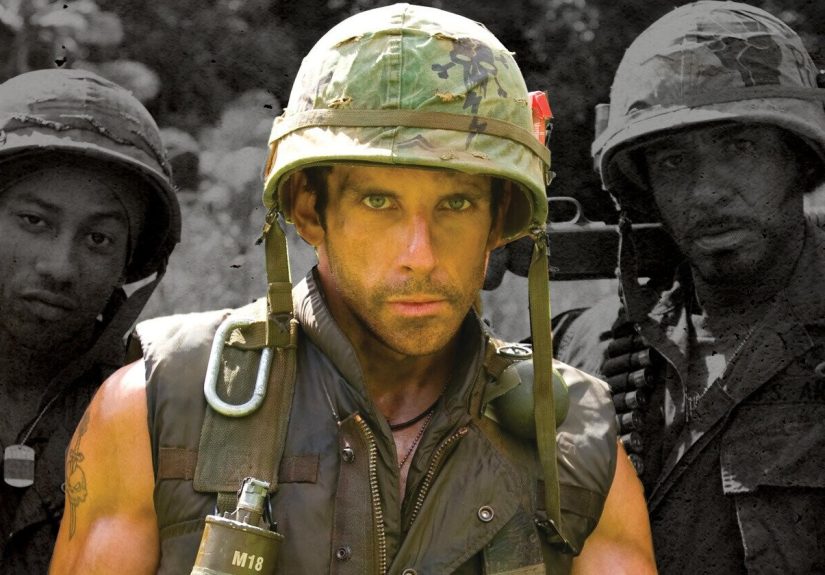
- 5. Tugg Speedman in Tropic Thunder (2008)
- 6. Tony Perkis in Heavyweights (1995)
- 7. Larry Daley in Night at the Museum (2006)
- 8. Alex the Lion in Madagascar (2005)
- 9. David Starsky in Starsky & Hutch (2004)
- 10. Reuben Feffer in Along Came Polly (2004)
- 11. Chas Tenenbaum in The Royal Tenenbaums (2001)
- 12. Michael Grates in Reality Bites (1994)
- 13. Mr. Furious in Mystery Men (1999)
- 14. Eddie Cantrow in The Heartbreak Kid (2007)
- 15. Mel Coplin in Flirting with Disaster (1996)
- What Makes These Performances Hall of Fame Material
- The Experience of Watching Ben Stiller Through the Years
- Conclusion
Ben Stiller has one of the weirdest superpowers in modern comedy: he can play a man who is both the problem and the victim of the problem at the exact same time. He can be smug, sweaty, needy, delusional, overconfident, deeply embarrassed, and somehow still oddly lovable. That is not easy. Plenty of funny actors can deliver a punch line. Stiller can build an entire character out of panic, ego, and a face that says, “I have made a terrible mistake,” sometimes before the mistake has even happened.
Across the 1990s, 2000s, and beyond, Ben Stiller became a defining figure in American screen comedy. He moved from sketch roots to big-screen stardom by mastering several comic modes at once: the cringe king, the puffed-up fool, the uptight straight man, the oblivious peacock, and the regular guy trapped in a nightmare designed by comedy gods. That range is exactly why a serious list of iconic comedy performances has to make room for him.
This list does not just collect his biggest hits. It celebrates the roles that best capture why Ben Stiller remains such a singular comic presence. Some were box-office smashes. Some became cult favorites. Some were family-movie staples that practically lived in DVD players. All of them left a mark. If there were an actual Comedy Hall of Fame, these would be the performances getting their own shiny plaque, their own velvet rope, and probably an aggressively awkward acceptance speech.
Why Ben Stiller Belongs in Comedy History
Stiller’s comedy works because he understands humiliation better than almost anybody in Hollywood. He knows how to let a joke land on his body, his posture, and his timing. He can make confidence look ridiculous and insecurity look hilarious. He is also one of the few comedy stars who has repeatedly reinvented the kind of funny he brings to a role. In one movie, he is the nervous human stress ball. In another, he is an idiot demigod of fashion. In another, he is a live-action cartoon villain in workout gear. The style changes. The precision does not.
15 Ben Stiller Roles for the Comedy Hall of Fame
1. Ted Stroehmann in There’s Something About Mary (1998)
If you want the role that launched Stiller into another stratosphere, start here. Ted is sweet, anxious, romantically doomed, and permanently one bad decision away from public disaster. Stiller turns him into the patron saint of men trying way too hard. The genius of the performance is that Ted is not a slick rom-com hero. He is a bundle of nerves in human form, and that makes the movie’s outrageous gags hit even harder. Stiller grounds the chaos with genuine yearning, which is why the character still feels funny instead of just pathetic. Ted is the awkward everyman, perfected.
2. Greg Focker in Meet the Parents (2000)
Greg Focker is one of the great stress-comedy characters of the modern era. He is competent enough to function in normal life, but the second he steps into his girlfriend’s family home, destiny starts throwing furniture at him. Stiller plays Greg as a decent guy whose every attempt to look respectable somehow creates a larger disaster. That is the magic. He is not a clown trying to be funny. He is a man trying not to collapse while the universe laughs in his face. His chemistry with Robert De Niro gives the movie its engine, but Greg’s escalating panic gives it its soul.
3. Derek Zoolander in Zoolander (2001)
Derek Zoolander is not merely a funny character. He is a comedy monument. The vacant stare, the tiny-mouthed self-seriousness, the absurd runway swagger, the heroic commitment to being hilariously dumb, all of it is iconic. Stiller makes Derek ridiculous without turning him into a throwaway joke. He plays him with such total sincerity that the stupidity becomes almost majestic. The performance works because Stiller never winks. Derek truly believes he is a deep thinker, a world-changing artist, and a victim of injustice, even when he is barely capable of understanding a juice box. That level of commitment is comedy gold.
4. White Goodman in Dodgeball: A True Underdog Story (2004)
White Goodman looks like a motivational poster that came to life and immediately became a lawsuit. As the villainous owner of Globo Gym, Stiller goes deliciously broad here, dialing his ego-driven absurdity all the way up to cartoon. But that is exactly what makes the role unforgettable. White is vain, insecure, predatory, ridiculous, and somehow still convinced he is the coolest man alive. Stiller plays him like a peacock with access to protein powder and absolutely no shame. It is one of his boldest comic turns, and one of the clearest examples of how well he can weaponize narcissism for laughs.
5. Tugg Speedman in Tropic Thunder (2008)
Tugg Speedman is a brilliant satire of fame, ego, and actor desperation. Stiller builds the character as a washed-up action star who is desperate to be taken seriously and utterly incapable of understanding why things keep going wrong. Tugg is vain, needy, and gloriously out of his depth. The performance gives Tropic Thunder its center because Stiller knows exactly how to make insecurity look huge. Tugg behaves like a star and thinks like a lost child. That gap is the joke. It is a sharp, self-aware performance that still leaves plenty of room for explosions, bad decisions, and jungle-grade nonsense.
6. Tony Perkis in Heavyweights (1995)
Tony Perkis is what happens when the language of self-improvement gets bitten by a radioactive lunatic. As the terrifyingly upbeat fitness tyrant at a kids’ camp, Stiller creates a villain who is funny because he is so deeply, hilariously intense. The voice, the body language, the fake positivity stretched over authoritarian madness, it all works. Tony is one of those performances that grew bigger with time because people kept revisiting the movie and realizing just how hard Stiller goes. This is not a casual comic turn. It is a full meal of unhinged commitment, and it helped make the film a cult favorite.
7. Larry Daley in Night at the Museum (2006)
Larry Daley shows Stiller in family-blockbuster mode, and he still makes the character unmistakably his own. Larry is a dreamer, a screwup, and a dad trying to prove he can be reliable. That everyman setup gives the fantasy around him a useful anchor. Surrounded by dinosaurs, wax figures, historical icons, and monkey-based disrespect, Stiller keeps the movie moving by reacting like a professional bewildered adult. He does not oversell the joke. He lets the joke hit him. That skill made Larry a family favorite and helped turn the role into one of the most broadly recognized performances of his career.
8. Alex the Lion in Madagascar (2005)
Voice acting can be a sneaky way to prove comic talent, and Stiller absolutely proves it as Alex the Lion. Alex is flashy, pampered, theatrical, and slightly horrified by the basic idea of nature. In other words, he is exactly the kind of overcivilized comic creation Stiller knows how to sell. His vocal performance gives Alex a neurotic showbiz energy that makes the character pop even in a movie crowded with animated chaos. He sounds like a star who has just discovered that the wilderness does not care about branding. It is a clever, energetic performance that helped define a major animated franchise.
9. David Starsky in Starsky & Hutch (2004)
Stiller’s David Starsky is tightly wound to the point of comic vibration. That makes him the perfect partner for Owen Wilson’s loose, smooth Hutch. The movie works because Stiller understands that rigidity can be hilarious when it is pushed just far enough. His Starsky is earnest, rule-bound, and permanently irritated by the fact that life keeps refusing to behave properly. The performance gives the film a comic spine. Without Stiller’s square-jawed overcommitment, the movie would just drift. With it, the character becomes a wonderfully stubborn engine for buddy-comedy friction.
10. Reuben Feffer in Along Came Polly (2004)
Reuben Feffer is one of Stiller’s finest anxiety sculptures. He is cautious, controlled, and so dedicated to minimizing risk that he basically turns daily life into an actuarial spreadsheet. That makes his collision with Polly all the funnier. Stiller understands that comedy often lives in overcorrection. Reuben is not merely careful; he is spiritually allergic to chaos. Watching him try to survive spontaneity, social embarrassment, and digestive catastrophe becomes its own kind of athletic event. It is an underrated performance because it relies on precise discomfort rather than giant bits, but that precision is exactly why it still lands.
11. Chas Tenenbaum in The Royal Tenenbaums (2001)
Yes, this is a comedy-drama, but Chas Tenenbaum absolutely belongs in the conversation. Stiller plays Chas as a man whose grief has curdled into control, paranoia, and hyper-organization. The funny part is how specific he makes all of it. Chas is absurd, but never fake. His matching tracksuits, his defensive fury, and his emotional overmanagement become both hilarious and strangely moving. That balance is difficult, and Stiller nails it. This role proved he could bring comic rhythm to material that was sadder, stranger, and more layered than standard studio comedy.
12. Michael Grates in Reality Bites (1994)
Michael Grates does not always get enough credit because Reality Bites is usually discussed as a Gen X time capsule first and a Ben Stiller performance second. But Stiller is terrific here as the supposedly corporate, compromised love interest who turns out to be more interesting than the movie’s rebel mythology wants to admit. He gives Michael warmth, ambition, and a slightly glossy edge that makes him easy to underestimate. That tension is what makes the performance stick. He plays the “sellout” with enough intelligence and humor to expose how flimsy that label can be.
13. Mr. Furious in Mystery Men (1999)
Only Ben Stiller could make a guy whose superpower is basically “being mad” feel this committed. Mr. Furious is a perfect Stiller creation because the character’s ego is much bigger than his actual abilities. He wants to be taken seriously as a superhero, and that desire makes every failure funnier. Stiller leans into the self-importance without losing the silliness. The role has aged especially well because it arrived before superhero culture swallowed the planet, which gives the performance a charmingly pre-franchise weirdness. It is goofy, scrappy, and more influential than it gets credit for.
14. Eddie Cantrow in The Heartbreak Kid (2007)
Eddie Cantrow is one of Stiller’s best examples of a man whose bad judgment keeps outrunning his common sense. The role asks him to play confusion, denial, romantic fantasy, and dawning horror in quick succession, and he does it with the kind of pained sincerity that has always been one of his strongest tools. Eddie is not a hero in the classic sense. He is impulsive, foolish, and painfully eager to believe he has found the answer to his life. Stiller makes that delusion funny, which is much harder than just making it loud.
15. Mel Coplin in Flirting with Disaster (1996)
Before some of his biggest mainstream hits, Stiller delivered one of his sharpest comic performances as Mel Coplin, a new father searching for his biological parents while his life spins into escalating absurdity. Mel is restless, insecure, and hilariously overmatched by the chaos around him. What makes the role so strong is that Stiller never treats Mel like a joke. He plays him as a man chasing identity, order, and emotional closure while the movie keeps throwing him into comic disorder. It is a terrific performance in a film that deserves to be remembered whenever the best Ben Stiller roles come up.
What Makes These Performances Hall of Fame Material
The common thread is not just that these roles are funny. It is that they are built with character logic. Stiller rarely settles for “guy says joke.” He creates people with anxieties, blind spots, vanity, and oddly specific rhythms. Derek Zoolander speaks and moves like a man born inside a fog machine. Greg Focker carries himself like someone waiting for a disaster report. White Goodman struts like an infomercial that learned to sneer. These characters are not interchangeable. That is why they last.
Another reason they endure is range. Stiller can play the victim of comedy or the engine of comedy. He can be sympathetic, obnoxious, lost, absurdly self-assured, or some glorious combination of all four. That versatility made him one of the defining comedy stars of his era, especially during the late 1990s and early 2000s, when studio comedies still aimed to become cultural events. His best roles did exactly that.
The Experience of Watching Ben Stiller Through the Years
One of the most interesting things about Ben Stiller’s career is how different his movies feel depending on when you discover them. Watch There’s Something About Mary as a teenager, and Ted looks like a guy stumbling through love with the worst luck on Earth. Watch it later, and he feels more like a case study in how nostalgia can make people incredibly stupid. See Meet the Parents when you are young, and it is a parade of embarrassment. See it after you have brought a partner home to meet relatives, and suddenly it feels less like a comedy and more like a documentary with better lighting.
That is part of Stiller’s appeal. His characters often age with the audience. Derek Zoolander is funny when you first meet him because he is obviously ridiculous. Years later, he gets even funnier because you realize how accurately he spoofs image culture, branding, celebrity emptiness, and the weird way confidence can survive without intelligence. White Goodman lands one way when you are just laughing at his absurdity, and another when you have seen enough wellness culture and fake self-help marketing to understand that he was parodying a whole species of American nonsense.
There is also a very specific shared-viewing experience attached to Ben Stiller roles. His films are deeply quotable, but they are also deeply reactive. People do not just repeat the lines. They perform the cringe. They imitate the stare, the pause, the tiny spiral of panic, the “this cannot possibly be happening to me” energy. That makes his work social in a way many comedies are not. A Ben Stiller movie often becomes a roomful of people anticipating the next disaster and laughing before it even arrives.
His family comedies add another layer. Plenty of people first met him through Night at the Museum or Madagascar, then later worked backward into Zoolander, Dodgeball, or Tropic Thunder. That creates a rare kind of multigenerational comic familiarity. Parents know him as the guy being humiliated by Robert De Niro. Kids know him as Larry Daley or Alex the Lion. Older comedy fans may still think first of The Ben Stiller Show or cult favorites like Heavyweights. Few comedy stars manage to connect across those lanes without losing their identity. Stiller did.
And maybe that is the real Hall of Fame argument. Ben Stiller did not just star in funny movies. He created recurring emotional experiences for audiences: social terror, secondhand embarrassment, inflated ego, wounded pride, and the eternal hope that maybe, just maybe, this disaster-prone idiot will pull it together. Usually he does not. Thankfully, that is what makes it funny.
Conclusion
If comedy is partly about timing, partly about character, and partly about the noble art of making humans look ridiculous, Ben Stiller has already earned his spot in the imaginary museum. His best roles cover the full comic map: romantic humiliation, workplace anxiety, celebrity satire, family-friendly chaos, villainous absurdity, and pure ego collapse. That is a serious body of work, even if half the characters look like they are one awkward sentence away from combusting.
From Ted Stroehmann to Greg Focker, from Derek Zoolander to White Goodman, Ben Stiller has given movie comedy a gallery of unforgettable fools, fighters, and walking cautionary tales. The Comedy Hall of Fame may not exist in brick and mortar, but if it did, these 15 performances would be impossible to ignore. Blue Steel would absolutely demand its own spotlight.