Table of Contents >> Show >> Hide
- How to Choose the Right Winter Flowers for Your Garden
- 24 Winter Flowers to Grow in the Cold
- 1. Hellebore
- 2. Snowdrop
- 3. Winter Aconite
- 4. Snow Crocus
- 5. Glory-of-the-Snow
- 6. Reticulated Iris
- 7. Witch Hazel
- 8. Winter Jasmine
- 9. Winter Heath
- 10. Mahonia
- 11. Hardy Cyclamen
- 12. Camellia
- 13. English Primrose
- 14. Pansy
- 15. Viola
- 16. Sweet Alyssum
- 17. Snapdragon
- 18. Stock
- 19. Calendula
- 20. Dianthus
- 21. Ornamental Kale
- 22. Ornamental Cabbage
- 23. Nemesia
- 24. Iceland Poppy
- Simple Tips for Bigger Winter Color
- Final Thoughts
- What Growing Winter Flowers Actually Feels Like
- SEO Tags
Winter has a reputation problem. The season gets blamed for dull yards, sleepy borders, and containers that look like they have emotionally checked out until April. But that gloomy picture only happens when gardeners hand winter the keys and walk away. The truth is that a smart plant list can keep a garden lively even when the thermometer starts acting dramatic.
If you want winter flowers that bring real winter garden color, the trick is choosing plants that actually enjoy cool weather. Some bloom in the dead of winter. Others shine in late winter or very early spring, when snow is still lurking like an uninvited guest. And in milder parts of the country, cold-hardy flowers such as pansies, violas, and stock can keep blooming for months.
This guide rounds up 24 winter flowers to grow in the cold, with practical notes on where they perform best, what they add to the landscape, and how to keep them looking sharp. Some are tiny but mighty. Some are shrubs with superstar energy. A few are technically vegetables wearing a floral disguise. All of them prove the same point: winter gardens do not have to be boring.
How to Choose the Right Winter Flowers for Your Garden
Before you start planting like a person possessed by a seed catalog, check your USDA hardiness zone. That matters because winter flowers fall into two big groups. The first group includes true cold-climate performers such as hellebores, snowdrops, witch hazel, and winter aconite. The second group includes cool-season annuals and mild-winter bloomers like pansies, calendula, and snapdragons, which often thrive in warmer regions where winter is chilly but not brutal.
Also think about light, drainage, and location. Winter-blooming bulbs and woodland plants usually appreciate moisture in the growing season and decent drainage in winter. Cool-season annuals generally prefer sun and soil that does not stay soggy. Containers can be spectacular in winter, but they dry out faster and freeze harder, so they need a bit more babysitting.
The smartest approach is to layer your picks. Use shrubs for height, bulbs for early surprises, and low growers or annuals for long stretches of color. That way, your winter garden looks designed instead of like a last-minute rescue mission.
24 Winter Flowers to Grow in the Cold
1. Hellebore
Hellebores are practically the royalty of the winter-blooming plants world. Their nodding flowers appear in shades of cream, pink, burgundy, green, and even near-black, often while the rest of the garden is still thinking things over. Plant them in part shade with rich, well-drained soil, and they will reward you with elegant blooms when color is in short supply.
2. Snowdrop
Snowdrops are tiny, white, and fearless. These early bulbs often push up through snow and bloom when the garden still looks half asleep. Mass them under deciduous trees or along paths, where their delicate flowers can be appreciated up close. They may be small, but they deliver major “spring is coming” energy.
3. Winter Aconite
If your winter beds need a shot of yellow, winter aconite is your answer. These cheerful little flowers open low to the ground and often appear before crocuses. They look best planted in drifts, where the bright blooms read like confetti tossed by a very optimistic gardener.
4. Snow Crocus
Snow crocus blooms early, stays compact, and punches well above its weight in charm. The goblet-shaped flowers come in purple, white, and soft striped tones, making them perfect for rock gardens, lawn edges, or naturalized areas. They are one of the easiest ways to sneak early color into a cold-climate garden.
5. Glory-of-the-Snow
With a name like glory-of-the-snow, this plant has a lot to live up to. Happily, it does. Its starry blue, pink, or white flowers show up early and look especially pretty when planted beneath trees or in drifts with other bulbs. It is ideal for gardeners who want a soft, natural look instead of formal rows.
6. Reticulated Iris
Reticulated iris is a small bulb with big style. The blooms are jewel-toned, often purple or blue with gold markings, and they appear very early in the season. Because the flowers are low to the ground, they are best planted where you can admire them at eye level from a path, step, or container.
7. Witch Hazel
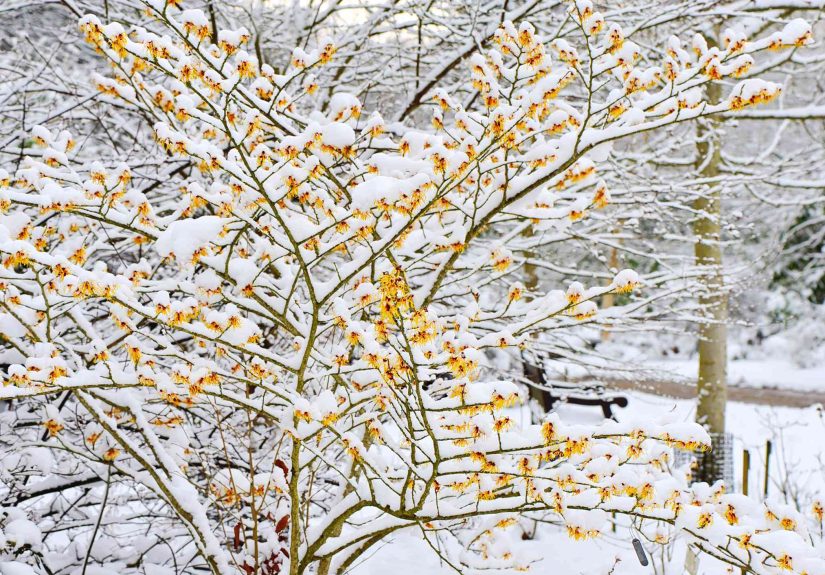
Witch hazel blooms on bare branches in late winter, which is already impressive before you even notice the ribbon-like petals in yellow, orange, or copper. Many varieties are lightly fragrant too, so they add both color and scent to the coldest part of the year. Use this shrub as a focal point where winter sunlight can catch the flowers.
8. Winter Jasmine
Winter jasmine is proof that cheerful flowers do not need to be fussy. Its bright yellow blooms appear on leafless green stems in late winter, often before much else is happening. It works beautifully spilling over walls, softening slopes, or filling awkward spaces where you want a relaxed, informal look.
9. Winter Heath
Winter heath stays low, evergreen, and tidy while producing loads of tiny flowers in pink, lavender, or white. It is excellent for edging, rock gardens, and sunny slopes. Because it forms dense mats, it gives you both winter texture and bloom color, which is a nice two-for-one deal in the cold season.
10. Mahonia
Mahonia brings bold foliage and bright yellow flowers to the winter garden, which is a pretty great combination when everything else is beige and reconsidering its life choices. Some varieties bloom in winter and early spring, followed by blue berries. It is especially useful in part shade, where many flowering plants are less enthusiastic.
11. Hardy Cyclamen
Hardy cyclamen has dainty swept-back flowers and marbled leaves, but do not let the dainty act fool you. Many species are impressively tough. These plants are wonderful tucked beneath deciduous trees and shrubs, where they enjoy winter sun and summer shade. They are subtle, graceful, and a little bit addictive.
12. Camellia
In milder regions, camellias are winter garden superstars. Their glossy evergreen foliage looks polished year-round, and the flowers can bloom from fall into winter or late winter into spring, depending on the type. If you live in the South or along the West Coast, camellias can supply serious color when most shrubs are taking the season off.
13. English Primrose
English primrose delivers bright, happy flowers in shades of yellow, pink, purple, red, and blue. In colder regions, it is a classic early-season bloomer. In mild winter climates, it can brighten beds and containers through much of the cool season. Plant it where the soil stays evenly moist and the afternoon sun is not too harsh.
14. Pansy
Pansies are the familiar faces of the winter flower world, and for good reason. They handle chilly weather far better than most bedding plants and keep blooming when temperatures stay cool. Their “face” pattern makes them charming in containers, window boxes, and borders. They are also one of the fastest ways to make a garden look cared for in winter.
15. Viola
Think of violas as pansies’ smaller, more prolific cousins. They produce loads of flowers, recover quickly after cold snaps, and often out-bloom larger bedding plants. If you want nonstop color in a mild-winter garden, violas are hard to beat. They are especially useful for edging paths, filling containers, and weaving through mixed beds.
16. Sweet Alyssum
Sweet alyssum creates low mounds of white, pink, or lavender flowers and often adds a soft honey-like fragrance too. In cool weather, it performs beautifully in containers and front-of-border plantings. It is perfect for softening edges and pairing with taller winter annuals that need a floral sidekick.
17. Snapdragon
Snapdragons bring height, vertical interest, and a touch of cottage-garden personality to winter beds in mild climates. Their flowers come in nearly every shade except true blue, and the spires make other plants look more intentional just by standing nearby. Bonus: children and adults alike still squeeze the blossoms. Science has never improved on this.
18. Stock
Stock is one of the best winter flowers if you want fragrance. Its spicy-sweet scent and soft clustered blooms make it a favorite for containers near doors, patios, and walkways. In cool weather, it performs far better than it does in heat, so winter is when stock really gets to show off.
19. Calendula
Calendula, sometimes called pot marigold, glows in shades of gold, apricot, and orange. It looks sunny even on gray days, which is a public service in January. In mild climates, calendula blooms steadily through the cool season and adds a slightly old-fashioned, herb-garden charm that works in both formal and casual plantings.
20. Dianthus
Dianthus offers fringed petals, spicy fragrance, and neat mounds of blue-green foliage. Some types are perennial, while others are grown as cool-season bedding plants. Either way, they are excellent for adding texture and flower color to winter and early spring displays. Think of them as the polished little overachievers of the flower bed.
21. Ornamental Kale
Ornamental kale is technically more foliage star than floral diva, but it absolutely earns a place in a winter color scheme. Its ruffled rosettes become more vivid as temperatures drop, developing rich shades of purple, rose, cream, and green. Use it in containers or mixed beds where you want structure that laughs at frost.
22. Ornamental Cabbage
Like ornamental kale, ornamental cabbage shines in cold weather and often improves after a frost. The round, bold rosettes add a sculptural look to winter beds and planters. It is an easy way to give your garden strong visual form when many true flowers are still warming up backstage.
23. Nemesia
Nemesia produces lots of small, bright flowers and thrives in cool weather, especially where winters are mild. It works beautifully in mixed containers because it spills, softens, and blooms generously without needing much drama. If your winter pots look a little stiff, nemesia can make them feel more relaxed and lively.
24. Iceland Poppy
Iceland poppy has papery blooms in cheerful shades of yellow, orange, white, pink, and apricot. In cool climates or mild winters, it adds a soft, floating quality to beds and borders. The flowers look delicate, but the plants are surprisingly willing to perform in chilly weather when given sun and good drainage.
Simple Tips for Bigger Winter Color
To get the most from your flowers for cold weather, do not rely on a single plant type. Pair low bulbs like snowdrops and crocus with long-blooming bedding plants such as violas and alyssum. Add one structural shrub, like witch hazel, mahonia, or camellia, and suddenly your garden has layers instead of lonely spots.
Mulch helps regulate soil temperature and moisture, especially around perennials and bulbs. Deadhead cool-season annuals to keep them blooming. Water during dry winter stretches because cold does not magically mean moist. And if you garden in containers, choose larger pots when possible; they buffer roots better against freeze-and-thaw swings.
One more good rule: plant for the view from inside your house. Winter gardening is not just about wandering outside in a scarf. It is about looking out the kitchen window with a mug in hand and seeing something alive, bright, and hopeful instead of an empty bed that resembles a failed archaeology dig.
Final Thoughts
The best winter gardens are not accidents. They are built with plants that understand cold weather and do not mind showing up early. Whether you lean toward elegant hellebores, bright pansies, fragrant stock, or bold ornamental cabbage, there is no reason your yard has to disappear for half the year.
Start with a few dependable performers, match them to your climate, and build from there. Once you see flowers pushing through frost or blooming on bare branches, winter stops feeling like the off-season. It starts feeling like a secret season that smart gardeners get to enjoy.
What Growing Winter Flowers Actually Feels Like
There is a special kind of satisfaction that comes from growing winter flowers, and it is hard to explain to anyone who thinks gardening only counts when roses are showing off in June. A winter garden feels more personal. It is quieter, less crowded, and somehow more impressive because every bloom has earned its place. When you step outside on a cold morning and spot a hellebore opening under last fall’s leaves, it feels like finding proof that the garden never really stopped living. It just lowered the volume.
One of the most common experiences gardeners talk about is surprise. Not just the surprise of seeing flowers in winter, but the surprise of how much those flowers change the mood of the whole yard. A patch of pansies by the front steps, a pot of violas near the mailbox, or a drift of snowdrops under a bare tree can make the garden look intentional instead of abandoned. Even people who claim not to notice plants somehow notice winter flowers. They stop. They point. They say, “Wait, those are blooming now?” Yes. Yes, they are, and frankly they deserve applause.
Another thing gardeners learn quickly is that winter color reads differently than summer color. In July, flowers compete with everything: green leaves, lush borders, giant shrubs, and the occasional tomato cage catastrophe. In winter, there is less visual noise. A small yellow winter aconite can shine like a spotlight. A camellia bloom can look almost theatrical against glossy evergreen leaves. A witch hazel in full flower can make an otherwise sleepy corner feel curated, like the garden hired a stylist for the season.
There is also the practical joy of realizing that winter flowers are often easier than people expect. Cool-season annuals are not trying to survive blasting heat, and many true winter bloomers are wonderfully low-key once established. The main lesson is usually this: right plant, right place, right expectations. Gardeners who fight their climate tend to get frustrated. Gardeners who work with it start having fun. If your winters are harsh, lean into bulbs, hellebores, and shrubs with late-winter bloom. If your winters are milder, go big with pansies, stock, calendula, and ornamental kale. Either way, the season stops feeling empty.
And finally, growing winter flowers changes how you experience time in the garden. Instead of waiting for spring like it is the only season that matters, you start noticing the little milestones of the colder months: the first camellia bud opening, the first snowdrop poking through, the first burst of color in a container by the door. Winter becomes less about endurance and more about anticipation. That may be the best part of all. These flowers do not just color the garden; they change the gardener too. They teach patience, reward attention, and make cold days feel a little less gray. Not bad for a bunch of plants working in a season that everyone else underestimated.