Table of Contents >> Show >> Hide
- What “Shade” Really Means for Flowering Vines
- 1) Climbing Hydrangea (Hydrangea anomala subsp. petiolaris)
- 2) Clematis (Shade-Friendly Picks + Bloom-Boosting Strategy)
- 3) Coral Honeysuckle (Lonicera sempervirens)
- Design Ideas: Making Shade Vines Look Like a Plan (Not an Accident)
- Troubleshooting: When Shade Vines Refuse to Bloom
- Safety and “Good Citizen” Notes
- Experience Notes: of Real-World Shade-Vine Wisdom
- Conclusion
If your yard has a shady side (literally), you’re not doomed to a lifetime of “green-ish” and “kinda leafy” as your only
decorating options. Shade can be lush, layered, andyesflower-filled. The trick is picking flowering vines that don’t act
personally offended when the sun clocks out early.
Vines are especially clutch for shade gardens because they let you “garden up” instead of out. A fence, trellis, pergola,
arbor, or even a sturdy tree trunk becomes real estate for blooms, fragrance, and pollinator traffic. And in many landscapes,
the shadiest places are also the most visible: the north-facing wall by the front door, the side fence you stare at from the
kitchen sink, the patio corner that’s always cool (and somehow always where guests gather).
Below are three flowering vines that can handle partial shadeand, in the right conditions, even deeper shadewithout turning
into sad, leggy green noodles. You’ll also get practical care tips, pruning guidance, and design ideas that make these vines
look intentional (not like they escaped from a plant witness protection program).
What “Shade” Really Means for Flowering Vines
Before we talk plants, let’s translate “shade,” because that word covers everything from “soft morning shade” to “cave vibes.”
Most flowering vines bloom best with at least some sun. But “some sun” can be surprisingly little if the plant is naturally
adapted to woodland edges or north-facing exposures.
- Light shade / dappled shade: Sun filters through tree branches. Bright, shifting light. Many flowering vines love this.
- Partial shade: Typically 3–6 hours of sun (often morning sun). Great for shade-tolerant bloomers.
- Full shade: Under dense tree canopies or on the north side of structures with minimal direct sun. Blooms can still happen, but you must choose wisely and manage expectations.
A helpful mindset: in deeper shade, you’re optimizing for reliable growth + respectable flowering, not “Instagram
explosion every week.” The good news is that the right vine can turn a dim corner into a living tapestryflowers included.
1) Climbing Hydrangea (Hydrangea anomala subsp. petiolaris)
If shade had a mascot vine, climbing hydrangea would be wearing the crown (and probably a tiny lacecap flower hat).
This woody climber is famous for thriving on part-shade to full-shade walls, producing large, creamy-white lacecap blooms that
smell sweet and look like they belong in a garden romance novel.
Why it’s a shade superstar
Climbing hydrangea is naturally comfortable in woodland conditions. It can tolerate heavy shade and still bloom, which is rare
in the vine world. Once established, it provides multi-season interest: handsome green leaves, summer flowers, fall color in
many climates, and attractive exfoliating bark in winter.
What it looks like (and how big it gets)
- Bloom season: Late spring into summer (timing varies by region).
- Flowers: Flat clusters with showy outer “petals” (sterile florets) and fertile center flowersclassic lacecap style.
- Size: Large and vigorous over time. Plan for a serious plant that needs real support.
- Growth habit: A woody vine that clings with aerial rootlets; it can also sprawl as a ground cover if unsupported.
Where to plant it for the best results
Think “cool, moist, and sheltered,” not “hot, dry, and reflective.” A north- or east-facing wall is often perfect, especially
if it gets some morning light. It can handle more sun in cooler regions, but in warmer climates, afternoon shade is a gift.
- Ideal light: Part shade to full shade; brighter shade often yields better flowering.
- Soil: Rich, fertile, moist but well-drained. This vine is not impressed by parched, neglected dirt.
- Support: A sturdy trellis, masonry wall, or mature tree trunk. It can become heavyplan accordingly.
Care tips (aka how to keep it from sulking)
Climbing hydrangea is low-maintenance once established, but it’s famously slow to get going. Many gardeners panic during year
one because it seems to “do nothing.” This is normal. The plant is busy building roots and structure so it can later take over
your wall in the most elegant way possible.
- Water: Keep evenly moist during establishment. Mulch helps conserve moisture and keeps roots cooler.
- Feeding: Compost in spring is often enough; avoid over-fertilizing with high nitrogen (which can encourage leaves at the expense of flowers).
- Pruning: Prune right after flowering if you need to control size or redirect growth. Avoid heavy pruning at random times if you want reliable blooms.
Common mistakes (learn from the internet’s collective facepalm)
- Expecting instant flowers: This vine can take a couple of years to bloom well. Patience is part of the purchase price.
- Planting in dry shade: “Shade” plus “dry” is tough on many plants. Add compost, mulch, and a sensible watering routine early on.
- Underbuilding support: A flimsy trellis is a short story with a dramatic ending. Go sturdy from day one.
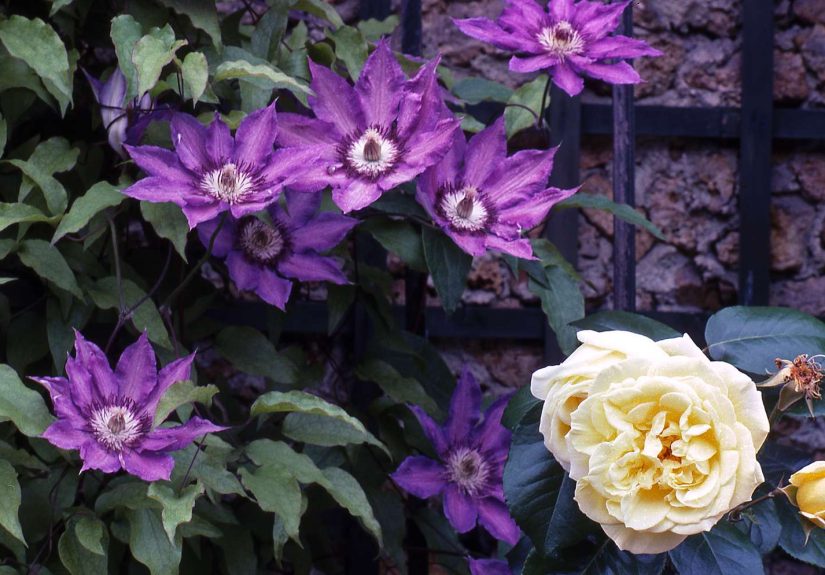
2) Clematis (Shade-Friendly Picks + Bloom-Boosting Strategy)
Clematis is often called the “queen of vines,” and like many queens, it has opinions about comfort. Most clematis bloom best
with sun on the top growth, but many varieties tolerate partial shade beautifullyespecially if they get bright light, morning
sun, or dappled shade.
The classic clematis advice is: “Head in the sun, feet in the shade.” Translation: keep roots cool and shaded
(mulch or companion plants help), while the vine and flowers get enough light to fuel blooming.
How much sun does clematis need in “shade gardens”?
If you can offer about 4–5 hours of sunespecially morning sunmany clematis will perform well. In hot climates,
partial shade can actually improve flower quality by protecting blooms from scorching and fading.
Shade-friendly clematis types to consider
“Clematis” isn’t one plantit’s a whole world. For shadier gardens, these categories are often the easiest wins:
- Early bloomers (often Group 1): Many spring-flowering clematis can handle lighter shade and bloom before trees leaf out fully.
- Large-flowered hybrids (often Group 2): Many do well with morning sun and afternoon shade, especially in warm regions.
- Summer bloomers (often Group 3): Typically want more sun, but some still tolerate partial shade if the site is bright.
Planting and care: the “make it bloom” checklist
- Give it drainage and rich soil: Clematis loves moisture but hates soggy roots. Amend with compost.
- Shade the root zone: Mulch 2–4 inches (kept slightly away from the stem) or plant low perennials at the base.
- Provide a climbable support: Clematis climbs by wrapping leaf stems, so thin structures (twine, wire, lattice) are easier than thick poles.
- Water deeply during establishment: Consistent moisture reduces stress and improves flowering.
- Prune correctly: This is the big oneand it’s why clematis gets a reputation for being “complicated.” It’s only complicated if you ignore the label.
Pruning groups, explained without the drama
Clematis pruning is based on when the plant blooms and whether it flowers on old wood, new wood, or both. If you prune at the
wrong time, you can accidentally remove flower buds. Here’s the simplified version:
- Group 1: Blooms on old wood (last year’s growth). Prune lightly after flowering, if needed.
- Group 2: Blooms on old and new wood. Light pruning and cleanup; avoid aggressive spring pruning.
- Group 3: Blooms on new wood (current season). Cut back hard in late winter/early spring for a fresh flush of flowering stems.
Practical tip: keep the plant tag (or record the variety name). “Mystery clematis” is how pruning mistakes happen.
Specific examples of clematis that can work in partial shade
If your space is bright but not blazing, these types are commonly grown with success:
- ‘Nelly Moser’: A classic with showy bicolored flowers; often recommended for locations with some shade to protect blooms.
- ‘Jackmanii’: A dependable purple summer bloomer that many gardeners grow with less-than-full-sun conditions.
- ‘Comtesse de Bouchard’: A vigorous pink option that performs well in many gardens when roots are kept cool.
Remember: in deeper shade, clematis may stretch toward light. That’s not failureit’s a vine doing vine things. Your job is to
give it a trellis path that leads it where you want it to go.
3) Coral Honeysuckle (Lonicera sempervirens)
Honeysuckle has a complicated reputation because some species are invasive. But coral honeysuckle
(also called trumpet honeysuckle) is a native North American vine that’s widely recommended as a
better-behaved alternative to invasive Japanese honeysuckle in many regions.
If you want a shade-tolerant flowering vine that also throws a party for hummingbirds, coral honeysuckle is a strong contender.
Its tubular red-to-coral flowers are basically neon signs that read: “Nectar served here.”
Why it belongs in the shade-vine conversation
Coral honeysuckle will grow in partial shade (though it blooms most heavily with more sun). For many homes,
that’s exactly the situation you have: an east-facing fence with morning light, a woodland edge with dappled sun, or a pergola
that gets a few hours of brightness and then cool shade. In those spots, this vine often grows happily and still flowers enough
to feel like a win.
What you’ll get: flowers, wildlife, and a vine that plays nicer
- Flowers: Bright tubular blooms in clusters, typically spring into summer (often with extended or repeat bloom depending on climate).
- Wildlife value: Flowers attract hummingbirds and butterflies; berries can feed songbirds later in the season.
- Size: Individual stems can reach roughly trellis-friendly lengthsbig enough to cover a structure, not so huge it needs a crane.
Planting and care
Coral honeysuckle is generally low maintenance once established. It tolerates many soils but does best when it isn’t forced to
live in bone-dry sand. If you can provide decent drainage, a bit of compost, and occasional deep watering during establishment,
you’re already ahead.
- Light: Full sun to partial shade (more sun = more blooms, but partial shade still works).
- Soil: Well-drained; slightly acidic is often ideal; avoid chronically dry, nutrient-poor sand.
- Support: Trellis, fence, wires, or arbortrain and tie young stems until they learn the route.
- Pruning: Prune to shape and remove tangles; light annual pruning can keep it blooming and tidy.
Bonus point: when you’re shopping, double-check the label. You want Lonicera sempervirens, not the invasive
look-alikes that sometimes show up in older landscapes.
Design Ideas: Making Shade Vines Look Like a Plan (Not an Accident)
Shade vines look best when the structure and the base planting work together. You’re creating a vertical “scene,” not just
attaching a plant to a thing and hoping for the best.
Try these combinations
- Climbing hydrangea + ferns/hostas at the base: A classic woodland look that stays attractive even when not in bloom.
- Clematis woven through shrubs: Let clematis climb through a well-behaved shrub or small tree at the edge of shade for a natural, layered effect.
- Coral honeysuckle on a patio trellis: Place it where you’ll actually see hummingbirdsnear seating or a window.
Structure tips that save headaches later
- Build for the mature plant: Climbing hydrangea especially can get heavy. Overbuild rather than rebuild.
- Mind the surface: Clinging vines can hold moisture against surfaces. On sturdy masonry it’s often fine; on older, delicate siding, use a trellis with airflow.
- Plan access: Leave room to prune, tie stems, and check for pests without performing acrobatics.
Troubleshooting: When Shade Vines Refuse to Bloom
If your vine is growing but not flowering, don’t immediately assume it hates you personally. Usually, it’s one of these issues:
- Not enough light: Even shade-tolerant bloomers need some brightness. “Full shade” might mean “less bloom.”
- Too much nitrogen: Lawn fertilizer drift or heavy feeding can push leafy growth instead of flowers.
- Wrong-time pruning: Clematis pruning group matters; climbing hydrangea blooms on older growth and is best pruned after flowering.
- Drought stress: Dry shade reduces bud formation and can cause flower drop.
- Immaturity: Some plantsespecially climbing hydrangeamay take time to settle in and bloom well.
The fix is usually simple: tweak light exposure if possible (even reflective light helps), improve soil with compost, mulch for
moisture stability, and make pruning decisions based on how the plant blooms.
Safety and “Good Citizen” Notes
A quick but important PSA: not all vines are equal in how they behave in landscapes. Choose non-invasive options whenever you
can, especially near natural areas. Also, many ornamental vines can cause mild skin irritation or stomach upset if handled or
eatenso gloves are a good habit and curious pets should be supervised.
- Coral honeysuckle: Often recommended as a native alternative to invasive honeysuckles in many regions.
- Clematis: Sap can irritate skin for some peoplewear gloves when pruning if you’re sensitive.
- Climbing hydrangea: A tough, woody vineuse proper tools for pruning and train it early to avoid wrestling matches later.
Experience Notes: of Real-World Shade-Vine Wisdom
Garden guides can tell you what a plant “should” do, but the garden teaches you what it actually does. Here are
experience-based lessons that shade gardeners commonly learnsometimes the easy way, sometimes after a season of staring at a
vine and whispering, “Are you… alive?”
1) Bright shade beats dark shade. Many gardeners discover that “shade” isn’t one conditionit’s a dozen
microclimates. A vine planted where it receives bright ambient light (even without direct sun) often outperforms the same vine
planted under dense evergreen trees. If you have choices, pick the location where you can comfortably read a book without
squinting. That’s usually the sweet spot for flowering vines that tolerate shade.
2) The first year is about roots, not glory. Climbing hydrangea is the poster child for this lesson, but it’s
true for clematis and honeysuckle too. New vines often spend their early energy establishing a root system and adapting to soil
moisture patterns. Many gardeners report that year two (or three) is when the plant suddenly “wakes up” and starts acting like
the vine you imagined. The takeaway: water well in the beginning, mulch consistently, and don’t over-fertilize in a panic.
3) Training early saves you from chaos later. Vines don’t automatically climb where you want them to climb.
They head toward light and grab what they can. Gardeners who loosely tie young stems to the trellis every week or two during
the first growing season usually end up with a cleaner, fuller coverage pattern. If you skip training, you may get a vine that
flowers beautifully… on the wrong side of the structure, behind the fence, where only squirrels can admire it.
4) “Cool feet” is not a cute phraseit’s a performance hack. Shade gardeners often see clematis improve
dramatically when the root zone is kept cool and evenly moist. A simple layer of mulch, a ring of small perennials at the
base, or even a decorative stone that shades the soil can reduce stress during heat spells. When roots are happier, the vine
is more willing to bloom rather than merely survive.
5) Bloom problems are often “timing problems.” With clematis, pruning at the wrong time can erase your bloom
season. With climbing hydrangea, pruning too aggressively can remove the flowering wood. Many gardeners learn to treat pruning
like a calendar event: identify the plant, learn when it blooms and on what growth, then prune accordingly. The payoff is real:
fewer “Where are the flowers?” moments and more “Okay, this corner is actually cute now” victories.
6) Shade vines love soil upgrades. Compost is the quiet hero of shady gardens. Under trees and near buildings,
soil can be compacted, root-filled, or depleted. Gardeners who top-dress with compost and refresh mulch annually often see
better leaf color, stronger stems, and more consistent floweringwithout turning the space into a high-maintenance project.
The big lesson: shade isn’t a limitationit’s a design style. With the right vine and a little strategy, your shady wall can
become the most relaxing, living part of your landscape.
Conclusion
If you want flowering vines that thrive in the shade, start with plants that genuinely tolerate lower light, then make shade
work for you: enrich the soil, stabilize moisture with mulch, give roots protection, and match pruning to the plant’s bloom
habits. Climbing hydrangea is your long-term, shade-proof showpiece. Clematis gives you color range and drama when you manage
its roots and pruning group. Coral honeysuckle offers wildlife-friendly blooms and a more responsible honeysuckle option for
many gardensespecially in bright partial shade.
In other words: your shady corner can absolutely bloom. It just needs the right climbersand a trellis that’s ready for fame.