Table of Contents >> Show >> Hide
There are few internet traditions more reliable than a giant nostalgia pile-on. Give adults a social platform, a little free time, and one innocent phrase like “today’s kids will never know”, and suddenly the timeline becomes a museum of dial-up tones, sticky VHS cases, and school memories that smell faintly of pencil shavings and cafeteria pizza. The funniest part is that these posts are not just jokes. They are tiny digital time capsules.
That is why threads like this work so well. They are funny, yes, but they also capture something bigger: how quickly everyday life changed. A generation grew up learning patience from slow technology, independence from mild inconvenience, and creativity from having fewer options. Today’s kids have better tools, faster entertainment, and maps that actually know where they are. Lucky them. But they also missed some gloriously weird experiences that built character, or at least excellent stories.
Why nostalgia tweets hit so hard
Nostalgia content performs well because it blends humor, identity, and shared memory. It is not really about proving one generation had it better. It is about recognizing the strange little rituals that once felt completely normal. Nobody thought rewinding a tape was romantic in the moment. Nobody called it “an analog bonding experience” when three siblings fought over the house phone. But once those habits disappear, they become cultural shorthand. One sentence can unlock an entire era.
So, in the spirit of those viral posts, here are 46 tweet-worthy reminders of the things today’s kids will probably never know.
46 things today’s kids will never know
Analog chaos, minor inconvenience, and character-building patience
- The busy signal. Not a text saying “I’m on another call.” Not a polite voicemail. Just that cold, repetitive tone announcing that someone else had beaten you to the phone line.
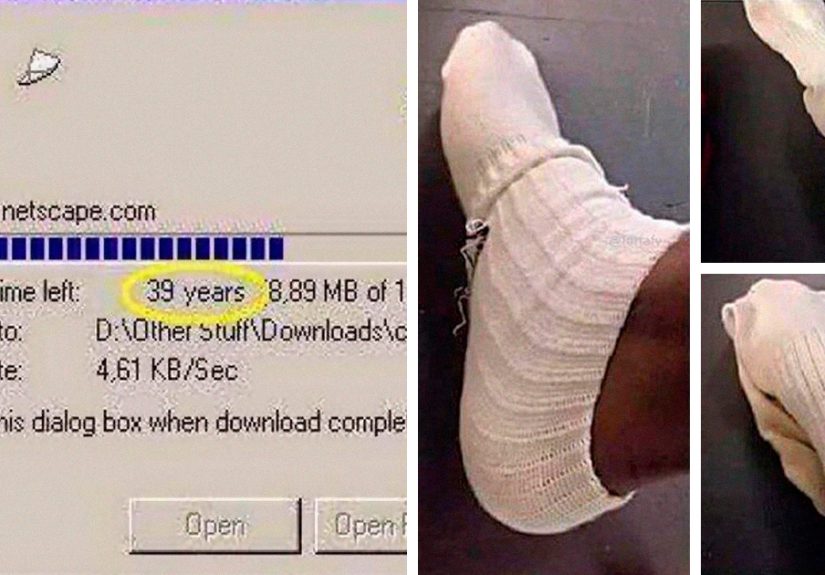
- The scream-song of dial-up internet. That robotic howl was the national anthem of early internet access, and everyone learned to fear it at midnight when the modem woke the whole house.
- Getting free internet in the mail. Entire generations found AOL trial disks stuffed into magazines, cereal-box inserts, and random envelopes like the country was being personally invited online.
- One phone line for the whole family. You had privacy only in theory. In practice, your mom needed the phone, your brother was expecting a call, and the cord barely reached the hallway.
- Stretching a curly phone cord around the corner. Nothing said “confidential teen conversation” like whispering from behind a wall while the cord looked one tug away from retirement.
- Payphones and emergency quarters. Leaving the house without a charged phone used to be standard. Leaving without coins was the real gamble.
- Memorizing phone numbers. Children once carried whole contact lists in their heads. Today many adults barely know their own number without checking.
- Phone books the size of paving stones. If you needed a number, you looked it up in a giant paper brick and hoped the information was current.
- Paper maps in the glove box. You unfolded them with confidence, refolded them with defeat, and usually ended up asking for directions anyway.
- Floppy disks that were actually floppy. The save icon on modern screens is based on an object many kids have never held, let alone trusted with a book report.
- The terror of saving homework to one disk. Your entire academic future could live on a fragile square of plastic that might stop cooperating because the universe felt mischievous.
- Rewinding before returning. Rental culture had rules, and one of them was simple: if you brought back a VHS tape without rewinding it, society judged you quietly but completely.
Entertainment rituals that now sound made up
- Friday night at the video store. Family movie night once involved fluorescent lighting, judgment in the comedy aisle, and at least one argument over whether the chosen film was “too long.”
- Seeing “Be Kind, Rewind.” A sticker managed to sound both gentle and threatening. It was customer service with a passive-aggressive soul.
- Checking the TV Guide or newspaper listings. You did not open an app. You hunted for your show in tiny print like a scholar decoding a sacred text.
- Planning your bathroom break around commercials. Streaming erased one of television’s old survival skills: sprinting to the kitchen and back before your show returned.
- Saturday morning cartoons feeling like an event. Kids woke up early by choice, parked themselves in front of the television, and treated cereal as a ceremonial companion.
- Learning from jingles on TV. If you can still recite a grammar rule because a cartoon sang it to you, congratulations, your brain was permanently furnished by educational television.
- Mixtapes as emotional labor. Making someone a playlist used to require time, sequencing, patience, and just enough courage to let track seven say what you could not.
- Flipping the cassette in your Walkman. Music was portable, but not frictionless. Every great song came with a tiny mechanical relationship.
- A boombox eating batteries like it held a grudge. Portable music felt powerful until you realized your entire allowance was now funding D-cell batteries.
- Recording songs off the radio. The DJ always talked over the intro. Always. It was the law of nature.
- Arcades as social media. Before likes and followers, there were high scores, glowing cabinets, and the social prestige of lasting one more round than your friends.
- Channel surfing as an art form. The remote was not just a device. It was a strategic instrument for finding something vaguely watchable before a sibling claimed it.
The early internet was weird, slow, and somehow magical
- One family computer in a shared room. Online privacy was basically impossible when the computer faced the hallway and everybody walked by with questions.
- Being kicked offline because someone picked up the phone. Few emotional collapses were quicker than losing your internet connection because somebody wanted to call Aunt Linda.
- Watching images load from top to bottom. You did not instantly see a photo. You watched it arrive like a curtain being raised by a very tired stage crew.
- Screen names that felt like alternate identities. The internet once encouraged people to be mysterious, dramatic, and maybe a little too attached to underscores and numbers.
- Away messages as performance art. Some people wrote a sentence. Others wrote a manifesto, a song lyric, and a vague message for one specific person who absolutely knew it was about them.
- Burning CDs with a marker-written title. Nothing felt more official than a homemade disc labeled in black ink with handwriting that suggested both effort and chaos.
- Printing directions before leaving the house. Miss one turn and the whole stack of instructions became a historical document.
- Chain emails that promised luck or disaster. Early internet culture had the energy of a digital haunted house assembled by your aunt.
- Computer rooms that doubled as heat sources. A desktop monitor, buzzing tower, and rattling printer could turn one corner of the house into a small climate system.
- Waiting for photos to be developed. There was no instant review, no deleting the bad ones. You got 24 or 36 shots and later discovered whether anyone had blinked.
- Photo albums instead of camera rolls. Memories once lived in plastic sleeves on living room shelves, where family members could embarrass you physically, not digitally.
School, home, and everyday moments that aged into legend
- The TV cart rolling into class. A single wheeled television could transform an ordinary school day into a celebration of lowered expectations.
- Overhead projectors and transparency sheets. Teachers wrote giant notes in real time while the machine hummed like it had opinions.
- Research before Wikipedia. You used encyclopedias, library books, and hope. If volume “M” was missing, your project on mammals got very exciting very fast.
- Card catalogs and library drawers. Information retrieval once required actual drawers, actual cards, and the patience of a saint in corduroy.
- Book fairs as economic temptation. Children entered with five dollars and left wanting twelve posters, three pens, a mystery novel, and one giant eraser shaped like a dolphin.
- Snow-day announcements on TV or radio. The suspense was brutal. You sat in pajamas listening for your school name like it was the winner of a national lottery.
- Meeting friends at the mall without live location sharing. You picked a fountain, an entrance, or the food court and simply believed destiny would handle the rest.
- Knocking on a friend’s door and asking, “Can they come out?” No texting first. No calendar invite. Just courage, timing, and a bicycle nearby.
- Drinking from the hose. Was it elegant? No. Was it refreshingly normal? Absolutely.
- Sitcom finales as national events. If you missed the big episode live, people talked about it at school or work like you had skipped a historic summit.
- Patience as the default setting. So many old experiences took longer, failed more often, and still felt normal. That may be the strangest memory of all.
What these memories were really like
Here is the part nostalgia threads usually skip: these old experiences were not charming because they were efficient. They were memorable because they were inconvenient in ways that forced people to interact with the world differently. You had to plan more. You had to wait more. You had to talk to people more. And because of that, ordinary moments had more texture.
Take the house phone, for example. It was never just a phone. It was family politics in plastic form. Everyone heard it ring. Everyone had an opinion about who had been on too long. If you were a teenager trying to sound cool while your parent wandered nearby folding laundry, you learned the fine art of speaking casually under pressure. Modern communication is faster and easier, but it is also less theatrical. Nobody today knows the emotional complexity of trying to flirt while standing beside a wall-mounted phone in the kitchen.
The same goes for entertainment. Watching a movie used to feel like an outing even when you stayed home. You picked the tape. You committed to the tape. If the tape was bad, that was your evening now. There was no endless scroll of backup options waiting to rescue you. Music was similar. A mixtape or burned CD was not just a collection of songs. It was evidence that somebody had spent time thinking about order, mood, and message. Every choice felt a little more deliberate because making the thing required actual effort.
Even boredom worked differently. Kids were bored more often, but boredom used to shove people into creativity. You drew things. You wandered outside. You called a friend from memory. You played the same game repeatedly until it became part competition, part mythology. When you finally got computer time, it felt earned. Logging on was not background behavior. It was an event. You heard the modem. You waited. You entered a different space.
There was also more shared timing. People watched the same shows at the same hour, listened to the same radio countdowns, and recognized the same cultural references at school the next morning. Life had fewer personalized feeds and more common touchpoints. That did not make it better in every way, but it did make it communal in a way that feels rarer now.
And maybe that is why the internet loves these jokes so much. They are funny on the surface, but underneath them is a real affection for a world that demanded a little more patience and rewarded people with stories. Not every old thing deserves a comeback. Nobody truly misses rewinding tapes or getting lost with printed directions. But many people do miss the feeling those rituals created: anticipation, surprise, and the tiny thrill of making something work with whatever you had.
So when people post about what today’s kids will never know, they are not only defending the glory of floppy disks and mall arcades. They are remembering a version of everyday life that felt slower, messier, and somehow more tactile. A world where entertainment had weight, information had friction, and being unreachable for an hour was not a crisis. It was just Tuesday.
Conclusion
The funniest tweets about old-school life work because they do two jobs at once. They make us laugh at obsolete habits, and they remind us how quickly culture can transform the ordinary into the unbelievable. Today’s kids may never know the panic of a busy signal, the smell of a video store carpet, or the confidence required to refold a paper map. But through nostalgia, humor, and a little affectionate exaggeration, they can at least understand why older generations keep talking about it like they survived a glorious, low-tech wilderness. In a way, they did.