Table of Contents >> Show >> Hide
- What Are Head Lice?
- 7 Common Lice Symptoms: Do You Have Lice?
- 1. An Itchy Scalp That Will Not Quit
- 2. A Tickling or Crawling Feeling in the Hair
- 3. Visible Nits Attached to Hair Shafts
- 4. Live Lice on the Scalp or Hair
- 5. Small Red Bumps or Sores From Scratching
- 6. Trouble Sleeping or Nighttime Restlessness
- 7. Swollen Lymph Nodes or Tender Areas Around the Neck
- How to Check for Lice at Home
- Lice vs. Dandruff: How to Tell the Difference
- Who Is Most Likely to Get Head Lice?
- What to Do If You Find Lice
- When to Call a Doctor
- Common Myths About Lice Symptoms
- How to Prevent Lice From Spreading
- Experience-Based Section: What Lice Symptoms Feel Like in Real Life
- Conclusion
Few words can make a household freeze faster than “lice.” Suddenly, every itch becomes suspicious, every hairbrush looks guilty, and someone starts Googling with the intensity of a detective in a crime drama. The good news? Head lice are common, treatable, and not a sign of poor hygiene. The less-good news? They are tiny, quick, and excellent at turning a peaceful evening into a full-family scalp inspection.
Head lice are small parasitic insects that live close to the scalp and feed on human blood. They do not jump, fly, or care whether your shampoo smells like a tropical vacation. They mainly spread through direct head-to-head contact, which is why they are especially common among school-age children, siblings, caregivers, and anyone who has recently shared close personal space.
This guide breaks down the seven most common lice symptoms, how to tell lice apart from dandruff or dry scalp, when to check more carefully, and what to do next if you find the tiny uninvited tenants. Let’s scratch the surfacecarefully.
What Are Head Lice?
Head lice are wingless insects that live on the scalp, usually near the hairline, behind the ears, and at the back of the neck. Adult lice are often described as about the size of a sesame seed, although they can be difficult to see because they move quickly and avoid light. Their eggs, called nits, attach firmly to hair shafts close to the scalp.
A head lice infestation is also called pediculosis capitis. While that sounds like a spell from a wizard school, it simply means lice are living on the scalp. They do not spread disease, and having lice does not mean someone is dirty. In fact, lice are equal-opportunity freeloaders. Clean hair, oily hair, curly hair, straight hairthey are not picky renters.
7 Common Lice Symptoms: Do You Have Lice?
1. An Itchy Scalp That Will Not Quit
The most common head lice symptom is itching. This itch usually happens because the body reacts to lice bites and their saliva. The scalp may feel mildly irritated at first, then become more noticeable over time. For some people, the itching is intense enough to interrupt school, work, or sleep.
However, itching alone does not prove you have lice. Dry scalp, dandruff, eczema, psoriasis, allergic reactions, and even a new hair product can also cause itching. The key is to look for patterns. Lice-related itching often concentrates behind the ears, along the neckline, and near the crown of the head.
It is also possible to have lice without itching, especially during a first infestation. Some people may not feel itchy for several weeks after lice arrive. That means a calm scalp is not always an all-clear signal.
2. A Tickling or Crawling Feeling in the Hair
Many people describe lice as feeling like something is moving in their hair. It may feel like a light tickle, a faint crawling sensation, or the kind of “wait, did something just move?” feeling that makes you stop mid-sentence and stare into the distance.
This symptom can be subtle, especially during the day. Lice are small and fast, so you may not see them even when you feel something. The crawling sensation may become more noticeable when you are sitting still, lying down, or trying to sleep.
Of course, once someone mentions lice, your imagination may also join the party. That is why the best next step is not panicit is a careful scalp check with good lighting and a fine-tooth lice comb.
3. Visible Nits Attached to Hair Shafts
Nits are lice eggs, and they are often easier to find than live lice. They may look like tiny white, yellowish, tan, or gray oval specks attached to the hair shaft. The important word is “attached.” Unlike dandruff or lint, nits do not brush away easily.
Fresh nits are usually found close to the scalp because they need warmth to develop. The areas behind the ears and along the back of the neck are prime inspection zones. If you find specks farther down the hair shaft, they may be old empty egg casings or debris, but they are still worth checking carefully.
One helpful test is the slide test. Dandruff usually flakes off or moves when touched. Nits tend to stay stuck like they signed a lease. A lice comb can help remove them and make identification easier.
4. Live Lice on the Scalp or Hair
Finding a live louse is the clearest sign of an active infestation. Live lice may appear tan, grayish, or brownish, and they move quickly away from light. They are most commonly found close to the scalp, especially behind the ears and near the neckline.
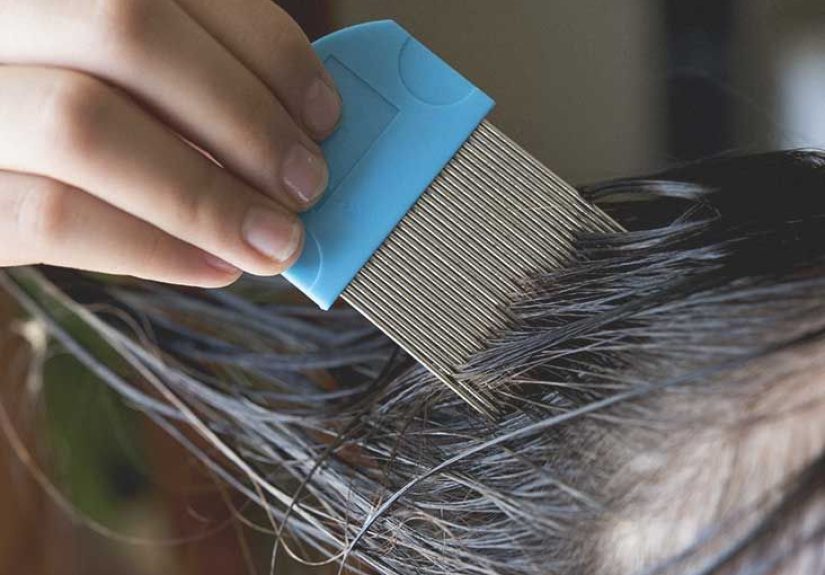
Because lice crawl fast and are small, they can be hard to spot during a quick glance. Checking dry hair may work, but many families find wet combing more effective. Wet hair slows lice down, and conditioner can make combing easier. Use a fine-tooth lice comb, part the hair into sections, and wipe the comb on a white tissue or paper towel after each pass.
If you see live lice, treatment is usually needed. If you only see possible nits, keep inspecting. Finding nits alone does not always confirm an active infestation, especially if they are far from the scalp.
5. Small Red Bumps or Sores From Scratching
Lice bites and repeated scratching can cause red bumps on the scalp, neck, or shoulders. These bumps may be small and scattered, or they may appear in irritated patches. In children, the back of the neck is a common place to notice redness.
Scratching may feel satisfying for about three seconds, but it can create tiny breaks in the skin. Those breaks may become sore, crusty, or tender. In some cases, scratching can lead to a bacterial skin infection, especially if the scalp becomes swollen, warm, painful, or oozes fluid.
If sores look infected, do not rely only on lice shampoo and crossed fingers. A healthcare professional can check whether additional treatment is needed.
6. Trouble Sleeping or Nighttime Restlessness
Head lice can be more active in the dark, which may make symptoms worse at night. A child who suddenly has trouble sleeping, tosses and turns, scratches their head, or seems unusually irritable may be dealing with scalp discomfort.
Nighttime itching can also happen with dry skin, allergies, or irritation from hair products, so it is not a guaranteed lice diagnosis. Still, when poor sleep appears along with scalp itching, nits, or recent lice exposure, it is time for a thorough check.
Parents may notice clues before children can describe them. A younger child may not say, “My scalp has an allergic reaction to louse saliva.” They are more likely to say, “My head feels weird,” while scratching like they are trying to solve a secret code.
7. Swollen Lymph Nodes or Tender Areas Around the Neck
In some cases, lice-related scratching and scalp irritation can lead to swollen or tender lymph nodes around the neck or behind the ears. This may happen when the skin becomes inflamed or infected from repeated scratching.
Swollen glands are not the most common lice symptom, but they can appear when the infestation has been present for a while or the scalp is very irritated. If swelling comes with fever, spreading redness, pus, significant pain, or a child who seems unwell, medical advice is important.
Think of swollen lymph nodes as your body’s security team showing up because the scalp party got out of hand.
How to Check for Lice at Home
Checking for lice takes patience, good lighting, and a comb that means business. A regular brush will not do the job. Use a fine-tooth lice comb designed to catch lice and nits.
Step-by-Step Lice Check
Start by seating the person in bright light. Natural daylight is helpful, but a strong lamp also works. Part the hair into small sections and examine the scalp closely. Focus on the hairline at the back of the neck, behind the ears, and around the crown.
For wet combing, dampen the hair and apply conditioner. Comb from the scalp to the ends, wiping the comb after each pass. Look for moving insects or firmly attached oval specks. Repeat section by section until the whole scalp has been checked.
If the hair is thick, curly, or long, take your time. Lice checks are not a speed sport. A rushed check can miss live lice, and missed lice can restart the whole itchy circus.
Lice vs. Dandruff: How to Tell the Difference
Lice and dandruff can both cause scalp confusion, but they behave differently. Dandruff is usually loose, flaky, and easy to brush away. Nits are firmly attached to individual hair shafts and do not slide off easily.
Dandruff may appear throughout the scalp and often comes with dryness or oily flakes. Nits are commonly clustered close to the scalp, especially in warmer areas behind the ears and near the neckline. Dandruff does not move. Live lice do.
If you are still unsure, use a lice comb. Comb through damp hair and inspect what comes out. A magnifying glass can help, especially when trying to tell a nit from a stubborn piece of lint pretending to be important.
Who Is Most Likely to Get Head Lice?
Children are more likely to get head lice because they often play closely together. Head-to-head contact during school, sleepovers, sports, selfies, whispering secrets, and dramatic playground negotiations gives lice a chance to crawl from one person to another.
Family members and caregivers can also get lice. If one child has lice, it is smart to check everyone in the household. That does not mean everyone automatically needs treatment. Treat people with live lice or clear evidence of an active infestation.
Sharing hats, combs, pillows, or hair accessories may spread lice, but direct head-to-head contact is the main route. Lice cannot survive long away from the human scalp, so your couch is not usually the villain. Still, washing recently used pillowcases, hats, and towels can be a sensible extra step.
What to Do If You Find Lice
If you find live lice, choose an appropriate treatment and follow the instructions exactly. Over-the-counter lice treatments are common, and prescription options are available when needed. Some products kill live lice but may not kill all eggs, which is why a second treatment may be recommended after several days. Other products may work differently, so the label matters.
Avoid using dangerous home remedies such as gasoline, kerosene, insect sprays, or harsh chemicals. Lice are annoying, but they are not worth turning the bathroom into a hazardous materials incident.
After treatment, continue combing as directed. Check the scalp regularly for live lice. Wash recently used bedding, hats, towels, and clothing in hot water when appropriate, and dry them on high heat if the fabric allows. Items that cannot be washed can usually be sealed in a plastic bag for a period of time, depending on treatment guidance.
When to Call a Doctor
Many lice cases can be handled at home, but professional help is wise in certain situations. Contact a healthcare provider if treatment fails, if the person is very young, pregnant, breastfeeding, has allergies or skin conditions, or if you are unsure which product is safe.
You should also seek medical advice if the scalp becomes painful, swollen, crusted, or oozing, or if there are signs of infection. A doctor or dermatologist can confirm the diagnosis and recommend a treatment plan that fits the person’s age, health, and symptoms.
Common Myths About Lice Symptoms
Myth 1: Only Dirty Hair Gets Lice
False. Lice do not care about cleanliness. They need blood, warmth, and hair to grip. That is it. A freshly washed head can get lice just as easily as a sweaty post-soccer-practice head.
Myth 2: Lice Can Jump Across the Room
Nope. Lice crawl. They do not fly, hop, or perform tiny Olympic long jumps. Close contact is the main way they spread.
Myth 3: Itching Always Starts Right Away
Not always. Some people do not itch for several weeks, especially during a first infestation. That is why checking for nits and live lice matters when exposure is known.
Myth 4: Pets Spread Head Lice
Human head lice live on humans. Your dog may be guilty of stealing snacks, but it is not the source of human head lice.
How to Prevent Lice From Spreading
Prevention is mostly about reducing direct head-to-head contact during an active infestation. Children do not need to live in a bubble, but they should avoid sharing combs, brushes, hats, scarves, helmets, hair ties, and pillows while lice are being treated.
Teach kids not to press heads together during play or photos. This advice may be harder to enforce than bedtime, but it helps. Also, avoid panic-cleaning the entire house. Focus on items that had recent contact with the head. Vacuuming floors and furniture is reasonable; fumigating the home is not necessary.
Experience-Based Section: What Lice Symptoms Feel Like in Real Life
When people talk about lice, they often talk about the treatment first: the combing, the shampoo, the laundry, the dramatic family meeting in the hallway. But the experience usually starts much earlier, with small symptoms that are easy to dismiss.
Imagine a child coming home from school and scratching behind one ear. At first, it looks ordinary. Kids scratch. Adults scratch. Everyone scratches when someone says the word “lice.” The next day, the scratching continues. By bedtime, the child says their head feels “tickly.” A parent checks quickly, sees nothing obvious, and hopes the issue is dry scalp. Hope is lovely, but lice are not moved by optimism.
A few days later, the itching is worse at night. The child has trouble settling down, and the back of the neck looks slightly red. During a closer inspection under a bright lamp, the parent notices tiny pale specks attached near the roots of the hair behind the ears. They try brushing them away. The specks do not move. That is the moment the household mood changes from “maybe it is nothing” to “everybody line up for scalp checks.”
This is a common lice experience because the signs can be gradual. Lice symptoms are rarely as dramatic as people expect. There is usually no flashing warning sign, no cinematic reveal, no tiny insect holding a welcome banner. Instead, there is itching, tickling, poor sleep, and the discovery of nits that cling stubbornly to hair shafts.
For adults, the experience can be just as frustrating. A parent may only realize they have lice after treating a child and then noticing their own scalp itching. Teachers, babysitters, siblings, and caregivers can all be exposed through close contact. The emotional reaction is often bigger than the medical concern. People feel embarrassed, even though lice are common and have nothing to do with hygiene. The truth is simple: lice spread because people get close to other people. That is not a character flaw; it is life.
The most useful lesson from real-life lice experiences is to check carefully before treating. Treating “just in case” can expose the scalp to unnecessary chemicals and may not solve the actual problem if the itch is caused by dandruff, eczema, or product irritation. On the other hand, ignoring visible nits or live lice can allow the infestation to continue. The sweet spot is calm confirmation: inspect, comb, identify, then treat according to reliable instructions.
Another practical lesson is that combing requires patience. Many families underestimate this part. A lice comb needs to reach the scalp and move slowly through small sections of hair. Thick or long hair can take a while. Putting on a movie, using conditioner, and working in sections can make the process less miserable. Nobody will call it a spa day, but it can be manageable.
Finally, the experience often teaches families not to panic-clean. Lice live on the scalp, not in the walls. Washing recently used bedding and hats is helpful, but tearing apart the entire home usually adds stress without much benefit. The real focus should be treating the affected person, checking close contacts, and repeating steps when the product instructions say to do so.
Lice are inconvenient, itchy, and socially awkward, but they are also solvable. With careful checking, proper treatment, and a little humor, the household can return to normal. The comb can go back in the drawer, the laundry mountain can shrink, and everyone can stop side-eyeing every speck of lint like it has legs.
Conclusion
Head lice symptoms can be easy to miss at first, especially when itching has not started yet or when nits look like dandruff. The seven most common signs include an itchy scalp, a crawling sensation, visible nits, live lice, red bumps or sores, trouble sleeping, and swollen or tender areas near the neck. If you suspect lice, check carefully with bright light and a fine-tooth comb, focusing behind the ears and along the neckline.
Most importantly, stay calm. Head lice are common, treatable, and not a reflection of cleanliness. The faster you confirm the problem, the faster you can choose the right treatment and stop the spread. Lice may be tiny, but with the right approach, they do not get to run the household.
Note: This article is for general educational purposes and is not a substitute for medical advice. If symptoms are severe, treatment fails, or the scalp shows signs of infection, contact a healthcare professional.