Table of Contents >> Show >> Hide
- 1. Misconception: All funerals are outrageously expensive
- 2. Misconception: Embalming is always required by law
- 3. Misconception: You must buy the casket or urn from the funeral home
- 4. Misconception: If you choose cremation, you cannot have a funeral or viewing
- 5. Misconception: You have to hire a funeral home for every death
- 6. Misconception: Green burial is illegal, impractical, or only for extreme minimalists
- 7. Misconception: A meaningful funeral has to be formal, religious, and gloomy
- Why these funeral myths matter
- Experiences families often have when these misconceptions fall apart
- Final thoughts
Funerals are one of those life events people would rather not research until they absolutely have to. That is understandable. Unfortunately, grief is not exactly the world’s best shopping assistant. When families are suddenly asked to make decisions about burial, cremation, embalming, officiants, flowers, prices, paperwork, and whether Uncle Mike really needed a dove release, myths can rush in faster than helpful facts.
That matters because misconceptions about funerals can cost families money, peace of mind, and the chance to create a service that actually reflects the person they loved. In the United States, funeral planning is shaped by federal consumer protections, state rules, personal preference, and a growing range of options, from direct cremation to green burial to memorials led by family members. In other words, there is no single “correct” funeral blueprint hiding in a secret velvet binder.
This guide breaks down seven of the most common misconceptions about funerals, explains what is actually true, and offers a more realistic, more human way to think about funeral planning. Whether you are making arrangements now, planning ahead, or simply trying to become the most informed person at Thanksgiving, these funeral myths deserve a proper send-off.
1. Misconception: All funerals are outrageously expensive
This is one of the biggest misconceptions about funerals because it contains a grain of truth wrapped in a much larger exaggeration. Yes, funerals can be expensive. Traditional full-service arrangements with viewing, burial, transportation, cemetery expenses, and merchandise can add up quickly. But “funeral” is not a synonym for “financial catastrophe.”
The real issue is that funeral costs vary dramatically depending on what a family chooses. A formal service with visitation, embalming, a casket, a hearse, and cemetery charges will cost more than a simple burial, direct cremation, or memorial service held later in a church hall, backyard, or community center. The mistake many families make is assuming the most elaborate package is the default rather than one option on a menu.
That menu matters. Families can choose fewer services, separate goods from services, compare providers, and ask for itemized pricing. A meaningful goodbye does not require every available add-on. Sometimes the most memorable service is a modest one: a favorite playlist, a few stories, a table of photographs, and the kind of potato salad the deceased insisted was better than everyone else’s. That is not “less than.” That is personal.
The smarter way to think about funeral planning is this: funerals can be expensive, but they are highly customizable. Cost is shaped by choices, not just by tradition. Once families understand that, the fog starts to lift.
2. Misconception: Embalming is always required by law
This myth has been around for so long it practically arrives wearing a top hat. Many people assume embalming is mandatory in every case, but in most situations, it is not. In the United States, embalming is generally not required as a routine legal step for every death.
So why does this myth survive? Because embalming is common in some traditional funeral arrangements, especially when there is a public viewing with the body present, or when timing and transportation make preservation more complicated. Families then assume “common” means “legally required.” It does not.
In many cases, families can choose alternatives such as immediate burial, direct cremation, refrigeration, or a closed-casket service. Some states or specific circumstances may involve timing rules or special handling requirements, so there can be exceptions, but embalming is not the automatic universal rule many people imagine.
This matters for both budget and values. Embalming adds cost. It may also conflict with religious beliefs, environmental goals, or personal preferences. A family that wants a simple, lower-cost, more natural process should know they can ask direct questions: Is embalming legally required in this case? Is refrigeration an option? Can we choose a service that avoids it?
That is not being difficult. That is being informed. And when it comes to funeral arrangements, informed is a very good look.
3. Misconception: You must buy the casket or urn from the funeral home
This is one of the costliest funeral myths because it can make families feel trapped at exactly the wrong moment. Many people believe that once they choose a funeral home, they must also buy the casket, coffin, or urn sold there. In reality, consumers usually have more freedom than they realize.
Under federal consumer protections, funeral providers cannot force families to buy a casket from them. They also cannot punish people for purchasing a casket elsewhere by tacking on a sneaky “handling” fee. That means families may be able to buy a casket online, from a warehouse retailer, from another vendor, or in some situations even build or supply one themselves, depending on the needs of the cemetery or crematory.
The same basic principle applies to cremation. A cremation does not always require an expensive casket. Often an alternative container can be used instead. That single fact has rescued many families from unnecessary sticker shock.
Of course, there are practical details to confirm. Cemeteries and crematories may have size, material, or safety requirements. But that is very different from saying, “You have no choice.” Families do have choices.
The bigger lesson is this: funeral merchandise is not always a one-store-only situation. If comparison shopping is normal when buying a couch, a refrigerator, or a suspiciously expensive wedding chair cover, it is also normal when buying funeral goods.
4. Misconception: If you choose cremation, you cannot have a funeral or viewing
Somewhere along the line, people started acting as though cremation and ceremony were mutually exclusive, like socks and sandals at a black-tie event. They are not. Choosing cremation does not mean you have to skip a funeral, memorial service, visitation, or celebration of life.
Families have several options. They may hold a traditional funeral before cremation, with the body present. They may choose a memorial service after cremation, with the urn present or not. They may hold a private family gathering first and a larger public remembrance later. They may do something formal, informal, religious, secular, indoors, outdoors, or somewhere in between.
This flexibility is one reason cremation has become such a common choice. It can give families more time to plan, save money in some cases, and create a service that fits the person rather than a rigid schedule. For example, a family may choose direct cremation immediately, then gather weeks later when relatives can travel, emotions are less frantic, and everyone has had time to locate the missing slideshow photo folder from 2008.
Cremation changes the disposition method. It does not erase the human need for ritual. People still want to tell stories, cry, laugh awkwardly at the wrong time, hug in parking lots, and remember a life together. A memorial after cremation can be deeply moving, and for many families, it is more personal than a rush-to-arrange traditional service.
5. Misconception: You have to hire a funeral home for every death
This myth surprises people, because funeral homes are so woven into American death care that many assume they are legally required in every case. In fact, in most states, families can handle at least some parts of after-death care themselves, although the exact rules vary by state and by local practice.
That does not mean a home funeral is simple or right for everyone. It can involve paperwork, transportation rules, permits, body care, timing requirements, and coordination with a cemetery or crematory. For many families, professional help is valuable and welcome. But valuable is not the same as mandatory.
Some families choose to do everything through a funeral home. Others want a hybrid approach: perhaps the family washes and dresses the body, holds a private vigil at home, and then works with a crematory or funeral director for final disposition. Still others choose a full home funeral because it fits their culture, budget, spirituality, or desire for a more intimate goodbye.
The key point is choice. When people believe funeral homes are legally unavoidable, they stop asking questions. When they learn they may have options, they can build arrangements that feel more intentional. For some families, professional support brings comfort. For others, hands-on involvement brings comfort. Neither choice is wrong.
Funeral planning is not one-size-fits-all. It is more like tailoring: the best result depends on the person, the family, and whether anyone insists on adding unnecessary satin.
6. Misconception: Green burial is illegal, impractical, or only for extreme minimalists
Green burial is often misunderstood. Some people picture it as a fringe idea for people who churn their own butter, compost with enthusiasm, and speak lovingly to tomatoes. In reality, green burial is a legitimate and increasingly visible funeral option in the United States.
A green burial generally focuses on simplicity and natural return to the earth. That can mean no embalming, biodegradable clothing or shrouds, biodegradable caskets or containers, and burial in a cemetery that supports more natural practices. In many cases, the goal is to avoid chemicals, elaborate materials, and concrete vaults when the cemetery permits it.
Availability depends on location, cemetery rules, and state or local requirements, so it is not as universally accessible as conventional burial or cremation. But it is far from imaginary. Families interested in environmentally conscious funeral options can find green burial providers, ask about certified cemeteries, and compare what different sites allow.
Another misconception is that green burial is automatically complicated or expensive. Sometimes it can reduce certain costs because it skips embalming and elaborate merchandise. Other times availability or travel may add expense. The point is not that green burial is always cheaper; the point is that it is real, practical for many families, and worth asking about if it aligns with the deceased person’s values.
In a culture that often treats funeral planning like a battle between “traditional” and “nothing at all,” green burial offers a third lane: simpler, more ecological, and often deeply meaningful.
7. Misconception: A meaningful funeral has to be formal, religious, and gloomy
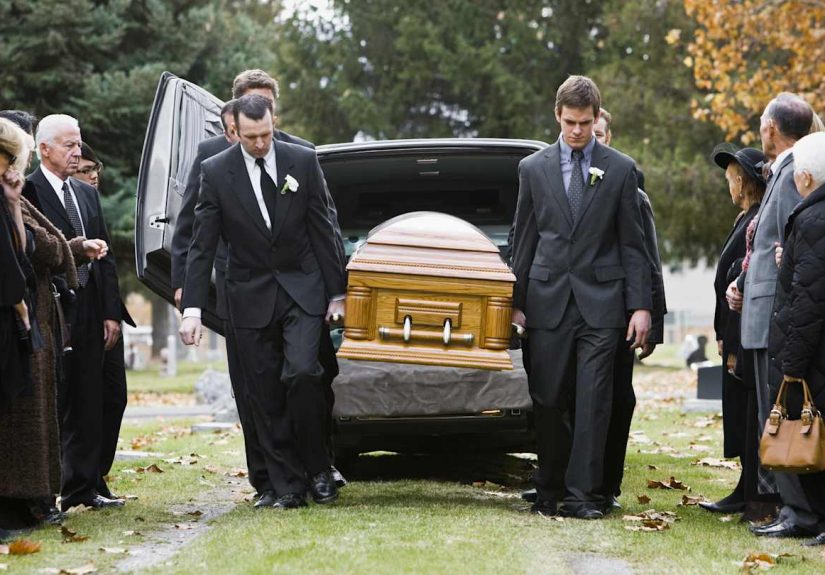
This may be the most stubborn misconception of all. Many people grew up with a very specific image of a funeral: dark suits, hushed voices, flowers that look expensive and smell faintly like obligation, and a clergyperson speaking from the front while everyone tries not to make eye contact during the tissue shortage.
There is nothing wrong with that kind of service if it fits the person and the family. But it is not the only kind of meaningful funeral. A funeral can be religious or secular. It can be led by clergy, a celebrant, a friend, or a family member. It can be solemn, joyful, quiet, funny, musical, formal, casual, or a combination of all of the above.
Meaning comes from honesty, not from choreography. A biker may be honored with a motorcycle procession. A teacher may be remembered through notes from former students. A grandmother who treated her kitchen like a sacred institution may be celebrated with recipe cards handed out to every guest. A military veteran may be honored with formal rites, while a nonreligious artist may be remembered in a gallery space with favorite songs and stories.
Too many families ask, “What are we supposed to do?” when the better question is, “What would feel true to this person?” Funerals exist to acknowledge a death, support the living, and honor a life. They do not need to look borrowed from somebody else’s expectations.
Why these funeral myths matter
Misconceptions about funerals are not just trivia errors. They shape decisions made under stress. A family that wrongly believes embalming is mandatory may spend money it did not need to spend. A family that assumes cremation means no service may lose an important chance to gather. A family that does not know its consumer rights may accept a package that feels impersonal and financially painful.
The better approach is simple: slow down when you can, ask for itemized prices, confirm what is actually legally required, and build a service around values rather than assumptions. Funeral planning is emotional, but it is also practical. Families deserve compassion and clear information, not myths dressed up as rules.
Experiences families often have when these misconceptions fall apart
One of the most eye-opening experiences families report is the moment they realize they have more options than they thought. At the beginning, many arrive tense, exhausted, and convinced they are about to choose between “expensive traditional funeral” and “cold, impersonal alternative.” Then someone asks a few better questions, and the entire conversation changes.
A daughter may walk into a funeral home expecting to buy a full package because she thinks that is what good families do. After seeing itemized prices, she realizes her father would have hated unnecessary fuss. Instead of paying for every add-on, she chooses a simple cremation, rents a hall at his veterans’ post, invites people to wear baseball caps instead of black, and displays his old tools on a table because he fixed half the neighborhood’s broken appliances. The service ends up feeling far more like him than any polished package ever could.
Another common experience is discovering that a family can still have ceremony after cremation. Relatives who initially worry that direct cremation feels “too bare” often feel relieved when they understand they can hold a memorial later. That extra time can make a huge difference. People travel in from out of state. Photo albums get found. Cousins stop arguing over whether the good portrait was taken in 1998 or 2001. Grief is still present, of course, but there is breathing room. The eventual service often feels warmer, more thoughtful, and less rushed.
Families exploring green burial often describe a different kind of relief. They are not trying to reject tradition; they are trying to match the farewell to the life that was lived. If the person loved nature, avoided waste, gardened obsessively, or spoke often about simplicity, a natural burial can feel emotionally coherent. The experience for the family is not “less dignified.” It is often more grounded, more peaceful, and more aligned with the person’s values.
Home funeral experiences can be especially meaningful for families who want time and presence rather than immediate handoff. Sitting with a body at home, washing and dressing a loved one, telling stories in the same room, or allowing grandchildren to participate in age-appropriate ways can transform fear into tenderness. It is not the right choice for everyone, and it does require planning, but families who choose it often describe it as intimate, calm, and unexpectedly healing.
Perhaps the most universal experience is this: once myths fade, people stop asking what a funeral is supposed to look like and start asking what will help them mourn well. That question leads to better decisions almost every time. And in the middle of loss, better decisions are not a luxury. They are a kindness.
Final thoughts
Funeral planning is hard enough without outdated assumptions making the process harder. The truth is that funerals are more flexible, more personal, and more consumer-driven than many Americans realize. You may not need embalming. You may not need an expensive casket. You may still have a beautiful service after cremation. You may have greener options, simpler options, or more hands-on options than you were led to believe.
Once you understand the facts, funeral planning becomes less about following a script and more about honoring a life with clarity and intention. That is not about doing less. It is about doing what matters.