Table of Contents >> Show >> Hide
- What Is Tanmatsu, Exactly?
- Why Tanmatsu Stood Out in 2025
- The Hardware Is More Serious Than the Cute Form Factor Suggests
- Open-Source Appeal Is a Huge Part of the Story
- Its 2025 Timeline Made It Even More Interesting
- Who Should Be Paying Attention to Tanmatsu?
- What Could Hold It Back?
- Why the “One to Watch” Label Was Earned
- Extended Experience: The Kind of Real-World Appeal Tanmatsu Has
- Conclusion
- SEO Tags
If 2025 had a mascot for the phrase “tiny device, big ambition,” Tanmatsu would be strutting around in a little cyberdeck cape. At first glance, it looks like the kind of gadget you’d expect to find in the bag of a hardware hacker, a field engineer, or someone who thinks a normal keyboard is too mainstream. But the deeper you look, the clearer it becomes: Tanmatsu is not trying to be another generic handheld. It is aiming to become a portable terminal for people who like to build, test, tinker, and communicate on the go.
That is exactly why Tanmatsu earned “one to watch” status in 2025. It showed up with a rare mix of traits that usually live in separate product categories: a real QWERTY keyboard, long-range wireless potential through LoRa, modern connectivity through Wi-Fi and Bluetooth, hardware expansion options, open development appeal, and a design philosophy that clearly says, “Please take this apart, mod it, and do weirdly brilliant things with it.” In a tech world overflowing with locked-down glass slabs, Tanmatsu felt refreshingly curious.
What Is Tanmatsu, Exactly?
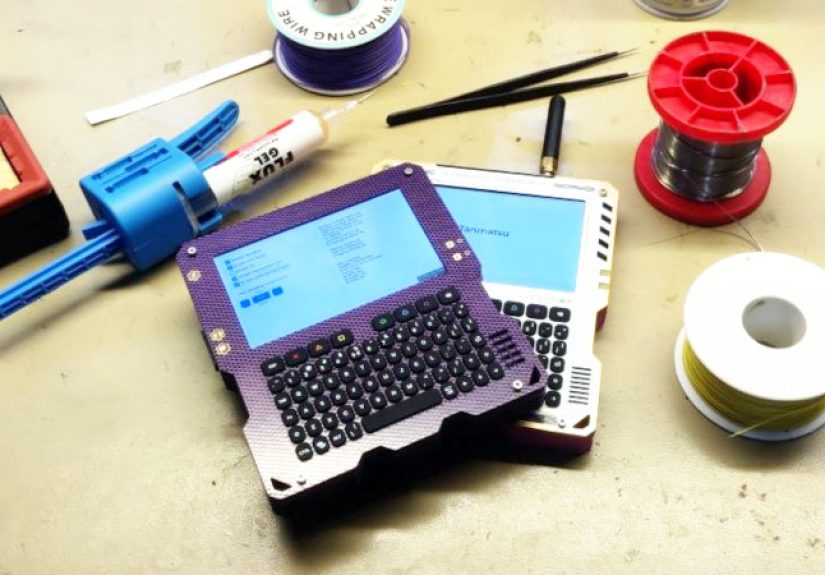
Tanmatsu is a compact handheld terminal built around Espressif’s ESP32-P4 application processor. In plain English, that means it is a small, portable computer designed less for passive scrolling and more for active doing. It combines a 3.97-inch 800×480 display, a full 69-key alphanumeric keyboard, a 2500 mAh battery, and a stack of wireless and hardware expansion options in a body that is roughly palm-sized. It is small enough to travel with easily, but loaded enough to do more than just look cute on a desk.
And let’s be honest: “portable hacker terminal” is a phrase that instantly makes a certain kind of person sit up straighter. Not because everyone needs one, but because many people in the maker and embedded development crowd have been waiting for a device that lives somewhere between dev board, communicator, field tool, and pocket experiment lab. Tanmatsu is aimed squarely at that overlap.
Why Tanmatsu Stood Out in 2025
Plenty of hardware projects get attention for a week and then disappear into the great electronics graveyard in the sky. Tanmatsu stood out in 2025 because it kept moving. It was not just an attractive concept render or a “coming soon” landing page fueled by optimism and caffeine. Over the course of 2025, the project moved through pre-orders, hardware revisions, compliance testing, software development, community updates, and eventually fulfillment. That kind of momentum matters.
It also stood out because it had a distinct identity. Tanmatsu was not pitched as a phone killer, a mainstream tablet, or a productivity machine for office workers who fear command lines. It was pitched as a terminal for hackers, makers, and tech enthusiasts. That clarity gave it an instant lane. In other words, Tanmatsu did not try to impress everyone. It tried to delight the right people, which is usually a smarter move.
The Hardware Is More Serious Than the Cute Form Factor Suggests
A real processor for real projects
At the center of the device is the ESP32-P4, described by Tanmatsu materials as a dual-core 400 MHz RISC-V processor paired with 32 MB of RAM and 16 MB of flash. That is not “desktop replacement” territory, obviously, but that was never the point. The point is that this chip gives Tanmatsu enough muscle for embedded apps, interfaces, communication tools, hardware experiments, and custom workflows without turning the device into a power-hungry brick.
This is part of Tanmatsu’s charm. It is ambitious, but in the right direction. It is not chasing benchmark drama. It is chasing usefulness.
The keyboard is a big deal
Many handheld gadgets claim to be productive, then hand you an input method that feels like typing with oven mitts. Tanmatsu went in the opposite direction with a full 69-key keyboard featuring tactile metal dome switches and white LED backlighting. That makes a huge difference. A device built for messaging, coding, configuration, shell work, or text-heavy tinkering lives or dies by its keyboard. Tanmatsu seems to understand that better than a lot of bigger brands do.
And yes, there is something undeniably fun about seeing a serious keyboard on a device this small. It gives off strong “I can send a mesh message, flash firmware, and probably annoy a sysadmin before lunch” energy.
Wireless options that make it more than a toy
Tanmatsu pairs the ESP32-P4 with an ESP32-C6 radio module, bringing Wi-Fi 6, Bluetooth LE, and IEEE 802.15.4 support for Thread and Zigbee-style mesh use cases. Then it adds LoRa support on top, with variants for 868/915 MHz and 433 MHz bands. That means Tanmatsu is not just a handheld with a screen and keyboard. It is also a communications-minded platform.
That matters because LoRa changes the personality of the device. It opens the door to long-range messaging, mesh experiments, off-grid communication ideas, and radio-focused development work that goes well beyond ordinary pocket computing. A lot of handhelds are companions to the internet. Tanmatsu also looks like it wants to be useful when the internet is not invited.
Expansion, ports, and “yes, you can plug weird stuff into it” energy
Tanmatsu leans heavily into expandability. It includes USB-C, a USB-A host port, a microSD card slot, a 3.5 mm headphone jack, a Raspberry Pi-compatible camera interface, and connectors compatible with Qwiic and Stemma QT accessories. It also has the wonderfully named CATT port, short for “Connect All The Things,” which supports PMOD and SAO add-ons and can double as a JTAG interface for the ESP32-P4.
That feature set tells you a lot about the design philosophy. This is not a sealed appliance. It is an invitation. You can attach sensors, experiment with add-ons, develop accessories, and treat the device like part handheld and part modular hardware platform. For the maker crowd, that is catnip.
Open-Source Appeal Is a Huge Part of the Story
One of the strongest reasons Tanmatsu was worth watching in 2025 had less to do with the case and more to do with the ecosystem around it. Nicolai Electronics published documentation, maintained public GitHub repositories, and kept posting progress updates as the project evolved. That visibility matters. It gives the project credibility and gives developers a reason to invest time in it.
The software angle is especially important. Tanmatsu’s launcher firmware is designed to let users browse apps from a repository, download them, and run them on the device. Over time, the roadmap expanded toward ELF applets, better LoRa support, communication features such as MeshCore and Meshtastic ambitions, and even early work toward CircuitPython support. That means Tanmatsu is not just a gadget you buy once. It is closer to a platform that can improve as the community builds around it.
That distinction is huge. A neat handheld can attract attention. A neat handheld with an active software ecosystem can build a lasting audience.
Its 2025 Timeline Made It Even More Interesting
Part of what made Tanmatsu fascinating in 2025 was watching it move from promise to product. Pre-orders opened in January 2025 at €120, which immediately made the device feel surprisingly accessible for the feature set. From there, the project went through the kind of very real, very unglamorous steps that separate serious hardware efforts from daydreams: board revisions, documentation work, compliance prep, field testing, and manufacturing planning.
There were delays, which is not exactly shocking in hardware. In fact, if a hardware project claims to have no delays, you should probably check whether it is powered by magic. But the updates made the delays understandable. Compliance work, firmware prep, and production revisions are boring only until you realize they are the reason a product actually reaches users without catching fire, failing tests, or becoming a collector’s item before launch.
By September 2025, the project reported that Tanmatsu had passed EMC and RED tests, clearing a major hurdle. By December 2025, Nicolai Electronics said all pre-orders had been fulfilled and Tanmatsu was in stock. That progression gave the project something many “watch list” gadgets never earn: follow-through.
Who Should Be Paying Attention to Tanmatsu?
Makers and embedded developers
This is the obvious audience. If you enjoy microcontrollers, firmware, hardware accessories, radio projects, or building odd little systems just because you can, Tanmatsu has your name written all over it in tiny, backlit letters.
LoRa and mesh communication enthusiasts
For people exploring long-range communication, mesh tools, or portable field messaging, Tanmatsu is interesting because it combines input, display, radio potential, and expandability in one pocketable unit. That is a much more compelling package than juggling multiple boards and adapters with a cable nest that looks like a small octopus attack.
Cyberdeck and alt-computing fans
There is also a style and culture angle here. Tanmatsu belongs to that wonderfully nerdy category of devices that feel like practical cyberdecks rather than consumer electronics. If you love unusual computers, tactile hardware, and devices with personality, Tanmatsu checks a lot of boxes.
What Could Hold It Back?
No serious article should pretend a niche device has no challenges. Tanmatsu’s biggest hurdle is that its potential can outpace its software maturity. The hardware is promising, but niche hardware lives or dies by how approachable it becomes over time. If everyday setup, app discovery, radio features, or programming workflows feel too rough for curious newcomers, the audience could stay relatively small.
There is also the reality that Tanmatsu is not designed for the mass market. That is a strength, but it is also a ceiling. This is a specialized handheld for people who enjoy some friction, some configuration, and maybe the occasional evening spent reading documentation for fun. That is not a flaw. It just means Tanmatsu is a product with a tribe, not a product for everyone.
Still, niche does not mean unimportant. Some of the most influential gadgets in hacker culture were never mainstream. They were simply useful, hackable, and beloved by the right people.
Why the “One to Watch” Label Was Earned
Tanmatsu earned its reputation in 2025 because it combined an unusual hardware vision with visible execution. It had a strong feature set, a clear audience, serious connectivity options, real expansion capability, and an open development story that kept getting more interesting as the year went on. It was not just a quirky handheld. It was a sign that small, purposeful computing devices still have room to surprise us.
And maybe that is the real reason Tanmatsu mattered. In a landscape dominated by polished rectangles, it reminded people that computing can still be weird, modular, tactile, and fun. It made room again for a device that feels like a tool, a toy, and a platform all at once.
If you were scanning 2025 for a hardware project with genuine personality and real momentum, Tanmatsu absolutely belonged on the list. It was one to watch then, and for the right crowd, it still is.
Extended Experience: The Kind of Real-World Appeal Tanmatsu Has
To understand why Tanmatsu clicked with so many hardware-minded people, it helps to picture the experience it is built to create. Imagine tossing it into a small bag before heading out for the day. It is not the device you bring because you want to watch three hours of streaming video in bed. It is the device you bring because you might want to test something, log something, message something, or build something while you are away from your desk.
You sit down at a café, a hackerspace, a train station, or a conference hallway. Instead of pulling out a laptop that demands a table, a charger, and your entire posture, you pull out Tanmatsu. The keyboard is already telling you this is going to be a more hands-on kind of relationship. You type instead of pecking. You navigate instead of swiping at a glass pane like you are begging for mercy. The device invites action.
That experience matters more than specs alone. A lot of maker hardware is technically powerful but awkward in real life. It lives in project boxes, parts bins, or anti-static bags because using it on the move is a nuisance. Tanmatsu feels designed to escape that fate. It gives those hardware instincts a body you can actually carry around.
There is also something very satisfying about a device that feels purpose-built. Tanmatsu does not apologize for being niche. In use, that becomes part of the charm. The radio options suggest communication experiments. The expansion ports suggest add-ons. The open software story suggests that what it does today may not be what it does six months from now. So the experience is not just using a device. It is watching a device become more capable as the ecosystem grows.
For conference goers, field testers, makers, and curious tinkerers, that can be surprisingly addictive. One day it is a compact terminal for text entry and wireless experiments. The next day it is part messenger, part development board, part badge-adjacent social object. It is the kind of gadget people ask about when they see it on a table. Not because it screams for attention, but because it looks like it has stories.
That is a rare quality. Most modern gadgets are polished, capable, and forgettable. Tanmatsu, by contrast, feels memorable. It has character. It looks like something made by people who genuinely like hardware. And for the audience it targets, that changes the whole experience. Using it is not just about efficiency. It is about curiosity, experimentation, and the small thrill of carrying around a tool that feels a little bit like the future and a little bit like the best parts of old-school portable computing.
Conclusion
Tanmatsu was one of the most interesting handheld hardware stories of 2025 because it managed to feel both playful and serious. It offered real specs, real radios, real expansion, and real progress. More importantly, it gave makers and developers something they do not get often enough: a compact device that feels designed for them instead of adapted for them as an afterthought.
That combination is why Tanmatsu deserved attention in 2025 and why it still deserves a second look now. For hardware hackers, embedded developers, LoRa experimenters, and anyone who misses the idea that portable computers can be weird in a good way, Tanmatsu is not just another gadget. It is a reminder that small devices can still dream big.