Table of Contents >> Show >> Hide
- Why This Is Such an Instantly Awesome Idea
- Are Dolphin Rescue Stories Real?
- Why Dolphins Might Help at All
- The Part We Should Not Romanticize Too Much
- Why the Story Still Feels Magical
- What This Awesome Thing Says About Being Human
- Extra Reflections: Experiences Related to the Feeling of a Dolphin Rescue
- Conclusion
There are dramatic movie moments, there are unbelievable real-life moments, and then there is the gold-medal winner of “I did not expect that from Tuesday”: you’re in serious trouble in the water, panic is knocking on the door, and suddenly a dolphin appears like the ocean hired a very sleek, highly intelligent bouncer. It is one of those stories people never get tired of telling because it sounds half myth, half miracle, and fully awesome.
The idea of a dolphin rescue hits a sweet spot in the human imagination. Dolphins already have a reputation for being smart, social, curious, and just a little bit showy. They are the marine mammals that somehow look like they are always in on the joke. So when people hear stories about dolphins nudging swimmers, circling surfers, or guiding someone toward safety, it feels emotionally right even before it feels scientifically sorted out.
And that is what makes this topic so fascinating. The emotional version says, “A dolphin saved a human.” The scientific version says, “Let’s slow down, look at the animal’s behavior, and be careful about assigning human motives.” The truth lives somewhere between awe and analysis. That makes it perfect for a 1000 Awesome Things-style celebration: not because dolphins are cartoon lifeguards with built-in whistles and a rescue certification, but because the possibility of unexpected help from the wild still has the power to stop us in our tracks.
Why This Is Such an Instantly Awesome Idea
At the heart of this title is a very simple emotional flip. One second, the world feels huge, chaotic, and indifferent. The next, something living in that same huge world appears to act in a way that feels protective. That contrast is powerful. It turns fear into relief and isolation into connection. It says, in the most cinematic way possible, that maybe nature is not always a cold shoulder and a rough tide. Maybe, once in a while, it is a nudge in the right direction.
That is why dolphin rescue stories stick. They do not just describe survival. They describe companionship arriving at the exact moment it seems least likely. It is hard to think of a more emotionally satisfying plot twist. Also, let’s be honest, if you are going to be unexpectedly rescued by an animal, a dolphin is a very strong choice. Better publicist than a jellyfish. Better bedside manner than a crab. Better smile than most people before coffee.
Are Dolphin Rescue Stories Real?
Short answer: there are many stories, some of them famous, and they have been reported for generations. But the careful answer is more interesting. Scientists know dolphins are capable of complex social behavior, coordinated action, and what looks a lot like care for one another. What is harder to prove in any specific human encounter is intention. Did the dolphin mean to rescue the person? Was it curious? Was it reacting to distress signals? Was it trying to protect itself or its group from a nearby predator? The ocean does not hand out neat little witness statements.
Why People Believe the Stories
People believe these stories because dolphins really do behave in ways that invite that interpretation. They are known for cooperative movement, quick reactions, and close physical interaction with other dolphins. Researchers have long observed dolphins supporting sick, weak, or injured companions near the surface so they can breathe. That alone matters, because it shows that physically assisting another body in the water is not outside the dolphin playbook. It is already part of dolphin social life.
There are also widely shared accounts of dolphins surrounding swimmers when sharks were nearby, nudging exhausted people, or escorting them through open water. Some stories may be embellished with time, as all good campfire legends eventually are. But the reason they keep resurfacing is that they align with what we already know about dolphin behavior: these animals are social, alert, coordinated, and capable of acting in ways that look uncannily purposeful.
What Science Can Actually Say
Science is at its best when it ruins the lazy version of a story and leaves you with a better one. In this case, scientists are comfortable saying dolphins are highly social marine mammals with remarkable memory, communication, and cooperation. They can recognize one another by signature whistles that function a bit like names. They form long-term bonds. In some populations, they even cooperate with humans during fishing, with each side appearing to benefit from the interaction. That is not fantasy. That is documented animal behavior.
So while science may not stamp every dramatic headline with an official “Yes, this dolphin consciously performed a heroic rescue” seal, it absolutely supports the idea that dolphins have the cognitive and social toolkit for highly responsive, coordinated, and sometimes astonishing interactions.
Why Dolphins Might Help at All
If dolphins are not underwater paramedics, why would they come close to people in distress? Several possibilities make sense.
They Are Built for Social Awareness
Dolphins do not drift through life like sleepy inflatable pool toys. They live in dynamic social groups, track one another acoustically, learn from observation, and remember individuals for years. Some research suggests bottlenose dolphins have extraordinary long-term social memory, including recognition of familiar whistles after decades apart. That level of social awareness matters because it suggests dolphins are finely tuned to movement, sound, behavior, and the condition of nearby bodies in the water.
In plain English: dolphins pay attention. A lot. If something in the water is thrashing, struggling, or behaving unusually, a dolphin may notice it in a way that is faster and more informed than most humans appreciate.
They Are Team Players
Dolphins cooperate when hunting. They herd fish, take turns, coordinate movements, and in certain places have even developed long-running cooperative relationships with human fishers. That makes dolphins one of the clearest examples in the sea of brains plus teamwork plus timing. When people imagine a dolphin rescue, the reason it feels plausible is that dolphins are already experts at synchronized action.
And yes, this is the point where dolphins start to sound like the overachievers of the ocean. They communicate. They coordinate. They adapt. They remember. Meanwhile, many humans still forget why they walked into the kitchen.
Curiosity Could Play a Role
Dolphins are famously curious. Curiosity does not always equal kindness, but it does explain why dolphins may approach unusual situations. A person in distress in the water is certainly unusual. In some cases, a dolphin may be investigating. In others, it may be engaging in behavior that accidentally becomes helpful. But accidental help is still help when you are the one receiving it.
Protection and Mobbing Behavior Matter Too
Dolphins also defend themselves and their young. They can respond aggressively to threats, including sharks. That means some human stories about dolphins “protecting” swimmers may be part rescue, part self-defense, part group defense, and part total mystery. Nature does not always sort actions into the tidy categories humans prefer. But sometimes an animal’s protective behavior overlaps with a human’s desperate need, and the result looks a whole lot like salvation.
The Part We Should Not Romanticize Too Much
Here is the important reality check: wild dolphins are still wild dolphins. They are not props for our spiritual breakthrough, not selfie accessories, and not ocean therapists with a flexible schedule. The same science that makes dolphins amazing also makes it clear that human interaction can be harmful to them.
Feeding wild dolphins is illegal in the United States and changes their behavior in damaging ways. Dolphins that learn to associate people with food can become dependent, more vulnerable to boats and fishing gear, and less likely to behave naturally. Researchers have documented how human-linked foraging behavior can disrupt normal dolphin lives, including social bonds and reproductive success. In other words, the “friendly dolphin” story can become tragic when humans push it too far.
This is one reason the best version of a dolphin rescue story is the one where the animal appears, helps if help happens, and then returns to being gloriously, unapologetically wild. No handshake. No interview. No podcast appearance. Just a splash, a blink, and a story you spend the rest of your life trying to tell correctly.
Why the Story Still Feels Magical
Even with all the scientific caution in place, something about this idea remains deeply moving. Maybe it is because dolphins occupy a rare space in the human imagination. They are not domesticated, but they do not feel entirely unreachable. They are intelligent, but not in a way that feels cold or mechanical. They seem emotional without needing to become human. They remind us that another mind can exist beside ours in the world, different but not empty.
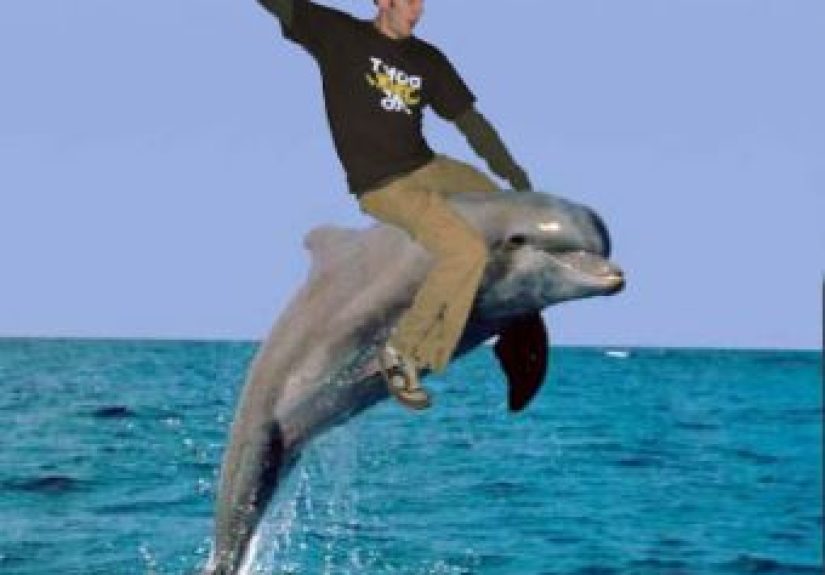
That is why the image lingers: a person in danger, a dolphin nearby, an impossible moment of connection. Whether the dolphin was acting from curiosity, social instinct, protective behavior, or something science has not fully explained yet, the emotional truth lands the same. For one brief moment, the ocean stops feeling like a vast place where you are alone and starts feeling like a place where life notices life.
And honestly, that may be the most awesome part of all. Not that a dolphin becomes a human hero in a neat little fairy tale, but that the natural world is still capable of surprising us with behavior that is more layered, more generous-looking, and more wondrous than our cynical brains are prepared for.
What This Awesome Thing Says About Being Human
Maybe the reason we love this title is that it is secretly about more than dolphins. It is about rescue arriving from somewhere unexpected. It is about the moment when panic meets presence. It is about finding out, in the most dramatic way possible, that you are not as alone as you thought.
That emotional pattern shows up everywhere. A stranger holds the elevator. A friend calls at the exact moment you were about to lose it. A neighbor helps push your dead car out of traffic. Someone tosses you a metaphorical life ring on an ordinary Wednesday. The dolphin version is just the deluxe ocean edition with better lighting and more cinematic splashing.
So yes, this belongs on a list of awesome things. Not because we should expect dolphins to patrol beaches with tiny whistles and laminated rescue badges, but because the idea captures one of the best feelings in the world: help showing up when hope is running low.
Extra Reflections: Experiences Related to the Feeling of a Dolphin Rescue
Most people will never literally be nudged to safety by a dolphin, and that is probably for the best. Life is stressful enough without requiring a marine mammal cameo to make your week feel complete. But almost everyone has experienced some version of the emotional shape behind this story.
It happens when you are overwhelmed and someone notices before you ask. It happens when you are one bad minute away from falling apart and a friend sends a text that says, “Hey, are you okay?” It happens when your tire goes flat in the rain and a stranger appears with jumper cables, a flashlight, and the confidence of someone who has absolutely wrestled with a stubborn battery before breakfast. In those moments, the world briefly feels less random and more inhabited by grace.
That is why the dolphin image works so well. It is not just about the ocean. It is about interruption. A bad story gets interrupted by help. Fear gets interrupted by company. Helplessness gets interrupted by a force moving toward you instead of away from you. We remember those interruptions because they change the plot.
Think about the first time you got lost in a huge airport, standing under a departures board that looked less like travel information and more like a threat. Then some patient employee, or a kind traveler with actual directional skills, points you toward the right gate. That person is not a dolphin, obviously. They are wearing khakis and moving fast and probably holding coffee. But emotionally? Very dolphin-adjacent.
Or picture being in the middle of a hard season when everything feels heavier than it should. You are tired, behind, discouraged, and quietly convinced everyone else got some secret handbook for life that never made it to your address. Then someone says the exact right thing. Not a perfect speech. Not a movie monologue. Just one honest sentence that makes you breathe differently. Again, no dorsal fin involved, but the same basic miracle: something outside you arrives and changes the current.
Even tiny versions count. The teacher who gives you one more chance. The coworker who covers for you when your day goes sideways. The cashier who makes a joke when you look exhausted. The family member who sees through your “I’m fine” voice and stays on the phone anyway. These are small rescues, but small rescues are still rescues. In fact, they may be the ones that quietly keep life from becoming one long, dramatic flail.
That is what makes #812 land so beautifully. Yes, it is funny. Yes, it is oddly specific. Yes, it sounds like a movie scene pitched by somebody who really trusts dolphins. But underneath it is a truth that feels universal: one of the best experiences in the world is realizing that help can still appear. Sometimes it arrives with flippers. More often it arrives with a kind voice, a steady hand, or perfect timing. Either way, the feeling is unforgettable.
And maybe that is why we keep telling these stories. We want to believe the world still contains surprise mercy. We want to believe that when things get rough, not everything turns away. Sometimes, something turns toward us. Sometimes the water parts just enough for hope to come swimming in.
Conclusion
“When you’re drowning and then a dolphin comes to your rescue” deserves its place among awesome things because it combines wonder, relief, and the mysterious intelligence of the natural world into one unforgettable image. The science is more careful than the legend, but it is not less interesting. Dolphins are social, smart, cooperative, and capable of behavior that can look startlingly compassionate. Whether a given moment is curiosity, protection, coordination, or true rescue, the effect is the same: it reminds us that the world still contains astonishing forms of connection.
And that, in a time when many people cannot get a customer service bot to understand the phrase “representative,” feels pretty awesome.