Table of Contents >> Show >> Hide
- The Short Answer
- Why This Question Confuses So Many People
- From Bobbleheads to Big Heads: How Funko Got Here
- So Which Figures Were in the First Pop Wave?
- Was Batman the First Funko Pop?
- Why Big Boy Still Matters So Much
- How to Tell Early Funko Pop History from Collector Myth
- Why the First Funko Pop Still Matters Today
- Final Verdict
- Collector Experiences: Why This Question Feels Bigger Than It Looks
If you have ever asked, “What was the first Funko Pop ever made?” welcome to one of the nerdiest rabbit holes in modern collecting. It sounds like a simple trivia question, but Funko history likes to play a little game with us. Depending on what you mean by “first,” you can end up with two different answers, one hungry mascot, several DC superheroes, and a lot of collectors arguing over tiny vinyl heads.
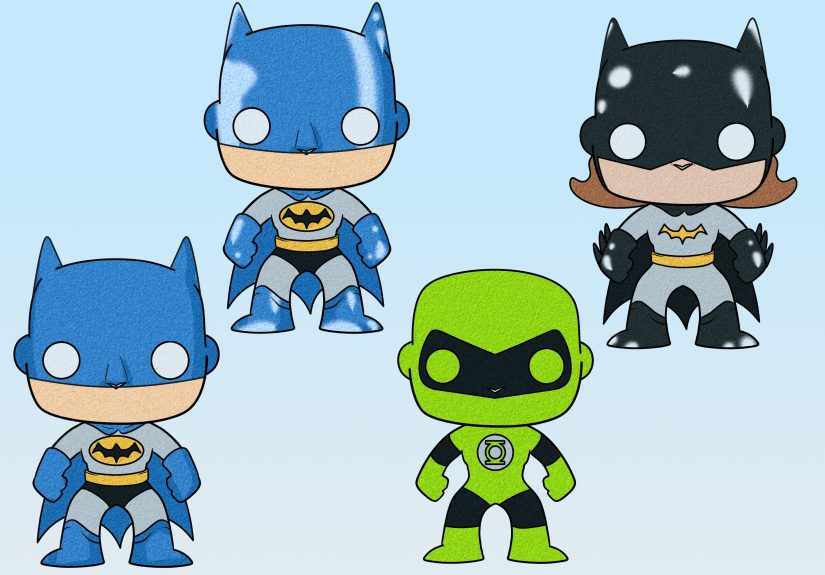
Here is the clean answer. If you mean the first Funko collectible ever made, that honor goes to Bob’s Big Boy, released as a Wacky Wobbler bobblehead in 1998. But if you mean the first actual Pop!-style figures, the earliest documented group arrived in 2010 under the name Funko Force 2.0. Those early figures included Batman, Batgirl, and Green Lantern, and they are the true ancestors of the Pop! empire we know today.
So no, the answer is not as simple as saying, “It was definitely this one little guy and everybody agrees.” In Funko land, history comes with variant paint jobs.
The Short Answer
The first Funko Pop ever made was not a single standalone figure in the way many collectors imagine. The first Pop!-style figures were a small batch of DC characters released as Funko Force 2.0 in 2010, before the Pop! branding fully took over. Batman is often treated like the poster child of that first wave, but he was not marching alone. He showed up alongside Batgirl and Green Lantern, with multiple color variants in the mix.
Meanwhile, Big Boy gets dragged into this conversation all the time because he was Funko’s first collectible overall back in 1998. That makes him the company’s origin-story mascot, even though he was not part of the original 2010 debut of Pop!-style figures.
Why This Question Confuses So Many People
The confusion comes from the fact that collectors often mix up Funko history with Pop! history. Those are connected, but they are not identical.
Funko’s first collectible was not a Pop!
Long before Pop! figures took over comic shops, conventions, and every shelf with at least three inches of free space, Funko started with bobbleheads. The company launched in 1998, and its first collectible was a Bob’s Big Boy Wacky Wobbler. That figure matters because it was the product that got the company off the ground.
The first Pop!-style figures arrived later
More than a decade later, Funko introduced Funko Force 2.0, a line that looked strikingly like what we now recognize as Pop! figures: oversized heads, tiny bodies, simple facial features, and that “why are its eyes staring into my soul?” vibe. These 2010 releases were the earliest true Pop!-style figures, even though they were not yet packaged and marketed exactly the way later Pops were.
Big Boy returned and blurred the story even more
Adding to the confusion, Big Boy later appeared as a Pop! figure too, including a highly collectible 2016 Ad Icons release. That made many newer fans assume Big Boy must have been the first Pop! ever made. It is an understandable mistake, but historically, Big Boy was the first Funko collectible, not the first Pop!-style release.
From Bobbleheads to Big Heads: How Funko Got Here
Funko began as a nostalgia-driven toy company with a low-tech charm. The early line centered on bobbleheads, especially the Wacky Wobblers series. Bob’s Big Boy became the company’s first major mascot and helped establish the business side of Funko’s licensing model. In plain English, that smiling burger-carrying restaurant icon helped open the door for everything that came later.
As the company expanded, it leaned harder into licensed pop culture. That shift eventually led to a more stylized vinyl figure format. By the late 2000s and early 2010s, Funko was experimenting with a design language that would become its signature look: chunky silhouette, compact body, minimal features, and broad appeal across movies, comics, TV, music, games, sports, and pretty much any fandom capable of producing a wallet.
The breakthrough came with Funko Force 2.0, which showed collectors a new direction. These figures were the bridge between early Funko experiments and the massive Pop! line that later exploded at retail. Once the Pop! box style took hold and the branding became consistent, there was no turning back. Funko had found its visual jackpot.
So Which Figures Were in the First Pop Wave?
The earliest documented Pop!-style releases centered on DC characters. The first wave commonly associated with Funko Force 2.0 included the following early standouts:
- Batman in blue
- Batman in metallic blue
- Batgirl in black suit styling
- Green Lantern in glow-in-the-dark green
Collectors and databases also list a broader early lineup tied to that same launch era, including names like Superman, The Flash, Wonder Woman, Robin, Penguin, Riddler, and Joker. But when people talk about the very first Funko Pop figures, the conversation usually begins with the small group of DC releases that debuted around San Diego Comic-Con 2010.
That is why many fans say there was not one single first Funko Pop. There was a first cluster, not one lonely vinyl monarch sitting on the throne by itself.
Was Batman the First Funko Pop?
Sort of, but not all by himself. Batman is one of the very first Pop!-style figures ever made, and Funko has used Batman to celebrate that early milestone. That has led many fans to casually call Batman the first Funko Pop. It is not totally wrong, but it is incomplete.
A more accurate way to say it is this: Batman was part of the first Pop!-style release group. He is one of the original faces of the line, but not the only one. If you are writing for accuracy instead of internet speed, that distinction matters.
In collector culture, precision is everything. A missing sticker matters. A tiny paint difference matters. A box corner ding can spark tragedy. So yes, the difference between “first ever” and “part of the first wave” matters too.
Why Big Boy Still Matters So Much
If Big Boy was not the first Pop!-style figure, why does he keep showing up in this discussion like the guest star who refuses to leave? Because Big Boy is the company’s original symbol. He is the mascot tied to Funko’s beginning, its first license, and its first successful collectible story.
That origin gave Big Boy a special place in Funko lore. Later Pop! versions of Big Boy, especially limited or convention-related releases, became highly desirable among collectors because they feel like a tribute to the company’s roots. In other words, Big Boy is not the first Pop!-style figure, but he may be the most emotionally important early character in Funko history.
That is also why article headlines and collector posts sometimes blur the lines. “The first Funko Pop ever made” sounds cleaner than “the mascot tied to Funko’s first collectible and later memorialized through rare Pop! releases tied to company nostalgia.” But the second version is closer to the truth, even if it is not exactly clickbait gold.
How to Tell Early Funko Pop History from Collector Myth
Funko collecting is full of myths, half-remembered convention stories, and lore repeated so often it starts sounding official. If you want to separate fact from fandom fog, keep these rules in mind.
1. Separate company history from product-line history
Funko began in 1998, but Pop! did not. When someone says “first Funko,” ask whether they mean the first product from the company or the first figure in the Pop! line.
2. Watch for pre-Pop branding
The earliest Pop!-style figures were released under Funko Force 2.0, not under the full Pop! branding most collectors recognize today. That branding shift is one reason the timeline gets messy.
3. Do not let box numbers fool you
A low box number can be important, but it does not always mean a figure was the oldest creation in all of Funko history. Box numbering often reflects category organization, not absolute chronology across every line.
4. Remember that collector favorites are not always historical firsts
Big Boy is iconic. Batman is foundational. Both belong in the story. But the cleanest answer depends on the exact question being asked.
Why the First Funko Pop Still Matters Today
At first glance, this might seem like glorified toy trivia. But collectors care because “the first” means origin, scarcity, and storytelling all rolled into one. The earliest figures are snapshots of a brand before it became a retail giant.
Those first Pop!-style releases show Funko before the company blanketed every fandom from anime to horror to sitcom dads with vinyl immortality. They capture the design language in its earliest recognizable form. That makes them historically important, even beyond dollar value.
There is also something charming about how small the line began. Today, Pop! feels endless. There are Pops for superheroes, mascots, musicians, athletes, monsters, streamers, cereal icons, and enough Star Wars characters to occupy a moon. But at the beginning, it was just a handful of stylized DC figures quietly setting the stage.
That contrast is part of the fun. A giant pop culture empire started with a tiny batch of figures and one company willing to bet that collectors would love giant heads and tiny bodies. Spoiler alert: collectors absolutely did.
Final Verdict
If you want the most accurate answer to “What was the first Funko Pop ever made?”, here it is:
The first Pop!-style figures were the 2010 DC Funko Force 2.0 releases, including Batman, Batgirl, and Green Lantern. There was not just one single first figure; there was a small original wave. Batman is often treated as the symbolic face of that first moment, but he shared the stage.
If you are asking about Funko’s first collectible overall, that was Bob’s Big Boy in 1998 as a Wacky Wobbler bobblehead. That is why Big Boy remains such a legendary name in Funko history, even when the strict Pop! timeline points elsewhere.
So the next time someone confidently says, “The first Funko Pop was definitely Big Boy,” you can politely smile, adjust your invisible collector gloves, and say, “Close, but let’s talk about Funko Force 2.0.”
Collector Experiences: Why This Question Feels Bigger Than It Looks
For a lot of collectors, the hunt for the “first Funko Pop” is not really about owning one figure. It is about touching the start of a story. That is why this question has so much staying power. The first figure in any major collectible line feels like the first issue of a comic, the pilot episode of a hit show, or the first guitar riff in a song everyone knows by heart. You are not just buying plastic. You are buying a beginning.
People who started collecting Funko years ago often describe a similar experience. They bought one figure because they liked a movie, a superhero, or a TV character, and then suddenly they were learning release histories, convention exclusives, vault status, paint variants, and packaging differences. Before long, the collection stopped being random and started feeling like a map. And on that map, the earliest releases sit at the center like a giant historical “you are here” marker.
That is part of why the first-wave DC figures create so much excitement. They represent the moment when Funko’s now-famous style stopped being an experiment and started becoming an identity. Collectors love that kind of turning point. It makes the figures feel important even if someone is not planning to flip them, grade them, or seal them inside enough plastic to survive the next ice age.
Big Boy creates a different kind of emotional response. For many fans, he feels like the soul of the company. Even collectors who focus mainly on movies, anime, or sports sometimes respect Big Boy because he symbolizes where Funko came from. He is the mascot that reminds people this giant brand once began as a niche nostalgia business built around a very specific burger boy with a pompadour and a tray. That is not just charming. That is collector catnip.
There is also a social side to this question. Ask a room full of Funko fans what the first Pop was, and you will get instant conversation. Some will say Batman. Some will say Big Boy. Some will bring up packaging, convention timing, or line naming. Nobody is technically trying to start a philosophical debate over vinyl eyebrows, but somehow that is exactly what happens. And honestly, that is part of the fun. Collecting is not only about objects. It is about shared knowledge, memory, and a little harmless obsession.
In that way, the “first Funko Pop” question becomes a gateway. Newer fans learn the timeline. Older collectors get to retell the lore. Everyone gets to feel like they are part of a bigger story, one that stretches from a 1998 bobblehead to a worldwide collecting phenomenon. That is why the topic still matters. It is not just about what came first. It is about why people still care.