Table of Contents >> Show >> Hide
- Quick Overview
- Fast Fact #1: Millvina Dean Was the Youngest Passenger on the Titanic
- Fast Fact #2: She Survived the Sinking, but Her Father Did Not
- Fast Fact #3: She Didn’t Remember the Titanicand Learned About It Later
- Fast Fact #4: She Became “Living History” After the Titanic Wreck Was Found
- Fast Fact #5: Her Later Years Highlighted Both Public Admiration and Real Financial Strain
- Why Millvina Dean Still Matters
- 500-Word Experience Add-On: What It Feels Like to Encounter Millvina Dean’s Story Today
- Conclusion
Some people become famous for what they did. Millvina Dean became famous for something much stranger: surviving one of history’s most famous disasters before she was old enough to hold her own bottle. As the last living survivor of the Titanic, Dean became a human bridge between 1912 and the modern internet agebetween coal-fired ocean liners and people Googling “did the Titanic really split in two?” at midnight.
But Millvina Dean’s story is bigger than a trivia answer. It’s about immigration plans interrupted, family loss, public memory, media attention, and the strange burden of becoming “living history.” Below are five fast facts about Millvina Deanfollowed by a deeper look at why her life still matters and a longer reflection on modern experiences of learning about her story.
Quick Overview
- Millvina Dean was the youngest passenger aboard the Titanic.
- She survived as a baby, but her father died in the sinking.
- She had no direct memory of the disaster and learned about it later as a child.
- She lived a largely ordinary working life before becoming a public symbol of the disaster in later years.
- She became the last surviving Titanic passenger and remained a powerful symbol of remembrance until her death in 2009.
Fast Fact #1: Millvina Dean Was the Youngest Passenger on the Titanic
A baby on a ship of legends
Millvina Dean (born Eliza Gladys Dean) was only about nine weeks old when her family boarded the RMS Titanic in April 1912. That made her the ship’s youngest passengerand later, the youngest survivor of the disaster. It’s hard to imagine now, but she wasn’t traveling for sightseeing or luxury. Her family was in third class and, like many passengers on the ship, was heading toward what they hoped would be a better future in the United States.
Her parents had sold what they owned in England and planned to start over in America. In many historical accounts, her father is described as intending to open a tobacconist’s shop. In other words, this wasn’t a glamorous movie setupit was a real family making a practical, brave, life-changing move.
One detail that often appears in reporting adds an extra layer of historical irony: the Dean family reportedly was not originally supposed to sail on the Titanic. Like many passengers of the era, they were affected by disruptions and ended up transferred onto the ship. History, as usual, didn’t bother asking for consent.
Fast Fact #2: She Survived the Sinking, but Her Father Did Not
A family story marked by rescue and loss
When the Titanic struck an iceberg on the night of April 14, 1912, chaos followed. Millvina’s father, Bertram Dean, is remembered in multiple reports as acting quicklywaking his family and helping get them to the boat deck. Millvina, her mother, and her older brother survived. Her father did not.
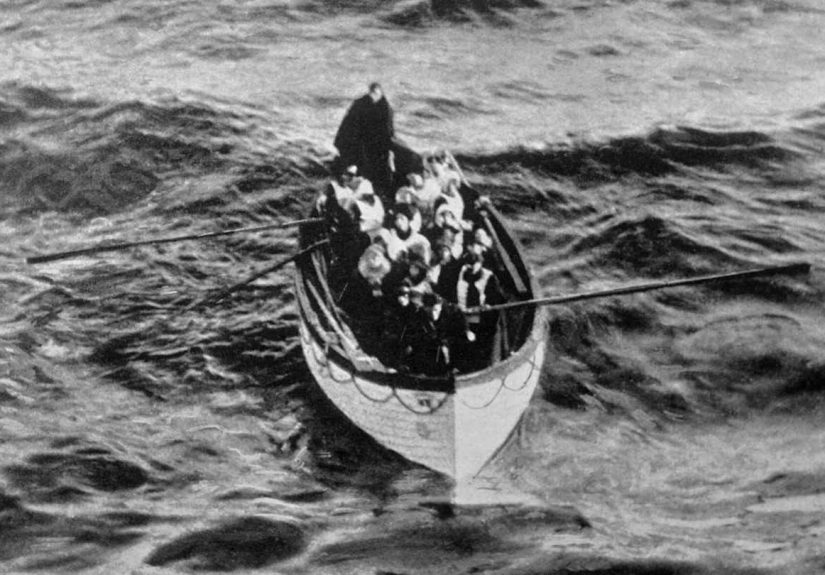
Accounts from obituaries and historical reporting describe baby Millvina being wrapped up and lowered into a lifeboat to protect her from the freezing conditions. That imagean infant lowered into safety while her father remained behindhas become one of the most emotionally powerful parts of her story.
The numbers surrounding the disaster are still staggering more than a century later: roughly 700 people survived, while more than 1,500 died. Millvina Dean’s life story is often told as a survival story, but it is equally a family-loss story. That distinction matters, because it helps us remember that “survivor” can still mean a lifetime shaped by grief, even if the person was too young to remember the event itself.
Fast Fact #3: She Didn’t Remember the Titanicand Learned About It Later
No memory, but a lifelong connection
Because she was only a baby, Millvina Dean had no personal memory of the sinking. She later said she learned about the disaster when she was around 8 years old, when her mother told her more about what had happened. That detail gives her story a unique emotional texture: she carried the consequences of the Titanic long before she understood the cause.
Her family returned to England after the disaster, and Dean grew up far from the kind of celebrity attention that later followed her. By many accounts, she might have remained largely unknown to the wider public if renewed interest in the Titanic had not exploded decades later.
In practical terms, she lived a working life, not a “museum label” life. Reporting over the years notes that she worked as a mapmaker/cartographer during World War II and later worked in office and secretarial roles. That’s one of the most compelling parts of her biography: before she was a symbol of history, she was simply a person with a career, routines, bills, and a life outside headlines.
Fast Fact #4: She Became “Living History” After the Titanic Wreck Was Found
1985 changed everything
Public interest in the Titanic surged after the wreck was discovered in 1985. That discoverymade possible by deep-sea exploration technology and an international research effortreignited global fascination with the disaster. For Millvina Dean, it also meant that people suddenly became interested in her.
She began attending memorials, conventions, interviews, and events connected to the Titanic. In later-life accounts, she is often described as warm, witty, and patient with admirersespecially children. Imagine being in your seventies and eighties and discovering that strangers now see you as a direct link to 1912. That is not a normal retirement hobby.
Dean also eventually completed a transatlantic journey to New York decades after the original voyage was cut short by tragedy. She even visited the American city her family had hoped to settle in, giving her story one of its most poignant “what might have been” moments. It’s the kind of historical detail that feels almost fictionalexcept it happened.
She famously refused to watch James Cameron’s Titanic
Millvina Dean became a public figure during the era when the 1997 film Titanic made the disaster newly iconic for a younger generation. But she declined to watch the movie. The reason was deeply human: films about the disaster made her think about her father and the reality of what happened to her family.
She reportedly found earlier dramatizations upsetting as well and chose not to revisit that pain through cinema. It’s a useful reminder that for millions, the Titanic is a story; for a handful of families, it was a wound.
Fast Fact #5: Her Later Years Highlighted Both Public Admiration and Real Financial Strain
History symbols still have bills
In her later years, Millvina Dean faced rising nursing home costs and sold some Titanic-related family mementos to help pay for care. News coverage at the time drew public attention to the uncomfortable reality that the last surviving passenger of the world’s most famous shipwreck was dealing with ordinary financial pressure.
Those items reportedly included personal objects and documents connected to her family’s post-disaster life, including items tied to relief support after the sinking. The story resonated not just because of the Titanic, but because it touched on something universal: aging, care costs, and dignity.
A fund was created to help support her, and notable donations came from people connected to James Cameron’s film, including Leonardo DiCaprio, Kate Winslet, and Cameron himself. The symbolism was hard to miss: the blockbuster that reignited worldwide Titanic fascination helped support the last surviving passenger in real life.
She died in 2009 as the last Titanic survivor
Millvina Dean died in 2009 at age 97. By then, she was widely recognized as the last living survivor of the Titanic. Her death was widely covered because it marked the end of a direct human link to the ship’s passenger list.
After her death, her ashes were scattered at Southampton docksthe same departure point connected to the ship’s ill-fated voyage. It was a striking final chapter: a life that began in the shadow of the Titanic returned, symbolically, to the place where the journey started.
Why Millvina Dean Still Matters
She helps us understand the Titanic as more than a spectacle
The Titanic remains culturally magnetic for obvious reasons: engineering ambition, class divisions, human error, heroism, tragedy, and nonstop retellings. But stories like Millvina Dean’s push us beyond “fun facts” and movie references. They remind us that the disaster affected real families making ordinary decisions about work, migration, and survival.
Her story also connects personal memory to public memory. Dean herself had no direct recollection of the sinking, yet she became a central figure in how later generations imagined it. That is historically fascinating. She was not a witness in the usual senseshe was a survivor whose life became a vessel for remembrance.
Her life reflects how historical events keep changing meaning
In 1912, the sinking was a breaking-news catastrophe. In the decades that followed, it became a symbol of technological overconfidence, social inequality, and maritime reform. After the wreck’s discovery in 1985, it became a renewed object of scientific and public fascination. After the 1997 film, it became a pop-culture reference point for a whole new generation.
Millvina Dean lived through all of those shifts. She began as a baby on the ship, then became a private citizen, then a public symbol, then the last survivor. That arc is why her biography is so compelling for readers, historians, and anyone interested in how society remembers trauma.
500-Word Experience Add-On: What It Feels Like to Encounter Millvina Dean’s Story Today
Learning about Millvina Dean today often starts in a very modern way: a search bar, a documentary clip, a social media post, or a “Did you know?” fact card. At first, the detail that grabs people is simple and dramaticshe was the last Titanic survivor, and she was only a baby when the ship sank. But the experience of reading deeper usually changes from curiosity to something more reflective.
A lot of people expect the Titanic story to feel like a giant historical set pieceiceberg, orchestra, lifeboats, headlines. Millvina Dean’s life makes it feel smaller and more human. Suddenly, the disaster is not just about a ship; it is about a mother trying to protect children, a father making a split-second decision, and a family plan that never happened. That shift is part of what makes her story so memorable.
Visitors to Titanic museums and exhibits often describe a similar emotional pattern. The early rooms can feel almost architectural and technicalblueprints, rivets, deck plans, luxury interiors, and engineering claims. Then you reach personal stories and artifacts, and the whole thing changes. A suitcase, a letter, a name on a passenger listthese details have a way of cutting through the spectacle. Millvina Dean’s story, especially when paired with later-life photos of her signing autographs or attending events, creates a powerful time-collapse effect: 1912 is suddenly standing right in front of you in a wheelchair, smiling.
There is also a strange emotional tension in the way modern audiences experience her story alongside the 1997 film. For many people, that movie is their “entry point” into Titanic history. But learning that Millvina Dean refused to watch it can be a sobering moment. It reminds us that what feels like cinematic nostalgia to one person may feel like inherited grief to another. That realization often changes the tone of how people discuss the disasterless meme, more respect.
Teachers, parents, and history enthusiasts also find her story useful because it makes a huge event understandable for younger audiences. A child may not immediately connect with maritime regulations or Edwardian class systems, but they can understand this: there was a baby on the ship, her family was moving for a better life, and one parent didn’t come home. From there, bigger conversations can grow naturallyabout migration, safety, technology, and how history is remembered.
In that sense, the experience of learning about Millvina Dean is not just about the past. It is about how we handle stories that become famous. Do we reduce them to trivia, or do we slow down and notice the people inside them? Millvina Dean’s life quietly encourages the second option. And honestly, history could use more of that energy.
Conclusion
Millvina Dean is often introduced as the last Titanic survivor, but that phrase only captures the headlinenot the full life. She was the youngest passenger on the ship, a survivor shaped by loss, a working woman who spent decades outside the spotlight, and later a reluctant but gracious symbol of one of history’s most studied tragedies.
Her story endures because it sits at the intersection of history and humanity. It reminds us that behind every major event are individual lives, interrupted plans, and long aftershocks. If the Titanic remains unforgettable, Millvina Dean is one of the clearest reasons why.