Table of Contents >> Show >> Hide
- The Cooling Dividend
- From Wrinkled Paper to “Cool Comfort”
- Air Conditioning Helped Build the Sun Belt
- Productivity, Learning, and Health
- The Grid: The Summer Peak Nobody Invited
- The Economics of “Right-Sized” Cooling
- Jobs: The Workforce Behind the Cold Air
- Humidity, Comfort, and the Stuff Buildings Protect
- Refrigerants and the Next Transition
- Equity and Resilience
- Experiences: Cooling in the Real Economy (About )
- Conclusion
Air conditioning gets filed under “comfort”somewhere between iced coffee and the “skip intro” button. Economically, it’s closer to plumbing: mostly invisible infrastructure that turns brutal summers into normal life. Cooling keeps people productive, protects goods and equipment, and makes entire regions livable year-round.
It’s also a giant national tradeoff. AC drives summer electricity peaks and utility bills, while delivering safety, learning, and growth. The trick isn’t to worship cold airit’s to use it wisely.
The Cooling Dividend
Hold temperature and humidity in a sane range and you reduce hidden costs: mistakes, absenteeism, spoilage, and “my brain has turned into soup.” That’s why cooling shows up everywhere from grocery stores to server rooms.
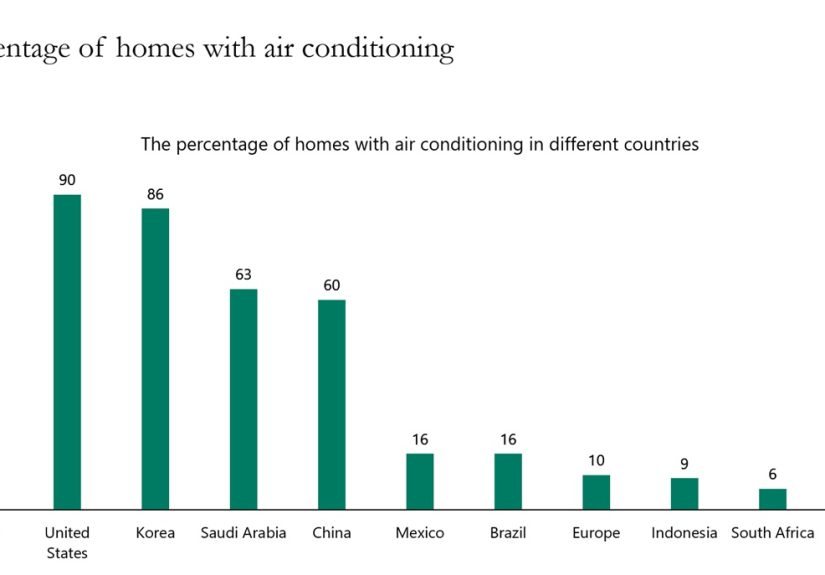
By 2020, about 88% of U.S. households used air conditioning, and cooling was the largest use of electricity in homes in EIA’s 2020 RECS data. At that scale, AC isn’t a gadgetit’s a national productivity tool.
And like any productivity tool, it creates spillovers. When a city stays functional through summer, everything around itrestaurants, child care, health clinics, transit, retail foot trafficgets more predictable. Predictability is an underrated economic asset.
From Wrinkled Paper to “Cool Comfort”
Modern AC began as quality control. In 1902, engineer Willis Carrier built a system to manage humidity at a printing plant so paper wouldn’t warp and ink would behave. Not glamorous, but revolutionary.
Once engineers could reliably cool and dehumidify air, the technology spread from factories and labs into public life. Theaters became famous early adoptersmost notably the Rivoli Theater in New York in the 1920sproving that comfort could be a business model. When people aren’t melting, they show up, stay longer, and spend money.
That pattern repeats. Supermarkets cool to protect produce and keep shoppers browsing. Pharmacies cool to protect medications. Museums cool to protect irreplaceable objects. Even offices cool because “try again tomorrow” is rarely an approved project plan.
Air Conditioning Helped Build the Sun Belt
Urban scholars tie the rise of warm-region metros to a mix of public health improvements, infrastructure, and air conditioning. Cooling didn’t just make summers tolerable; it made them workable, enabling year-round service economies and office growth across the South and Southwest.
Think about what “workable” means in practice: construction schedules that don’t collapse every afternoon, offices that can recruit nationally, hospitals that can operate safely during long heat waves, and indoor commercial spaces that remain attractive when sidewalks feel like cast-iron skillets.
How “cool” turns into dollars
- Migration and housing: hot places become easier to choose, not just to survive.
- Business location: firms can operate without seasonal slowdowns or constant heat-related equipment failures.
- Retail and leisure: malls, theaters, and restaurants don’t have to treat July as an off-season.
Productivity, Learning, and Health
Heat is a performance tax. NBER research on temperature and production shows high heat can reduce industrial output, and that air conditioning is a practical way to reduce exposure and protect productivity. In plain English: sweating is not a reliable business strategy.
In knowledge work, the “loss” looks like slower thinking and more errors. In physical work, it can look like fatigue, safety incidents, and shorter effective shifts. In precision worklabs, manufacturing, medical caretemperature and humidity control can be the difference between a stable process and expensive rework.
Schools: cooling as a learning intervention
A widely cited NBER study links hotter school years to lower learning and finds patterns consistent with air conditioning offsetting heat’s impact. The classroom isn’t just curriculum; it’s conditions. A cooler room buys attention and timetwo resources schools never seem to have enough of.
Healthcare: cooling as preventive medicine
The CDC treats extreme heat as a serious risk and recommends using air conditioning or getting to an air-conditioned place during dangerous conditions. The CDC also notes that fans aren’t always enoughespecially when indoor temperatures are very highbecause moving hot air can make heat stress worse.
CDC surveillance has reported hundreds of heat-related deaths per year in the U.S. over 2004–2018. Cooling isn’t only comfortit can be lifesaving, particularly for older adults, people with chronic conditions, and anyone whose housing traps heat.
The Grid: The Summer Peak Nobody Invited
AC’s biggest side effect is timing. When heat waves arrive, millions of compressors switch on during the same afternoon hours, stressing generation, transmission, and local transformers. That’s why utilities obsess over peak demand, not just monthly kWh.
Peak demand is expensive because the grid has to be built for the worst hour, not the average hour. It’s the reason “a little efficiency” can have outsized value: shaving a few percent off peak load can delay new infrastructure, reduce emergency pricing, and lower the odds of a brownout on the hottest day of the year.
Efficiency is economic policy
DOE updated minimum standards and test procedures so many systems now use SEER2 and EER2 metrics for equipment manufactured starting in 2023. Higher ratings generally mean more cooling for the same electricity, which improves both household budgets and grid stability.
ENERGY STAR reports that certified smart thermostats deliver measured savings; their FAQs cite average savings of about 8% of heating and cooling costs (often summarized as roughly $50/year, depending on home and climate). Scale that across millions of homes and you’re talking about avoided power plants and fewer emergency grid days.
A quick reality check: efficiency needs installation
A high-SEER2 system can still waste money if it’s oversized, short-cycles, or sits on leaky ducts. The unglamorous winners are proper sizing, duct sealing, clean filters, and balanced airflowboring fixes that often beat fancy features in real-world savings.
The Economics of “Right-Sized” Cooling
If you want a single phrase that explains why some homes have high bills and uneven comfort, it’s this: wrong-sized equipment. Bigger isn’t better. An oversized system cools the air quickly but may not run long enough to remove humidity, leaving rooms chilly and clammy (the worst of both worlds). An undersized system runs constantly and still can’t keep up, which is like paying for a treadmill that never stops.
The economic lesson is simple: comfort is a system, not a box. Insulation, air sealing, shading, and windows change the cooling load before the AC even starts. Then equipment sizing and duct design determine whether you deliver cool air efficiently or launch it into the attic like a charitable donation to summer.
Small upgrades with big leverage
- Seal the envelope: reduce hot air leaks so you’re not paying to cool the outdoors.
- Manage the sun: shading and reflective roofs reduce peak cooling needs when the grid is stressed.
- Keep airflow honest: clean filters and sealed ducts protect both comfort and efficiency.
- Use the thermostat strategically: consistent setpoints and smart scheduling often outperform “arctic blast, then off.”
Jobs: The Workforce Behind the Cold Air
Cooling is a service economy with tools. The U.S. Bureau of Labor Statistics projects HVACR mechanics and installers to grow 8% from 2024 to 2034, driven by new construction, replacements, and upgrades. Every efficiency push and refrigerant change increases the value of skilled installationbecause the most expensive AC is the one that’s the wrong size, leaky, or poorly commissioned.
From an economic standpoint, that workforce matters twice: it keeps existing buildings functional, and it determines whether new policy goals (efficiency, refrigerant transitions, electrification) actually work in the field rather than only in PowerPoint.
Humidity, Comfort, and the Stuff Buildings Protect
Temperature gets the spotlight, but humidity is the plot twist. ASHRAE comfort guidance treats comfort as a mix of factorstemperature, radiant heat, air speed, clothing, and activitynot a single thermostat number. Economically, humidity control protects buildings and inventory: it reduces mold risk, preserves artifacts and documents, and supports manufacturing processes that can’t tolerate “kind of damp.”
It also protects people in less obvious ways. When humidity is managed, many homes can feel comfortable at slightly higher thermostat settingsmeaning less energy use without sacrificing comfort. That’s the kind of win you want: cheaper, healthier, and calmer.
Refrigerants and the Next Transition
Cooling is also a chemistry story. Today’s major policy shift is the phase-down of HFC refrigerants, which can have high global warming potential.
Under the AIM Act, EPA is implementing a stepwise plan to reduce HFC production and consumption to 15% of baseline levels by 2036. For consumers and businesses, this affects equipment choices, supply chains, and technician trainingespecially as markets move toward lower-GWP refrigerants with new handling and safety requirements.
The practical takeaway: if you’re replacing equipment, ask about refrigerant roadmap and serviceability. The cheapest choice today can become an expensive headache if parts, refrigerant availability, or code requirements shift over the next decade.
Equity and Resilience
Not everyone can afford to run their AC the way their body would prefer. Older homes, poor insulation, and high utility bills can turn heat waves into emergencies, which is why cooling centers and heat-response plans have become standard public health tools.
Economically, inequitable cooling is costly: it increases preventable health care spending, reduces work capacity, and can worsen learning outcomes during hot periods. Prevention is usually cheaper than emergency responseheat is no exception.
The smartest approach is a portfolio: efficient HVAC, tighter buildings, shading and reflective roofs, smarter controls, and community options that keep vulnerable people safe when temperatures spike or the grid fails.
Experiences: Cooling in the Real Economy (About )
1) The first real heat wave. You learn that AC doesn’t just cool a roomit makes a city usable. Errands happen at noon. Kids can nap. You stop scheduling life like a dawn raid. The economic punchline: your time becomes yours again.
2) The office that stops arguing with itself. In a hot workplace, patience evaporates before the sweat does. When cooling is steady, people make fewer mistakes and spend less time staring at the thermostat like it owes them money. Meetings last longer for better reasons: ideas, not survival.
3) The classroom that finally feels fair. Students in a sweltering room are asked to learn while their bodies are busy doing heat management. With AC, the room gets quieter, attention lasts longer, and the day stops feeling like endurance training. Teachers notice it first: fewer “restless” kids when the air isn’t punishing them.
4) The hospital that never gets dramatic. Hospitals rely on cooling for patient comfort, medication stability, and staff performance. It’s so essential that its success looks boringwhich is exactly what you want from critical infrastructure. In healthcare, “boring” is a compliment.
5) The small business that stays open in July. A bakery, salon, or gym without cooling has a summer “off-season.” With cooling, customers linger, staffing is predictable, and revenue doesn’t melt along with everyone else. Comfort cooling turns weather into a smaller business risk.
6) The apartment where the bill is scarier than the heat. Some households have an AC unit but feel trapped by electricity costs. They cool one room, set the thermostat high, and wait out the worst hoursproof that access is affordability, not just hardware. It’s also why efficiency upgrades are social policy, not only home improvement.
7) The emergency repair call. When an AC fails during a heat wave, you discover a hidden economy of dispatchers, technicians, and parts suppliers. The best tech doesn’t just “swap a box”they fix airflow, duct leaks, and sizing problems that quietly waste money for years. You feel the savings later, when the bill looks less like a prank.
8) The smart thermostat that feels like a polite roommate. It nudges setpoints, pre-cools before peak hours, and proves a surprising idea: comfort often comes from timing and consistency, not maximum blast. Your home can feel the same while drawing less power at the worst moment for the grid.
9) The power outage that turns cooling into community. When the grid fails in extreme heat, cooling centers, libraries, and neighbors with generators become economic lifelines. Resilience is shared, whether we plan it or notand the value of public cool spaces suddenly becomes obvious.
10) The moment “cool” becomes invisible. You’re working, learning, or caregiving and you don’t think about the temperature at all. That’s air conditioning at its best: quietly converting harsh climate into normal life. The economic wonder is how much it enables by simply staying out of the way.
Conclusion
Air conditioning is an economic wonder because it turns climate from a hard limit into a manageable cost. It reshaped American geography, stabilized workplaces and schools, and reduced heat risk. The trade-off is energy and equity: cooling drives summer peaks and can become inaccessible when bills are too high.
The future belongs to better coolingefficient equipment, smarter controls, improved buildings, cleaner refrigerants, and policies that treat safe cooling as part of public health and economic resilience. Keep the cool air. Lose the waste.