Table of Contents >> Show >> Hide
- Why This Amazon Tree Keeps Getting So Much Attention
- How Good Is the Deal, Really?
- What Makes an Artificial Christmas Tree Worth Buying
- How This Amazon Favorite Compares With Other Editor Picks
- Who Should Buy It Right Now
- Tips for Making an Artificial Tree Look Expensive
- The Real-World Experience of Buying and Living With This Tree
- Final Thoughts
Buying a Christmas tree in the middle of spring sounds a little like wearing a velvet Santa suit to a barbecue. And yet, seasoned deal hunters know this is exactly when holiday décor can get interesting. When Amazon starts trimming prices on its most popular artificial Christmas trees, smart shoppers pay attention long before the stockings come out of storage. The tree getting the most buzz is the National Tree Company Dunhill Fir, a model that has popped up again and again in shopping coverage for its realistic look, sturdy construction, and sale-friendly price.
That popularity is not just hype wrapped in a red bow. Across major U.S. lifestyle and home publications, artificial trees from National Tree Company, Puleo, Balsam Hill, and Best Choice Products keep showing up for the same reasons: they look fuller than budget trees of years past, they save cleanup time, and they spare you the annual ritual of vacuuming pine needles out of places pine needles should never be. In other words, they offer holiday magic with less chaos. For a lot of households, that is the dream.
Why This Amazon Tree Keeps Getting So Much Attention
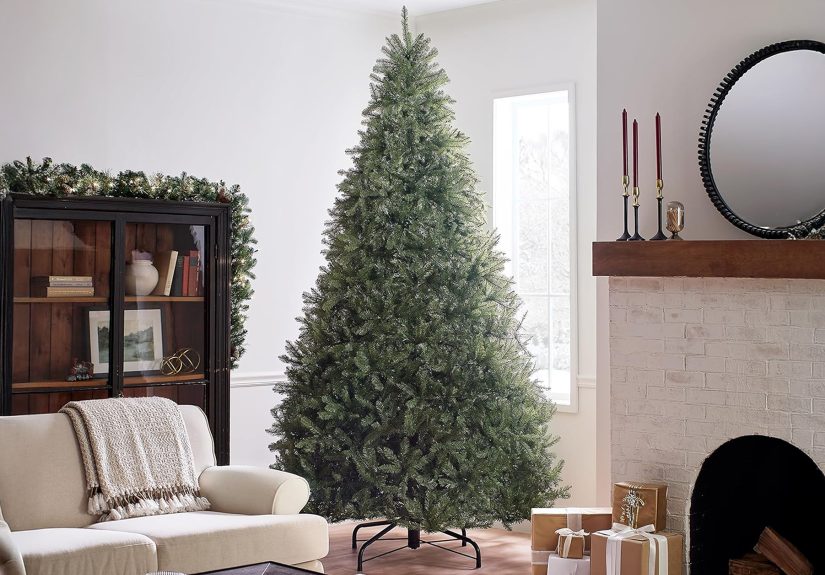
The standout model behind the headlines is the National Tree Company Dunhill Fir. The 6-foot unlit version is widely praised for offering that classic full-tree silhouette without veering into cartoonishly fluffy territory. It has a 46-inch base diameter, hinged branches for easier setup, and a generous tip count that helps it look lush once properly fluffed. There is also a pre-lit version with the same general dimensions and a built-in set of warm white lights for shoppers who would rather skip the annual wrestling match with tangled strands.
What makes it feel like a smart buy is the balance. It is not bargain-bin bare, but it also is not luxury-tree expensive. That middle ground matters. Plenty of shoppers want a tree that looks polished in a living room photo without requiring the budget of a small kitchen appliance. The Dunhill Fir lands in that sweet spot: realistic enough to impress guests, practical enough to store, and affordable enough to feel like a win when the markdown appears.
What Shoppers Seem to Love Most
- A realistic shape: It has a traditional, full-bodied profile that feels familiar and festive.
- Easy assembly: Hinged branches simplify setup compared with older trees that feel like a thousand-piece puzzle.
- Holiday longevity: Fire-resistant and hypoallergenic materials make it a practical repeat-use buy.
- Decorating flexibility: The unlit version is great for people who prefer their own lights, color schemes, and topper drama.
That last point matters more than it gets credit for. A lot of people still prefer an unlit tree because pre-lit trees, while convenient, lock you into a certain light style. If you are team “warm white only,” pre-lit might be perfect. If you switch from nostalgic multicolor to elegant champagne lights depending on your mood and caffeine level, the unlit model gives you more freedom.
How Good Is the Deal, Really?
Here is where things get a little delightfully chaotic, because Amazon pricing moves faster than holiday playlists appear in October. Recent U.S. shopping coverage has shown the Dunhill Fir and similar National Tree Company trees discounted at several different levels depending on the season, promotion, and configuration. Some outlets highlighted the 6-foot unlit Dunhill Fir at under $100, while others featured larger or fuller versions at well over that mark but still deeply discounted from their original prices.
That tells us two things. First, this is a model Amazon and shopping editors keep coming back to because it genuinely resonates with shoppers. Second, “on sale today” should always be treated like a moving target. The smart approach is not to fixate on one exact number forever. The smart approach is to understand the value of the tree, watch for the model you want, and pounce when the price drops into your comfort zone. Holiday shopping, meet strategy.
What Makes an Artificial Christmas Tree Worth Buying
If you are deciding whether this Amazon favorite deserves a spot in your cart, focus on the same features editors and testers keep returning to: realism, size, setup time, light options, and branch density. Those five factors tell you almost everything you need to know.
1. Realism Comes Down to Materials
More realistic artificial trees usually use a mix of PE and PVC. PE tips tend to look more like real evergreen needles, while PVC often fills the inside of the tree for fullness and value. That combination helps a tree look better from across the room and in close-up. If realism is your top priority, look for molded tips or mixed-tip construction. If price matters most, a PVC-heavy tree can still look great once fully shaped and decorated.
2. Size Is Not Just About Height
A 6-foot tree sounds simple enough until you realize the base width can turn your living room into an obstacle course. That is why dimensions matter as much as height. Full trees feel classic and dramatic, while slim and pencil styles work better in apartments, offices, entryways, and corners that cannot handle a full holiday explosion. If you love the look of a big traditional tree but live in a tighter space, always measure before you buy. Future you will be grateful.
3. Pre-Lit vs. Unlit Is a Lifestyle Choice
Pre-lit trees save time and reduce frustration. Unlit trees give you total creative control. Neither choice is wrong. It depends on whether you want convenience or customization. The Dunhill Fir works well in both camps because shoppers can choose the version that matches their decorating personality, whether that personality is “minimalist glow” or “holiday maximalist with opinions.”
4. Setup Time Is Real Time
Many trees look just okay when they first come out of the box. That is not a red flag; it is the fluffing phase. The best advice from retailers and home editors is simple: budget time to shape the branches. That final fullness does not happen by magic. It happens because someone stood there patiently bending, separating, and arranging tips until the tree went from “shipping carton survivor” to “holiday centerpiece.”
How This Amazon Favorite Compares With Other Editor Picks
The Dunhill Fir is popular because it hits value well, but it is not the only game in town. Testing from home publications and shopping sites regularly puts other models in the conversation too.
Puleo International often earns praise for realism, ease of assembly, and sturdy construction. If you want a tested favorite with dependable performance, it is a strong alternative. Balsam Hill remains the aspirational choice for shoppers who want premium realism and do not mind paying more, especially when rare markdowns hit. Best Choice Products earns attention as a wallet-friendlier pick that still delivers satisfying fullness for the price. And for small homes, pencil trees or compact tabletop options can be the smarter move than forcing a grand tree into a not-so-grand floor plan.
So where does Amazon’s popular artificial Christmas tree fit in? Right in the middle of the venn diagram where price, looks, and practicality overlap. It may not be the most luxurious tree on the market, but it is one of the easiest to recommend to mainstream shoppers who want something attractive, reliable, and likely to make it through several holiday seasons.
Who Should Buy It Right Now
This tree makes the most sense for people who want to get ahead of holiday shopping, replace an older artificial tree, or finally retire the family hand-me-down that has been dropping plastic needles since the Obama administration. It is also a smart buy for households that decorate early, families with allergies, and anyone tired of hauling a live tree inside only to spend the rest of December sweeping under it like a festive janitor.
If you love customizing your décor, the unlit version is especially appealing. If you want a fast, plug-in-and-go setup, the pre-lit version is the better match. And if your home has limited space, it might still be worth considering a slim model instead. A good deal is only a good deal when the product actually fits your room and your routine.
Tips for Making an Artificial Tree Look Expensive
Here is the truth nobody tells you loudly enough: even a reasonably priced tree can look fantastic with a little effort. Start with a thorough fluffing session. Then use more lights than you think you need, especially if you are working with an unlit tree. Add ornaments in layers, mixing larger statement pieces with smaller fillers. Tuck some ornaments deeper into the branches to create depth. Finally, do not ignore the base. A good collar or skirt finishes the look and hides the stand like the design hero it is.
That is often the difference between “nice tree” and “wait, where did you get that tree?” The tree itself matters, yes. But styling is what takes it from decent to dazzling.
The Real-World Experience of Buying and Living With This Tree
There is something oddly satisfying about buying a Christmas tree when everyone else is shopping for patio cushions and garden hoses. It feels like you are getting away with something. While the rest of the world is debating outdoor string lights for summer dinners, you are quietly planning a far more important future event: peak cozy season. And that is part of the appeal of a deal like this. It is not just a discount. It is a head start.
The experience usually begins with a little skepticism. Can an Amazon tree really look good? Will it arrive flattened, sad, and suspiciously shiny? That concern is fair. Plenty of people have been burned by artificial trees that looked full online and then showed up in real life looking like a broom with ambition. But popular models like the Dunhill Fir tend to earn repeat attention because they clear that first hurdle. Once assembled and fluffed, they look far more convincing than many shoppers expect.
Then comes setup day, which is a ritual all its own. You open the box, pull out the sections, attach the stand, and spend a while shaping branches like a holiday sculptor. For some people that sounds annoying. For others, it is the beginning of the season. There is music playing, coffee or cocoa nearby, maybe someone debating whether the tree should go by the window or in the corner, and eventually the whole thing starts to look less like boxed plastic and more like Christmas arrived early.
Living with an artificial tree is where the convenience really shows up. No watering. No sap. No midnight panic that the tree is leaning more than usual. No crunchy carpet surprise every morning. For busy families, apartment dwellers, and anyone with pets or allergies, that lower-maintenance experience is a huge part of the value. You get the visual payoff of a traditional holiday centerpiece without the mess that usually tags along behind it.
There is also an emotional side to it. Artificial trees become repeat players in family traditions. The same ornaments go on the same branches. The same topper gets lifted into place every year. Kids get older, décor styles change, and somehow the tree sticks around like a dependable cast member in your holiday movie. That is why shoppers care so much about durability. They are not just buying seasonal décor. They are buying the backdrop for future memories, gift exchanges, awkward family selfies, and at least one argument about whether tinsel is classy or chaos.
And honestly, that is what makes Amazon’s popular artificial Christmas tree deal worth paying attention to. A good tree is not just about one sale day. It is about how many seasons it can carry, how easy it is to live with, and how festive it looks when the room goes dark and the lights are the only thing glowing. If you can get that at a discount, even better. That is not impulse shopping. That is holiday strategy with excellent timing.
Final Thoughts
Amazon’s popular artificial Christmas tree gets attention for good reason. The National Tree Company Dunhill Fir checks a lot of boxes for everyday shoppers: it looks full, stores relatively easily, comes in lit and unlit options, and frequently shows up in worthwhile sales coverage. It is not the fanciest tree in the universe, but it does what a smart holiday purchase should do: it delivers strong visual impact without making your wallet cry into the eggnog.
If you have been waiting for the right moment to upgrade your holiday setup, this kind of sale is the moment to watch. Just remember to compare dimensions, choose your preferred light style, and leave room in your schedule for fluffing. Because yes, the best artificial Christmas tree deals can save money. But the real victory is finding one that still looks great years later when the ornaments come out and the house starts feeling festive all over again.