Table of Contents >> Show >> Hide
- Why Barcelona Apartments Are a Special Kind of Puzzle
- The Brothers’ Game Plan (Before Touching a Single Wall)
- The Transformation: 7 Moves That Made the Flat Feel Twice as Big
- 1) Make light travel (instead of stopping at the first obstacle)
- 2) Re-think the kitchen location (or at least the kitchen’s relationship to daylight)
- 3) Unify the flooring (so the apartment reads as one home, not five chapters)
- 4) Go drawer-heavy in the kitchen (because cabinets are basically black holes)
- 5) Build storage into architecture (so “stuff” doesn’t become décor)
- 6) Choose “broken-plan” over fully open-plan (the best of both worlds)
- 7) Add one brave color moment (Barcelona approves)
- Room-by-Room Cheat Sheet
- Mistakes to Avoid (Even If Your Brother Thinks It’s “Fine”)
- Frequently Asked Questions
- Conclusion
- Bonus Appendix: 7 Brotherly Barcelona Reno Experiences (About )
A Barcelona apartment makeover is already a thrilling sport: part design, part logistics, part “why is this wall here?”
Add two brothers to the mix, and suddenly it’s also part family sitcomcomplete with passionate debates over tile, lighting,
and whether a sofa can be “too emotional.”
This is the story (and the blueprint) of an apartment transformation in Barcelona powered by the most underrated renovation tool:
brotherly love. Not the mushy kindmore like the “I’ll carry the couch up four flights, but I’m naming the new paint color” kind.
Along the way, we’ll dig into what makes Barcelona apartment renovations unique, which design moves pay off most in tight
city flats, and how siblings can collaborate without ending up in separate WhatsApp groups titled “DO NOT REPLY.”
Why Barcelona Apartments Are a Special Kind of Puzzle
Long, narrow layouts (and the famous hallway that eats your sunlight)
Many traditional Barcelona flatsespecially in older neighborhoodswere carved into a chain of rooms, often linked by a corridor that seems
determined to keep natural light as a private luxury. Even when the building has beautiful “bones,” the interior can feel chopped up, dim,
and oddly ceremonial, like you need to announce yourself before entering the kitchen.
That layout isn’t “bad,” but it does demand strategy. You can’t just toss in trendy furniture and hope your hallway discovers happiness.
The best transformations start by treating light, circulation, and storage as the real VIPs.
Historic charm worth saving (because character beats “sad beige box”)
Barcelona homes often come with features people would pay extra to “fake” elsewhere: patterned hydraulic tile, arched or vaulted ceilings,
tall doors, and generous windows at the ends of the apartment. Renovation isn’t about erasing that historyit’s about letting it breathe.
The Brothers’ Game Plan (Before Touching a Single Wall)
Let’s meet our two leads:
Jordi (the Barcelona-based brother) wants a bright, functional home that feels calm after a long day.
Max (the visiting brother) is equal parts design nerd and budget realist. Together, they set three rules:
they’d respect the apartment’s original character, maximize light and flow, and avoid “renovation regret” purchases (you knowthe ones that arrive
and instantly feel like a mistake with tracking numbers).
Step 1: Define roles so every decision doesn’t become a democracy
- Jordi = daily-life expert (what the home must do every morning and every tired evening)
- Max = systems thinker (layout logic, storage planning, cost trade-offs, sourcing)
- Both = final vote on anything visible from the sofa (because that’s the “most-seen” real estate)
Step 2: Write the “Non-Negotiables” list
The brothers kept it shortbecause long lists are where dreams go to get complicated:
- Light-first layout: remove visual barriers that block sunlight from traveling.
- A real kitchen workflow: more usable counter space, better storage, less “where do we put this?”
- One calm palette: warm neutrals, natural materials, and one bold color moment (oneno chaos allowed).
- Storage that disappears: fewer exposed piles, more built-ins, more “this is where it lives.”
Step 3: Budget like grown-ups (with a “surprises happen” buffer)
Renovations love surprise plot twists: hidden electrical issues, uneven floors, or that one wall that reveals three eras of questionable decisions.
The brothers planned a cushion for the unexpected, prioritized big-impact upgrades (layout, lighting, storage), and saved on anything that didn’t
improve daily living.
The Transformation: 7 Moves That Made the Flat Feel Twice as Big
1) Make light travel (instead of stopping at the first obstacle)
In many Barcelona apartments, light is abundant near windows and scarce everywhere else. The fix isn’t “add more lamps and pray.”
It’s about removing unnecessary partitions, widening sightlines, and choosing finishes that bounce light around.
- Swap heavy interior doors for glass or sliding options where privacy isn’t critical.
- Use light-reflective walls (warm whites, soft stone tones) to brighten the corridor effect.
- Layer lighting: ambient + task + accent, so nights don’t feel like a detective movie.
2) Re-think the kitchen location (or at least the kitchen’s relationship to daylight)
A common renovation win: stop treating the kitchen like a back-of-house utility room. The brothers opened the kitchen to the living zone and
aligned it with natural light, so cooking felt social and less like working in a cave. They also created a small peninsula for prep and casual meals,
which became the apartment’s “life hub”coffee in the morning, tapas at night, heated debates about which lamp is “too modern.”
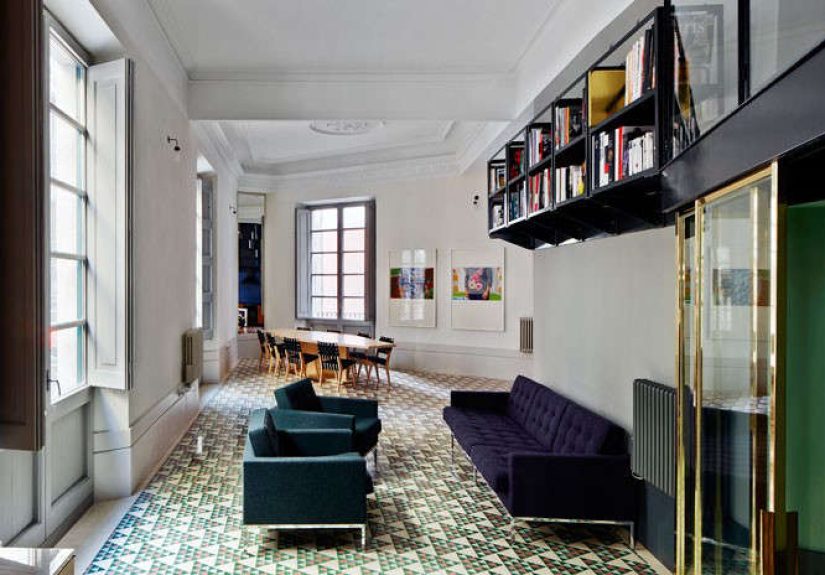
3) Unify the flooring (so the apartment reads as one home, not five chapters)
If your floors change material every time you blink, the space feels smallervisually chopped into zones. A unified floor finish can make a narrow
apartment feel longer, calmer, and more intentional.
The brothers chose a continuous, neutral surface through most of the home, then preserved original tile as a “feature moment” in select areas.
The result: modern flow, historic soul.
4) Go drawer-heavy in the kitchen (because cabinets are basically black holes)
Small kitchens aren’t doomedthey just can’t waste inches. One clever approach is minimizing lower-door cabinets and leaning into drawers:
easier access, better organization, fewer items getting lost behind the blender you swear you’ll use “next week.”
- Deep drawers for pots and pans
- Shallow drawers for spices and utensils
- Vertical dividers for cutting boards and trays
- Pull-outs for cleaning supplies (so the under-sink zone stops being a messy cave)
5) Build storage into architecture (so “stuff” doesn’t become décor)
Barcelona apartments can be generous in ceiling height, which is basically an invitation to think vertically. The brothers used tall cabinetry,
built-in benches with hidden storage, and a few wall-mounted solutions that kept floors clear.
- Floor-to-ceiling wardrobes (less dust, more capacity)
- Entry storage that handles shoes, coats, bags, and the mystery items every home accumulates
- Open shelving only where it would stay tidy (because “open shelving” and “chaos” are close friends)
6) Choose “broken-plan” over fully open-plan (the best of both worlds)
Open layouts can feel airy, but not everyone wants to see the sink from the sofa. The brothers used a “broken-plan” strategy:
sightlines stayed open, but zones were defined with partial partitions, furniture placement, and lighting.
The living room felt like a destination, not an extension of the kitchen. The dining area felt intentional, not like a table that wandered in and never left.
7) Add one brave color moment (Barcelona approves)
Barcelona design often balances warmth with boldnesssunlight, natural textures, and a confident color choice that feels lived-in rather than staged.
The brothers picked a single “hero” color for a compact zone (think: kitchen cabinetry, a painted niche, or a statement wall), keeping everything else calm.
It’s the design equivalent of adding hot sauce: a little goes a long way.
Room-by-Room Cheat Sheet
Entry + hallway
- Mirror placement to reflect window light and visually widen the corridor
- Wall hooks + slim console so essentials don’t land on every surface
- Warm lighting to avoid the “airport hallway” vibe
Living + dining
- One large rug to anchor the zone and make it feel bigger
- Furniture with legs to keep the room visually light
- Wall sconces to free up side-table space
Kitchen
- Drawer-first storage for daily items
- Vertical organizers for trays and boards
- Layered lighting: under-cabinet + pendant + ceiling
Bedroom
- Under-bed storage (especially for linens and off-season clothes)
- Wardrobes to the ceiling to maximize cubic space
- Minimal surfaces so the room feels restful, not busy
Bathroom
- Large mirror to increase brightness and depth
- Wall-mounted storage so the floor stays open
- Consistent finishes to keep it feeling calm and clean
Mistakes to Avoid (Even If Your Brother Thinks It’s “Fine”)
Buying furniture that’s too small (the counterintuitive trap)
Tiny furniture can make a room feel cluttered because you end up with more pieces. A few properly scaled itemslike a bigger rug or one substantial
statement pieceoften reads cleaner and more spacious.
Overdoing open shelving
Open shelving is gorgeous… in houses where nobody owns cereal boxes. Use it where you can keep it curated, and hide the rest behind closed fronts.
Skipping the lighting plan
If lighting is an afterthought, your apartment will look like it’s always waiting for better times. Plan it early, layer it, and give each zone a purpose.
Letting renovation decisions become personal identity statements
A renovation is not a referendum on your taste. When the brothers disagreed, they asked one question:
“Will this make daily life better?” If the answer was “not really,” it didn’t make the cut.
Frequently Asked Questions
How do you make a Barcelona apartment feel bigger without adding square footage?
Prioritize light flow, unify finishes, use fewer (but better-scaled) furniture pieces, and build storage into walls instead of the floor plan.
Think “calm and continuous,” not “busy and broken up.”
Is open-plan always the best choice?
Not always. A “broken-plan” approach can keep the airy feel while protecting privacy and reducing visual clutter.
It’s especially helpful if the kitchen is part of the main living space.
What’s one upgrade that pays off every day?
Storage you don’t have to think about. If daily items have a homedrawers, built-ins, vertical organizersyour apartment stays calmer with less effort.
That’s the real luxury.
Conclusion
A great Barcelona apartment transformation isn’t just about pretty finishesit’s about making the space work with the city’s rhythm:
bright mornings, social evenings, and a home that feels easy to live in.
And when two brothers tackle the project together, something else happens: the renovation becomes a shared language. A floor plan turns into a family
story. A kitchen island becomes the place where life gathers. Even the disagreements become part of the charmbecause the goal isn’t perfection.
It’s a home that feels like yours, built with care, humor, and just enough compromise to keep the group chat alive.
Bonus Appendix: 7 Brotherly Barcelona Reno Experiences (About )
1) The “first walk-through reality check”
The brothers started confidentthen the apartment greeted them with a hallway that felt like it had its own climate system.
Jordi said, “It’s cozy.” Max said, “It’s a tunnel.” They laughed, took measurements, and agreed the hallway wasn’t the enemyit was simply the main
design problem wearing a trench coat.
2) The tile debate that almost became a soap opera
Barcelona floors can be heartbreakingly beautiful, and also heartbreakingly inconsistent. One corner had charming patterned tile; another had something
that looked like it survived three decades of indecision. The compromise: preserve the best original patches as features, then unify the rest so the
apartment felt intentional. Result: historic character without the “patchwork quilt of flooring eras” vibe.
3) The day they discovered storage is emotional
Storage sounds practical, but it’s secretly about peace. When the brothers mapped where everyday items would livekeys, shoes, cookware, cleaning stuff
they realized clutter wasn’t just mess. It was friction. Once they built better “homes for things,” the apartment felt calmer before the décor even arrived.
4) The lighting moment that changed everything
They tested lighting at night with temporary fixtures and realized the room looked flat and tired. After layering ambient, task, and accent lighting,
the apartment finally felt warm. Jordi described it perfectly: “Now it looks like someone lives hereand likes it.”
5) The open-plan fear (and the broken-plan win)
Max wanted openness. Jordi wanted boundaries. They solved it like adults: with a layout that kept sightlines open but used subtle zoning.
A peninsula defined the kitchen, a rug defined the living area, and lighting signaled transitions. No walls needed, no “kitchen on display” anxiety.
6) The brave color choice (aka the “we’re really doing this” moment)
Picking one bold color felt riskyuntil they remembered Barcelona isn’t shy. They chose a hero shade for a compact area, kept everything else grounded,
and suddenly the apartment had personality without chaos. Max called it “confidence paint.” Jordi called it “finally, not boring.”
7) The final furniture placement: when a home becomes a home
The last day wasn’t about constructionit was about rhythm. Where do you drop your bag? Where do you sit with coffee? Where does conversation happen?
They nudged the sofa two inches (then two more), centered the dining table, and added a small bench that became everyone’s favorite spot.
The big reveal wasn’t a “before-and-after” photoit was realizing the apartment now supported their actual lives. And yes, they celebrated with tapas,
because some traditions are non-negotiable.