Table of Contents >> Show >> Hide
Honey bees are tiny, winged workaholics that somehow manage to be both adorable and economically essential. They help pollinate a huge share of America’s fruits, nuts, vegetables, and specialty crops, yet for nearly two decades they have also been the stars of one of agriculture’s most unsettling mysteries: Colony Collapse Disorder, or CCD.
CCD became a household term after large numbers of managed honey bee colonies began failing in unusual ways in the United States around 2006. Since then, scientists, beekeepers, growers, regulators, and basically everyone who enjoys almonds, apples, berries, melons, or a stable food system have been trying to answer the same question: what is happening to the bees, and what does it cost when they disappear?
The short answer is that CCD is real, specific, and serious, but it is also often misunderstood. Not every dead hive is a case of CCD. Not every bee problem can be pinned on one villain. And the economic damage is not just about honey jars on a grocery shelf. It affects crop yields, pollination contracts, beekeeper survival, input costs, and the long-term resilience of American agriculture.
What Is Colony Collapse Disorder, Exactly?
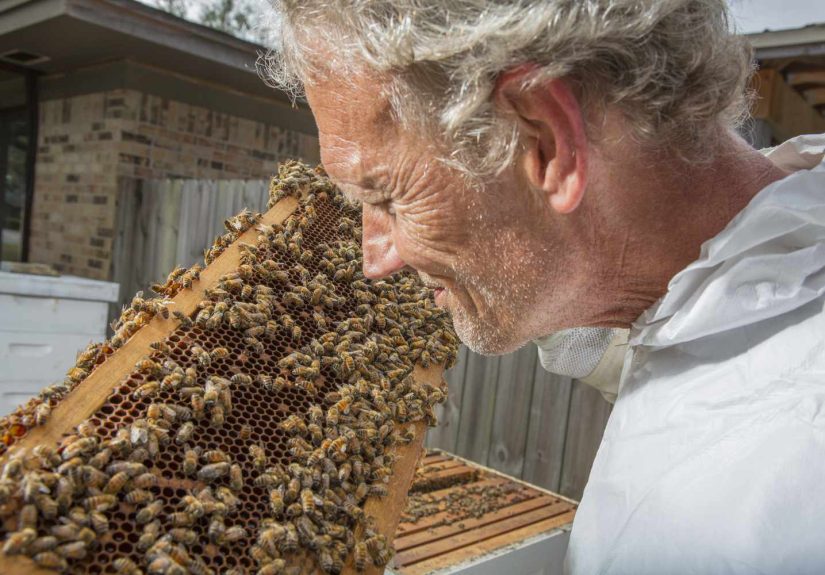
Colony Collapse Disorder is not a catchall phrase for “bees are having a bad day.” It refers to a particular pattern of colony failure. In classic CCD cases, most adult worker bees suddenly disappear from the hive, while the queen, immature bees, and food stores are often left behind. One of the strange features is the lack of large piles of dead bees around the entrance. In other words, the colony looks less like a battlefield and more like the adult workforce clocked out, took their tiny lunch boxes, and never came back.
That detail matters because it helps separate CCD from other causes of colony loss. Acute pesticide poisoning, for example, often leaves visible numbers of dead bees near the hive. Starvation, disease, queen failure, and heavy parasite infestations can also kill colonies, but they may not match the classic CCD pattern.
That is why experts now talk about colony losses more broadly, while still treating CCD as a narrower syndrome. The public often uses the term to describe all bee declines, but scientifically speaking, CCD is only one piece of a much larger bee-health puzzle.
How Bee Losses Became a National Story
Before CCD exploded into headlines, honey bee colonies were already dealing with normal levels of stress. Beekeeping has never been a hobby for people who crave calm certainty. Weather changes, bad forage, pests, disease, and queen problems have always been part of the job. Historically, annual losses were serious but usually lower than what commercial operators have faced in the CCD era.
Then came the mid-2000s, when beekeepers in multiple states began reporting dramatic and unusual losses. Since then, annual colony losses have stayed stubbornly high compared with older baselines. Even when fewer colonies meet the strict definition of CCD, the broader pattern remains troubling: beekeepers still lose large percentages of colonies each year and must rebuild, split, requeen, or replace stock just to stay in business.
That constant rebuilding is one reason the issue has not faded away. The label may have evolved, but the pressure on bees and beekeepers has not.
What Causes CCD and Heavy Colony Losses?
The most honest answer is also the least satisfying one: there is no single magic-bullet explanation. Researchers have spent years testing possible causes, and the strongest conclusion is that colony collapse and broader honey bee losses are driven by multiple interacting stressors. Bees are not usually facing one bad thing. They are facing several bad things at once, which is a rough way to run a superorganism.
1. Varroa Mites and the Viruses They Spread
If honey bees had a supervillain, Varroa destructor would absolutely be auditioning for the role. These mites attach to bees, weaken them, damage brood, shorten worker lifespan, and spread harmful viruses such as deformed wing virus. Across modern beekeeping, Varroa is widely seen as one of the most important drivers of colony losses.
This matters because a colony can look decent on the surface and still be sliding toward failure. Mites undermine the health of individual bees, which weakens the entire colony’s ability to forage, rear brood, defend itself, and survive winter. In many cases, the colony does not collapse because of one dramatic event. It erodes from the inside out.
2. Poor Nutrition and Habitat Pressure
Bees need diverse forage, not an endless buffet of the same thing. When landscapes lose flowering diversity or when colonies are moved through forage-poor environments, nutrition suffers. A nutritionally stressed colony is less resilient to mites, disease, and weather shocks.
This is where land use becomes an economic issue too. Research tied to grasslands and forage quality shows that better landscapes can produce stronger colonies, and stronger colonies are worth more in pollination markets. In practical terms, healthy bee habitat is not just pretty. It can change the bottom line.
3. Pesticide Exposure
Pesticides remain one of the most debated parts of the conversation, partly because the topic is real, complicated, and emotionally charged. Some pesticide incidents kill bees outright. Others may create sublethal effects that weaken navigation, brood development, queen health, or recovery from other stressors.
The important point is nuance. Experts do not treat every bee death as proof of one pesticide problem, but they also do not dismiss chemical exposure as irrelevant. In the real world, pesticides can interact with parasites, disease, and nutrition to magnify harm.
4. Pathogens, Disease, and Management Stress
Viruses, fungi, bacteria, and microsporidian infections can all reduce colony health. Add in the physical stress of transporting commercial hives long distances for pollination, plus the difficulty of maintaining strong queens and balanced brood cycles, and it becomes easier to see why colony management has become more expensive and more fragile.
Commercial bees are often moved across states to meet pollination demand. That mobility is economically useful, but biologically stressful. It is a little like sending your workforce on a nonstop national road tour and hoping everyone shows up rested and immune to everything.
5. Weather and Climate Stress
Extreme heat, drought, unusual winter swings, and badly timed storms can all affect forage and colony survival. Climate stress does not act alone, but it can make every other problem worse. When bloom timing shifts, nectar availability drops, or temperatures whip from one extreme to another, bees and beekeepers have less room for error.
Why CCD Matters to the U.S. Economy
Honey bees are not important merely because they make honey. Their biggest economic role is pollination. In the United States, pollination by bees adds billions of dollars to crop value every year. Specialty crops such as almonds, apples, berries, cucurbits, and many vegetables rely heavily on managed pollinators.
That means bee losses ripple through several layers of the economy at once.
Crop Production and Food Supply
When colonies are scarce or weak, growers may struggle to secure enough pollination at the right time. That can mean lower fruit set, uneven yields, lower quality, or greater uncertainty during critical bloom windows. For crops that are highly dependent on insect pollination, this is not a minor inconvenience. It is a direct production risk.
California almonds are the classic example because they require enormous numbers of rented colonies during bloom. Almond demand has helped transform pollination into a major revenue stream for commercial beekeepers. When bee losses rise, the entire system tightens. Hive availability becomes more fragile, and the cost of pollination can increase.
Higher Costs for Growers
USDA data show that producers spent more than $400 million on pollination services in 2024. That number says a lot. Pollination is not some quaint side note in agriculture. It is a major purchased input, and when bees become harder to maintain, growers feel it in their budgets.
Higher pollination costs can affect farm profitability, especially in sectors already coping with labor costs, water limits, fuel prices, and volatile markets. For some crops, pollination is one more expensive line item. For others, it is the line item standing between a harvest and a disaster.
Financial Pressure on Beekeepers
Commercial beekeepers do not just lose bees when colonies die. They lose labor, replacement costs, production potential, breeding progress, and contract reliability. Rebuilding colonies requires money, time, feed, equipment, medication, queens, and skill. When annual losses stay high, the business model gets shaky fast.
USDA honey data also show the commercial reality from another angle. In 2024, honey production in the United States totaled 134 million pounds from 2.60 million honey-producing colonies. At the same time, pollination income remained a major source of revenue. That means beekeepers are balancing two businesses at once: producing honey and supplying living pollination machines under increasingly difficult conditions.
Consumer Effects
Consumers may not see a line on a receipt that says “bee instability surcharge,” but the effects can still show up. Pollination constraints can contribute to higher production costs, tighter supply, and more volatility in prices for certain fruits, nuts, and vegetables. The impact is not always immediate or dramatic, but it is real.
The bigger concern is resilience. A food system that depends on managed pollinators becomes more vulnerable when those pollinators are expensive, stressed, or harder to replace.
Why the CCD Story Still Matters Today
Some people assume CCD is old news because the phrase is not splashed across headlines the way it was in the late 2000s. That is misleading. The terminology may have shifted toward broader colony health and annual losses, but the underlying challenge remains very current.
The real lesson of CCD is not just that bees can disappear in a strange way. It is that modern agriculture depends on a biological workforce that is both incredibly valuable and surprisingly vulnerable. If those colonies weaken, every part of the system becomes more expensive, less predictable, or both.
What Helps Reduce Risk?
No single solution will rescue honey bees overnight, but several practical steps make a real difference. Better Varroa management is at the top of the list. Stronger forage and habitat help bees build resilience. Smarter pesticide timing and application practices reduce avoidable exposure. Better queen quality, disease monitoring, and nutrition support colony strength. Research, extension education, and pollinator-friendly land management all matter too.
In short, the bee problem is solvable only in pieces. That may sound unromantic, but it is how agriculture usually works. The fix is less “heroic miracle” and more “a thousand better decisions.”
Real-World Experiences Behind the Numbers
The statistics around Colony Collapse Disorder can sound abstract until you picture what they mean on the ground. For a commercial beekeeper, a bad year does not arrive as a dramatic movie scene. It arrives row by row, lid by lid, colony by colony. You open a hive in late winter expecting noise, movement, and a steady workforce getting ready for spring. Instead, the colony is weak or nearly empty. There may still be a queen. There may still be food. But the momentum is gone. That is the part many non-beekeepers miss. A colony does not have to be completely dead to be economically devastating. Sometimes it is simply too weak to do the job it was supposed to do.
Growers experience the problem differently. For them, the season runs on bloom timing, weather windows, and narrow opportunities. If hives arrive late, arrive weak, or cost much more than expected, that tension spreads quickly. Pollination is one of those farm inputs you cannot really postpone. Trees bloom when they bloom. Fields do not wait politely while someone sorts out a bee shortage.
Extension specialists and researchers often describe a similar pattern: there is almost never one neat explanation. A beekeeper may start with decent colonies, then get hit by a dry forage season, rising mite loads, disease pressure, and difficult weather all in one cycle. None of those stressors alone tells the whole story. Together, they can knock a colony from productive to fragile in a matter of weeks.
Backyard beekeepers see a more personal version of the same issue. Many start with excitement, curiosity, and a little romantic optimism. Then they learn that keeping bees now requires serious monitoring, mite control, nutrition planning, and timing. The old image of bees happily making honey with minimal intervention is, for many places, outdated. Modern beekeeping is part livestock management, part pest management, part weather gambling, and part stubborn optimism.
That is why CCD and related colony losses still matter emotionally as well as economically. They are not just about missing bees. They are about constant uncertainty for the people who rely on them, study them, and care for them. The experience is often one of rebuilding. Replacing queens. Splitting surviving colonies. Adjusting forage plans. Watching bloom maps. Hoping this year’s careful decisions will hold off next year’s losses. It is repetitive, expensive, and exhausting. But it also shows why bee health remains such a serious issue: because behind every statistic is a season that someone had to salvage.
Conclusion
Colony Collapse Disorder is one of the most famous names in modern agriculture, but the bigger story is broader than the term itself. CCD helped expose just how dependent the U.S. food system is on managed pollinators and how vulnerable those pollinators can be when parasites, disease, poor nutrition, pesticides, habitat pressure, and weather stress all collide.
The economic impact is not theoretical. It shows up in billions of dollars in crop value, hundreds of millions in pollination spending, rising pressure on beekeepers, and ongoing risk for growers who depend on strong colonies at exactly the right moment. Honey bees remain astonishingly productive, but they are not invincible. If America wants reliable pollination, stable specialty-crop production, and a healthier agricultural future, protecting bee health is not a side project. It is infrastructure.