Table of Contents >> Show >> Hide
- What Is Vaisselle, Exactly?
- The Lockdown Origin Story (AKA: When Home Needed Extra Magic)
- London-Born Design, Spanish Craftsmanship
- Design DNA: French Nostalgia Meets Spanish Antique Inspiration
- Why Vaisselle Feels Like a “Bright Spot” (Even Now)
- How to Style Vaisselle Without Turning Your Table Into a Circus (Unless You Want a Circus)
- Building a Collection: What to Buy First
- Care Tips: Keep the Joy (and the Paint) Looking Fresh
- Vaisselle in Real Life: Specific Ways to Use It (Beyond “Put Food on Plate”)
- FAQ: Quick Answers for Curious Buyers
- Conclusion: A Small Upgrade That Hits Daily
- Lockdown-to-Now: The Experience of Living With Joyful Ceramics
Some brands arrive with fireworks. Others show up like a perfectly timed text from a friend:
“Hey, I brought snacks.” Vaisselle is the snack-text of ceramicsbright, playful, and weirdly
comforting when your days feel a little too beige.
Dreamed up in London by French designer Léa Zana and made (and hand-painted) in southern Spain,
Vaisselle became a small, colorful “bright spot” during lockdownwhen staying home wasn’t a vibe, it was the law.
If you’ve ever looked at your own cooking and thought, “This needs a PR team,” you already understand the
brand’s origin story.
What Is Vaisselle, Exactly?
Vaisselle is a contemporary tableware and homeware line built around one big idea:
make everyday meals feel like an occasion. The name “vaisselle” literally means “dishes” in French,
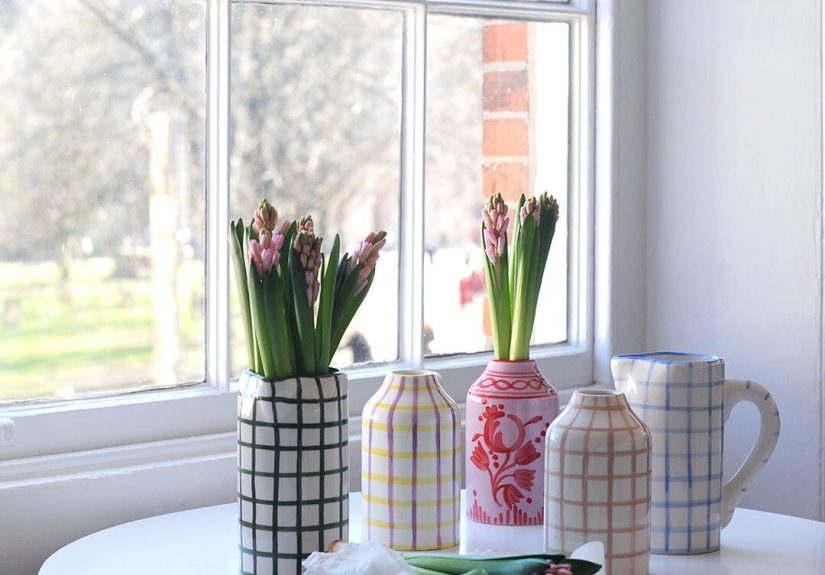
but the pieces don’t feel basic at all. Think bold gingham patterns, punchy florals, and shapes that feel slightly
storybooklike your pitcher is about to wink at you and suggest you add more olive oil.
The collection includes items such as plates, bowls, jugs, vases, oil dispensers, candle holders, and salt-and-pepper
setsdesigned to mix and match. That’s the point. Vaisselle isn’t about building a “perfect set” so much as creating
a table that looks collected over time, full of personality, and completely unafraid of color.
The Lockdown Origin Story (AKA: When Home Needed Extra Magic)
Vaisselle was born during lockdown as a solution to a very specific problem: when restaurants and favorite bistros were
off the table, the table at home had to level up. Zana began the project on Instagram, leaning into what she knew and loved:
fashion-level pattern play, flea-market nostalgia, and the idea that a meal can feel special even if it’s… let’s say,
“emotionally under-seasoned.”
The brand’s humor is part of its charm. Product names and a wink-and-nod attitude make the pieces feel approachable.
It’s not precious pottery you’re afraid to touch. It’s ceramics that show up to dinner in a great outfit and dares you
to do the same.
London-Born Design, Spanish Craftsmanship
Here’s where Vaisselle gets its backbone: the pieces are made in Spain using traditional techniques, then decorated with
hand-painted patterns. The production is associated with artisans in Andalusia (southern Spain), where ceramics
and decorative arts have deep roots. Vaisselle’s lookjoyful color and old-world referencesfits right into that heritage,
while still feeling modern.
The brand has described an intentionally smaller environmental footprint connected to traditional craft methods, including
the use of local clay and lead-free paints/natural pigments. Translation: these aren’t factory-rushed copies. They’re
small-batch pieces where you can feel the human handtiny quirks included, because perfection is overrated and also
kind of boring.
Design DNA: French Nostalgia Meets Spanish Antique Inspiration
Vaisselle’s patterns don’t read like random “cute prints.” They feel rootedlike the memory of a grandmother’s kitchen,
a stack of mismatched plates found at a flea market, or a vintage textile you can’t stop thinking about. Zana has spoken
about being inspired by French flea markets and her grandmother’s objects, and the brand is also described as drawing from
Spanish antique ceramicswith a colorful, French-inflected twist.
This blend is why the line works so well in real homes. The pieces can play nicely with minimal spaces (one statement plate
can do a lot), but they also thrive in a maximalist tablescape where patterns and colors layer like a great outfit:
gingham + floral + stripe, and somehow it still makes sense.
Signature Motifs You’ll See Again and Again
- Gingham in unexpected colorways (soft lilac, forest green, baby blue, and more).
- Florals with a vintage feel (some described as inspired by historical motifs).
- Bold borders and stripes that frame food like it’s posing for a magazine cover.
- Playful shapes (from genie-bottle-style vases to jugs that feel theatrical in the best way).
Why Vaisselle Feels Like a “Bright Spot” (Even Now)
Let’s be honest: the last few years taught us that the “little things” are not little. A cheerful plate can’t fix your inbox,
but it can absolutely change how you feel at 7:12 p.m. on a Tuesday when dinner is a leftover situation and your brain is
doing that spinning-buffer-wheel thing.
Color has a real psychological effectdesigners have been using it forever to create energy, calm, warmth, or optimism. Vaisselle
leans into optimistic color in a way that’s instantly legible. You don’t need to “get” design to get it. Your eyes understand
the assignment in one second: this is fun.
And because Vaisselle is tableware, it plugs directly into ritualscoffee, toast, salad, the weekend pancake moment. You’re not
buying a decorative object that sits silently on a shelf (though the vases do look great there). You’re buying something that
shows up in your day repeatedly, quietly improving it through repetition.
How to Style Vaisselle Without Turning Your Table Into a Circus (Unless You Want a Circus)
Vaisselle is built for mixing. Still, “mixing” can feel intimidating if you’ve ever overmixed patterns and ended up with a table
that looks like it lost a bet. Here are a few foolproof approaches.
1) The One-Hero Move
Keep your everyday plates neutral and bring in one Vaisselle piece: a gingham side plate for dessert, a floral serving bowl,
or a colorful jug as a centerpiece. This is the easiest way to add personality without rethinking your entire cabinet.
2) The Two-Print Rule
Pair two patterns and repeat a color so your eye has something to hold onto. Example: a blue gingham plate + a floral motif
that also includes blue. Then keep linens simple (solid napkins or a subtle stripe).
3) Maximalist, But With a Backbone
If you love a layered look, choose a “spine” color (say, green) and let it appear in at least three places:
plate edge, jug detail, and napkin. Then you can add additional colors freely because the spine keeps things cohesive.
4) Mix Old and New
Vaisselle looks especially good alongside vintage glassware, simple flatware, and natural textures (linen, wood, rattan).
The contrast makes the ceramics pop and keeps the overall look warm rather than overly styled.
Building a Collection: What to Buy First
If you’re starting from zero, you don’t need to commit to a full set. In fact, Vaisselle is at its best when it feels collected.
Here’s a smart (and budget-friendlier) order of operations.
- Start with one “anchor” piece: a serving bowl, a statement plate, or a jug.
- Add a repeatable daily-use item: a small plate or a bowl you’ll use constantly.
- Then go decorative-functional: a vase that doubles as a centerpiece, or a candle holder.
- Finish with the “tiny joy” items: salt-and-pepper shakers or an oil dispensersmall upgrades, big delight.
The biggest win is choosing pieces that match your real habits. If you never host, buy for breakfast. If you always host, buy for
serving. If you do both, congratulationsyou’re living the dream and we all want to come over.
Care Tips: Keep the Joy (and the Paint) Looking Fresh
Handmade and hand-painted ceramics are durable, but they’re also not stainless steel gym equipment. The safest care approach is:
follow the maker’s care notes for each item. If you’re not sure, gentle hand washing is the conservative choice,
especially for richly painted surfaces.
Practical habits that help
- Avoid abrasive scrubbers on painted areas.
- Don’t shock the piece with extreme temperature changes (hot oven-to-cold counter, etc.).
- Store carefully if you’re stacking (use a soft liner between pieces if you’re worried about scuffs).
- Use as intendedthese pieces are designed to live with you, not just pose for photos.
Vaisselle in Real Life: Specific Ways to Use It (Beyond “Put Food on Plate”)
Sure, a plate is a plate. But also: a plate is a stage. Here are a few very real ways people use colorful ceramics to make
everyday life feel more intentionalwithout turning into a lifestyle influencer who owns 400 candles.
Weeknight reset
Put the simplest dinner on the most joyful plate you own. It’s a tiny psychological trick: your brain reads “special” before it
reads “pasta.” This is especially effective for leftovers, which often need emotional support.
Hostess shortcut
Serve one elementbread, salad, desserton a standout Vaisselle piece. Guests will think you planned the entire table. You did not.
You planned one thing. Let ceramics do the rest.
Kitchen counter styling that isn’t fussy
Use a decorative bowl as a fruit bowl. Use a small plate as a landing pad for keys or jewelry. Use a jug for utensils or flowers.
These moves make your kitchen look lived-in, not staged.
FAQ: Quick Answers for Curious Buyers
Where is Vaisselle made?
Vaisselle is designed in London and made in Spain, with production tied to artisan ceramic work in southern Spain.
Is Vaisselle a full “matching set” brand?
Not really. The pieces are meant to be interchangeable and mixed, so you can build a collection over time without everything looking
identical. The goal is personality, not uniformity.
What’s the overall style?
Think joyful, pattern-forward, vintage-referencing, and slightly cheekyFrench nostalgia with Spanish ceramic inspiration, executed in bold color.
Conclusion: A Small Upgrade That Hits Daily
Vaisselle is proof that “practical” doesn’t have to mean “plain.” It’s tableware that treats everyday life like it mattersbecause it does.
Born during lockdown, built on craft, and powered by color, the line turns routine meals into mini moments. Not every day needs a grand gesture.
Sometimes it just needs a plate that makes you smile before you even take a bite.
Lockdown-to-Now: The Experience of Living With Joyful Ceramics
If you want to understand why a colorful ceramics line could feel like a lifeline during lockdown, remember how repetitive everything was.
Days blurred. Meals blurred. Even the exciting moments had the same background: your own walls. In that kind of sameness, small sensory details
start to matter more than you’d expect. A mug with a bold pattern becomes “the good mug.” A plate with a mint border becomes the plate you reach
for when you need a mood boostlike a wearable color, but for your kitchen.
The most relatable part of the Vaisselle story is that it began with a very human problem: eating at home got old. Not because food is bad
(okay, sometimes food is bad), but because the experience around it lost variety. That’s where playful tableware sneaks in as a surprisingly
powerful tool. You can’t teleport to your favorite bistro, but you can change the vibe of your table in ten seconds. Set down a striped plate,
drop a napkin beside it, and suddenly your sandwich feels less like “just lunch” and more like “a proper break.”
There’s also something grounding about handmade objects when so much of life feels digital. When you’re on screens all day, your hands start to
crave real texture: the slight curve of a rim, the weight of a jug, the tiny irregularities that remind you a person made this. Those little
“not machine-perfect” moments are comforting. They’re evidence of time and attentiontwo things many people felt starved for during lockdown.
Ceramics carry that evidence in a way that’s simple and direct.
And then there’s the social side. Even when you’re not hosting a big dinner, a colorful piece on the table can create the feeling that something
is happening. Maybe it’s a Saturday morning coffee served in your favorite patterned mug. Maybe it’s a Tuesday night salad that looks instantly
better in a bright bowl. Maybe you light a candle in a gingham holder and decide that your kitchen counter is allowed to be charming, actually.
These choices aren’t frivolousthey’re tiny acts of care, like making your bed or opening a window.
The best “experience” takeaway is this: joyful tableware doesn’t demand a new lifestyle. It meets you where you are. If your cooking is amazing,
it frames it beautifully. If your cooking is questionable, it adds confidence. Either way, it turns the table into a place you want to return to.
That’s the real bright spotdesign that quietly helps you feel more at home in your own life, one meal at a time.