Table of Contents >> Show >> Hide
- What “Durable” Really Means in Doormat Language
- Size, Placement, and Door Clearance (Because Your Door Has Opinions)
- The 10 Easy Pieces: Durable Doormats That Earn Their Keep
- 1) The Thick Coir Scraper (Best for Covered Porches)
- 2) Coir + Rubber Frame (Best “Doesn’t Budge” Upgrade)
- 3) All-Rubber Raised Pattern Mat (Best for Rainy, Muddy Weather)
- 4) Rubber Lattice / Open-Grid Mat (Best for Heavy Debris + Drainage)
- 5) The “Bi-Level Scraper + Trapper” Performance Mat (Best All-Around Workhorse)
- 6) Woven Vinyl “Shag” Mat (Best for Sleek Style + Surprisingly Tough Use)
- 7) Marine-Grade Rope Mat (Best for Coastal, Humid, or Rain-Heavy Areas)
- 8) Teak Slat Mat (Best for Minimalists Who Still Want Performance)
- 9) The Washable Two-Piece System (Best for “Real Life” Households)
- 10) The Indoor “Mud Trapper” Microfiber Mat (Best Inside the Door)
- How to Make Any Doormat Last Longer
- Common Doormat Mistakes (And How to Avoid Them)
- Final Takeaway: The “Right” Durable Doormat Is the One That Matches Your Mess
- Extra: Real-World Experiences That Make Doormat Choices “Click” (About )
A doormat is the bouncer at your front door: it decides what gets into the house and what gets politely turned away.
And when you pick the wrong one, it’s like hiring a bouncer who immediately calls in sick the first time it rains.
The “right” durable doormat doesn’t just look good for a weekit keeps scraping, trapping, and drying out through
muddy boots, sandy flip-flops, soggy dog paws, and that one friend who somehow always steps in the only puddle on the block.
This roundup is a “10 Easy Pieces”–style guide to doormats that can take a beating and still show up for work.
You’ll find options for covered porches, wide-open stoops, snowy climates, coastal sand, pets, and high-traffic homes
plus practical tips for choosing the right size and material so you’re not accidentally buying a mat that your front door
bullies every morning.
What “Durable” Really Means in Doormat Language
“Durable” isn’t a vibe. It’s a checklist. The best long-lasting doormats tend to nail four things:
- Material that matches the weather: Coir (coconut fiber) is a fantastic scraper but prefers cover; rubber and many synthetics handle full exposure better.
- A surface that actually scrapes: Look for raised patterns, bristles, rope loops, or textured ridges that pull grit off soles (not just “decorate” them).
- Grip and weight: A non-slip backing and enough heft to stay put reduce curling, sliding, and that awkward “mat scoot” guests do.
- Easy cleaning: The more convenient it is to shake, hose, vacuum, or wash, the more likely you’ll do itkeeping the mat effective longer.
One more reality: the “forever mat” is often a two-mat systema tough scraper outside, and an absorbent trapper inside.
That combo dramatically cuts the dirt and moisture that would otherwise migrate into your floors, rugs, and sanity.
Size, Placement, and Door Clearance (Because Your Door Has Opinions)
A durable outdoor doormat should be wide enough that people can’t “accidentally” miss it. As a practical baseline,
many homeowners start with a mat around 18″ x 30″ for a standard single door and go up to
24″ x 36″ (or larger) when there are sidelights or heavier traffic. Bigger entry? Bigger mat.
You want at least a couple of steps on itotherwise it’s more of a decorative stamp than a functional tool.
Also: check thickness. If your door swings outward over the mat, you need a lower-profile option
(or you’ll be “shaving” the mat every time you open the door). If it’s under a covered porch, you can go thicker and
more textured without risking constant door battles.
The 10 Easy Pieces: Durable Doormats That Earn Their Keep
Below are ten proven “types” of durable doormatseach with strengths, tradeoffs, and the best place to use them.
Think of these as the core categories that show up again and again in expert roundups and real-life homes.
1) The Thick Coir Scraper (Best for Covered Porches)
If you want classic curb appeal and serious scraping power, thick coir is hard to beat. Coir’s stiff coconut fibers
are naturally great at knocking off dry dirt and grit. It’s the doormat equivalent of a firm handshake.
- Best for: Covered entries, mild-to-moderate weather, lots of dry debris.
- Why it lasts: Dense fiber bundles resist flattening for a long time when protected from constant soaking.
- Watch-outs: Full exposure to heavy rain can shorten its lifespan; shedding is normal early on.
- Care tip: Shake it out and vacuum occasionally; don’t over-soak it unless the manufacturer says it’s okay.
2) Coir + Rubber Frame (Best “Doesn’t Budge” Upgrade)
Want coir’s scraping benefits with better stability? Look for a coir insert set into a rubber frame or backed by rubber.
This combo usually grips the ground better and gives you a sturdier perimeter that takes scuffs and weather like a champ.
- Best for: Busy front steps, families, and anyone tired of mats that drift like slow-motion icebergs.
- Why it lasts: Rubber adds structure and weight; coir does the scraping.
- Watch-outs: Still happiest in covered or semi-covered areas if you want maximum lifespan.
3) All-Rubber Raised Pattern Mat (Best for Rainy, Muddy Weather)
Rubber mats are the work boots of the doormat world. A textured rubber surface (ridges, knobs, geometric patterns)
scrapes soles and stands up to wet weather without getting soggy the way some natural fibers can.
- Best for: Fully exposed outdoor entries, wet climates, mud season, and high-traffic doors.
- Why it lasts: Rubber doesn’t “rot” the way natural fibers can, and it’s usually easy to hose off.
- Watch-outs: Some styles can feel utilitariangreat function, less “Pinterest cottage.”
- Care tip: Hose, scrub with mild soap if needed, and let it dry fully.
4) Rubber Lattice / Open-Grid Mat (Best for Heavy Debris + Drainage)
If your entry gets hit with leaves, gravel, or that delightful mix of dirt and mulch that clings to everything,
an open-grid rubber mat is a quiet genius. The holes let debris fall through, so the top stays more usable between cleanings.
- Best for: Outdoors, especially where drainage matters.
- Why it lasts: Thick rubber plus open structure equals fewer clogged fibers and less trapped moisture.
- Watch-outs: You’ll still need to lift it and shake out what collects underneath (nature always finds a way).
5) The “Bi-Level Scraper + Trapper” Performance Mat (Best All-Around Workhorse)
Performance mats with a raised surface and recessed channels (often paired with a rubber backing) are designed to
scrape shoes while trapping water and dirt below the walking surface. Many households love this style because it’s
equally good at sand, rain, and everyday grime.
- Best for: The main entry you use constantlyfront door, mudroom door, garage entry.
- Why it lasts: Designed for repeated abuse, often with fade- and stain-resistant fibers plus solid backing.
- Watch-outs: Some versions dry more slowly than thin rubber mats; choose the right size so it’s worth it.
- Care tip: Regular vacuuming helps; many can be rinsed or hosed off.
6) Woven Vinyl “Shag” Mat (Best for Sleek Style + Surprisingly Tough Use)
Modern woven mats made from durable synthetic yarns (often vinyl-based) look clean, contemporary, and don’t rely on
“bristles” to do the work. Instead, the dense weave captures grit and can handle moisture without turning into a sponge.
This is the doormat for people who want function and a design moment.
- Best for: Modern homes, covered or exposed entries (depending on the specific material and backing).
- Why it lasts: Strong woven structure resists crushing; easy cleaning prevents grime buildup.
- Watch-outs: Choose a version with good traction so it doesn’t slide on smooth porch surfaces.
7) Marine-Grade Rope Mat (Best for Coastal, Humid, or Rain-Heavy Areas)
Rope matsespecially those built for outdoor conditionsexcel where moisture is constant and you want something that drains fast.
They also do a nice job scraping sand off soles (and sand is basically glitter’s grittier cousin: it never leaves).
- Best for: Beach houses, lake houses, humid climates, and homes where wet footwear is a daily reality.
- Why it lasts: Fast drainage and sturdy rope construction reduce the “stays wet forever” problem.
- Watch-outs: Some rope styles are more “scrape” than “absorb,” so pair with an indoor mat for moisture.
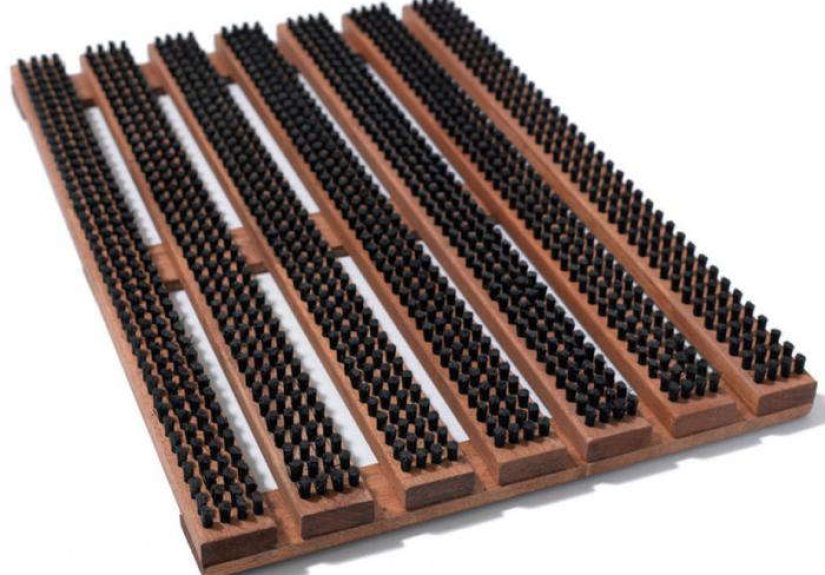
8) Teak Slat Mat (Best for Minimalists Who Still Want Performance)
A slatted wood mat (often teak) is an underrated pick for durabilityespecially in sandy or wet environments.
The raised slats keep shoes slightly elevated, letting debris and moisture fall between them instead of pooling on top.
It’s a doormat that politely refuses to become a swamp.
- Best for: Sand, rain, and modern/Scandi-style entries; also great near outdoor showers or back doors.
- Why it lasts: Teak is naturally resilient and weathers outdoors (it will change color over time).
- Watch-outs: Check thickness for door clearance; slatted mats can be taller than fiber mats.
9) The Washable Two-Piece System (Best for “Real Life” Households)
If you’re juggling pets, kids, or high traffic, “washable” becomes less of a preference and more of a survival strategy.
Two-piece systems often have a removable top layer you can launder, with a grippy base that stays put.
This style shines when you want the mat to look good again in a hurrywithout staging a full backyard hose ceremony.
- Best for: Apartment dwellers, pet owners, messy seasons, and anyone who loves convenience.
- Why it lasts: Being able to actually clean it thoroughly reduces permanent staining and grime buildup.
- Watch-outs: Some washable tops can fray over time; follow care instructions and avoid harsh cycles.
10) The Indoor “Mud Trapper” Microfiber Mat (Best Inside the Door)
This one isn’t always pretty in a “front porch magazine spread” waybut inside the door, it’s a hero.
Microfiber mats are designed to absorb water and hold onto fine dirt. If your household brings in wet shoes,
dog paws, or sports gear, placing one of these just inside the entry can drastically reduce puddles and grime trails.
- Best for: Mudrooms, garage entries, rainy climates, snowy winters, and pet-heavy homes.
- Why it lasts: Built for repeated washing and heavy moisture; great as the second line of defense.
- Watch-outs: Use a tougher scraper outside so it doesn’t get overwhelmed instantly.
How to Make Any Doormat Last Longer
Even the most durable doormat has a limit if it’s never cleaned. A simple routine keeps mats performing and reduces
the “why does my entryway always look dusty?” phenomenon:
- Weekly: Quick shake-out (or a fast vacuum pass). You’ll be shocked how much a mat can hold.
- Monthly: Deeper cleanhose rubber/synthetics, vacuum thicker fibers, and let everything dry completely.
- Seasonally: Rotate or swap mats if your climate swings hard (dry/dusty summers vs. wet winters).
Material-specific tips:
- Coir: Shake, vacuum, and spot clean gently. Coir is tough, but it’s not thrilled about being soaked for hours.
- Rubber: Hose and scrub with mild soap. Let it dry flat to avoid warping.
- Woven textiles/synthetics: Follow care instructions; many handle rinsing well, and some are fully washable.
- Wood slats: Rinse as needed and let dry; expect natural weathering (patina is normal, not a crisis).
Common Doormat Mistakes (And How to Avoid Them)
- Buying too small: If people can step around it, they will. Humans are chaos. Size up when in doubt.
- Ignoring exposure: A fully exposed stoop is not the place for a mat that hates rain.
- Forgetting traction: A non-slip doormat is safer and stays effective longer because it stays in position.
- Skipping the indoor backup: One mat can’t do everything. A second mat inside often makes the “durable” choice feel magical.
- Never cleaning it: A dirty mat stops trapping dirt and starts redistributing it. That’s not hospitality; that’s betrayal.
Final Takeaway: The “Right” Durable Doormat Is the One That Matches Your Mess
The best durable doormat isn’t the fanciest or the most expensiveit’s the one built for your specific conditions:
covered porch vs. exposed stoop, sand vs. snow, pets vs. pristine. If you want a high-confidence setup, use a
sturdy scraper outside (rubber, rope, performance scraper/trapper) and a moisture-absorbing mat inside.
Your floors will stay cleaner, your entry will look better, and your vacuum might finally get a weekend off.
Extra: Real-World Experiences That Make Doormat Choices “Click” (About )
Most people don’t realize how personal a doormat decision is until they’ve lived with the wrong one for a month.
The “wrong” mat is the one that looks adorable on day one and then spends the next 29 days either shedding,
curling, sliding, or turning into a damp sponge that smells like defeat. The “right” mat, on the other hand,
quietly fixes problems you didn’t even know were optional.
In rainy climates, the biggest lesson is that scraping and absorbing are two different jobs.
A thick coir mat might scrape off grit beautifully, but if it stays soaked, it can age fasterand the entry can feel perpetually damp.
Households that feel “instantly cleaner” often switch to a rubber or performance scraper/trapper mat outside, then add
a microfiber “mud trapper” inside. The outside mat keeps sludge from crossing the threshold; the inside mat catches the
moisture that sneaks in anyway. It’s less about perfection and more about containment.
Pet owners learn quickly that paws don’t wipe themselves. A durable outdoor doormat helps, but the big win is
an indoor washable mat placed exactly where the dog barrels in like it’s an Olympic event. People with multiple pets
often prefer mats they can rinse or wash without drama, because hair + mud + water creates a kind of “felt” that clings
to fibers over time. In these homes, easy cleaning isn’t a luxuryit’s what keeps the mat from becoming a permanent art installation.
Families with kids (and the mysterious crumbs that appear from nowhere) often prioritize traction and size.
A mat that slides is a safety hazard, but it also fails at its main job because it shifts away from the doorway.
Bigger mats help because kids don’t land neatly on a target like they’re playing a video game tutorial. A wide mat catches
the chaos: sneakers, soccer cleats, roller skates, and whatever that sticky thing is that nobody admits touching.
Apartment dwellers tend to become doormat minimalists with very strong opinions. Without a hose, “washable” and
“shakeable” matter more than ever. Low-profile mats that don’t snag the door are also crucialbecause no one wants to
wrestle the entry door while holding groceries and pretending they’re fine. Washable systems or lighter rubber mats that
can be scrubbed in a tub often become favorites simply because they fit real life.
Coastal homes learn the sand lesson: sand isn’t dirt; it’s a lifestyle. Rope mats and slatted wood mats do well
because they let sand fall away instead of trapping it in a dense pile on top. But the true secret is regular shake-outs
and a second indoor matbecause sand loves to hitchhike past even the best scraper.
The bottom line from real homes is simple: a doormat is only “durable” if it’s easy to live with. Match the material to
the weather, size it so people can’t miss it, and pick a cleaning routine you’ll actually follow. That’s when a mat stops
being decor and starts being a genuine home upgrade.