Table of Contents >> Show >> Hide
- What Is Butternut Squash Kugel?
- Why This Pareve Kugel Recipe Works
- Ingredients for Butternut Squash Kugel
- How to Make Butternut Squash Kugel
- Recipe Tips for the Best Butternut Squash Kugel
- Flavor Variations
- What to Serve With Butternut Squash Kugel
- How to Store and Reheat It
- Can You Make It Ahead?
- Frequently Asked Questions
- Final Thoughts
- Experiences, Stories, and Practical Lessons From Making Butternut Squash Kugel
- SEO Tags
If casseroles had a charming Jewish cousin who always showed up to dinner looking polished and smelling amazing, it would be kugel. And if that kugel happened to be dressed in fall colors, lightly sweet, deeply savory, and proudly dairy-free, you’d be looking at this Butternut Squash Kugel (Pareve) Recipe. It is cozy without being heavy, simple without being boring, and elegant enough for a holiday table without behaving like it needs its own dressing room.
This version leans into everything people love about butternut squash: its natural sweetness, velvety texture, and talent for becoming golden and caramelized in the oven. Instead of burying the squash under cream or cheese, we keep things pareve with eggs, oil, onion, and potato starch. The result is a kugel that slices neatly, tastes rich, and plays nicely with a meat meal. In other words, it has excellent manners.
What Is Butternut Squash Kugel?
Kugel is a baked dish traditionally built from a starch, eggs, and fat. Some kugels are sweet, some are savory, and almost every family swears theirs is the correct one. That is part of the charm. A butternut squash kugel swaps in roasted and mashed squash for a soft, silky interior while still keeping that classic baked, sliceable texture people expect from a good kugel.
Because this recipe is pareve, it contains no dairy or meat ingredients. That makes it especially useful for Shabbat dinners, holiday meals, and any menu where you want a side dish that can sit beside roast chicken, brisket, turkey, or a hearty vegetarian spread without causing culinary drama.
Why This Pareve Kugel Recipe Works
The magic here is balance. Roasting the squash gives it deeper flavor and helps cook off excess moisture. Sautéed onions add savory backbone so the dish does not taste like dessert in a casserole dish. Eggs provide structure, while potato starch helps the kugel hold together without becoming dense or gummy. A little cinnamon and nutmeg wake up the squash, but not so much that the dish starts impersonating pie filling.
The texture lands in that sweet spot every kugel hopes for: tender in the center, lightly set around the edges, and just golden enough on top to make you “accidentally” take the corner piece first.
Ingredients for Butternut Squash Kugel
Main Ingredients
- 1 large butternut squash, about 3 pounds, peeled, seeded, and cubed
- 1 medium yellow onion, finely diced
- 3 large eggs
- 1/3 cup neutral oil or extra-virgin olive oil, plus more for the pan
- 1/2 cup potato starch
- 2 tablespoons brown sugar or maple syrup
- 1 1/4 teaspoons kosher salt
- 1/2 teaspoon black pepper
- 1 teaspoon ground cinnamon
- 1/4 teaspoon ground nutmeg
- 1 tablespoon fresh thyme leaves or 1 teaspoon dried thyme (optional)
Optional Topping
- 1 tablespoon pumpkin seeds
- 1 teaspoon olive oil
- A small pinch of cinnamon
How to Make Butternut Squash Kugel
1) Roast the squash
Preheat your oven to 400°F. Spread the cubed squash on a lightly oiled sheet pan. Roast for 25 to 30 minutes, turning once, until the squash is tender and lightly browned around the edges. This step matters. Roasted squash tastes fuller, sweeter, and far less watery than squash that was merely introduced to hot water and told to do its best.
2) Cook the onion
While the squash roasts, warm 1 tablespoon of oil in a skillet over medium heat. Add the diced onion and cook for 8 to 10 minutes until soft and lightly golden. Do not rush this. Properly cooked onions bring savory depth and keep the kugel from tasting one-note.
3) Mash and mix
Transfer the roasted squash to a large bowl and mash it until mostly smooth. A few small lumps are fine; this is kugel, not a baby-food audition. Stir in the cooked onion, remaining oil, eggs, potato starch, brown sugar or maple syrup, salt, pepper, cinnamon, nutmeg, and thyme if using. Mix until fully combined.
4) Bake the kugel
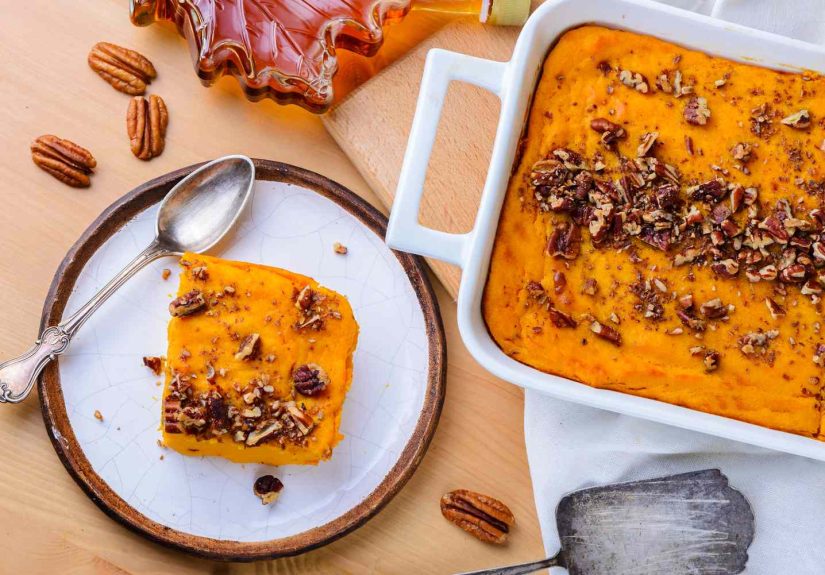
Lightly oil an 8-by-11-inch or 9-by-9-inch baking dish. Pour in the mixture and smooth the top. If using the topping, toss the pumpkin seeds with the olive oil and cinnamon, then sprinkle over the surface. Bake at 375°F for 40 to 50 minutes, until the center is set and the top is lightly golden.
5) Let it rest before slicing
Cool the kugel for at least 15 minutes before cutting. This is not the moment for impatience. Resting helps the structure settle so you get clean slices instead of delicious but chaotic orange rubble.
Recipe Tips for the Best Butternut Squash Kugel
Roast instead of boil when possible
Boiling is not forbidden, of course, but roasting gives the squash better flavor and keeps the mixture from becoming soggy. If you must boil or steam it, drain it extremely well and let excess moisture evaporate before mixing.
Do not skip the eggs
Eggs are the structural backbone here. They help the kugel bake up firm enough to slice while keeping the inside tender.
Use potato starch for clean slices
Potato starch helps bind the squash mixture and keeps the texture smooth. It also makes this recipe naturally gluten-free, assuming your other packaged ingredients fit your needs.
Season like you mean it
Butternut squash loves salt, onion, black pepper, and warm spices. Underseasoned squash kugel can taste flat, which is a tragedy easily avoided with one confident pinch at a time.
Leave room for contrast
A tiny touch of sweetness brings out the squash’s flavor, but too much can make the dish feel more like dessert. Aim for a savory-sweet balance, not a sugar rush in a baking dish.
Flavor Variations
More savory
Skip the brown sugar and increase the thyme. Add a pinch of garlic powder or a little extra black pepper for a more dinner-side-dish personality.
More holiday-style
Add a few tablespoons of chopped dried cranberries or finely diced apple. That gives the kugel a festive fall feel without pushing it into pie territory.
Passover-friendly direction
If you prepare kosher-for-Passover meals, potato starch is a particularly practical binder. Just make sure every packaged ingredient you use matches your kitchen’s standards.
What to Serve With Butternut Squash Kugel
This pareve kugel is versatile enough to work across several menus. Serve it with brisket, roasted chicken, turkey, or glazed salmon for a holiday-style spread. It also works beautifully beside green beans, roasted carrots, or a sharp salad with lemon dressing. If you are building a fall table, this is one of those dishes that quietly ties everything together while pretending not to enjoy the attention.
It is also excellent at room temperature, which makes it a smart make-ahead side for busy hosts and crowded ovens. On a holiday, that is not a small gift. That is kitchen diplomacy.
How to Store and Reheat It
Once cooled, cover the kugel and refrigerate leftovers for up to 3 to 4 days. Reheat in a 325°F oven until warmed through, or microwave individual slices if life is moving fast and dinner is already late.
If you have extra raw squash after prep, keep the cut pieces in an airtight container in the refrigerator and use them within several days. You can also freeze cubed squash for future cooking. This recipe is friendly to planners, leftovers, and the occasional “I bought a gigantic squash and now I must live with my choices” moment.
Can You Make It Ahead?
Yes, and you probably should if you are cooking for guests. Bake the kugel a day ahead, cool it completely, then refrigerate it covered. Reheat before serving, or bring it to room temperature if that suits the rest of your menu. The flavors settle in nicely overnight, and the texture often slices even better the next day.
Frequently Asked Questions
Is butternut squash kugel sweet or savory?
It can be either, but this version is best described as savory-sweet. The squash naturally brings sweetness, while onion, salt, pepper, and thyme keep things balanced.
What makes a kugel pareve?
A pareve kugel contains no dairy or meat ingredients. Instead of butter, cream, or cheese, this recipe uses oil and eggs to create richness and structure.
Can I use frozen butternut squash?
Yes. Roast it straight from frozen or thaw and drain it well first. The key is managing moisture so the kugel sets properly.
Can I make this without onion?
You can, but the flavor will be flatter. If onion is not an option, try a little garlic powder and thyme to build back some savory depth.
Why is my kugel watery?
Usually because the squash held too much moisture. Roasting instead of boiling helps, and any cooked vegetables should be drained well before they go into the batter.
Final Thoughts
A good Butternut Squash Kugel (Pareve) Recipe should feel like comfort food with standards. It should be easy enough for a weeknight, worthy enough for a holiday, and flavorful enough that nobody asks where the dairy went. This one checks all the boxes.
It is warm, golden, gently sweet, and deeply practical. It suits meat meals, works for make-ahead cooking, and turns one humble squash into something that looks far more impressive than the effort it requires. Frankly, that is the kind of kitchen math we love.
Experiences, Stories, and Practical Lessons From Making Butternut Squash Kugel
There is something oddly satisfying about bringing a butternut squash kugel to the table and watching people try to decide what it is before they taste it. At first glance, it looks like it might be a casserole, a savory pudding, or a respectable holiday side dish that owns at least one linen napkin. Then someone takes a bite, pauses, and realizes it tastes familiar and surprising at the same time. That is usually the moment the serving spoon starts moving faster.
One of the most common experiences people have with this dish is discovering that texture matters more than they expected. The first homemade kugel can come out a little too soft if the squash was boiled and not drained enough. The second attempt is usually the turning point. Roast the squash instead, cook the onions until mellow, and suddenly the whole thing becomes richer, more concentrated, and easier to slice. It is one of those kitchen lessons that feels small until it changes everything.
Another very real experience: someone who “doesn’t like squash” ends up going back for seconds. Butternut squash has a talent for winning over skeptics when it is paired with onion, eggs, salt, and a little spice. In soup, it can sometimes feel too soft or too sweet for certain eaters. In kugel, though, it has structure and contrast. The top browns, the edges firm up, and the onion keeps the sweetness in check. Suddenly the vegetable that once seemed like a side character becomes the main reason the dish works.
This recipe also earns its keep during holidays, when oven space becomes a competitive sport. A pareve kugel is useful because it can be made ahead, served warm or room temperature, and placed beside a meat main dish without issue. That flexibility is not just convenient; it saves your sanity. When the kitchen is crowded and every burner is occupied, a dish that waits patiently without losing its charm is the culinary equivalent of a good friend who brings ice and does not ask where the forks are.
Families also tend to adapt the recipe over time. Some like it more savory, with extra onion and thyme. Others add a little more cinnamon or a spoonful of maple syrup for a softer, holiday-style sweetness. Some blend it smooth for a custardy texture, while others leave small chunks of squash for a more rustic feel. That is the beauty of kugel culture: once you understand the structure, the recipe becomes less of a rulebook and more of a family conversation.
There is also a practical joy in the leftovers. A cold or reheated slice the next day can be tucked next to salad, roast chicken, or even eaten straight from the fridge in a moment of honest hunger. No judgment here. In fact, many people end up liking the texture even better the next day because the kugel has had time to settle and slice cleanly. Some dishes peak at the table. This one often gets an encore.
And finally, there is the simple experience of making a dish that feels rooted in tradition while still leaving room for your own style. Butternut squash kugel does not ask you to choose between comfort and elegance, or between practicality and flavor. It gives you all of them in one baking dish. That is a rare trick, and a very welcome one.