Table of Contents >> Show >> Hide
- Why astronomers are paying attention to Xuntian
- How China’s telescope compares with Hubble
- How it compares with James Webb
- The technical case for excitement
- Why the Tiangong connection matters
- What could limit its impact
- What success would actually look like
- So, could it really rival Hubble and James Webb?
- What it may feel like to live through the Xuntian era
- Conclusion
Every few years, astronomy gets a fresh excuse to act like a kid in a candy store. A new telescope appears on the horizon, scientists start speaking in equal parts equations and awe, and the rest of us suddenly remember that the universe is very big, very weird, and apparently full of things we still do not understand. China’s upcoming space observatory, known as the Chinese Space Station Telescope or Xuntian, is shaping up to be one of those moments.
And yes, the headline comparison to Hubble and James Webb is dramatic. But this time, the hype has actual hardware behind it. Xuntian is not just another “someday, maybe” concept sketch floating through the internet like cosmic clickbait. It is a serious flagship telescope designed to survey huge areas of the sky with high resolution, and it could become one of the most important astronomy tools of the next decade.
That does not mean China is building a copy of Hubble. It also does not mean James Webb should start polishing its résumé. What it does mean is more interesting: Xuntian could rival these famous observatories in impact, scientific value, and data production, even though it plays a somewhat different game.
Why astronomers are paying attention to Xuntian
Xuntian, which is often translated as “surveying the heavens,” is expected to fly in low Earth orbit near China’s Tiangong space station. The telescope is designed with a primary mirror about 2 meters wide. That makes it slightly smaller than Hubble’s 2.4-meter mirror, but still squarely in the class of major space observatories. In astronomy, that is not a toy. That is a very serious pair of cosmic binoculars.
Where Xuntian gets especially exciting is its field of view. The telescope is designed to capture images with Hubble-like sharpness across a much broader patch of sky at once. Think of Hubble as a master portrait photographer who can zoom in beautifully on a distant galaxy. Xuntian is more like a photographer standing on a mountain with a giant panoramic camera, still sharp enough to catch details but able to cover far more cosmic real estate in one shot.
That wide-field capability matters because modern astronomy is not just about pretty close-ups of nebulae that look like the universe discovered watercolor. It is also about massive sky surveys, statistical power, and collecting the kind of data that lets scientists map dark matter, track galaxy evolution, and study how the large-scale structure of the universe changed over time.
In simple terms, Xuntian could help astronomers answer one of the biggest scientific questions around: why does the universe look the way it does, and why is it expanding the way it is?
How China’s telescope compares with Hubble
Hubble still owns the legend status
Let’s be fair to Hubble. The veteran telescope has been orbiting since 1990 and is still one of the most productive scientific instruments ever built. It transformed astronomy by observing in ultraviolet, visible, and some near-infrared wavelengths, all from above Earth’s blurry atmosphere. Hubble gave us iconic views of star nurseries, black hole environments, distant galaxies, and those famous deep field images that basically told humanity, “You thought space looked empty? That is adorable.”
Hubble also benefited from something rare and brilliant: astronaut servicing missions. Instead of fading into retirement after a few technical problems, it received upgrades and repairs in orbit, extending its life and improving its science.
Xuntian may beat Hubble at survey work
This is where the rivalry gets real. Xuntian’s biggest advantage is not mirror size. It is efficiency. Reports and technical descriptions indicate that the telescope is being built to scan vast areas of the sky with a field of view hundreds of times larger than Hubble’s. That makes it especially strong for sky mapping, weak gravitational lensing studies, galaxy surveys, and large cosmology programs.
So while Hubble is phenomenal at targeted observations, Xuntian could become a data-hungry workhorse for wide-field astronomy. If Hubble is the meticulous detective with a magnifying glass, Xuntian is the detective with drones, satellite feeds, and a citywide map pinned to the wall.
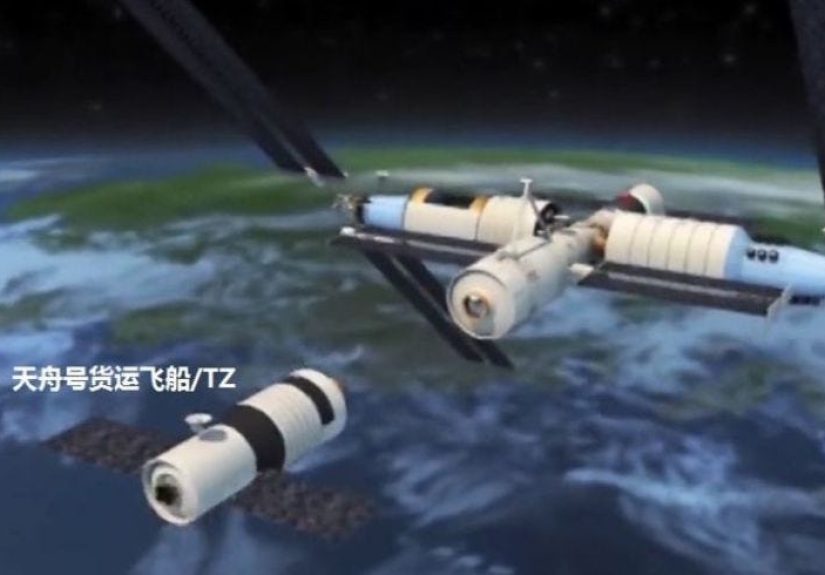
Another intriguing twist is serviceability. Like Hubble, Xuntian is expected to be capable of maintenance and upgrades. Because it will co-orbit with Tiangong and periodically dock with the station, Chinese astronauts may be able to repair, maintain, or improve it over time. That gives it a long-term advantage many modern observatories do not have.
How it compares with James Webb
James Webb is built for a different mission
Comparing Xuntian to the James Webb Space Telescope is a little like comparing a luxury off-road vehicle to a Formula 1 car. Both are astonishing machines. Both cost a fortune. Both can make people emotional. But they are built for different terrain.
Webb has a 6.5-meter segmented mirror, far larger than either Hubble or Xuntian, and it was designed primarily for infrared astronomy. That lets it look deeper into cosmic history, studying very distant galaxies, dusty stellar nurseries, and exoplanet atmospheres. Webb is stationed far away near the Sun-Earth L2 point, where it can stay extremely cold and operate with exquisite infrared sensitivity.
Xuntian, by contrast, is a low Earth orbit telescope focused on wide-field optical and near-ultraviolet to near-infrared observations. It is not expected to out-Webb Webb in deep infrared sensitivity, and anyone claiming otherwise is overselling it like a late-night infomercial for cosmic cookware.
Rivalry does not have to mean duplication
That said, Xuntian could still rival Webb in overall scientific importance. Webb is a precision tool for deep, faint, infrared exploration. Xuntian could become a survey powerhouse that finds the targets, patterns, anomalies, and large-scale structures that future missions study in more detail.
In fact, this is how modern astronomy increasingly works. One telescope maps the sky. Another zooms in. One finds rare objects. Another dissects them. One collects broad statistical evidence. Another produces the glamorous close-up that ends up on posters, phone wallpapers, and the occasional motivational office calendar.
If Xuntian performs as expected, it will not replace Webb. It will complement it. And that may be even more valuable.
The technical case for excitement
On paper, Xuntian is loaded with serious scientific promise. Recent technical summaries describe a 2-meter-class observatory with a very large field of view, high image quality, and multiple instruments for imaging and spectroscopy. The planned wavelength coverage reaches from near-ultraviolet into near-infrared, making it especially useful for studies of galaxies, stars, transients, and cosmic structure.
Its survey strategy is one of the most compelling parts of the mission. Researchers expect the telescope to conduct wide-field imaging and spectroscopy over enormous sky areas across a roughly 10-year mission. That kind of repeated, large-scale observation can help scientists tackle dark energy, dark matter, weak gravitational lensing, baryon acoustic oscillations, supernova cosmology, and galaxy clustering.
That sentence may sound like a blender filled with astrophysics jargon, so here is the plain-English version: Xuntian is being built to help answer what the universe is made of, how it evolved, and why so much of it seems to be controlled by things we cannot directly see.
It also brings an enormous imaging system to the table. Reports describing the telescope mention a 2.5-billion-pixel camera, which helps explain why astronomers are talking about it as a sky survey giant. Big mirror plus big detector plus broad field of view equals a whole lot of scientific leverage.
Why the Tiangong connection matters
One of the mission’s cleverest features is its relationship with China’s Tiangong space station. Xuntian is expected to fly independently, not permanently attached to the station, but in a similar orbit that allows periodic docking. That means the telescope can operate with some freedom while still preserving the possibility of astronaut access.
This is a fascinating design choice because astronomy history has already shown the value of serviceable telescopes. Hubble’s repeated repairs and upgrades turned it from a flawed but promising mission into a scientific legend. China appears to have taken that lesson seriously.
If Xuntian can be upgraded in orbit, its long-term scientific value could grow dramatically. Instruments age. Detectors improve. Missions evolve. A telescope that can receive maintenance is like owning a house you can renovate instead of a hotel room you can only admire until checkout.
What could limit its impact
Of course, no telescope launches into a perfect universe. First, schedules slip. Space projects have a long tradition of announcing optimistic dates and then politely moving them to the right on the calendar. Current reporting places Xuntian’s launch around late 2026 or early 2027, after earlier timelines shifted.
Second, international access remains a question mark. Some reporting suggests there is still limited clarity on how broadly international researchers will be able to use the telescope’s data and when. In modern astronomy, data sharing can be almost as important as the telescope itself. A brilliant observatory with restricted access may produce excellent science, but its global impact will depend on how open the system becomes.
Third, low Earth orbit is becoming crowded. Satellite megaconstellations are an increasing concern for astronomers, and some recent analysis suggests telescopes like Xuntian may face interference from satellite trails. Ironically, the same orbit that makes servicing easier may also create more observational headaches.
What success would actually look like
Success for Xuntian should not be judged by whether it beats Hubble at being Hubble or whether it dethrones James Webb at being James Webb. That is the wrong scoreboard. The better question is whether it becomes one of the defining astronomical survey missions of its era.
If it launches on schedule, achieves its planned image quality, and produces high-quality survey data at scale, Xuntian could absolutely reshape research in cosmology and galaxy evolution. It could identify huge samples of galaxies, gravitational lenses, transient events, and structural patterns that help refine our understanding of dark energy and dark matter. It could also become a major platform for studying the Milky Way, star formation, and even certain exoplanet-related questions.
And perhaps most importantly, it would signal that the next chapter of space astronomy is not being written by one country or one telescope. It is being written by a growing network of observatories with different strengths, different operating modes, and different scientific personalities.
So, could it really rival Hubble and James Webb?
Yes, but with a giant asterisk shaped like a telescope mirror.
China’s Xuntian could rival Hubble in visible-light survey relevance and serviceable design philosophy. It could rival Webb in scientific importance and influence, especially if its sky maps lead to discoveries that drive astronomy for years. But it is not a direct clone of either mission, and that is exactly why astronomers are interested.
Hubble showed us the universe with clarity. Webb is showing us the universe with depth. Xuntian may show it to us at scale.
And in astronomy, scale changes everything.
What it may feel like to live through the Xuntian era
There is also a human side to all of this that gets lost when telescope stories are reduced to mirror diameter, launch vehicles, and acronym soup. New observatories change the rhythm of science, but they also change the emotional experience of following science. Anyone who lived through the Hubble era remembers the strange cultural magic of it. Hubble images did not just end up in journals. They ended up in classrooms, museums, T-shirts, desktop wallpapers, and the collective imagination. They made space feel less abstract and more personal.
Webb has done something similar, but with a slightly different flavor. Webb images often feel like peeking behind the cosmic curtain. The colors are dramatic, the dust structures are surreal, and the science somehow manages to be both mind-bending and oddly intimate. A telescope built to study the early universe has become one of the internet’s most effective beauty influencers, which is not a sentence anyone expected to write twenty years ago.
If Xuntian succeeds, it could create a new kind of public experience: less about one iconic image at a time and more about a flood of discovery. Its strength is in surveying, mapping, and finding patterns across huge parts of the sky. That means the excitement may come in waves. One month, it might help identify unusual gravitational lenses. Another month, it may improve dark matter maps. Then it could turn up strange transients, rare galaxies, or large samples that let astronomers test old theories with new confidence.
For researchers, that kind of mission can be thrilling in a very practical way. Instead of waiting years for tiny data sets, astronomers suddenly have catalogs large enough to ask better questions. Whole subfields can speed up. Debates that once relied on hints and small samples can shift into a more evidence-rich phase. In plain English, a good survey telescope gives scientists more chances to be wrong quickly and right more convincingly. That is a healthy scientific ecosystem.
For students and ordinary space fans, the experience may be more subtle but just as meaningful. A telescope like Xuntian reminds us that the future of astronomy is not one heroic instrument floating alone in darkness. It is an ecosystem. Some observatories take exquisite close-ups. Others build giant maps. Some hunt exoplanets. Others measure cosmic expansion. Together, they make the universe less mysterious in detail, even as it stays gloriously mysterious overall.
There is something deeply satisfying about that. We are watching a period in which humanity is putting multiple extraordinary eyes in space, each with its own specialty. Hubble still works. Webb is rewriting textbooks. Roman is on the way. Xuntian could soon join that conversation. For anyone who loves astronomy, this is not a dull transition period. It is a feast.
And maybe that is the best way to think about China’s telescope. Not as a replacement. Not as a geopolitical trophy. Not as a dramatic movie sequel called Telescope Wars: Mirror of Destiny. But as another powerful instrument that could widen humanity’s view of the cosmos. That is a pretty good experience to live through, even from a tiny blue planet where most of us still struggle to take a clear photo of the moon on our phones.
Conclusion
China’s Xuntian telescope deserves serious attention because it appears built for a role modern astronomy desperately needs: wide, sharp, high-volume sky surveying from space. It may not outmuscle James Webb in infrared depth, and it does not need to. Its real power lies in coverage, cosmology, and the possibility of long-term servicing through Tiangong. If the mission delivers on its design goals, it could become one of the defining observatories of the late 2020s and 2030s.
That is why the comparison to Hubble and Webb is not just headline sparkle. It is a sign that astronomy is entering a more crowded, more capable, and more exciting era. Hubble taught us to look up. Webb taught us to look deeper. Xuntian may teach us to look wider.