Table of Contents >> Show >> Hide
- What Does “Double Curve” Mean in Kibbe?
- Double Curve vs. Being Conventionally Curvy
- How to Identify Double Curve on Yourself
- Signs You May Have Double Curve
- Signs You Probably Do Not Have Double Curve
- Common Mistakes People Make
- How to Dress for Double Curve
- Practical Outfit Examples
- Why Double Curve Is So Hard to Identify Online
- Common Experiences People Have When Exploring Double Curve
- Final Takeaway
Note: This article is for style education and self-assessment, not a rigid body-rating system.
If you have spent more than seven minutes on style TikTok, Reddit, or fashion YouTube, you have probably seen the phrase double curve tossed around like everybody was handed the same secret decoder ring. One creator says it is obvious. Another says it is rare. A third says, “If you have boobs and hips, congratulations.” Helpful? Not exactly.
In the Kibbe world, double curve is not just about being “curvy” in the everyday sense. It is a specific visual idea tied to silhouette, proportion, and how fabric interacts with your natural lines. That is why this topic confuses so many people: two women can both look curvy in jeans, yet only one may read as having a classic double-curve line in Kibbe terms.
This guide breaks down what the Double Curve Kibbe feature actually means, how to identify it without spiraling into body-checking purgatory, what it is not, and how to dress for it if it sounds like you. Think of this as the practical, no-drama version of the conversation.
What Does “Double Curve” Mean in Kibbe?
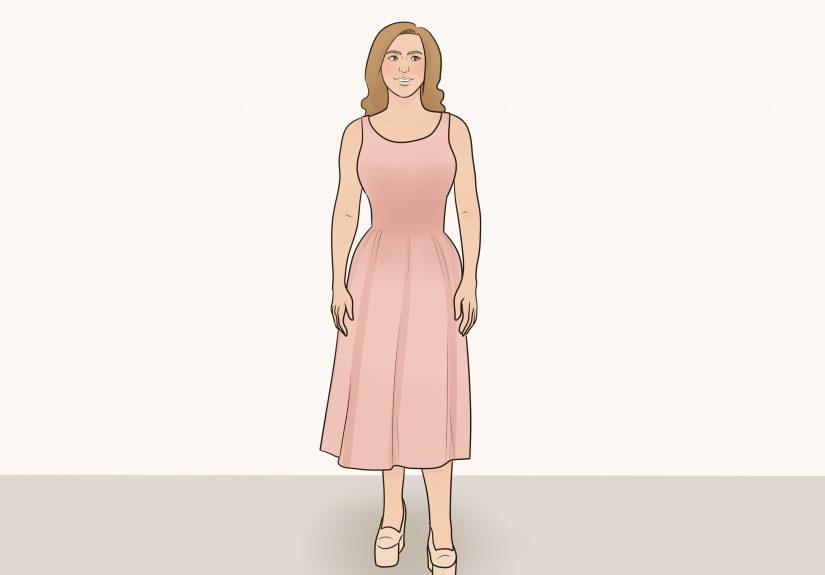
At its core, double curve refers to a silhouette where the body reads as rounded in both the upper and lower portions, with the curve coming through the flesh rather than being interrupted by a stronger angular frame. In plain English, your outline looks soft and continuous from top to bottom instead of straight, broad, or elongated.
That is why double curve is usually discussed as a line issue, not a numbers issue. It is not about a bust-waist-hip ratio, not about weight, and not about whether you personally feel “hourglass enough” on a random Tuesday. It is also not the same thing as having a tiny waist by measurement. Kibbe is meant to be holistic, which is a fancy way of saying your overall silhouette matters more than a single body part.
A useful mental image is this: if your outline has a soft rounded presence above the waist and another rounded presence below the waist, with no major interruption from width, length, or sharpness, you may be looking at a double-curve effect. If your outline reads straighter, broader, longer, or more frame-first, you are probably looking at something else.
Double Curve vs. Being Conventionally Curvy
This is where many people take a wrong turn and drive straight into confusion canyon.
Conventional curvy
In everyday fashion language, “curvy” often means a defined waist plus fuller bust, hips, thighs, or some combination of the above. That is a broad, normal, useful descriptor. It helps you buy jeans. It does not automatically tell you your Kibbe lines.
Kibbe double curve
In Kibbe terms, the question is more specific: what does your silhouette do? Do your curves visually dominate your outline, or does something else take over first? For example, some people are conventionally curvy but still read as broad in the shoulders, elongated through the torso, or sharp through the frame. In those cases, the body may need accommodation for width or vertical rather than a classic double curve.
That is why a person can be very obviously curvy in a bodycon dress and still not have double curve in Kibbe language. Style systems love making simple things sound mystical, but the point is actually practical: what line should your clothing respect first?
How to Identify Double Curve on Yourself
Here is the part everyone wants: the actual self-check. No crystal ball required.
1. Start with your outline, not your measurements
Put on simple, close-fitting clothes: leggings and a tank, a fitted knit dress, or soft activewear without extra structure. Stand in front of a mirror or take a straight-on photo. Forget the tape measure. Forget the app. Forget the internet stranger who typed you from one blurry selfie. Look at your whole outline.
2. Check for upper curve
Upper curve is not just “I have a bust.” It is whether the bust creates a rounded effect in your outline that needs room and softness in clothing. If stiff tops make your upper body look cramped, flattened, or strangely bossy, that can be a clue. If softer necklines, gathers, draping, and gentle shaping make you look instantly more harmonious, that is another clue.
3. Check for lower curve
Now look at the lower half. Do your hips create a rounded line that continues the softness of the upper body? Or does the lower body read straighter, more vertical, or more frame-led? A person with double curve usually has a rounded lower silhouette that looks better in clothes that skim rather than fight the hips.
4. Ask whether the frame interrupts the line
This question matters more than most people realize. If your shoulders are broad and visually dominant, that may indicate width. If your body reads notably long or elongated before anything else, that may indicate vertical. If either one steals the spotlight, the classic double-curve effect often becomes less likely.
5. Notice whether waist emphasis looks natural or forced
Waist emphasis is not always mandatory in life, but it is often revealing in a fitting room. If a belt, wrap shape, gentle cinch, or softly fitted waist instantly makes your body make sense, you may be looking at curve accommodation. If that same styling trick looks fussy, costume-y, or like the outfit is trying too hard, the answer may be somewhere else.
Signs You May Have Double Curve
- Your silhouette reads soft and rounded both above and below the waist.
- Soft, draped, body-skimming fabrics look better than stiff or boxy cuts.
- Waist emphasis tends to look natural, elegant, and easy.
- Clothes with rounded shaping often look more harmonious than straight, severe pieces.
- Overly broad shoulder emphasis or long straight columns can overwhelm you.
- You do not just have curves; your curves seem to drive the entire outfit line.
Signs You Probably Do Not Have Double Curve
- Your shoulders or upper back visually dominate before your curves do.
- Your body reads long and elongated first, even when you are wearing fitted clothes.
- Sharp tailoring, clean vertical lines, or straighter silhouettes look more natural than softness.
- You have hip curve only, without that same rounded effect in the upper silhouette.
- You look best in structure, openness, or length rather than in compact softness.
Common Mistakes People Make
Mistake #1: Treating double curve like a body-shape quiz result
It is not a BuzzFeed result. Kibbe itself is not meant to be solved by one formula, and double curve is definitely not a neat little math problem.
Mistake #2: Confusing “hourglass” with “double curve”
Hourglass is a mainstream body-shape concept. Double curve is a silhouette accommodation concept. They overlap sometimes, but they are not interchangeable twins wearing the same trench coat.
Mistake #3: Focusing only on weight gain patterns
Double curve is not code for “soft everywhere.” Weight can change. Line does not vanish just because your jeans had a rough winter.
Mistake #4: Letting one body part make the entire decision
Having a full bust does not guarantee upper curve in the Kibbe sense. Having fuller hips does not guarantee lower curve dominance. The whole picture matters.
Mistake #5: Ignoring fit feedback from actual clothes
Your closet tells the truth faster than comment sections do. If certain lines consistently flatter you, pay attention. Your dresses are less dramatic than the internet, but they are often more accurate.
How to Dress for Double Curve
If double curve sounds familiar, the styling goal is not to “fix” your shape. It is to echo it. When clothing respects your natural line, you look polished without looking trapped inside a geometry project.
Best shapes and fabrics
- Wrap dresses and tops: naturally follow the bust and waist.
- Soft draping: creates movement without swallowing your frame.
- Waist emphasis: belts, tie waists, shaping seams, and gentle cinches.
- Bias-cut or body-skimming skirts: follow the hip line instead of fighting it.
- Rounded details: softer necklines, gathers, ruching, and curved seams.
- Light to medium fabrics: enough flow to move with your body, enough shape to avoid collapse.
What often works against double curve
- Boxy blazers with no waist definition
- Harsh, straight column dresses
- Very stiff fabrics that flatten the bust and hips
- Oversized cuts that erase the waist and make the body look hidden instead of harmonious
- Extreme shoulder padding that shifts attention away from the curve-led silhouette
This does not mean you are banned from modern fashion, oversized jackets, or cool-girl denim. It just means that if you wear those pieces, you may need to balance them with a fitted knit top, a defined waist, a softer hem, or a more fluid fabric so the outfit still nods to your line.
Practical Outfit Examples
The easy day outfit
A fitted scoop-neck knit top, high-rise jeans with a contoured waist, and a softly draped cardigan. The top respects upper curve, the rise highlights the waist, and the cardigan adds softness instead of bulk.
The office outfit
A blouse with light drape tucked into a midi skirt that skims the hips, plus a blazer that curves slightly at the waist. This keeps the look professional without turning you into a rectangular filing cabinet.
The event outfit
A wrap dress, a bias-cut midi, or a sheath with shaping through the waist and hips. If it looks elegant on the hanger and mildly dangerous in a cardboard box, you are probably on the right track.
The outerwear trick
Choose coats that have either a tie waist, princess seams, or a softly shaped cut. A giant straight coat can be chic, but if you constantly feel like a duvet with ankles, a more shaped silhouette may be your friend.
Why Double Curve Is So Hard to Identify Online
Because the internet loves a shortcut, and Kibbe really does not. Photos flatten the body. Angles distort width and length. Trendy content often zooms in on one trait while skipping the larger silhouette. Add in celebrity comparisons, hot takes, and the human tendency to stare at our own flaws under bad bathroom lighting, and you get confusion with a ring light.
Another issue is that many people approach the subject competitively, as if double curve is some glamorous VIP pass. It is not. In Kibbe, every line has its own harmony. The point is not to “win” a type. The point is to stop fighting the body line you already have.
Common Experiences People Have When Exploring Double Curve
One of the most common experiences people describe is a long history of wearing the “correct” clothes on paper and still feeling slightly off in real life. They try oversized button-downs because those are supposedly timeless. They buy boxy blazers because minimalism is chic. They test straight column dresses because everyone says they are modern. And yet the mirror keeps giving them the same review: “Nice try, but no.” When they finally switch to softer shaping, a defined waist, and fabrics that move with the body, the difference can feel almost suspiciously immediate. Suddenly the outfit makes sense. Suddenly the person looks polished instead of dressed by committee.
Another frequent experience is confusion caused by mainstream body-shape advice. A woman may know she is conventionally hourglass, so she assumes Kibbe double curve must be automatic. Then she discovers that broad shoulders, visible elongation, or strong frame can change the visual story. On the flip side, someone who never thought of herself as dramatically curvy may realize that her clothes behave as though her silhouette is curve-led. She may not have movie-star bombshell proportions, yet wrap dresses, ruching, waist emphasis, and soft knits consistently flatter her in a way that straight tailoring does not. That surprise is common, and honestly, a little rude at first.
Many people also report a strange relief once they stop trying to copy celebrity outfits that fight their natural lines. Instead of forcing themselves into severe blazers, long unbroken silhouettes, or aggressively oversized trends, they begin choosing pieces that echo softness. The result is not “dress more feminine or else.” It is more like learning the volume setting your body prefers. The clothes stop shouting over you. A shaped coat, a curved neckline, a gently draped top, or a skirt that skims instead of hangs stiffly can feel like the wardrobe version of finally adjusting your chair to the right height.
There is also a very real emotional side to this process. Style systems can become obsessive if you let them. Plenty of people start out hoping for clarity and end up body-checking every shoulder, ribcage, and kneecap like they are being graded by a panel of judgmental swans. The healthier experience happens when double curve is treated as a practical styling observation, not a verdict on beauty. People usually feel better once they stop asking, “Do I qualify?” and start asking, “Which lines make me look most like myself?” That shift matters. It turns the whole exercise from self-critique into self-recognition.
Finally, a lot of people say their biggest breakthrough comes not from typing photos but from trying on the right clothes. A body-skimming dress with waist definition, a knit top that honors the bust instead of flattening it, a pair of high-rise jeans that follow the hips without gaping at the waist, or a softly shaped jacket can reveal more in ten minutes than ten hours of online debate. In real life, the body usually tells the truth. If an outfit works every single time, that is not luck. That is line harmony waving at you from the fitting room mirror.
Final Takeaway
The Double Curve Kibbe feature is best understood as a soft, rounded silhouette that appears in both the upper and lower body and is not visually overruled by strong width, length, or sharp angularity. It is not a measurement, not a status symbol, and definitely not a reason to examine yourself like a suspicious houseplant.
If you are trying to identify it, focus on your overall outline, the way clothing hangs on you, and whether softness plus waist emphasis creates harmony more naturally than straight or boxy lines. When in doubt, let your best outfits vote. They usually know exactly what they are doing.