Table of Contents >> Show >> Hide
- What Makes Homemade Applesauce So Good?
- Ingredients and Tools
- Choosing the Best Apples for Applesauce
- Easy Homemade Applesauce Recipe (Stovetop)
- Three Easy Methods: Stovetop, Slow Cooker, and Instant Pot
- Flavor Variations That Don’t Taste Like Candle Aisle
- How to Store, Freeze, and (Safely) Can Applesauce
- Troubleshooting: Fix Common Applesauce Problems
- Serving Ideas (Beyond Eating It Straight From the Bowl)
- FAQ: Quick Answers
- Kitchen Stories and Practical Experiences (The “Real Life” Version)
Store-bought applesauce is fine. It’s the “white T-shirt” of snacks: dependable, always available, and somehow never the one you’re excited about.
Homemade applesauce, though? That’s the cozy hoodie versionwarm, fragrant, and customized exactly the way you like it. Chunky or silky. Sweet or
tangy. Cinnamon-forward or “don’t you dare add spices to my apples” plain.
The best part: applesauce is one of those magical kitchen wins where “from scratch” doesn’t mean “all day.” With a handful of apples and a pot,
you can make a batch that tastes brighter, fresher, and more apple-y than most jarsand you’ll control the sugar, texture, and flavor.
What Makes Homemade Applesauce So Good?
Applesauce is basically apples that have decided to relax. Heat breaks down the fruit’s structure, releasing natural sweetness and pectin (a natural
thickener) that gives applesauce its body. When you make it at home, you can:
- Dial in the texture: rustic and chunky, smooth and spoonable, or anywhere in between.
- Control sweetness: use naturally sweet apples, add a little sugar, or skip sweetener entirely.
- Boost flavor: lemon brightens, cinnamon warms, and a pinch of salt makes apples taste more like apples.
- Avoid extras: no mystery “natural flavors” neededyour kitchen already smells amazing.
Ingredients and Tools
Core ingredients
- Apples: about 3 pounds (roughly 8–10 medium apples) makes ~4 to 5 cups of applesauce.
- Liquid: 1/4 to 1/2 cup water (or apple cider/juice) to start.
- Acid (optional but recommended): 1–2 tablespoons lemon juice for brightness and to slow browning.
- Salt: a pinch. Quietly powerful. Like the bassline of a song you didn’t know you needed.
Optional add-ins
- Sweetener: sugar, brown sugar, maple syrup, or honey (add only if needed).
- Spices: cinnamon, nutmeg, allspice, clove (go easyclove can take over fast).
- Zest or peel: lemon or orange peel for a subtle, fancy aroma.
Helpful tools
- Large pot with lid (or slow cooker / pressure cooker)
- Knife + cutting board + peeler (optional)
- Potato masher (chunky), immersion blender (smooth), or blender/food processor (extra smooth)
- Fine-mesh sieve or food mill (for ultra-silky applesauce)
Choosing the Best Apples for Applesauce
You can make applesauce with almost any apple, but your final flavor and texture depend heavily on variety. Softer apples break down faster
into a naturally creamy sauce, while firmer apples may need a little more time (and might keep more texture).
Great applesauce apples
- McIntosh, Cortland, Paula Red: softer, break down easilyclassic applesauce vibe.
- Gala, Fuji, Golden Delicious: naturally sweet and smooth.
- Granny Smith, Jonathan: tart apples that add zip when mixed with sweeter ones.
Best strategy: mix sweet + tart
Mixing varieties is the easiest way to get “wow” flavor with zero extra work. Try these combos:
- Balanced: Gala + Granny Smith
- Classic fall: McIntosh + Golden Delicious
- Bright & tangy: Fuji + Jonathan
- Deep apple flavor: Cortland + Honeycrisp
Easy Homemade Applesauce Recipe (Stovetop)
This is the everyday, no-drama method: apples + a splash of liquid + gentle simmer. The apples do the rest.
Ingredients (makes about 4–5 cups)
- 3 pounds apples, peeled or unpeeled (your call), cored and chopped
- 1/4 to 1/2 cup water (start smaller; add more if needed)
- 1–2 tablespoons lemon juice (optional)
- Pinch of salt
- Optional: 1–3 tablespoons sugar or brown sugar (to taste)
- Optional: 1/2 to 1 teaspoon cinnamon (to taste)
Step-by-step instructions
-
Prep the apples. Wash, core, and chop. Peeling is optional:
- Unpeeled: more fiber, slightly rosier color, rustic vibe (blend or use a food mill if you want it smooth).
- Peeled: classic smooth applesauce, especially if you’re mashing by hand.
-
Cook. Add apples to a large pot with water, lemon juice, and salt. Cover and bring to a gentle simmer over medium heat.
Reduce to low and simmer 15–25 minutes, stirring occasionally, until apples are very tender. -
Choose your texture.
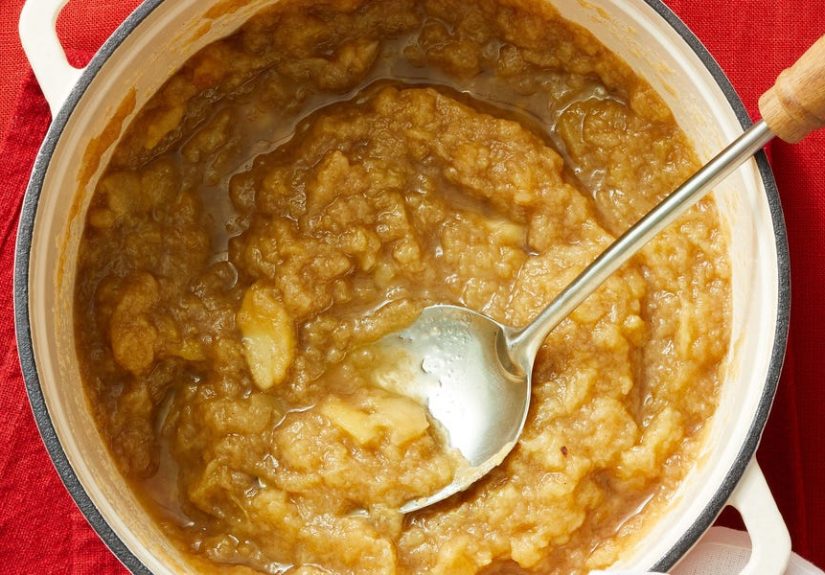
- Chunky: mash with a potato masher.
- Mostly smooth: use an immersion blender for a few quick pulses.
- Silky smooth: blend fully, or run through a food mill/sieve.
-
Taste and adjust. Add cinnamon, sweetener, or an extra squeeze of lemon if you want more brightness.
If it’s too thick, stir in a splash of water or apple cider. - Cool and enjoy. Applesauce thickens slightly as it cools. Serve warm, room temp, or chilled.
Three Easy Methods: Stovetop, Slow Cooker, and Instant Pot
1) Stovetop (fast and flexible)
Best for: quick batches, easy texture control, and “I want applesauce today” energy.
Time: ~25–35 minutes including prep.
2) Slow cooker (hands-off)
Best for: big batches, cozy fall weekends, and doing literally anything else while your apples become sauce.
Add apples, a small splash of water or cider, lemon juice, and salt. Cook on HIGH about 4 hours (or LOW longer),
stirring once or twice if you remember. Mash or purée at the end.
3) Instant Pot / pressure cooker (fast, minimal babysitting)
Best for: speed + less stirring. Add apples with a small amount of water (or apple cider), lemon juice, and salt.
Cook on HIGH pressure for about 5–8 minutes, then quick-release or carefully release pressure per your appliance instructions.
Mash or blend.
Flavor Variations That Don’t Taste Like Candle Aisle
Spices are greatuntil the applesauce tastes like you’re eating a potpourri display. Aim for “apple-forward” first, then add subtle accents.
Easy flavor ideas
- Classic cinnamon: 1/2 teaspoon cinnamon per 3 pounds apples (then adjust).
- Apple pie vibe: cinnamon + pinch of nutmeg + tiny pinch of clove.
- Bright citrus: lemon juice + a strip of orange peel while simmering (remove peel before blending).
- Maple warmth: 1–2 tablespoons maple syrup + cinnamon.
- Grown-up tang: a teaspoon or two of apple cider vinegar to perk up the flavor.
- Berry swirl: cook a handful of raspberries or cranberries with the apples for color and tartness.
How to Store, Freeze, and (Safely) Can Applesauce
Refrigerator
Cool applesauce, then store in an airtight container. It typically keeps well for about a week. If it smells “off” or looks fizzy, toss it.
(Your nose is a better editor than any food blog.)
Freezer
Applesauce freezes beautifully. Portion into freezer-safe containers or bags, leaving a little headspace for expansion.
Freeze for a couple of months for best quality. Thaw in the fridge overnight and stirtexture may loosen slightly, but flavor stays great.
Canning (food safety matters)
If you want shelf-stable applesauce, use a tested, reputable canning method and follow it exactlyespecially for processing time,
jar size, and altitude adjustments. Applesauce is commonly canned using a boiling-water canner, and pressure canning is also an option depending on the
tested recipe. For safety, stick with guidance from trusted university extension services or USDA-linked resources.
Troubleshooting: Fix Common Applesauce Problems
“My applesauce is watery.”
- Simmer uncovered for a few minutes to evaporate excess liquid.
- Next time, start with less water; apples release plenty of juice as they cook.
- Use a food mill or blend less if you want a thicker, rustic texture.
“It’s bland.”
- Add a pinch more salt (seriously), then re-taste.
- Add lemon juice to brighten.
- Mix apple varieties next timeone-note applesauce is usually a single-variety issue.
“Too tart!”
- Stir in a small amount of sugar, maple syrup, or honey.
- Balance with sweeter apples next batch (Fuji or Gala help).
“Too sweet!”
- Add lemon juice or a tiny splash of apple cider vinegar for balance.
- Mix in a tart apple variety next time.
“It turned brown.”
Some browning is normalapples oxidize. Lemon juice helps, and so does minimizing how long cut apples sit out.
But don’t panic: slightly darker applesauce can still taste fantastic.
Serving Ideas (Beyond Eating It Straight From the Bowl)
- Swirl into yogurt or oatmeal with granola.
- Serve alongside pork chops, roast chicken, or latkes.
- Use as a simple dessert with whipped cream and toasted nuts.
- Bake with it: applesauce can add moisture in some cakes and muffins (great for tender texture).
- Freeze into popsicles for an easy snack.
FAQ: Quick Answers
Do I have to peel the apples?
Nope. If you want smooth applesauce without peeling, use an immersion blender, blender, or food mill. Peels add color and fiber, and they’re great
if you like a more “whole fruit” feel.
Can I make applesauce with no sugar?
Absolutely. Choose naturally sweet apples (Fuji, Gala, Golden Delicious) and taste after cooking. Many batches don’t need any added sugar at all.
How do I make applesauce extra smooth?
Cook the apples until very soft, then blend thoroughly or pass through a food mill. If it still feels grainy, you may be using a variety that
purées less smoothlymixing apple types often helps.
Kitchen Stories and Practical Experiences (The “Real Life” Version)
Homemade applesauce looks ridiculously simple on paper, but the lived-in version is where all the best tricks show up. A lot of home cooks start
with the same cheerful plan: “I’ll make applesauce!” Then they hit the first plot twist: apples are not one flavor. Some are bright and tangy,
some are honey-sweet, and some are… politely described as “mild.” That’s why the “mix your apples” advice gets repeated so oftenit’s less about
being fancy and more about building flavor insurance. When you combine a sweet apple (like Fuji or Gala) with something tart (like Granny Smith),
you get a sauce that tastes complete without needing much sugar.
The second common experience: water. People tend to add too much at the beginning because they’re worried about sticking. But apples release juice
quickly, especially once they warm up and start collapsing. Starting with a smaller splash of liquid and adding more later is the calmest approach.
If you do end up with watery applesauce, it’s not a failureit’s just a “simmer uncovered for a few minutes” situation. Many cooks learn this the
same way they learn to salt pasta water: by doing it once, noticing the difference, and never forgetting again.
Texture is where applesauce becomes personal. In some kitchens, “chunky” means a few tender apple pieces that give the sauce character. In others,
anything less than velvety smooth is considered suspicious. A potato masher creates a rustic sauce fast, and it’s surprisingly satisfyinglike
culinary stress relief. For smoother applesauce, an immersion blender is the sweet spot: it lets you stop the moment you hit the texture you like.
Full blender purée is great too, but it can sometimes make the sauce look a bit more uniform and glossy (not badjust a different vibe).
Then there’s the spice debate. Plenty of people love cinnamon, but there’s a fine line between “warm and cozy” and “I accidentally made this
taste like a seasonal candle.” The practical lesson many cooks discover is to add spices at the end, especially if you’re using ground spices.
Cooking spices for a long time can mute some notes and overemphasize others. Adding them after you purée keeps flavor clearer and easier to control.
A pinch of salt and a squeeze of lemon are the quiet MVPs herethey make the apple flavor pop without announcing themselves.
Another real-life moment: leftovers. Homemade applesauce tends to disappear faster than expected, because it’s easy to grab, easy to eat, and
mysteriously “counts as fruit,” which feels like a moral victory. People often find that storing it in small containers helpsone for breakfasts,
one for snacking, one for bakingso you don’t end up with one giant tub that gets opened repeatedly. Freezing in portions is also a common
discovery: it’s much easier to thaw what you need than to wrestle a frozen applesauce mega-block that refuses to cooperate.
Finally, there’s the oddly satisfying pride factor. Homemade applesauce is one of those foods that makes people say, “Wait, you made this?”
even though the process is mostly: chop apples, simmer, mash. But that’s the magicsimple steps, big payoff. Once someone nails their preferred
apple blend and texture, applesauce often becomes a seasonal ritual: a way to use up apples, fill the kitchen with a cozy smell, and stock the
fridge with something that feels both nostalgic and genuinely delicious.