Table of Contents >> Show >> Hide
- Why Homemade Eggnog Is Worth It
- Food Safety First (Without Killing the Vibe)
- The Best Homemade Eggnog Recipe (Cooked Custard Method)
- Choosing Alcohol (Flavor Matters More Than Proof)
- Non-Alcoholic Eggnog That Still Tastes Like Eggnog
- Variations That Don’t Feel Like Compromises
- Troubleshooting: Common Eggnog Problems (And Fixes)
- Make-Ahead, Storage, and Serving Tips
- FAQ: Questions People Ask Every Year (Like It’s Their First Winter)
- of Real-World Eggnog “Experience” (What It’s Like in an Actual Kitchen)
- Conclusion
Eggnog is basically holiday cheer in a glass: creamy, lightly sweet, warmly spiced, and just boozy enough to make you laugh at your uncle’s “classic” joke for the seventh year in a row. And while store-bought cartons can be perfectly fine, homemade eggnog is in a different leaguefresh dairy flavor, real nutmeg perfume, and a texture that’s either silky like melted ice cream or airy like a dessert cloud (you’re the boss).
This guide gives you a safe, cooked-custard homemade eggnog recipe that tastes classic and feels indulgent, plus smart variations (spiked, non-alcoholic, extra-frothy, and dairy-flexible). You’ll also get the why behind each stepso you can make it confidently, not nervously whispering, “Please don’t curdle,” at the pot.
Why Homemade Eggnog Is Worth It
The best eggnog doesn’t just taste sweetit tastes round. Homemade lets you control the three things that make eggnog memorable:
- Texture: Custard-smooth, lightly foamy, or full-on whipped and fluffy.
- Spice balance: Nutmeg should smell like the holidays, not like a scented candle accident.
- Strength: No alcohol, gentle warmth, or “this party has a playlist” boozy.
And here’s the secret: eggnog is not complicated. It’s mostly dairy, eggs, sugar, and time. The method you choose (cooked vs. uncooked) sets the tone, but either way, eggnog rewards you for chilling it and letting flavors mingle.
Food Safety First (Without Killing the Vibe)
Traditional eggnog is sometimes made with raw eggs. That can be risky, especially for kids, older adults, pregnant people, and anyone immunocompromised. Alcohol may slow bacterial growth, but it’s not a guarantee, and you shouldn’t rely on it as a “magic safety wand.” The safest approach for homemade eggnog is to either:
- Cook the egg base to 160°F (a custard method), or
- Use pasteurized egg products (or in-shell pasteurized eggs) for a no-cook version.
This recipe uses the cooked custard method because it’s reliable, foolproof, and still tastes luxuriously classic. You’ll heat the mixture gently and stop at the safe temperatureno scrambling, no stress.
The Best Homemade Eggnog Recipe (Cooked Custard Method)
This is a rich, classic eggnog with real vanilla and freshly grated nutmeg. It’s thick enough to feel special, not so heavy that it needs a fork.
Yield
About 8 cups (roughly 8–10 servings)
Ingredients
- 6 large egg yolks
- 2/3 cup granulated sugar (about 135 g), plus 1–2 tbsp to taste
- 1/4 tsp fine salt
- 3 cups whole milk
- 2 cups heavy cream
- 1 tbsp pure vanilla extract
- 1/2 tsp freshly grated nutmeg, plus more for serving
- Optional spices: 1 small cinnamon stick or a pinch of ground cinnamon; tiny pinch of clove
- Optional alcohol: 3/4 to 1 1/4 cups total (rum, bourbon, brandy/cognac, or a blend)
Equipment
- Medium saucepan
- Whisk
- Instant-read thermometer (highly recommended)
- Fine-mesh strainer
- Large bowl or pitcher
Step-by-Step Instructions
- Whisk yolks, sugar, and salt until smooth.
In a large bowl, whisk the egg yolks with sugar and salt until the mixture looks slightly pale and thickened. Don’t rush thisdissolving sugar now prevents gritty eggnog later. - Warm the dairy gently (don’t boil).
In a saucepan, combine milk and cream. Add the cinnamon stick if using. Heat over medium-low until steaming and warm to the touch. You’re aiming for “hot latte,” not “volcano.” - Temper the eggs (your anti-scramble move).
While whisking constantly, slowly drizzle about 1 cup of the warm dairy into the yolk mixture. This gradually raises the yolk temperature so they thicken smoothly instead of turning into breakfast. - Cook to a safe, silky custard.
Pour the tempered yolk mixture back into the saucepan. Cook over low heat, stirring constantly with a whisk or heatproof spatula, until the custard reaches 160°F. The mixture should lightly coat the back of a spoon. Do not boil. If you see steam and tiny bubbles at the edges, lower the heat. - Strain for extra-smooth eggnog.
Immediately pour the custard through a fine-mesh strainer into a clean bowl or pitcher. This catches any tiny egg bits and spices so your final drink is silky. - Cool, then add vanilla and alcohol (if using).
Stir in vanilla and nutmeg. If you’re adding alcohol, let the mixture cool 10–15 minutes first so you don’t evaporate the good stuff or shock the dairy. - Chill to let flavors marry.
Cover and refrigerate at least 4 hours, preferably overnight. Eggnog improves with restthicker texture, smoother sweetness, more integrated spice. - Serve like you mean it.
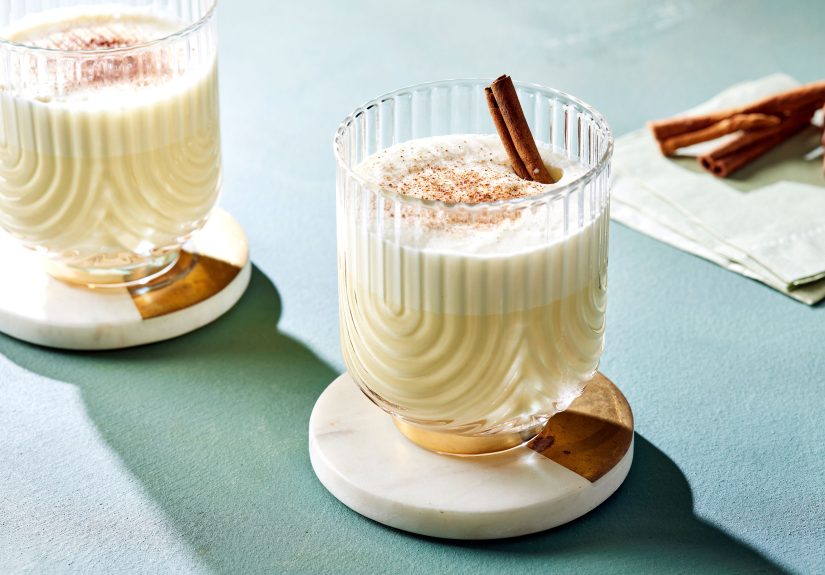
Shake or whisk before serving. Pour into small glasses, grate fresh nutmeg on top, and add a cinnamon stick if you’re feeling fancy (or if your guests love Instagram more than they love you).
Optional: Make It Extra Frothy (Without Raw Egg Whites)
If you want that classic airy top without using raw whites, whip 1 cup cold heavy cream to soft peaks, then fold it into the chilled eggnog right before serving. The result is fluffy, dessert-like eggnog that still keeps the cooked base safety.
Choosing Alcohol (Flavor Matters More Than Proof)
“Spiked eggnog” can mean anything from a gentle holiday warmth to an honest-to-goodness seasonal potion. A simple, crowd-pleasing blend is:
- Dark rum for caramel notes
- Bourbon for vanilla and oak
- Brandy or cognac for fruit and floral depth
Start with 3/4 cup total alcohol, chill, taste, then increase in small additions. Eggnog gets stronger as it sits, not because the alcohol multiplies (sadly), but because the flavor integrates and becomes more noticeable.
Non-Alcoholic Eggnog That Still Tastes Like Eggnog
If you skip alcohol, you’ll want a touch more flavor lift. Try adding:
- Extra vanilla (an additional 1–2 teaspoons)
- A tiny pinch of cinnamon (or a short cinnamon stick warmed in the dairy)
- Orange zest (one small strip steeped briefly, then removed)
Serve it very cold with fresh nutmeg on top. Nutmeg is non-negotiable; it’s basically the eggnog’s signature cologne.
Variations That Don’t Feel Like Compromises
1) “Light” Eggnog (Still Creamy, Less Heavy)
Replace 1 cup of heavy cream with 1 cup of whole milk. You’ll keep richness but lose some heaviness. Great for people who want eggnog with cookies, not eggnog as cookies.
2) Extra-Spiced Eggnog (Warm, Not Potpourri)
Add a cinnamon stick to the dairy while warming and remove it before cooking the custard. Optional: a tiny pinch of clove. If your eggnog starts tasting like you dropped it in a craft store aisle, you went too far.
3) Coffee-Kissed Eggnog
Replace 1/2 cup of milk with strong cold-brew concentrate or very strong cooled coffee. It turns eggnog into something like a holiday latteespecially good with bourbon.
4) Coconut “Coquito-ish” Direction (Dairy-Optional)
For a coconut-forward twist, replace up to 1 cup of dairy with full-fat coconut milk and add a little extra vanilla. You’ll get a tropical holiday vibe without losing the creamy structure.
Troubleshooting: Common Eggnog Problems (And Fixes)
“My eggnog curdled!”
It usually means the heat was too high or the mixture boiled. Immediately pull it off the heat, strain, and blend briefly with an immersion blender. It won’t be perfect, but it can still be delicious. Next time, use lower heat and stir constantlycustard is needy like that.
“It’s too thick.”
Whisk in a splash of cold milk until it loosens up. Eggnog thickens in the fridge as fat firms and proteins set.
“It tastes flat.”
Add a pinch of salt, more vanilla, and fresh nutmeg. Also: chill longer. Eggnog tastes better after a rest.
“There’s foam/separation on top.”
Totally normal. Shake or whisk before serving. If it separates a lot, the dairy ratio may be too lean or it wasn’t mixed well after chilling.
Make-Ahead, Storage, and Serving Tips
- Make-ahead sweet spot: 12–24 hours in the fridge for peak flavor and texture.
- Storage: Keep it tightly covered and cold. Stir or shake before serving.
- Party move: Keep a chilled pitcher in the fridge and refill glasses as needed. Fresh nutmeg on top makes every pour feel “new.”
- Leftovers: Use in French toast batter, pancake batter, bread pudding, or even as a coffee creamer.
FAQ: Questions People Ask Every Year (Like It’s Their First Winter)
Can I make eggnog without a thermometer?
You can, but it’s easier to overshoot and scramble. If you’re making eggnog more than once, a thermometer pays for itself in avoided heartbreak.
Is uncooked eggnog ever safe?
“Safe” depends on ingredients and risk tolerance. For a no-cook method, use pasteurized eggs/egg productsor choose the cooked custard base in this recipe. If you’re serving kids or anyone vulnerable, cooked is the simplest safe route.
Can I age eggnog?
Some people age boozy eggnog for weeks or months for a more integrated flavor. If you go that route, alcohol level and cold storage matter a lot, and results varysome tasters prefer fresh versions anyway. If you’re curious, consider making a small “science batch” and comparing.
Why does fresh nutmeg matter so much?
Pre-ground nutmeg goes dull quickly. Freshly grated nutmeg smells brighter and sweeter, and it’s the signature aroma that makes homemade eggnog feel like the holidays instead of “sweet dairy beverage.”
of Real-World Eggnog “Experience” (What It’s Like in an Actual Kitchen)
If you’ve never made homemade eggnog before, the emotional arc is surprisingly dramatic for a drink. It starts with confidence: eggs, milk, creamhow hard can it be? Then you whisk yolks and sugar and notice the mixture turning glossy and pale, like you just unlocked a secret dessert level. At that moment, you feel like the kind of person who owns matching glassware and casually says things like “I’ll just grate a little nutmeg to finish.” (You may or may not be wearing pajama pants while thinking this. Both are valid.)
The first “aha” is tempering. When you drizzle warm dairy into yolks while whisking, it feels like you’re defusing a tiny culinary bomb. Nothing explodes; instead, it becomes velvety and calm. That’s the moment eggnog stops being mysterious and turns into a technique you can repeat forever. The second “aha” happens on the stove: custard thickens slowly, then suddenly. One minute it’s thin, the next it coats a spoon and you realize you should have been paying closer attention. (This is why eggnog demands your full presence. It’s festive, but it’s not casual.)
Then comes the scent. Warm milk, vanilla, and nutmeg smells like a holiday movie montage: soft lights, someone laughing off-camera, snow you don’t actually have to shovel. Fresh nutmeg is the star here. Grate it right over the bowl and you’ll notice how the aroma blooms instantlysweet, woody, almost buttery. It’s the kind of smell that makes people wander into the kitchen “just to see what you’re doing,” which is adult code for “I heard there might be something delicious.”
The chilling step is where patience gets rewarded. Freshly cooked eggnog is good, but chilled eggnog tastes finished. The sweetness feels more balanced, the spice less sharp, and the texture thicker and smoother. If you add alcohol, the drink also becomes more cohesive after a restless like “milk plus liquor” and more like “holiday potion.” This is why making eggnog the day before a gathering feels like a flex: you’re not scrambling last minute, and the flavor is genuinely better.
Finally, serving eggnog is a small ritual. You whisk the pitcher, pour into glasses, and grate nutmeg on top like you’re signing your name. Someone will ask, “Is it strong?” and you’ll smile in a way that suggests both kindness and plausible deniability. And when there’s leftover eggnog the next morning, that’s when you learn the real secret: eggnog isn’t just a drinkit’s an ingredient. It turns French toast into a holiday breakfast, makes coffee taste like dessert, and upgrades plain pancakes into something guests will talk about. Homemade eggnog is festive, yesbut the best part is that it quietly makes everything around it taste like a celebration.
Conclusion
A great homemade eggnog recipe is equal parts technique and comfort: gentle heat, steady whisking, a little patience, and the confidence to season with real vanilla and fresh nutmeg. Use the cooked custard method for a safe, silky base, customize the alcohol (or skip it), and let the mixture chill long enough to taste like the holidays actually showed up on time. When you pour that first glass, you’ll understand why eggnog has survived centuries of winter gatheringsbecause it makes ordinary moments feel like an event.