Table of Contents >> Show >> Hide
- Why ERRF 18 Mattered Right Away
- The Spirit of RepRap Was Alive and Kicking
- Not Just DIY: A Launchpad for New Ideas and New Products
- More Than Machines: Creativity Was Everywhere
- The 3D Printed Derby Was a Brilliant Touch
- Why the First Year Success Was So Important
- From ERRF to 3DPrintopia: A Legacy in Motion
- What ERRF 18 Really Started
- Experiences Related to ERRF 18: What the Event Must Have Felt Like
- Conclusion
Every great movement needs a moment when it stops being a niche hobby and starts feeling like a real cultural force. For East Coast makers, tinkerers, modders, filament hoarders, and people who think “just one more upgrade” is a perfectly normal life motto, ERRF 18 was that moment. The inaugural East Coast RepRap Festival did not just give 3D printing fans another weekend event to circle on the calendar. It gave the East Coast a proper gathering place for the open-source spirit, strange ideas, bold prototypes, and wonderfully obsessive energy that made desktop 3D printing so exciting in the first place.
That is why the phrase “the start of something great” fits so well. ERRF 18 was not simply a trade show with folding tables and a few shiny machines. It was a statement. It said the 3D printing community on the East Coast was large enough, creative enough, and passionate enough to build a festival of its own. It said the RepRap movement still mattered in an era when low-cost imported printers were crowding the market. And maybe most importantly, it said that the future of desktop fabrication would not be shaped only by corporations. It would also be shaped by curious people who love to build, modify, share, and occasionally argue about hotends like they are discussing championship sports.
Why ERRF 18 Mattered Right Away
To understand why ERRF 18 felt important, you have to understand the world it entered. By 2018, consumer 3D printing had already passed its early “wow, a machine that makes stuff!” phase. The market was maturing. Budget printers were everywhere. Ready-made machines were getting cheaper. That was great for accessibility, but it also created a new fear: what if the wild, experimental, open-source heart of 3D printing got buried under convenience?
ERRF 18 showed that heart was still beating loudly.
Inspired by the legendary Midwest RepRap Festival, ERRF brought that same maker-first energy to the East Coast. Instead of focusing only on polished products, it celebrated the broader ecosystem of 3D printing: hacked machines, custom builds, unusual materials, community knowledge, project sharing, and the kind of technical conversations that begin with “I changed one thing…” and end three hours later with a crowd around a printer.
This is what made the event feel different from a conventional expo. At a typical industry event, you often see finished messaging, carefully managed branding, and products presented as if they emerged from a perfect vacuum. At ERRF 18, the atmosphere leaned more honest and more alive. Builders showed what worked, what almost worked, and what had to be zip-tied into submission five minutes before the doors opened. That kind of openness is not a flaw. In the 3D printing world, it is practically a love language.
The Spirit of RepRap Was Alive and Kicking
One of the clearest themes of ERRF 18 was that open source 3D printing was still alive and very much willing to make noise. That mattered because RepRap was never only about owning a printer. It was about understanding the machine, improving it, remixing it, and sharing those improvements so the next person could build something even better.
ERRF 18 put that philosophy on full display. Instead of just rows of identical machines, attendees saw printers that reflected the personality and priorities of their creators. Some were built for scale. Some were built for cleverness. Some looked like they were engineered in a lab. Others looked like they had been assembled by a genius raccoon with access to a hardware store and too much caffeine. All of them helped prove the same point: the best thing about 3D printing is not only what comes off the bed. It is what happens in the mind of the person who built the machine in the first place.
Examples That Told the Story
The machines highlighted around ERRF 18 captured that open-source ethos beautifully. The Piper 1, for example, showed how affordable and adaptable a printer could be when it used common EMT electrical conduit and printed connectors. It was practical, hackable, and built around the idea that a user should not need magical parts from a faraway warehouse just to participate.
Then there was the Woodstock Delta, a heavily refined interpretation of the Rostock concept, with documentation and thoughtful modifications that reflected the collaborative spirit of the maker community. It was not just a printer. It was an argument in physical form: here is what happens when somebody takes an existing idea, improves it carefully, and shares the results.
That is what made ERRF 18 exciting. It was not chasing perfection in the sterile sense. It was celebrating iteration. In the RepRap mindset, a printer is never truly finished. It is simply at an interesting stage of becoming.
Not Just DIY: A Launchpad for New Ideas and New Products
Of course, ERRF 18 was not all garage-born genius and printed brackets. It also became a real platform for new commercial ideas. That might sound like a contradiction, but it was actually one of the event’s biggest strengths. The best maker festivals do not separate hobbyists and businesses into different universes. They let them collide in productive ways.
At ERRF 18, companies had a rare chance to present products to an audience that actually knew what to ask. Not just “How much does it cost?” but “What board is it running?” “How does it handle heat creep?” “Can I mod it?” “Is it open?” “Will it survive my bad life choices?” In other words, the crowd was informed, curious, and impossible to bluff. That makes for great product feedback.
Several products and prototypes stood out in coverage of the event. Venturi 3D drew attention with a fully enclosed machine that aimed to look more refined than the usual hobbyist printer while still embracing multi-material capability. Printrbot used the moment to show off the Printrbot Easy concept and the evolving Printrbelt, a machine built around the idea of effectively infinite build volume. Those were not small ideas. They were examples of how events like ERRF can become testing grounds where companies measure real-world excitement before a product fully enters the market.
Then there was Slice Engineering’s Mosquito hotend, one of the most talked-about hardware developments associated with the event. It represented a different side of 3D printing innovation: not a whole new printer, but a critical component designed to improve performance, temperature capability, and reliability. That is a very ERRF kind of innovation. People at events like this understand that sometimes the future arrives not as a giant machine, but as a better hotend, a smarter motion system, or a cleaner extrusion path.
More Than Machines: Creativity Was Everywhere
What truly separates a memorable 3D printing festival from a room full of hardware is the work people bring to it. ERRF 18 appears to have understood that from day one. It was not enough to line up printers and let them hum dramatically. The event also highlighted what those printers made possible.
Some of the most interesting examples were not traditional “benchy and bracket” demonstrations at all. Coverage from the event pointed to 3D printing on fabric, a technique that fused printed material with tulle to create flexible printed textiles. That sort of work matters because it reminds people that 3D printing is not trapped inside the same box forever. It can move into wearables, art, costume design, soft structures, and hybrid materials.
There was also a converted liquid-handling robot turned into a large-format 3D printer, a perfect symbol of maker ingenuity. Why buy the exact machine you need when you can rescue a complex device from another industry and teach it a whole new trick? That is classic hacker thinking. It is also one of the reasons events like ERRF matter. They create a stage for oddball brilliance, the kind of project that might not fit neatly into a product page but can absolutely inspire the next wave of builders.
The 3D Printed Derby Was a Brilliant Touch
If you want proof that ERRF 18 understood community building, look no further than the 3D Printed Derby. This was a smart move because it turned the event from a passive showcase into an active shared experience. It gave attendees something playful, visual, and competitive that still fit naturally within the festival’s DNA.
The derby took the familiar pinewood race idea and gave it a 3D printing twist. Suddenly, design decisions were not just theoretical. They were flying down a track. It encouraged people to think about weight, form, aerodynamics, creativity, and presentation all at once. It also brought out something every healthy maker scene needs: joy. Sometimes the future of advanced manufacturing looks like an engineering lecture. Sometimes it looks like nerds cheering for tiny plastic cars. Both are valid. Frankly, the second one sounds more fun.
Why the First Year Success Was So Important
First-year events are tricky. A lot can go wrong. Attendance can disappoint. Exhibitors can hesitate. Logistics can wobble. A festival can have a strong concept and still fail to become a tradition. That is why the early success of ERRF 18 mattered so much. It proved demand was real.
The event had enough momentum to feel meaningful right away, and that matters in community spaces. People do not return to an event simply because it existed. They return because it felt alive. By all available accounts, ERRF 18 had that energy. There were fresh product reveals, strong community turnout, unusual builds, practical conversations, and enough enthusiasm to make people imagine what the next year could become.
Even the imperfections helped tell the right story. Reports mentioned a few logistical grumbles, including venue-related annoyances and some empty exhibitor tables. Oddly enough, those small flaws almost make the first year more impressive, not less. Why? Because they remind us that ERRF 18 was real. It was not polished into lifelessness. It was an ambitious first swing that landed hard enough to make people believe in the second one.
From ERRF to 3DPrintopia: A Legacy in Motion
One of the best ways to judge whether an event mattered is simple: did it grow? In the case of ERRF, the answer is yes. The festival did not remain a one-year curiosity. It developed into a recurring institution and later evolved under the 3DPrintopia name. That rebrand says something important about the event’s long-term identity. It began with RepRap roots, but it was always about something broader: creating a welcoming, high-energy celebration of everything related to 3D printing.
That legacy makes ERRF 18 even more significant in hindsight. It was not merely a good first event. It was the foundation for a larger ecosystem. When people look back at how East Coast maker culture around desktop fabrication matured, they will likely see ERRF 18 as one of those key early chapters where a local gathering turned into a durable platform.
What ERRF 18 Really Started
So what exactly started at ERRF 18? Not 3D printing itself, obviously. That train had already left the station, printed its own replacement parts, and posted the STLs online. What started here was something more regional and more human: a reliable East Coast home for the people who believe 3D printing should remain experimental, collaborative, and fun.
ERRF 18 helped connect hobbyists with companies, educators with builders, tinkerers with future customers, and curious newcomers with the wider maker world. It reminded attendees that 3D printer festivals can be more than shopping opportunities. They can be culture builders. They can preserve values like documentation, openness, iteration, and generosity. They can turn isolated makers into a visible community.
That is why the event deserves more than a passing nod in 3D printing history. It was an opening act with sequel energy. It created momentum. It created memory. And it created a template for what a modern East Coast maker event could look like when it trusted the community to bring the magic.
Experiences Related to ERRF 18: What the Event Must Have Felt Like
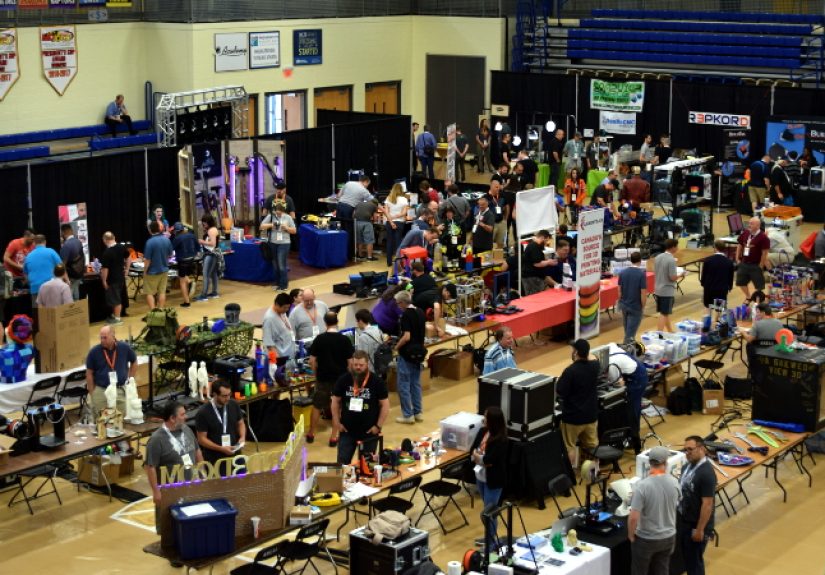
One of the most compelling things about ERRF 18 is the experience it seems to have created for the people who walked through the doors. Even if you were not there in person, the reports, interviews, and event coverage paint a vivid picture. You can almost imagine the soundtrack immediately: stepper motors singing in uneven harmony, fans whirring, people laughing over failed prints that somehow became conversation starters, and that one person explaining a wildly complicated mod with the casual confidence of somebody describing how to butter toast.
The first experience was probably sensory overload in the best possible way. You walk in expecting printers, sure, but not that many interpretations of what a printer could be. Small and simple machines sit near giant, exotic builds. A polished commercial setup is only a few steps away from a DIY printer that looks like it was built out of determination, conduit, printed parts, and an unwillingness to accept retail prices. It is the kind of room that makes you stop every ten feet and say, “Wait, hold on, what is that?”
Then there is the social side. Maker events often work because the barriers between strangers are weirdly low. You do not need an introduction when someone is holding a printed part shaped like a mechanical puzzle and you are already staring at it. Conversations begin fast. Advice gets traded even faster. Somebody asks about slicer settings. Somebody else jumps in with a different nozzle recommendation. Five minutes later, three people are debating direct drive versus Bowden like the fate of civilization depends on it. That is not awkward. That is community.
The excitement of discovery must have been everywhere. At ERRF 18, attendees were not just looking at finished consumer products in glass-case mode. They were seeing experiments, prototypes, adaptations, and personal statements. A printed textile piece might make one person think about fashion. A converted robot printer might make another think about lab surplus. A hotend demo might send someone home determined to rebuild an entire machine they were supposedly “done upgrading” months ago.
And then there is the emotional layer that only a first-year success can create. People at a new event are not just attending. They are testing a possibility. They are asking, consciously or not, “Can this become our thing?” When the answer starts to look like yes, the whole place changes. The room becomes warmer. The energy gets more generous. People are not only enjoying the present event anymore. They are already imagining next year.
That is likely the most memorable experience connected to ERRF 18: hope with evidence. Not vague hype, but the feeling that something real had just begun. The printers mattered. The products mattered. The derby mattered. But the biggest thing in the room may have been the shared realization that the East Coast 3D printing scene had found a home big enough for its ambition. That kind of feeling sticks. It is the sort of experience that turns attendees into evangelists, exhibitors into returnees, and a promising weekend into the first chapter of a lasting tradition.
Conclusion
ERRF 18 succeeded because it balanced everything that makes 3D printing exciting: open-source ingenuity, commercial experimentation, artistic creativity, practical engineering, and a deeply enthusiastic community. It gave the East Coast its own flagship 3D printing festival and proved there was real hunger for a gathering built around creation instead of mere consumption.
Looking back, the inaugural event was more than a success story. It was a signal flare. It told the wider maker world that the East Coast RepRap scene was not waiting for permission to matter. It was already building the future layer by layer, mod by mod, and conversation by conversation. For anyone who cares about the culture of desktop fabrication, ERRF 18 was not just the start of something great. It was proof that something great had already started.