Table of Contents >> Show >> Hide
- What IBS Actually Is
- Why Ginger Gets So Much Attention for Digestive Problems
- What the Research Says About Ginger for IBS Specifically
- So Is Ginger Worth Trying for IBS?
- How Ginger Might Help Some IBS Symptoms Without “Treating IBS”
- Best Ways to Try Ginger if You Have IBS
- How to Test Ginger the Smart Way
- Possible Side Effects of Ginger
- Who Should Be Cautious With Ginger
- When Ginger Is Not Enough
- The Bottom Line on Ginger for IBS
- Experiences With Ginger for IBS: What People Commonly Notice
- SEO Tags
If you have irritable bowel syndrome, you have probably heard this advice at least once: “Try ginger.” It usually arrives with the confidence of a person handing you the secret map to digestive peace. Tea, capsules, chews, ginger shots, ginger everything. The problem is that IBS is not one symptom, one cause, or one tidy little villain you can chase out of town with a spicy root.
So, does ginger help IBS? The honest answer is: maybe a little for some symptoms, but the direct research on IBS itself is limited and not especially convincing. Ginger has a solid reputation for helping nausea and may influence digestion in ways that sound promising. But when researchers looked specifically at IBS, the results were not exactly a parade with confetti.
That does not mean ginger is useless. It means ginger may be more of a supporting actor than the star of the show. For some people, it may help with bloating, queasiness, or post-meal discomfort. For others, it may do absolutely nothing except make tea smell nice. Here is what the science suggests, where the gaps are, and how to try ginger without turning your gut into a test lab with poor management.
What IBS Actually Is
Irritable bowel syndrome, or IBS, is a disorder of gut-brain interaction. In plain English, your digestive tract and your nervous system are not always communicating like mature adults. The result can be abdominal pain, cramping, bloating, gas, diarrhea, constipation, or a fun little combo pack of both.
IBS is usually grouped into subtypes:
- IBS-D: diarrhea-predominant
- IBS-C: constipation-predominant
- IBS-M: mixed bowel habits
- IBS-U: unclassified
Because IBS symptoms vary so much, there is no single remedy that works for everyone. That is why people often experiment with food changes, stress management, peppermint oil, fiber, medications, probiotics, and herbal remedies like ginger. Some of these approaches have decent evidence. Some are basically digestive folklore in a nicer outfit.
Why Ginger Gets So Much Attention for Digestive Problems
Ginger has been used for centuries for digestive complaints, and modern research gives that tradition at least some scientific backup. Ginger contains active compounds, especially gingerols and shogaols, that may affect the gastrointestinal tract in several ways.
1. It may help with nausea
This is where ginger’s evidence is strongest. It has been studied for pregnancy-related nausea, postoperative nausea, and nausea linked to motion or treatment side effects. If your IBS comes with queasiness, especially after eating, ginger may be more helpful for that symptom than for the full IBS picture.
2. It may influence gastric emptying
Some research suggests ginger can help the stomach empty faster. That matters because people with upper digestive symptoms, like fullness, pressure, or post-meal discomfort, sometimes feel worse when food seems to just sit there staging a sit-in.
3. It may have mild anti-inflammatory and motility effects
Researchers have explored whether ginger can affect inflammation, muscle contractions in the gut, and digestive signaling. Those mechanisms sound promising on paper. The catch is that IBS is complex. A theoretically helpful effect does not always translate into meaningful symptom relief in real people living real lives and eating real lunches.
What the Research Says About Ginger for IBS Specifically
Here is the part that matters most: when researchers looked directly at ginger for IBS, the evidence was underwhelming.
A small pilot randomized controlled trial examined ginger as a treatment for IBS. Participants took either placebo, a lower dose of ginger, or a higher dose of ginger over a short period. The result? Ginger did not clearly outperform placebo. In fact, placebo response was high, which is common in IBS studies. That does not mean symptoms were imaginary. It means IBS is a condition where expectation, symptom fluctuation, stress, routine changes, and gut-brain signaling can heavily influence how people feel.
The study also was small, which means it was not strong enough to deliver a final verdict. But small studies can still send a signal, and the signal here was not, “Ladies and gentlemen, we have found the IBS miracle root.” It was more like, “Interesting idea, needs better evidence, do not print the victory T-shirts yet.”
That is why major IBS management recommendations tend to focus on approaches with stronger support, such as:
- Low-FODMAP diet under guidance
- Soluble fiber, especially for some people with IBS-C
- Peppermint oil for abdominal pain and cramping in some cases
- Targeted medications depending on IBS subtype
- Stress reduction and gut-directed psychological therapies
- Exercise, sleep, and symptom tracking
Ginger is not usually presented as a front-line, evidence-backed IBS treatment. It sits more in the “possibly helpful for certain digestive symptoms, generally low-risk when used sensibly” category.
So Is Ginger Worth Trying for IBS?
For some people, yes. But expectations should be realistic. Think helpful experiment, not dramatic rescue helicopter.
Ginger may be worth trying if your IBS symptoms include:
- Mild nausea
- Post-meal discomfort
- Bloating that seems tied to feeling overly full
- Digestive uneasiness during stressful days
Ginger may be less impressive if your main symptoms are:
- Frequent severe cramping
- Urgent diarrhea
- Persistent constipation
- Symptoms tied strongly to FODMAP triggers
- IBS flares driven mainly by stress, sleep loss, or hormonal changes
In those situations, ginger may still be a nice add-on, but it is unlikely to solve the bigger problem by itself.
How Ginger Might Help Some IBS Symptoms Without “Treating IBS”
This is an important distinction. A remedy does not need to cure IBS to be useful. Plenty of people with IBS use layered strategies. One thing helps pain. Another helps constipation. Another helps anxiety around meals. Another helps when travel throws the gut into chaos.
Ginger may fit into that layered approach because it can sometimes ease the extras around IBS:
- Nausea after meals: Ginger may calm that rolling, unsettled feeling.
- Mild upper abdominal discomfort: It may help when the problem feels more like sluggish digestion than lower bowel spasm.
- General digestive support: A warm ginger tea can encourage slower eating, hydration, and a calmer routine, which sometimes helps all by itself.
In other words, ginger may improve the experience of IBS for some people without being a proven IBS treatment in the clinical sense.
Best Ways to Try Ginger if You Have IBS
If you want to test ginger, start low and stay observant. IBS rewards patience and punishes chaos. That is just one of its many hobbies.
Ginger tea
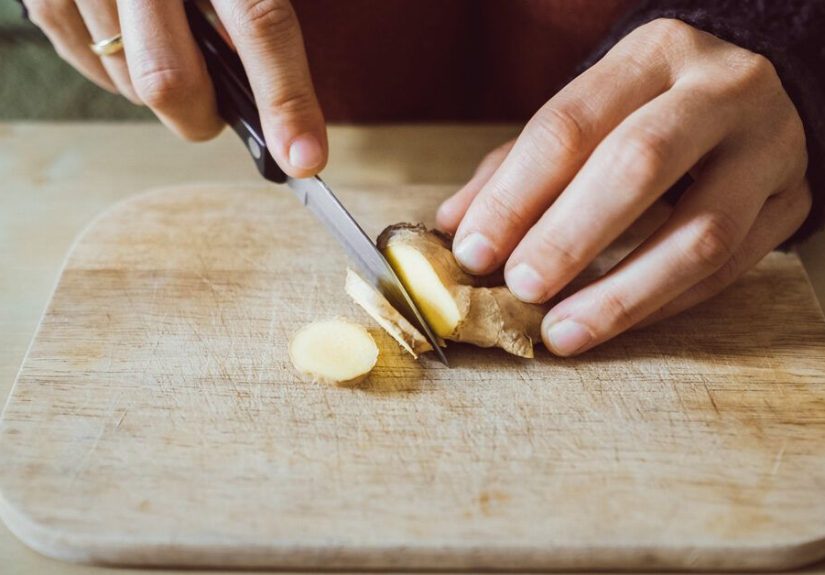
Fresh ginger steeped in hot water is one of the gentlest ways to try it. It is simple, low-cost, and easy to adjust. For some people, sipping warm tea is soothing in itself.
Fresh ginger in food
Adding small amounts of grated ginger to soups, rice dishes, or stir-fries may be enough for people who are sensitive to supplements.
Capsules
Capsules offer more standardized dosing, but they can be stronger and may irritate some people. In studies on digestive symptoms, ginger doses often fall around 1 to 2 grams per day, though more is not automatically better.
Chews, candies, and ginger ale
Proceed with caution. Many ginger candies are loaded with sugar, which may not agree with every IBS gut. Ginger ale is often more “ale” than “ginger,” and carbonation can worsen bloating for some people.
How to Test Ginger the Smart Way
Do not try ginger on the same day you also decide to eat three slices of pizza, start a new probiotic, and drink a giant iced coffee. That is not an experiment. That is an ambush.
Use a simple method instead:
- Pick one form of ginger, such as tea or capsules.
- Start with a small amount.
- Try it consistently for several days to two weeks.
- Track symptoms like bloating, pain, bowel movements, nausea, and reflux.
- Stop if symptoms worsen.
A symptom journal can help you tell the difference between “This actually helps” and “I had one decent Tuesday and gave ginger all the credit.”
Possible Side Effects of Ginger
Just because ginger is natural does not mean it is universally friendly. Plenty of natural things are rude. Poison ivy, for example, is not exactly a wellness icon.
Potential side effects of ginger include:
- Heartburn
- Stomach irritation
- Loose stools or diarrhea at higher amounts
- Mouth or throat irritation in concentrated forms
Some people with IBS, especially those prone to reflux or diarrhea, may find that too much ginger backfires instead of helping.
Who Should Be Cautious With Ginger
Talk with a clinician before using ginger regularly if you:
- Take blood thinners
- Have a bleeding disorder
- Have gallbladder disease
- Are pregnant and want to use concentrated supplements
- Have severe reflux or frequent heartburn
Food-level ginger is usually different from taking concentrated extracts every day. Supplements can hit harder than your sushi side garnish ever dreamed of.
When Ginger Is Not Enough
If IBS symptoms are frequent, disruptive, or getting worse, it is time to zoom out. Ginger is not a substitute for proper evaluation, especially if you have symptoms such as:
- Unintentional weight loss
- Blood in the stool
- Fever
- Nighttime symptoms that wake you up
- New symptoms after age 50
- Anemia or persistent fatigue
Those are signs to get medical advice rather than conducting a private tea ceremony with escalating desperation.
The Bottom Line on Ginger for IBS
Ginger is not a proven cure for IBS, and the direct research so far does not show strong benefit for IBS symptoms overall. That is the boring answer, but boring answers are often the most useful ones in health writing. The better answer is that ginger may still help some people with related digestive complaints, especially nausea, mild bloating, or post-meal discomfort.
If you enjoy ginger and it does not aggravate your symptoms, it can be a reasonable low-risk tool to test as part of a broader IBS plan. But if you are hoping it will single-handedly calm abdominal pain, normalize bowel habits, and make your gut stop sending dramatic emails to your brain, the evidence just is not there.
The smartest approach is to treat ginger as one possible helper, not the entire strategy. IBS usually responds best to a personalized combination of food changes, stress management, symptom tracking, and evidence-based treatment matched to your subtype. Ginger can join the team. It just probably should not be named captain.
Experiences With Ginger for IBS: What People Commonly Notice
The following experiences are illustrative of patterns many people with IBS describe when trying ginger. They are not controlled research findings, and they are not a replacement for medical advice. They are useful, though, because real-life symptom management does not happen in a lab. It happens at breakfast, during commutes, before meetings, on vacation, and sometimes in the middle of the night when your digestive tract chooses chaos.
One common experience is that ginger helps the stomach more than the bowels. A person with IBS may drink ginger tea after a heavy meal and say, “I feel less gross.” That can be real and meaningful. The bloated, sloshy, slightly nauseated feeling may improve. But their bowel habits may stay exactly the same. They may still have constipation, urgency, or cramping later in the day. In other words, ginger can make some people feel better without fixing the part of IBS that bothers them most.
Another pattern is that small amounts feel soothing, while bigger amounts feel irritating. Someone starts with mild ginger tea and finds it comforting. Encouraged, they move to strong capsules or multiple ginger shots and suddenly get heartburn, burning in the stomach, or looser stools. That does not necessarily mean ginger is “bad.” It may simply mean the dose, form, or timing was wrong for that person’s gut.
People with IBS-D sometimes report mixed experiences. A warm ginger drink may calm nausea or that unsettled, pre-urgency feeling. But if the ginger is concentrated or sugary, it may also stir things up. For some, the difference comes down to whether the ginger is paired with a calm meal and a steady routine or slammed down on an empty stomach before a stressful day.
People with IBS-C may hope ginger will “get things moving.” Sometimes they feel a little less heavy after meals, but it usually does not act like a constipation solution on its own. If constipation is the main issue, they often discover that fiber balance, hydration, physical activity, and targeted treatment matter much more than ginger ever will.
Then there are people with IBS-M or stress-sensitive IBS who find the ritual matters almost as much as the ingredient. Sitting down with warm ginger tea can slow eating, reduce anxiety, and create a pause in an otherwise frantic day. That does not make the benefit imaginary. The gut-brain connection is a real part of IBS. A calming habit can genuinely reduce symptom intensity for some people, even if ginger is only one part of why it helps.
Some people also discover that the delivery method matters a lot. Fresh ginger in soup may go over beautifully, while ginger candy causes bloating because of added sweeteners. Ginger tea may feel fine, while fizzy ginger ale turns the abdomen into a percussion instrument. This is one reason blanket advice on social media so often misses the mark. “Try ginger” is incomplete advice. The form, amount, context, and the person’s IBS subtype all matter.
Perhaps the most useful real-world lesson is that ginger tends to work best when treated as a trial, not a belief system. The people who learn the most from it are usually the ones who test one version at a time, keep notes, and stay honest about the results. If it helps, great. If it does nothing, also great, because that is valuable information. With IBS, progress often comes less from finding one magical fix and more from steadily learning your own pattern. Not glamorous, but very effective.