Table of Contents >> Show >> Hide
- What Is a Guest Simple Stacking Bed?
- Why a Simple Stacking Bed Works So Well for Guest Rooms
- Best Spaces for a Guest Simple Stacking Bed
- Key Features to Look For
- How to Style a Stacking Bed So It Looks Inviting
- Comfort Tips for Overnight Guests
- Simple Stacking Bed vs. Other Guest Bed Options
- Buying Checklist for a Guest Simple Stacking Bed
- Common Mistakes to Avoid
- Real-Life Experiences With a Guest Simple Stacking Bed
- Conclusion
A guest simple stacking bed is the kind of furniture idea that makes you wonder why every spare room does not already have one. It is practical, neat, space-saving, and just clever enough to make your home feel like it has a secret hospitality department. Instead of dedicating an entire room to a bed that sits there judging your laundry piles for eleven months of the year, a stacking bed gives you flexibility. Stack it when you need floor space. Separate it when guests arrive. Dress it up as a sofa, daybed, twin bed, or two-person sleeping setup when life suddenly announces, “Surprise, relatives are coming.”
The phrase “Guest Simple Stacking Bed” may sound minimal, but the concept is surprisingly rich. It belongs to the same family of small-space sleeping solutions as trundle beds, daybeds, sleeper sofas, folding beds, and Murphy beds. The difference is that a stackable guest bed focuses on easy transformation without complicated hinges, heavy wall installation, or the inflatable-mattress drama of waking up on the floor at 3 a.m. because the air valve had commitment issues.
For apartments, home offices, vacation homes, kids’ rooms, studios, and multipurpose guest rooms, a simple stacking bed can be a quiet little genius. It saves space, supports real mattresses, and gives overnight visitors a more dignified place to sleep than “here is a couch and a decorative pillow that looks like a potato.”
What Is a Guest Simple Stacking Bed?
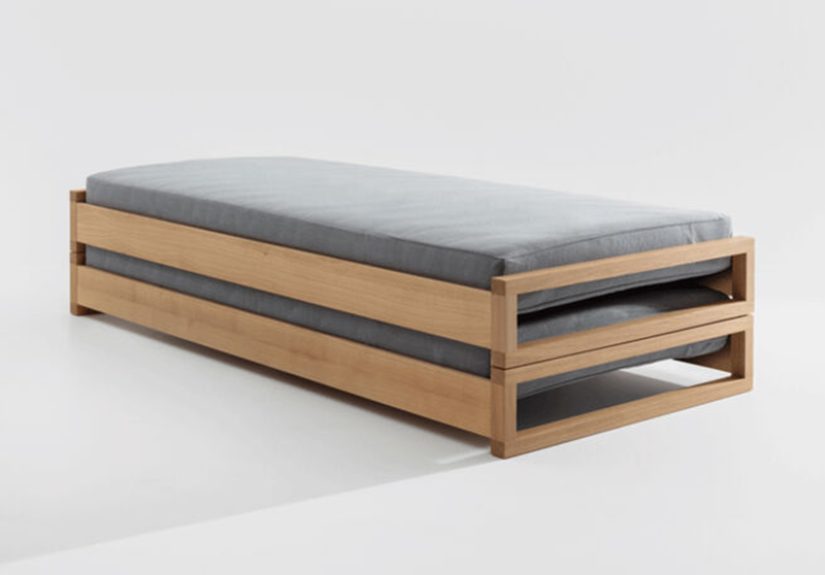
A guest simple stacking bed is usually a set of two low-profile bed frames designed to sit securely on top of each other when not in use. When stacked, the beds can function as a single bed, bench, lounge, or sofa-style seating area. When separated, they become two individual beds. Depending on the design and mattress arrangement, they may also be placed side by side to create a larger sleeping surface.
The most common format is twin-size or near-twin-size because twin beds are easier to move, stack, store, and fit into smaller rooms. Some models use wood frames, while others use metal or engineered materials. The best versions keep the design simple: clean frame, stable base, compatible mattress, and enough flexibility to switch from daily living to guest hosting without requiring a toolbox, a prayer, and three instructional videos.
How It Differs From a Trundle Bed
A trundle bed hides a second mattress under the main bed and rolls or pulls out when needed. A stacking bed, on the other hand, stores the second bed vertically by stacking one frame on top of the other. Trundles are great when you have enough under-bed clearance, but stackable beds can feel cleaner and more modular. They are especially useful when you want the room to function as an office, yoga corner, craft room, or reading space between guest visits.
How It Differs From a Daybed
A daybed is usually designed to look like a sofa and sleep like a twin bed. Many daybeds are beautiful, but they can be bulky and fixed in one layout. A simple stacking guest bed gives you more layout freedom. It can become seating, one bed, two beds, or a wider sleep surface depending on the frame design. In other words, a daybed says, “I am stylish.” A stacking bed says, “I am stylish, but I also brought backup.”
Why a Simple Stacking Bed Works So Well for Guest Rooms
The biggest advantage of a stackable guest bed is flexibility. Modern homes often need rooms to do more than one job. A guest room might also be a home office, workout area, playroom, storage zone, or quiet escape from the household circus. A full-size or queen bed can dominate that room every single day, even when nobody is sleeping there.
A simple stacking bed solves that problem by giving you a real sleep setup only when you need it. During normal use, the stacked beds take up the footprint of one compact bed. When guests arrive, you unstack them and create separate sleeping spaces. This is ideal for siblings, friends, visiting parents, kids’ sleepovers, or guests who prefer not to share a mattress.
Another benefit is comfort. Compared with many air mattresses, stackable beds can use actual mattresses on slatted or platform-style frames. That means better support, less wobble, fewer mysterious squeaking noises, and no slow-motion deflation during the night. Your guests wake up feeling hosted, not mildly betrayed by vinyl.
Best Spaces for a Guest Simple Stacking Bed
Small Guest Bedrooms
In a small guest bedroom, a stackable twin bed can make the room feel more open. Instead of squeezing in a large bed, two nightstands, a dresser, and a suitcase that blocks the door like a dramatic movie barricade, you can keep the layout lean. Add wall-mounted lighting, a small side table, and a luggage rack, and the room becomes useful without feeling crowded.
Home Offices
A home office is one of the best places for a simple stacking bed. Most of the time, the stacked bed can act as a sofa or reading bench. Add a few firm back pillows and a throw blanket, and it becomes a casual seating area for breaks. When guests stay overnight, move the desk chair, unstack the beds, and the office becomes a guest room without needing a permanent queen bed in the background of every video call.
Studio Apartments
Studio living rewards furniture that can change jobs quickly. A stackable guest bed can serve as daytime seating and nighttime sleep space. It is also easier to visually soften than a traditional bed. With a tailored cover, bolsters, and neutral bedding, the stacked bed can blend into a living area instead of announcing, “Hello, I sleep here and also eat cereal here.”
Kids’ Rooms and Sleepover Spaces
For children’s rooms, a simple stacking bed can be a flexible alternative to bunk beds, especially if you do not want the height or guardrail concerns of an upper bunk. The beds can be separated for sleepovers and stacked again to create more play space. Always follow the manufacturer’s age, weight, and safety instructions, especially with younger children who see furniture and immediately think, “climbing structure.”
Key Features to Look For
1. A Strong, Stable Frame
The frame should feel sturdy when stacked and unstacked. Solid wood, reinforced metal, and well-built slat systems are all common options. Avoid frames that wobble, shift, or feel too lightweight for adult guests. A guest bed does not need to be luxurious, but it should not behave like a nervous folding chair.
2. Mattress Compatibility
Before buying, check the exact mattress size and recommended thickness. Many stacking beds work best with thinner twin mattresses because the frames need to stack neatly. However, too thin can mean less comfort for adults. A medium-firm foam or hybrid mattress often works well for occasional guest use because it balances support and cushioning for different sleep styles.
3. Easy Stacking and Unstacking
A good guest simple stacking bed should be simple enough for one or two adults to reconfigure without stress. Look for smooth edges, manageable weight, and clear instructions. If the process feels like moving antique gym equipment, you will avoid using it. The whole point is convenience.
4. Floor Clearance and Height
Many stackable beds are low to the ground. This creates a clean, modern look and makes stacking easier. However, low beds may be difficult for older guests or people with mobility issues. If you frequently host parents, grandparents, or visitors with joint pain, consider the finished height with mattress included. A mattress topper may help comfort, but it may need separate storage when the beds are stacked.
5. Slat Spacing and Support
Slats should be close enough to support the mattress properly. Wide gaps can cause foam mattresses to sag over time. Slatted bases also help airflow, which is useful for keeping mattresses fresher. If the bed uses a solid platform, make sure the mattress manufacturer approves that type of support.
6. Styling Potential
The best stackable guest beds do not look like emergency furniture. Choose a finish and shape that match your home: natural pine for a Scandinavian feel, black metal for modern spaces, white wood for cottage style, or upholstered options for a softer look. Add a fitted cover, layered pillows, and a throw, and the stacked bed can pass as intentional seating.
How to Style a Stacking Bed So It Looks Inviting
Styling is where a simple stacking bed goes from “practical object” to “oh, that is actually cute.” When stacked, treat it like a daybed or low sofa. Use a fitted sheet or custom cover over the top mattress, then add two or three large pillows along the wall. A long lumbar pillow can make it feel polished without creating a pillow mountain that guests must excavate before sleeping.
Keep bedding nearby but hidden. A storage bench, closet shelf, under-bed bin, or fabric basket can hold sheets, blankets, and pillowcases. The goal is to make guest setup fast. Nobody wants to search for fitted sheets at midnight while whispering angrily into a linen closet.
Lighting matters too. Add a wall sconce, clip-on lamp, or slim bedside lamp so guests can read, charge devices, and find their way around. If the beds separate into two sleeping spots, try to provide lighting and a small surface for each person. Even a compact stool can work as a nightstand.
Comfort Tips for Overnight Guests
A stackable guest bed is only as good as the sleep experience it provides. Start with a supportive mattress that fits the frame exactly. Add breathable sheets, a medium-weight blanket, and an extra layer for cold sleepers. Include two pillow options if possible: one softer and one firmer. Guests have strong pillow opinions, even if they are too polite to say so.
Place a small rug beside the bed if the floor is hard. It adds warmth and makes the room feel less temporary. Clear a place for luggage so visitors are not forced to open their suitcase on the bed. A folding luggage rack is inexpensive, easy to store, and instantly makes a room feel more guest-ready.
Privacy also counts. Add curtains, blinds, or shades that block morning light. A stackable bed in a multipurpose room can still feel restful if the space is clean, calm, and not surrounded by stacks of paperwork labeled “taxes, maybe.” Remove clutter before guests arrive and leave a few empty hooks or hangers for clothing.
Simple Stacking Bed vs. Other Guest Bed Options
Stacking Bed vs. Air Mattress
An air mattress is compact and affordable, but it can lose air, feel cold, or lack edge support. A stacking bed takes more space but feels more like a real bed. For frequent hosting, the stackable option usually wins on comfort and dignity.
Stacking Bed vs. Sleeper Sofa
A sleeper sofa is excellent for living rooms, but it can be heavy and expensive. Some sofa beds also have thin mattresses or metal support bars that introduce themselves to your spine. A simple stacking bed is often easier to move and can provide two separate beds instead of one shared surface.
Stacking Bed vs. Murphy Bed
A Murphy bed saves floor space beautifully, but it usually requires wall installation and a bigger budget. A stackable bed is more portable and renter-friendly. It is a smart choice when you want flexibility without construction.
Stacking Bed vs. Bunk Bed
Bunk beds use vertical space well, but they require attention to guardrails, ladder safety, ceiling height, and age suitability. A low stackable bed avoids the upper-bunk issue because the beds are separated for sleeping. For adult guests, this can feel more comfortable and less like being assigned to summer camp.
Buying Checklist for a Guest Simple Stacking Bed
- Measure the room before buying, including walking space when both beds are unstacked.
- Check the frame’s weight capacity for each bed.
- Confirm the exact mattress size and maximum mattress thickness.
- Look for smooth corners and secure stacking points.
- Choose a finish that works as everyday furniture, not just emergency bedding.
- Plan storage for bedding, pillows, and mattress toppers.
- Consider guest age and mobility before choosing a very low frame.
Common Mistakes to Avoid
The first mistake is buying a bed before measuring the room in both configurations. A stacked bed may fit perfectly, but two separated beds may create a maze worthy of a game show. Use painter’s tape on the floor to map the layout before purchasing.
The second mistake is choosing mattresses that are too thick to stack or too thin to sleep comfortably on. Balance is everything. Read the manufacturer’s mattress guidance carefully.
The third mistake is ignoring bedding logistics. If every guest visit requires hunting through three closets and one mystery storage bin, the system is not simple. Keep a dedicated guest bedding kit labeled and ready.
The fourth mistake is overdecorating the bed with too many pillows. A few pillows make it cozy. Twelve pillows make guests wonder whether they are sleeping in a furniture catalog or being tested.
Real-Life Experiences With a Guest Simple Stacking Bed
In everyday use, a guest simple stacking bed shines because it reduces the awkwardness of multipurpose rooms. Imagine a small home office with a desk, a bookshelf, and a stacked twin bed against the wall. During the week, it functions as a reading bench. You can sit there with coffee, review notes, or pretend you are going to meditate before checking your phone for forty minutes. The room feels open because there is still floor space. Then Friday arrives, and a friend texts, “Can I stay over?” Instead of panic-cleaning and inflating an air mattress that sounds like a leaf blower, you simply unstack the beds, add sheets, and the room becomes a guest suite.
One of the best hosting experiences with this type of bed is giving guests options. Two friends visiting from out of town may not want to share a bed. A sibling and child may need separate sleep surfaces. A couple may prefer the beds pushed together. A stackable guest bed lets you adapt without owning multiple bulky frames. It is especially helpful during holidays when sleeping arrangements become a domestic puzzle and every cousin somehow arrives with a duffel bag the size of a refrigerator.
Another experience many hosts appreciate is how easy the room is to reset. After guests leave, strip the beds, wash the linens, let the mattresses air out, and stack everything back into place. The room returns to normal quickly. That matters in small homes where no room can afford to be “only” a guest room. A simple stacking bed respects the reality of modern living: the spare room may need to be an office on Monday, a workout room on Tuesday, and a guest bedroom by Saturday.
Comfort feedback is usually strongest when hosts pay attention to the mattress and bedding. A basic frame with a good mattress feels far better than an expensive frame with sad, thin padding. Guests remember clean sheets, a supportive pillow, a reachable outlet, and a place to put their phone. They also appreciate not having to climb into a bunk bed or unfold a complicated sleeper mechanism. Simple really is the luxury here.
There is also an emotional benefit. A stackable bed helps a home feel ready. You do not need a mansion, a formal guest suite, or a linen closet organized by a lifestyle influencer. You just need a flexible sleeping setup, fresh bedding, and a little thoughtfulness. When guests feel comfortable, they relax faster. When hosts can set up the room without stress, they enjoy the visit more. That is the quiet magic of a guest simple stacking bed: it turns limited space into generous hospitality.
Conclusion
A guest simple stacking bed is one of the smartest choices for anyone who wants a practical, comfortable, and space-saving guest bed without committing an entire room to occasional visitors. It works beautifully in small bedrooms, home offices, kids’ rooms, studios, and vacation homes. Compared with air mattresses, it feels more stable. Compared with Murphy beds, it is easier to install. Compared with sleeper sofas, it can be lighter, simpler, and more flexible.
The best stackable guest bed is sturdy, easy to move, compatible with comfortable mattresses, and attractive enough to live in your room every day. Pair it with good bedding, thoughtful lighting, luggage space, and clutter-free styling, and you have a guest setup that feels intentional rather than improvised. In the grand competition of small-space furniture, the simple stacking bed deserves a trophyor at least a very nice throw blanket.